

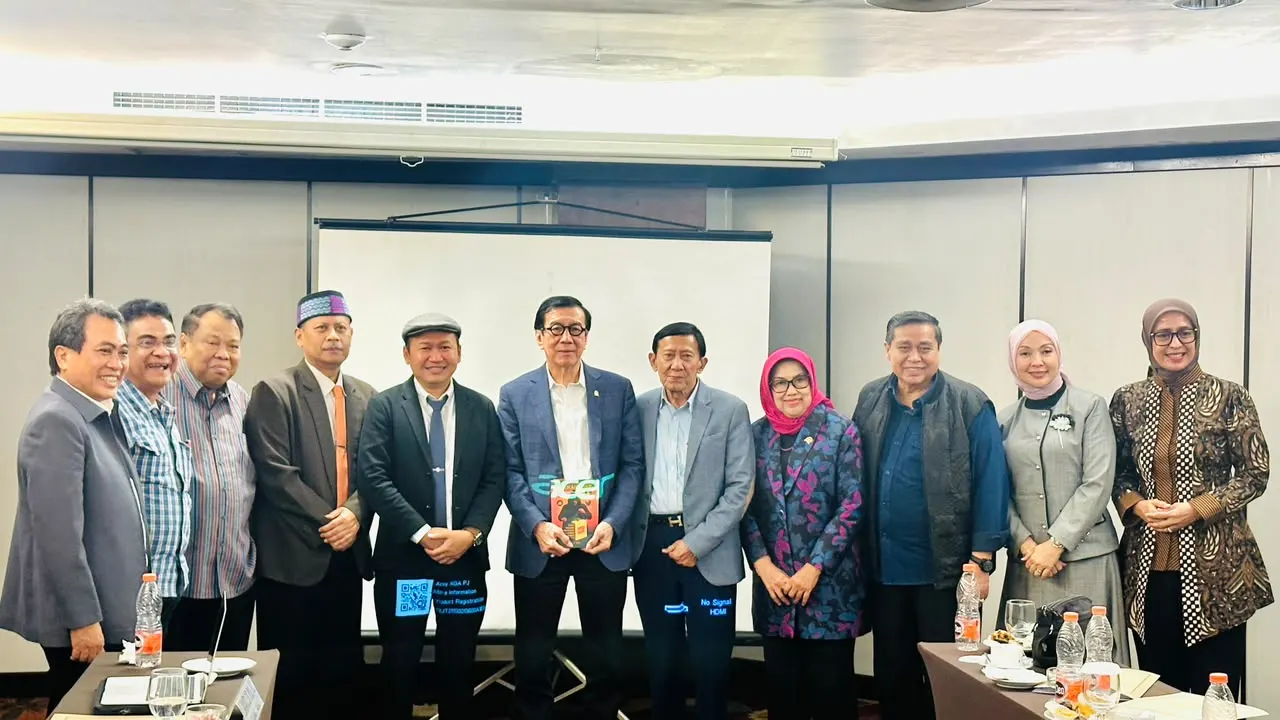
Semarang – The Faculty of Social and Political Sciences, Diponegoro University (FISIP UNDIP), strengthens its academic contribution to the discussion of strategic constitutional issues through the involvement of two FISIP UNDIP experts, Prof. Drs. Teguh Yuwono, M.Pol.Admin., and Wijayanto, S.IP., M.Si., Ph.D., in a Focus Group Discussion (FGD) organized by the Study Board of the People’s Consultative Assembly of the Republic of Indonesia (MPR RI).
The FGD, which raised the theme “People’s Sovereignty in the Perspective of Pancasila Democracy,” was held on Tuesday (6/10/2026) at a hotel in Semarang City. This activity is part of the MPR RI Study Board’s review to obtain academic perspectives and substantive input regarding the implementation and possible refinement of the 1945 Constitution of the Republic of Indonesia (UUD NRI Tahun 1945).
In the forum, FISIP UNDIP presented two academics with expertise in socio-political and governmental fields: Prof. Drs. Teguh Yuwono, M.Pol.Admin., as Dean of FISIP UNDIP, and Wijayanto, S.IP., M.Si., Ph.D., as Vice Rector IV of UNDIP and also an expert at FISIP UNDIP. Both provided complementary academic perspectives in discussing people’s sovereignty, democracy, governance, and the relationship between society and the state.
In addition to the two FISIP UNDIP experts, UNDIP also presented an expert from the Faculty of Law, Prof. Dr. Arief Hidayat, S.H., M.S.
The activity was also attended by the Leadership of the MPR RI Study Board, Prof. Dr. Yasonna H. Laoly, S.H., M.Sc., Ph.D., Members of the MPR RI Study Board, and the Secretariat General Team of the MPR RI.
Two Academic Perspectives from FISIP UNDIP on People’s Sovereignty
The FGD was organized to gather views from academics, experts, specialists, and practitioners as material for the MPR RI Study Board’s recommendations regarding amendments to the 1945 Constitution of the Republic of Indonesia. Specifically, the forum discussed how the concept of people’s sovereignty can be understood and implemented within the framework of Pancasila Democracy.
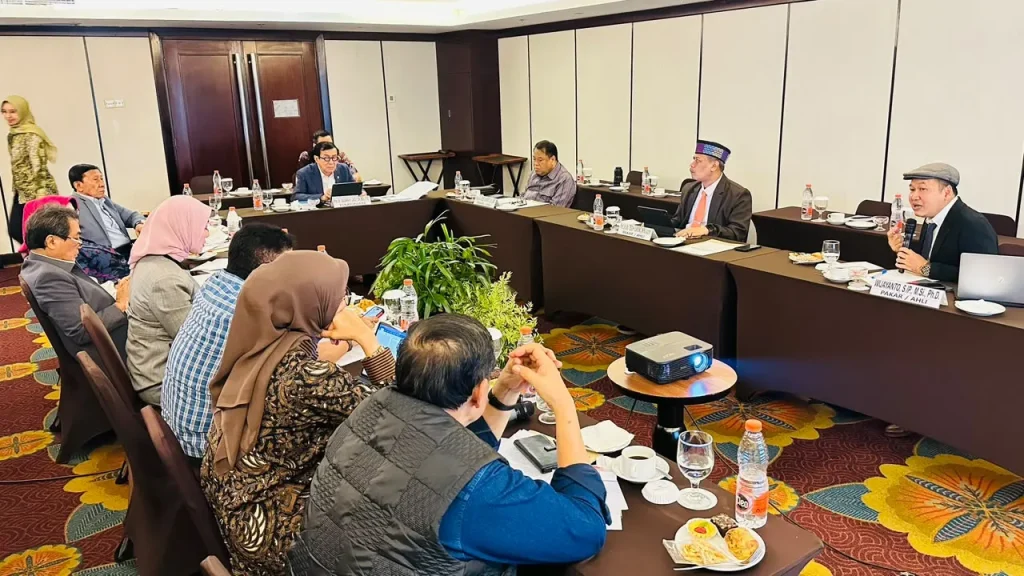
In the discussion, Prof. Drs. Teguh Yuwono, M.Pol.Admin., provided a perspective from the field of government and public administration. This perspective is important for examining the relationship between the principle of people’s sovereignty and the implementation of government, as well as how the people’s mandate is translated into state governance.
Meanwhile, Wijayanto, S.IP., M.Si., Ph.D., provided a perspective from the field of socio-politics and democracy. This view enriched the discussion regarding the position of society as the holder of sovereignty, democratic dynamics, public participation, and the development of relations between society, political institutions, and the state.
Both perspectives are an important part of viewing people’s sovereignty not merely as a constitutional principle but also as a principle that needs to be realized in the practice of democracy and governance.
The FGD discussion also linked people’s sovereignty with the values of Pancasila, particularly just and civilized humanity, democracy led by wisdom in deliberation/representation, and social justice for all Indonesian people.
Within this framework, there are three important principles that are of concern in the meaning of people’s sovereignty: Human Rights, Substantive Democracy, and Social Justice. All three are important perspectives for assessing how democracy can provide meaningful space for society while guaranteeing the fulfillment of rights and social justice.
Discussing Public Participation and Substantive Democracy
After the presentations by the speakers, the activity continued with a discussion and in-depth exploration session with the Leadership and Members of the MPR RI Study Board.
The discussion addressed a number of issues related to the implementation of people’s sovereignty in Indonesian democratic life, ranging from public participation in the political process, the conduct of elections and regional elections, the formulation of laws and regulations, public participation spaces, constitutional challenges by the public, to the strengthening of substantive democracy.
From a socio-political and governmental perspective, public participation is one of the important elements in ensuring that people’s sovereignty does not stop at the electoral process. Democracy also needs to provide space for society to convey aspirations and be involved in public decision-making processes.
The development of digital technology was also part of the discussion. Digital space has developed into a new arena for society to convey aspirations, build public discourse, and participate in political and social life.
This condition presents both challenges and opportunities in expanding public participation. Therefore, the development of digital space is also one of the relevant aspects to be studied in the context of people’s sovereignty and democracy in Indonesia.
The forum was then directed toward exploring various possibilities for refining the constitution to strengthen the principles of people’s sovereignty in the practice of national and state life, should changes or amendments to the 1945 Constitution of the Republic of Indonesia be necessary.
FISIP UNDIP Strengthens Academic Contribution to National Policy
The involvement of Prof. Drs. Teguh Yuwono, M.Pol.Admin., and Wijayanto, S.IP., M.Si., Ph.D., as two FISIP UNDIP experts in the FGD of the MPR RI Study Board demonstrates FISIP UNDIP’s commitment to providing academic contributions to various strategic national issues.
Their presence also demonstrates the importance of a multidisciplinary perspective in studying the issue of people’s sovereignty. The governmental and public administration perspective brought by Prof. Teguh Yuwono combines with the socio-political and democratic perspective of Wijayanto to provide a more comprehensive understanding of the relationship between the people, the state, democracy, and the constitution.
This contribution is in line with the role of higher education institutions as spaces for knowledge development as well as strategic partners in providing academic-based input for the formulation of national policy.
Through the involvement of its experts, FISIP UNDIP continues to encourage the utilization of academic expertise to provide tangible contributions to strengthening democracy, governance, public policy, and Indonesian constitutional life.
The activity was then closed by the Leadership of the MPR RI Study Board and continued with a group photo session with all FGD participants. The various inputs conveyed by academics, experts, specialists, and practitioners in the forum subsequently became material for the MPR RI Study Board in drafting recommendations regarding amendments to the 1945 Constitution of the Republic of Indonesia, particularly concerning “People’s Sovereignty in the Perspective of Pancasila Democracy.”
Through this forum, FISIP UNDIP reaffirms its role in presenting two complementary academic perspectives to support the strengthening of democracy and governance based on Pancasila values and oriented toward the interests of society.