

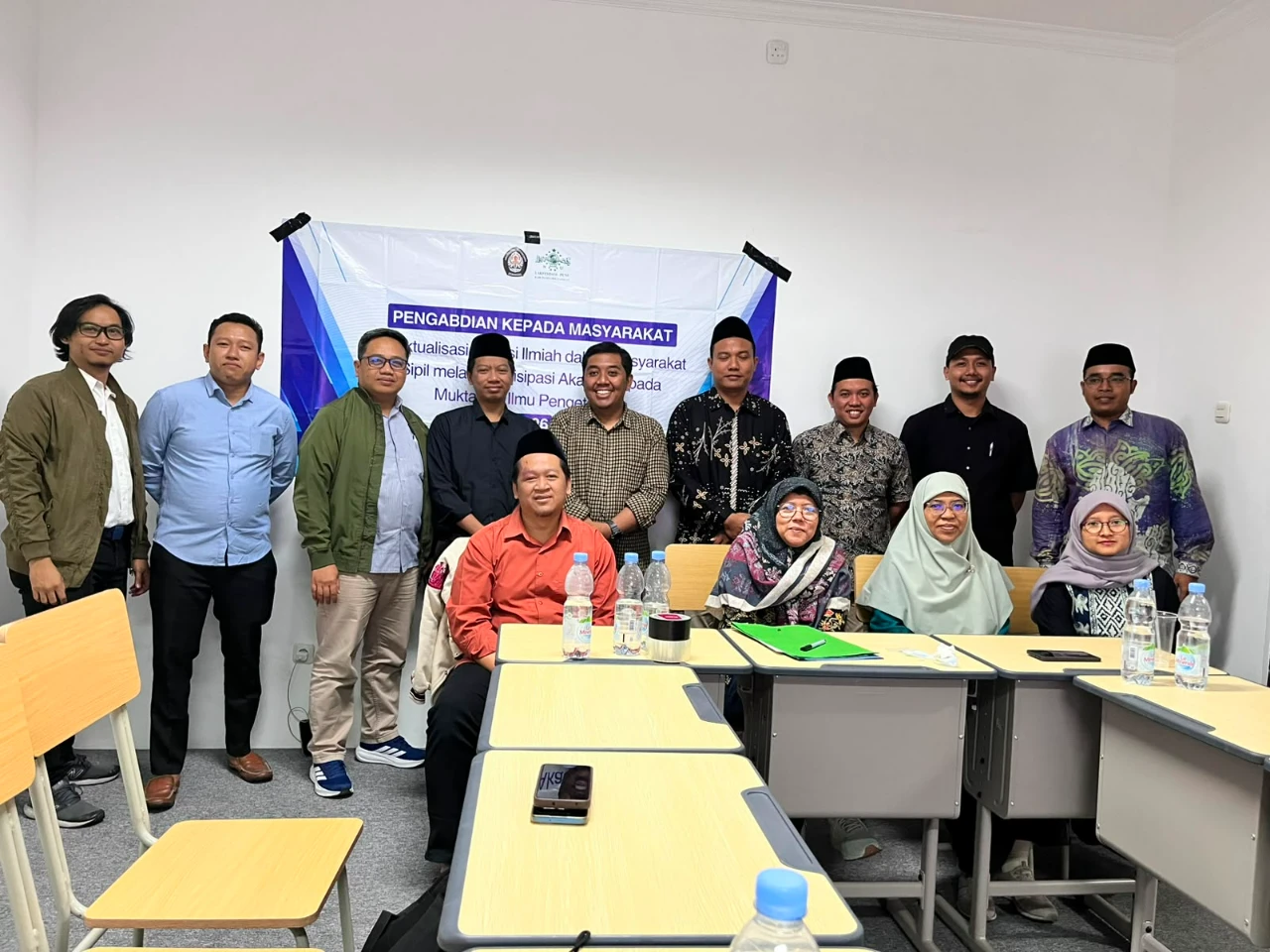
Surakarta – Lakpesdam PWNU Central Java, together with a team of lecturers from the Faculty of Social and Political Sciences (FISIP), Diponegoro University (Undip), held a Community Service activity entitled “Reactualization of Scientific Tradition in Civil Society through Academic Participation” at the Faculty of Tarbiyah, UIN Raden Mas Said Surakarta, on Thursday (July 30, 2026). This activity served as a space for academic collaboration to translate the outcomes of the IV Science Congress (Muktamar Ilmu Pengetahuan / MIP) of Nahdlatul Ulama into applicable policy recommendations for organizational strengthening.
The community service program was led by Dr. Laila Kholid Alfirdaus as the team chair, with members Yoga Putra Prameswari, M.A., Faiz Kasyfilham, M.A., Jihan Marsya Azahra, M.A., Nuruddin Al Akbar, M.A., and Dr. Supratiwi. The involvement of FISIP Undip academics demonstrates the university’s commitment to supporting the capacity building of civil society organizations through research and community service-based approaches.
The Chair of Lakpesdam PWNU Central Java, M. Zainal Anwar, M.S.I., in his remarks, emphasized that this activity is a tangible implementation of the Memorandum of Understanding (MoU) between Lakpesdam PWNU Central Java and FISIP Diponegoro University, signed in early 2025. “This collaboration does not stop at the signing of the MoU, but is realized through academic activities that produce ideas and policy recommendations. Today is one of the concrete follow-ups to that commitment,” he said.
According to Zainal, the main focus of the meeting was to discuss the drafting of policy papers and policy briefs as a follow-up to the outcomes of the IV Science Congress, organized by Lakpesdam PWNU Central Java in collaboration with UIN Sunan Kudus at the end of June 2026.
He explained that the outcomes of the Science Congress should not remain merely an academic forum but must be translated into recommendations that can serve as references for strengthening the governance of the Nahdlatul Ulama organization as well as public policies related to the development of religious civil society.
Furthermore, Zainal revealed that based on the directives of the Chair of PWNU Central Java, KH Abdul Ghaffar Rozin (Gus Rozin), Lakpesdam was requested to seriously oversee the development of ideas regarding Nahdlatul Ulama as a religious civil society, grounded in the actual practices developing in Central Java.
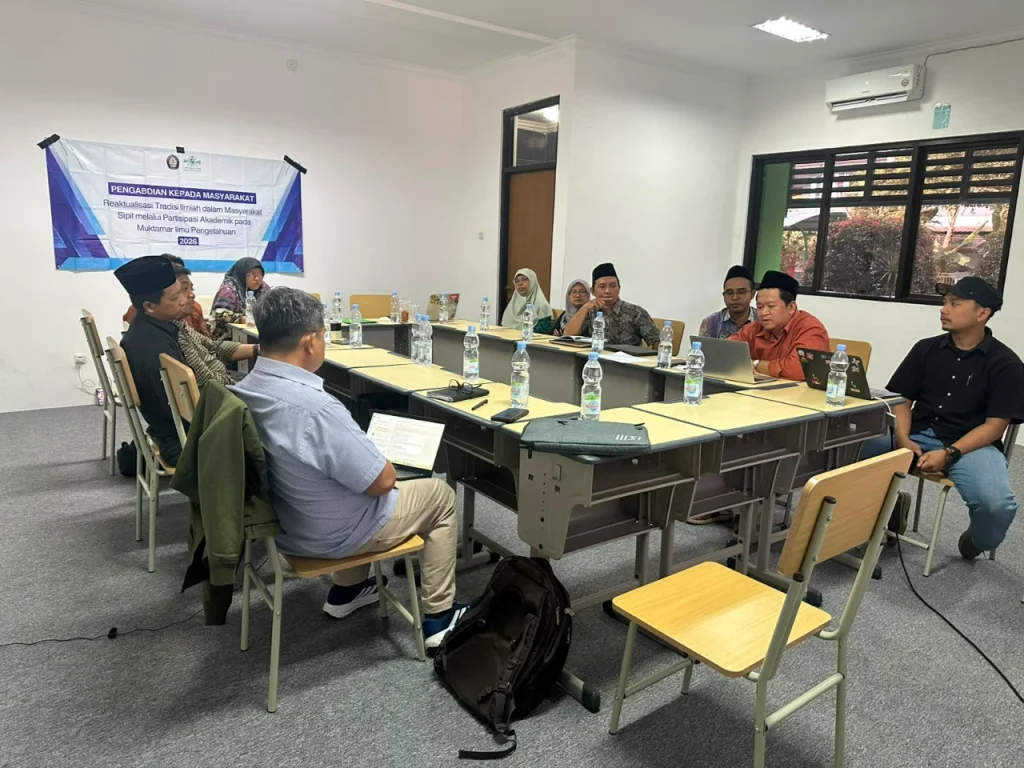
“Discussions with Gus Rozin resulted in a shared understanding that the concept of NU as civil society cannot be built solely through political science theories, but must stem from the experiences, institutional practices, and living traditions among NU members in Central Java. Therefore, Lakpesdam is tasked with overseeing this academic process to produce formulations that are both practice-based and conceptually robust,” he explained.
In the forum, participants discussed a draft Policy Brief entitled “Strengthening Jam’iyyah Governance as a Key Foundation for an Independent, Adaptive, and Sustainable Civil Society.” The policy brief offers a new perspective in understanding Nahdlatul Ulama as a religious civil society.
Laila Kholid emphasized that while civil society has often been understood through modern political science approaches, the outcomes of the IV Science Congress affirm that the capacity of NU’s civil society is actually built through the organization’s distinctive traditions such as sanad (chains of knowledge transmission), khidmah (service), jam’iyyah (organizational structure), musyawarah (deliberation), kaderisasi (regeneration), konsolidasi (consolidation), srawung (social interaction), kemandirian (self-reliance), and maslahat (public benefit). “These nine concepts are positioned not merely as normative values but as institutional governance mechanisms that enable NU to maintain organizational autonomy while strengthening its social capacity,” said Laila.
Based on this framework, the drafting team formulated five strategic recommendations for strengthening Nahdlatul Ulama as a religious civil society. First, strengthening NU’s knowledge ecosystem through the development of pesantren networks, universities, scientist regeneration, and the reproduction of scientific traditions. Second, strengthening jam’iyyah governance through organizational consolidation, sustainable regeneration, and institutional digitalization. Third, making economic self-reliance a key foundation for organizational autonomy through strengthening philanthropy, social investment, and jam’iyyah-based business development.
The fourth recommendation is to build an innovation ecosystem based on collaboration (srawung) between pesantren, universities, government, businesses, and the wider community to generate innovations oriented toward public benefit. Meanwhile, the fifth and final recommendation positions public benefit (maslahat) as the primary indicator in the formulation, implementation, and evaluation of all policies for strengthening religious civil society.
The discussion was dynamic, addressing contemporary challenges faced by civil society organizations, ranging from digital disruption, leadership regeneration, economic self-reliance, organizational independence in relations with the state and the market, to the need to build more adaptive organizational governance in response to changing times.
Through this community service activity, Lakpesdam PWNU Central Java and FISIP Diponegoro University hope to produce policy documents that are not only academically sound but also able to serve as strategic references for strengthening Nahdlatul Ulama as it enters its second century as an independent, adaptive, and sustainable religious civil society organization. This collaboration between academia and civil society organizations also demonstrates that the development of scientific traditions does not stop in academic spaces but must make tangible contributions to strengthening organizational governance and delivering public benefit to society.