


The Faculty of Social and Political Sciences, Diponegoro University (FISIP UNDIP), conducted the EQUITY UNDIP 2026 Joint Supervision Program as a strategic step to strengthen international academic collaboration, enhance the quality of postgraduate education, and expand productive and reputable research. This activity was facilitated by the Directorate of Reputation, Partnerships, and Global Connectivity (DRKKG) UNDIP as part of the support for the World Class University agenda.
This program also contributes to the strengthening of several QS World University Rankings indicators, particularly the Faculty Student Ratio related to the quality of learning and supervision, the International Faculty Ratio through the involvement of international academics, and the International Research Network through the development of cross-country research networks. Furthermore, this activity aligns with UNDIP’s commitment to supporting the achievement of the Sustainable Development Goals (SDGs), especially through the strengthening of public policy studies, human development, and social welfare.
In its implementation, FISIP UNDIP collaborated with Diego Fossati, PhD, Associate Professor in Global and Area Studies at the University of Hong Kong. Diego Fossati is a political scientist with expertise in Southeast Asian politics, democracy, political representation, public opinion, social policy, and governance. His research extensively examines the relationship between democracy, public policy, political legitimacy, decentralization, and development in Indonesia and the Southeast Asian region.
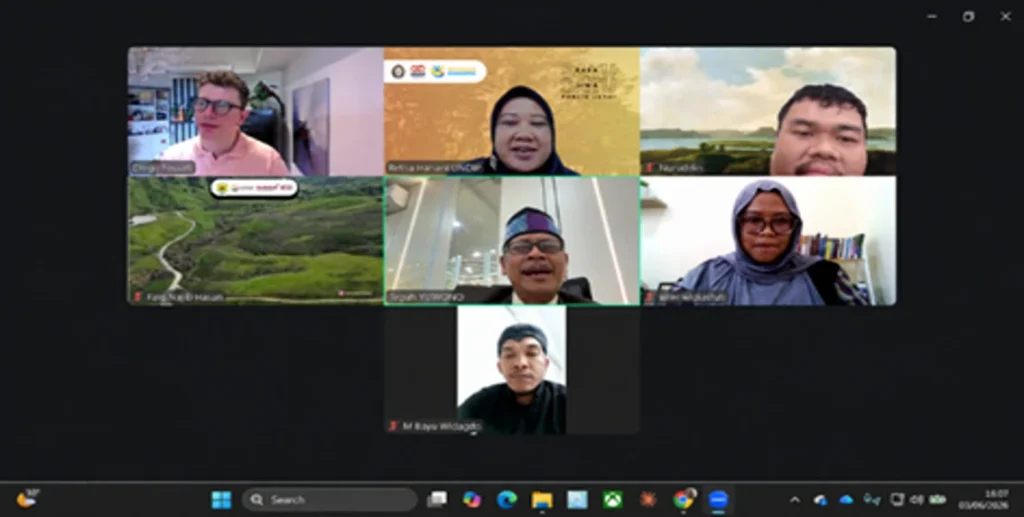
This academic collaboration focuses on the development of research entitled “Asymmetric Decentralization in Human Development Policy in Indonesia: Problems, Practices, and Policy Options for Advancing the Welfare State.” This study employs a comparative approach in Jakarta, Yogyakarta, and West Sumatra to analyze how variations in regional autonomy influence education, health, and social welfare policies.
The Joint Supervision Program was conducted online through six meetings. The series of activities included doctoral student supervision, discussion of research design and methods, refinement of research questions, development of collaborative research opportunities, and strategies for writing articles for publication in reputable international journals.
The series of activities concluded with a career mentoring session for young lecturers at FISIP UNDIP. This session discussed the importance of building a sustainable academic career, developing scholarly identity, maintaining publication consistency, and expanding international collaboration networks. Through this program, FISIP UNDIP reaffirms its commitment to producing excellent, relevant, and beneficial research for the community.