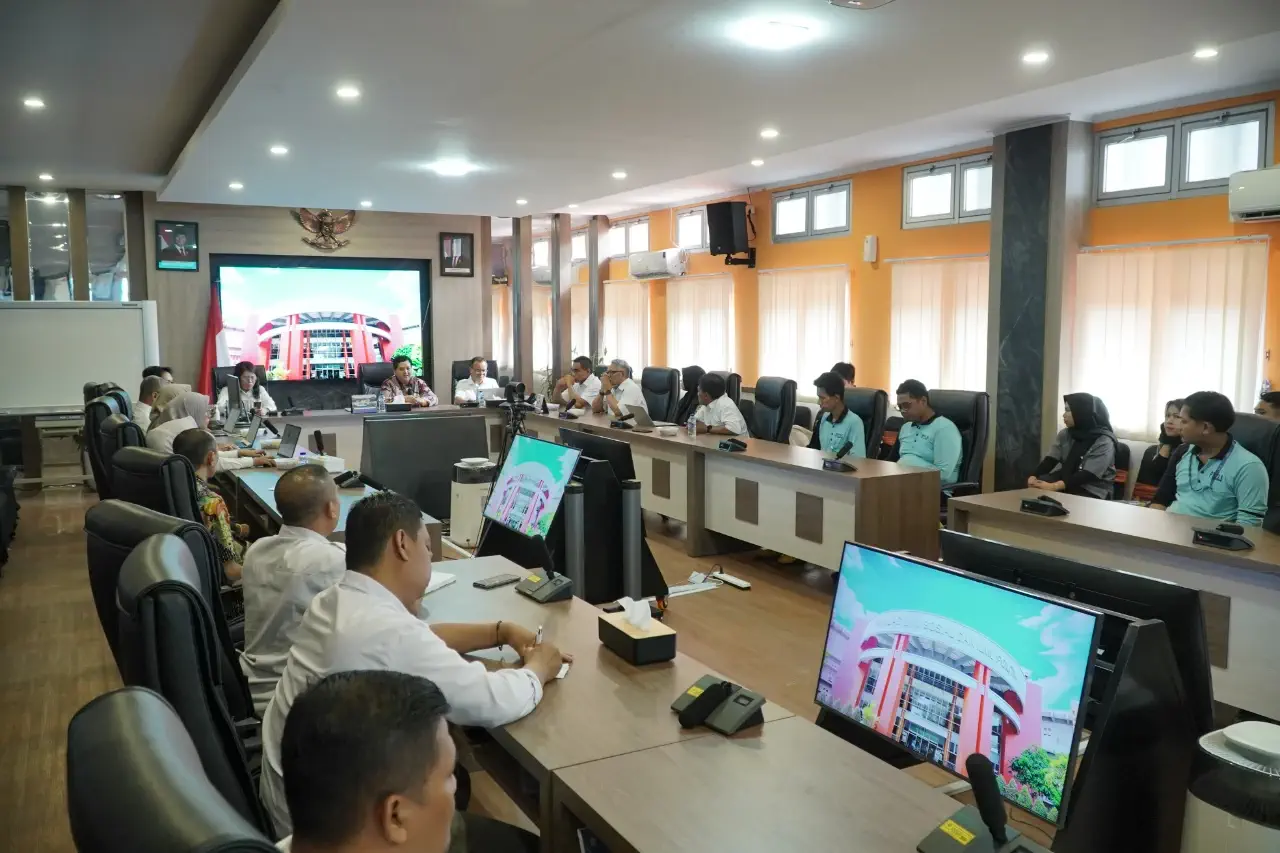
Semarang – The Faculty of Social and Political Sciences, Diponegoro University, continues to strengthen its commitment to creating a clean, healthy, and sustainable campus environment through waste sorting-based management. This commitment was realized through a socialization and discussion on waste management towards zero waste, featuring a resource person from UNDIP, Dr.Eng. Maryono, and his team.
The discussion was also attended by the Vice Dean for Academic and Student Affairs of FISIP UNDIP, S. Rouli Manalu, S.Sos., MCommSt., Ph.D.; the Vice Dean for Resources, Prof. Ika Riswanti Putranti, A.Md.A.K., S.H., M.H., Ph.D.; as well as a communication lecturer at FISIP UNDIP, Dr. Yanuar Luqman, S.Sos., M.Si., who also served as a resource person in the discussion on communication strategies for waste management on campus.
In his presentation, Dr.Eng. Maryono explained the UNDIP Guidelines for Waste Reduction, Sorting, Processing, Utilization, and Handling (P5S-UNDIP) as a concrete step by UNDIP in building a sustainable waste management culture. UNDIP is currently developing a waste sorting system into six main categories: food waste, food and packaging plastics, paper and cardboard, clean plastic bottles and cups, bottles and cans, and tissues and tea dregs. Later, six types of waste bins will be provided at designated points so that all members of the academic community can sort waste according to its category.
According to Dr.Eng. Maryono, the success of the program depends not only on facilities but also on how to build awareness within the campus community through appropriate communication. “Our target is how we can communicate well and positively. What Prof. Ika has achieved is already good, but we want it to spread by word of mouth, especially among students, because 80% of waste comes from students,” said Dr.Eng. Maryono.
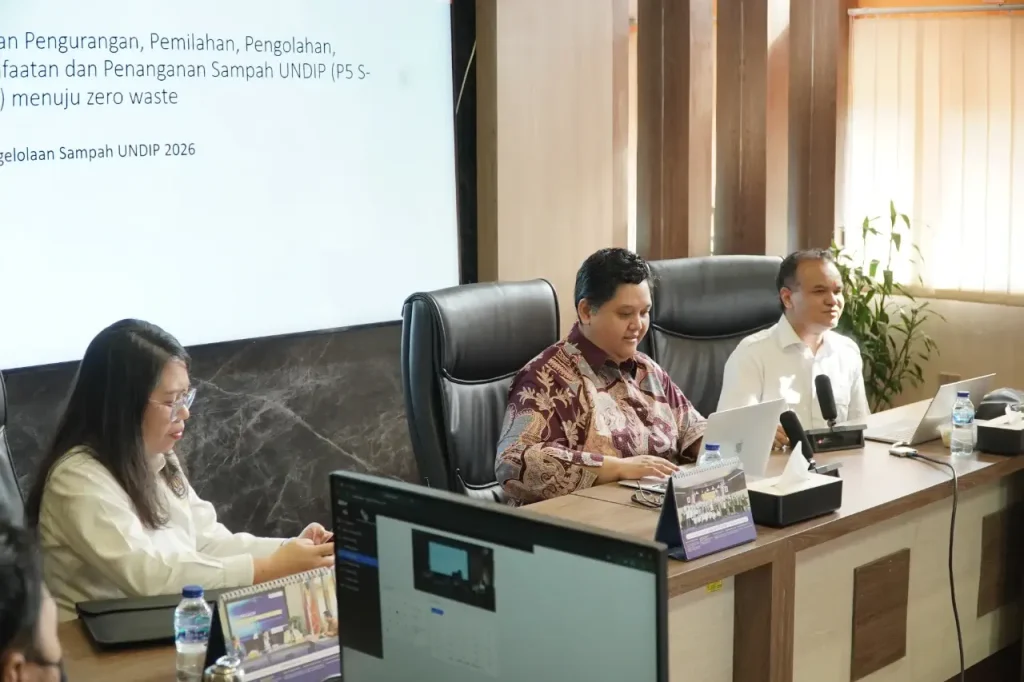
He emphasized that all stakeholders within the UNDIP environment, particularly FISIP, need to have a shared awareness of the importance of sorting waste from its source. In addition, the condition of the waste bins must also be kept clean and comfortable so that people are encouraged to dispose of waste according to the designated categories.
From a public communication perspective, Dr. Yanuar Luqman assessed that the steps taken by FISIP UNDIP have been going well. However, in his view, the biggest challenge lies in how the message about waste management can be effectively received by students, who are the largest waste contributors on campus.
“From a public communication standpoint, what FISIP has done is okay, but the challenge lies with the stakeholders, and the biggest one is students. Regarding waste sorting, the messages conveyed to students so far have been directive, like commands. We need to recreate the message to be more persuasive and with clearer icons,” explained Dr. Yanuar Luqman.
During the discussion session, the cleaning service (CS) staff also conveyed various obstacles they face in the field, particularly in the waste sorting process in the canteen area, classrooms, and office buildings. The canteen area was identified as a spot with the largest volume of waste and the most complex to sort, especially food plastic waste and consumption leftovers. This has become a serious concern for FISIP UNDIP.
As a follow-up, FISIP UNDIP, together with the Facilities and Infrastructure Team and the cleaning staff, will develop a waste management plan for the canteen area so that the sorting and waste reduction system can run more optimally. This step is expected to become part of a new culture on campus, supporting the creation of a greener, cleaner, and zero waste-oriented FISIP UNDIP.