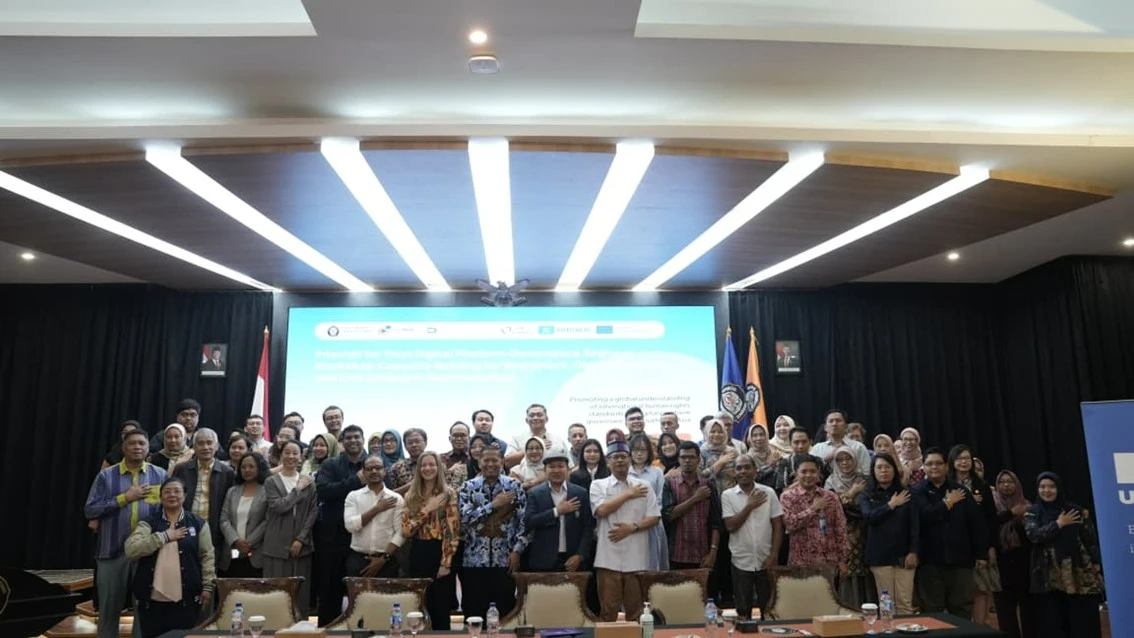
Semarang, May 8th, 2026 — The Faculty of Social and Political Sciences (FISIP) Universitas Diponegoro, together with the Department of Politics and Government Studies, continued the third day of the regional workshop titled “Internet for Trust: Digital Platform Governance Regional Workshop Capacity Building for Regulators, Digital Platforms, and Civil Society in Southeast Asia.” The event is a collaboration between UNESCO and Universitas Diponegoro, with the Asian Media Information and Communication Centre (AMIC) and Civic Tech Lab serving as implementing partners, and supported through funding from the European Union. The workshop served as a strategic dialogue platform bringing together academics, regulators, digital platform representatives, civil society organizations, and digital rights advocates to strengthen transparent, inclusive, and human rights-based digital platform governance across Southeast Asia.
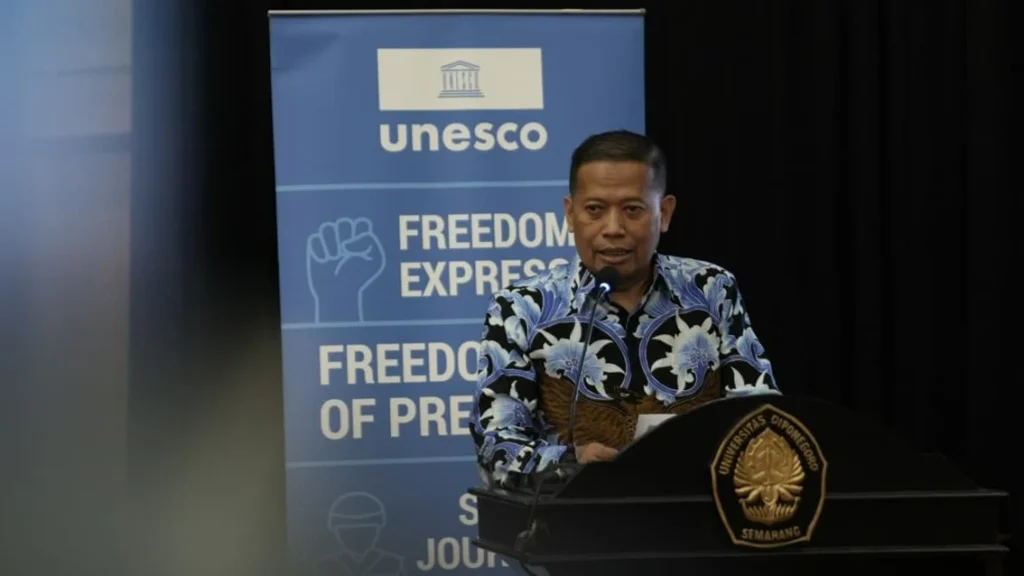
The third day of the event opened with a Host Speech Speech & Remarks delivered by the Rector of Universitas Diponegoro, Prof. Dr. Suharnomo, S.E., M.Si. In his remarks, Prof. Suharnomo emphasized the importance of cross-sector collaboration in building responsible and public-oriented digital governance. He highlighted that digital spaces must remain safe, inclusive, transparent, and capable of protecting vulnerable groups such as journalists, women, activists, and minorities. Prof. Suharnomo also expressed appreciation to UNESCO, AMIC, Civic Tech Lab, and various international partners for supporting the implementation of the regional workshop. According to him, universities should not only produce academic ideas, but also create tangible impacts for society through collaboration and digital policy innovation.
The following session featured Prof. Weiyu Zhang from Civic Tech Lab, who presented a session titled “Strengthening Platform Governance and Responsibility: Southeast Asia Context.” In his presentation, Prof. Zhang highlighted the rapid growth of digital platforms in the region, while regulatory frameworks and oversight mechanisms are still evolving. He emphasized that digital platforms bear significant responsibility in addressing disinformation, hate speech, and user data protection amid Southeast Asia’s high level of internet penetration.
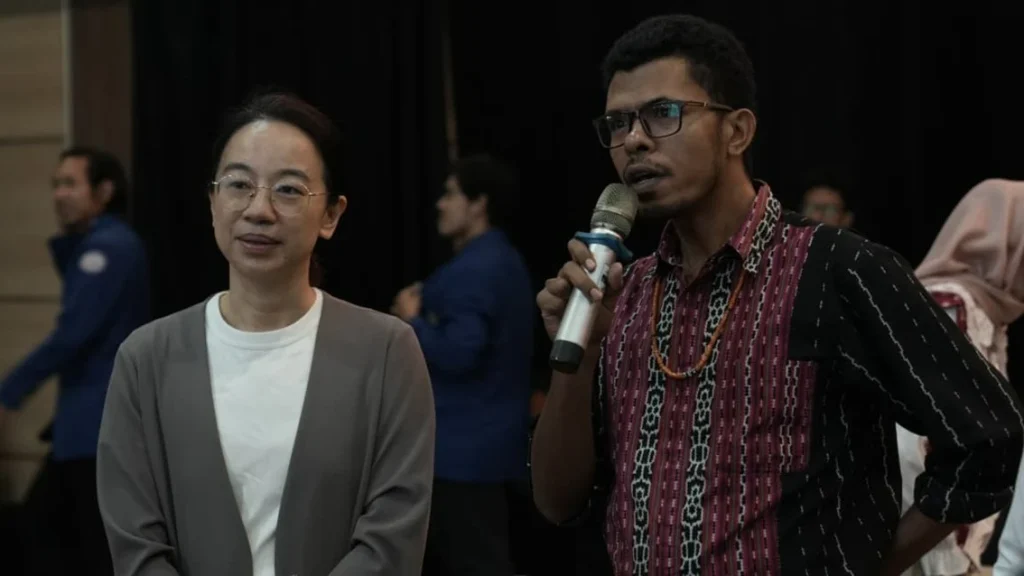
The discussion continued with Ho Wei Yang, who addressed the issue of harmful content representation on YouTube and TikTok. The session emphasized that harmful content cannot simply be understood as content that should be immediately removed by platforms, but rather as an issue closely connected to how algorithms shape dissemination, public perception, and social impact. The discussion highlighted how platform algorithms can amplify exposure to certain content while simultaneously influencing public behavior and opinion in digital spaces. The session was further enriched through a discussion with Mr. Nicolas Thomas Fernandez, who explored challenges related to content moderation, algorithmic transparency, and the need to balance digital safety with freedom of expression.
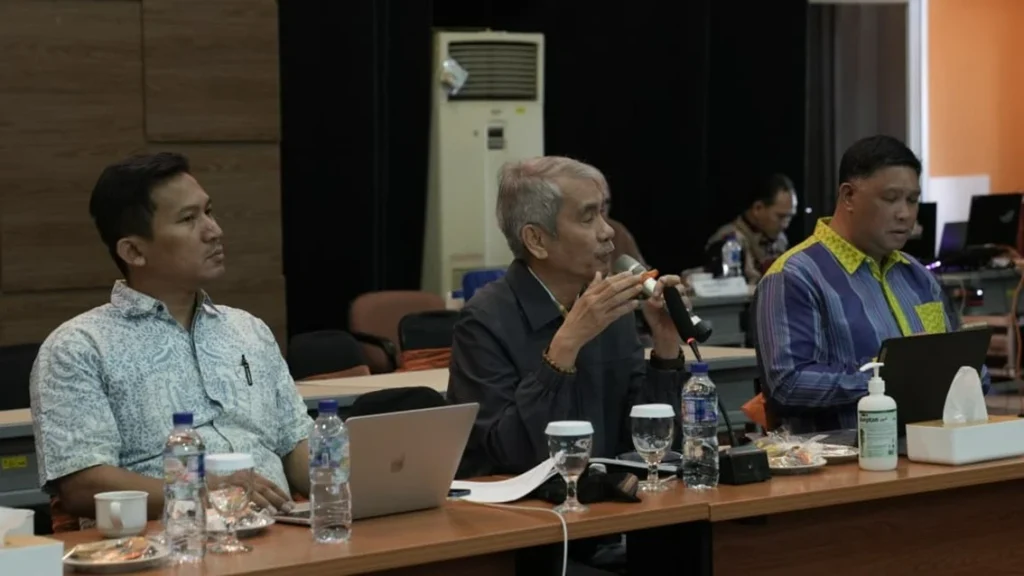
In the next session, Ramon Tuazon and Marco Polo from AMIC delivered a discussion titled “Enhancing Transparency and Accountability Mechanisms.” During the session, the speakers emphasized the importance of establishing stronger transparency and accountability mechanisms within digital platform governance. Transparency, they argued, is not only related to openness regarding algorithms and content moderation policies, but also concerns the clarity of platform decision-making procedures, responses to public reports, and the availability of fair appeal mechanisms for users. According to the speakers, public trust in digital platforms can only be built when accountability and openness are consistently upheld.
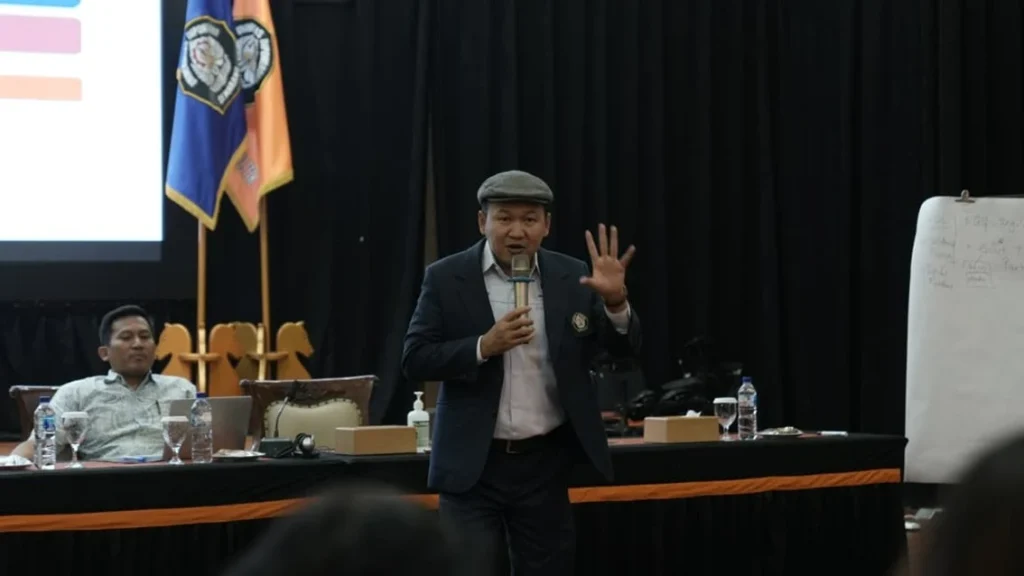
The third day of the workshop concluded with Closing Remarks delivered by Assoc. Prof. Wijayanto, S.IP., M.Si., Ph.D. and Bangkit Aditya Wiryawan, S.Sos., M.A., Ph.D. In their closing remarks, both speakers emphasized that the challenges of digital platform governance in Southeast Asia require sustained cooperation among governments, academics, civil society, and digital platform companies. They also underlined that the workshop was not merely an academic discussion forum, but a concrete step toward strengthening regional collaboration in building a safe, democratic, and rights-respecting digital ecosystem. With the conclusion of the event, UNESCO, Universitas Diponegoro, AMIC, and Civic Tech Lab expressed hope that the collaborative networks established through the workshop would continue to grow and serve as a foundation for strengthening digital platform governance across Southeast Asia.