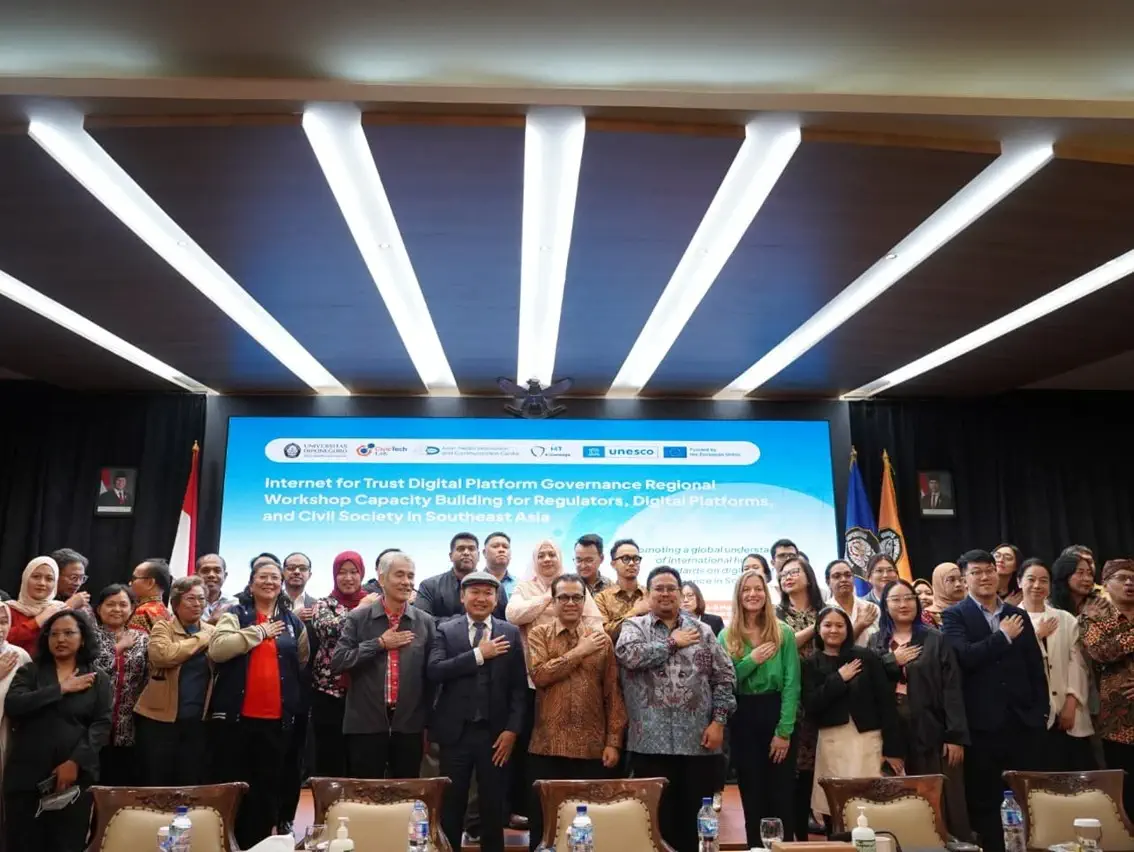
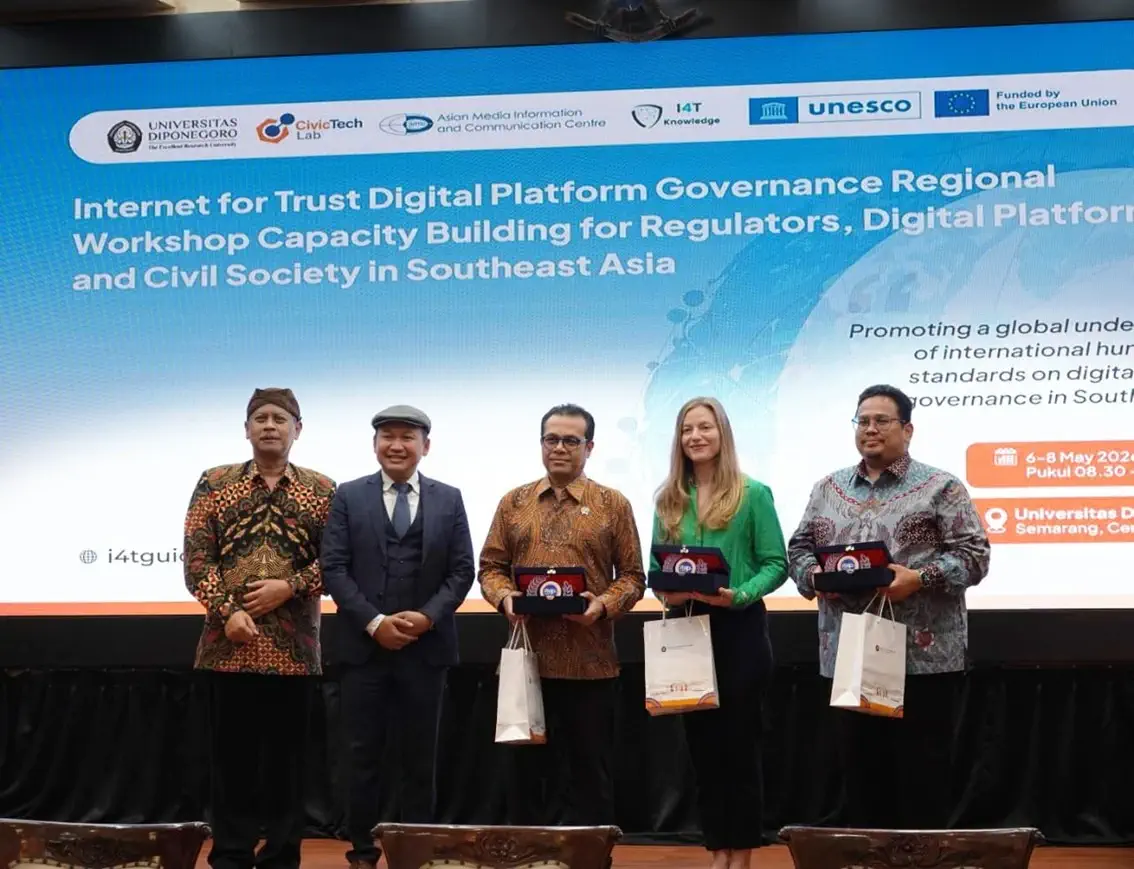
Semarang, May 7th, 2026 — The Faculty of Social and Political Sciences, Universitas Diponegoro and the Department of Politics and Government Studies at Diponegoro University continued the second day of the regional workshop series held in collaboration with UNESCO FISIP Undip and Universitas Diponegoro, with implementation partners Asian Media Information and Communication Centre and Civic Tech Lab, funded by the European Union, under the theme “Internet for Trust: Digital Platform Governance Regional Workshop Capacity Building for Regulators, Digital Platforms, and Civil Society in Southeast Asia.” The second day’s agenda focused on strengthening civil society capacity, fostering multi-stakeholder dialogue, and reinforcing digital rights perspectives in platform governance across Southeast Asia. The event brought together academics, regulators, digital platform representatives, and civil society organizations to deepen discussions on transparency mechanisms, accountability, and the protection of digital freedoms.
The first session of the second day opened with welcoming remarks delivered by Wijayanto and Anna Lomtadze. In his remarks, Wijayanto emphasized the importance of collaboration among academics, regulators, and civil society in building a digital governance ecosystem that is transparent, accountable, and centered on public interest. Meanwhile, Anna Lomtadze reaffirmed UNESCO’s commitment to promoting the Internet for Trust principle as a global framework to strengthen information integrity, protect digital rights, and develop platform regulations that respect freedom of expression and human rights across Southeast Asia.
The program then continued with a civil society workshop led by Ramon Tuazon from AMIC. In the session titled Enhancing Transparency and Accountability Mechanisms, Ramon highlighted the importance of building stronger transparency mechanisms within the digital platform ecosystem. He explained that accountability extends beyond algorithmic transparency or content moderation policies, encompassing how platforms respond to public reports, provide fair appeal mechanisms, and ensure clarity in decision-making procedures. According to him, public trust in digital platforms can only be built when transparency becomes a core principle of governance.
In the following session, Weiyu Zhang from Civic Tech Lab presented a session entitled Strengthening Platform Governance and Responsibility: Southeast Asia Context. In her presentation, Prof. Zhang highlighted Southeast Asia’s unique characteristics as a region with high digital penetration but still-developing regulatory frameworks. She explained that digital platforms carry increasing social responsibility in addressing disinformation, hate speech, and personal data protection. She emphasized that platform governance in Southeast Asia must consider local socio-political contexts to ensure that implemented policies do not inadvertently narrow democratic digital spaces.
 |
 |
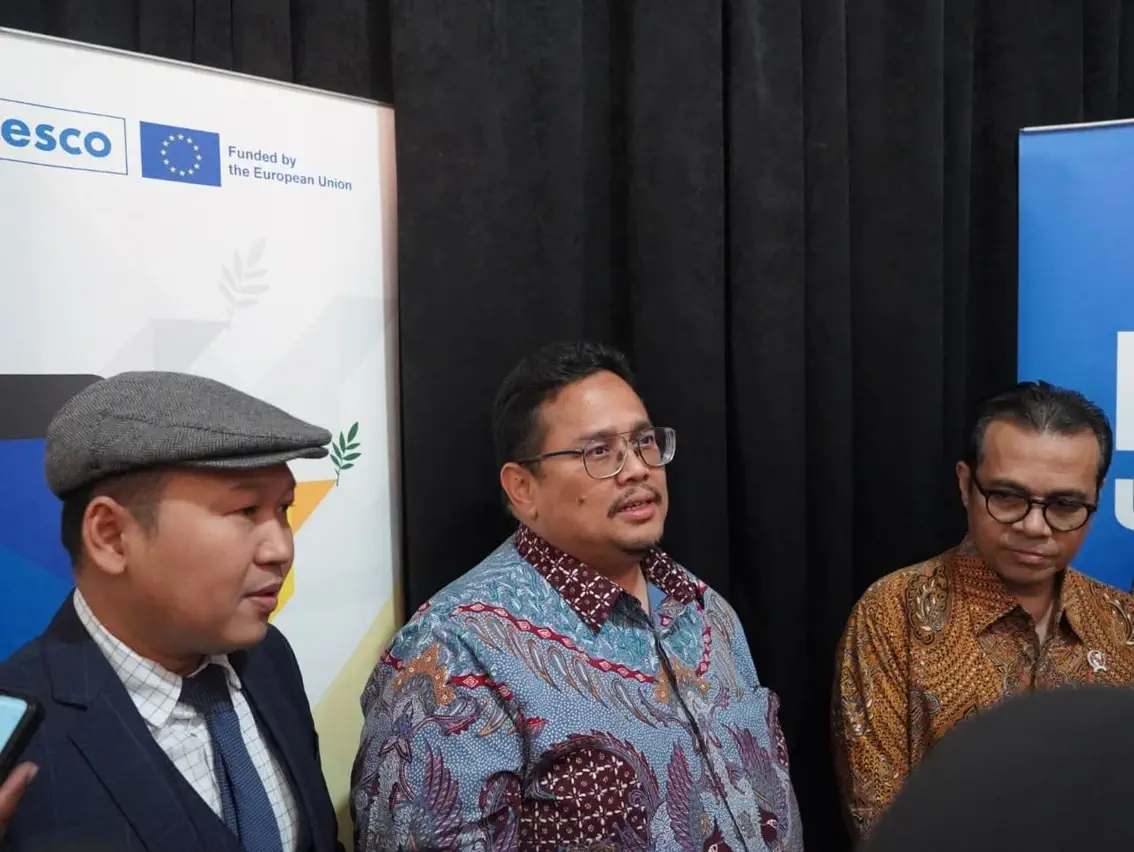
Following the civil society workshop sessions, the agenda continued with the Multi-Stakeholder Dialogue on The Sub-Regional Toolkit for The Governance of Digital Platform, a strategic forum that brought together regulators, parliamentary representatives, digital platform companies, academics, and human rights advocates. The forum was opened with remarks from Suharnomo, who stressed that universities bear a moral and intellectual responsibility to support the development of inclusive and sustainable digital governance. Additional remarks were delivered by Anna Lomtadze from UNESCO Jakarta, both emphasizing the importance of cross-sector collaboration in creating a safe and trustworthy digital ecosystem.
The first Discussion Panel session brought together diverse perspectives from regulators, policymakers, human rights organizations, academics, and representatives from the digital platform industry. The panel featured Nezar Patria, Amelia Anggraini from the Dewan Perwakilan Rakyat Republik Indonesia, Rahmat Bagja from Badan Pengawas Pemilihan Umum Republik Indonesia, Anita Wahid, Ramon Tuazon from AMIC, Danny Ardianto from YouTube, Chandrabhanu Pattanayak, who also serves as Co-chair of the Internet for Trust Global Knowledge Network, and Jaypee Abella. The discussion explored challenges in digital platform regulation, the protection of civil liberties, strengthening algorithmic transparency, and policy harmonization across Southeast Asia.
The second panel session, moderated by Prof. Zhang, expanded the discussion to cross-border policy issues and the responsibilities of global platforms. Rofi Uddarojat presented strategies for addressing digital security challenges and protecting online communities. Meanwhile, Miguel Luis Villafuerte and Sarah Maria Sison discussed the development of digital regulations in the Philippines and the importance of regional policy harmonization in Southeast Asia.
Closing the second day’s program, the Regulators and Civil Society Workshop featured Prapasiri Suttisome alongside Anna Lomtadze from UNESCO Jakarta in a discussion titled Digital Rights and Online Freedom in Southeast Asia. This session emphasized that the protection of digital rights must serve as a foundational principle in all efforts to develop platform governance. The speakers highlighted that freedom of expression, digital privacy, and online safety are fundamental rights that must be safeguarded amid growing digital surveillance and increasingly complex regulatory frameworks.