

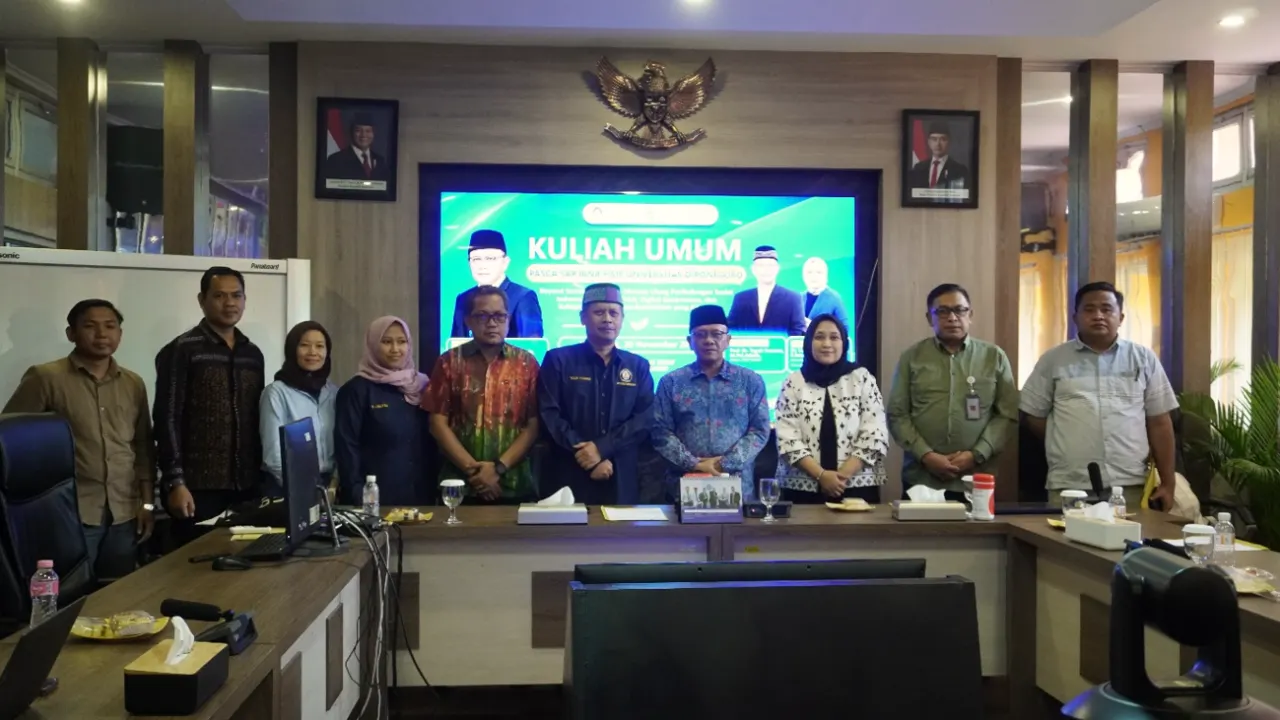
Semarang — The Postgraduate Program of the Faculty of Social and Political Sciences (FISIP) at Universitas Diponegoro (Undip) held a University General Lecture (UGC) on Friday, November 20, 2026, at the FISIP Undip Senate Meeting Room. Carrying the theme “Beyond Social Protection: Restructuring Indonesia’s Social Protection through DTSEN, Digital Governance, and Adaptive Poverty Alleviation Policies”, the event featured the Secretary General of the Ministry of Social Affairs of the Republic of Indonesia, Dr. Muhammad Hasan Chabibie, S.T., M.Si., as the keynote speaker.
Moderated by Dr. Lintang Ratri Rahmiaji, S.Sos., M.Si., the event was attended by FISIP Undip postgraduate students with high enthusiasm.
Remarks from the Dean of FISIP Undip: Hopes for Applying Knowledge at the Alma Mater
The general lecture opened with remarks from the Dean of FISIP Undip, Prof. Dr. Drs. Teguh Yuwono, M.Pol.Admin. In his remarks, he expressed gratitude for the speaker’s return to his alma mater to share ideas and public policy experience. Prof. Teguh also hoped that the material presented could be absorbed and applied by FISIP Undip postgraduate students, given that issues of social protection and policy governance hold strong relevance in today’s political and governmental dynamics.
Presentation: From Aid Distribution to Transformation and Graduation
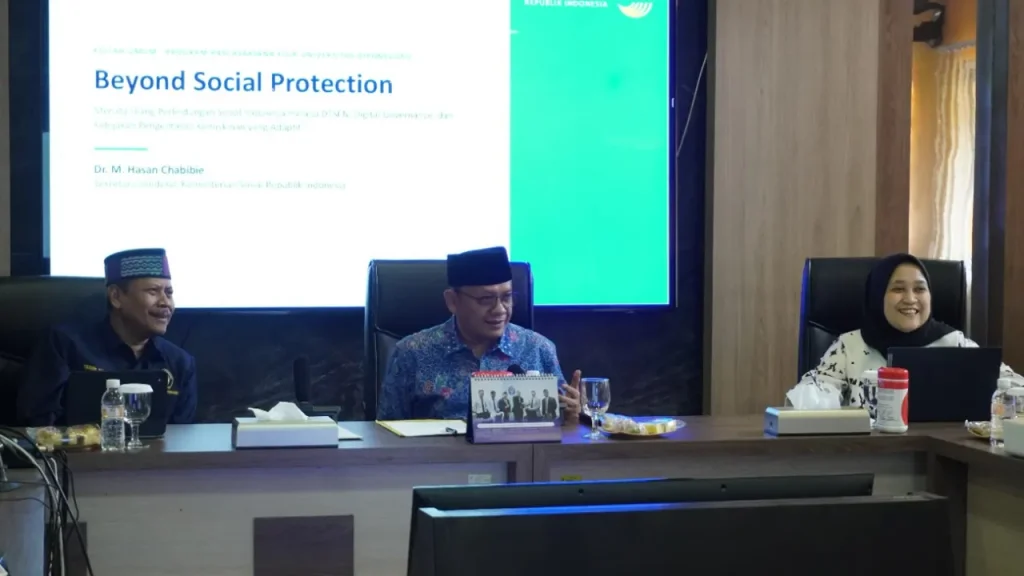
In his presentation, Dr. Muhammad Hasan Chabibie, S.T., M.Si. explained that Indonesia needs to shift its social protection paradigm—from merely distributing aid toward building a precise, digital-based system that encourages graduation (family self-reliance).
- Poverty Context, Inequality, and Fiscal Paradox
Referring to data from Statistics Indonesia (BPS) as of March 2026 (released in August 2026), the national poverty rate stood at 8.07% (22.93 million people), down by 920 thousand people over one year from 8.47% in March 2025. However, national averages still conceal pockets of poverty and inequality:
- The Gini ratio rose by 0.005 points from 0.363 (September 2025) to 0.368 in March 2026.
- Regional disparities remain wide, with rural poverty (10.67%) higher than urban poverty (6.34%), while the Maluku–Papua region reached 18.06%.
Meanwhile, social protection budgets continue to rise—from the 2025 outlook of Rp468.1 trillion, the 2026 APBN of Rp508.2 trillion (outlook Rp500.0 trillion), to the 2027 RAPBN of Rp549.9 trillion—yet targeting accuracy remains a major challenge. Ministry of Social Affairs data (June 2026) recorded a social assistance mistargeting rate of >40%, while a social assistance digitalization pilot in Banyuwangi (357 thousand beneficiary families/KPM) showed that 77% of legacy data was declared erroneous and roughly ~60% of Digital Social Protection (Perlinsos Digital) applicants were deemed ineligible after verification.
- Four Root Causes and the Beyond Social Protection Framework
The Ministry of Social Affairs identified four core root causes that prevent social protection from optimally “lifting” welfare: fragmented data, static targeting, analog services, and the absence of a graduation pathway, which risks triggering long-term dependency.
Adapting the Transformative Social Protection framework (Devereux & Sabates-Wheeler, 2004), Beyond Social Protection requires four functions to work together on top of DTSEN, digital governance, and adaptive policies:
- Protective: Guaranteeing basic needs (such as PKH, Sembako, PBI-JK, and social rehabilitation).
- Preventive: Preventing people from falling into poverty during shocks (through social security, JKP, disaster response, and adaptive social protection).
- Promotive: Increasing income and capabilities (such as PPSE, Kampung Berdaya, Sekolah Rakyat, and market access).
- Transformative: Addressing structural inequities through disability and gender inclusion, rights to services, and accountable data.
- Three Pillars of Reform
- Pillar 1 — DTSEN (Data Tunggal Sosial dan Ekonomi Nasional / National Socio-Economic Single Data): Based on Presidential Instruction (Inpres) No. 4/2025 and Minister of Social Affairs Regulation (Permensos) No. 3/2025, DTSEN unifies DTKS, Regsosek, and P3KE matched with Dukcapil data, features welfare decile rankings from 1–10, and is dynamically updated through a cycle of matching, verification, proposals/objections (usul-sanggah via the Cek Bansos app, SIKS-NG, or village/sub-district offices), and determination. Periodic updates have recorded 4.33 million new KPM in deciles 1–4 receiving assistance (September 2026) as well as the removal of 11 thousand households in decile 5 and above (April 2026).
- Pillar 2 — Digital Governance (Perlinsos Digital): Shifts the mechanism from “proposed by intermediaries” to “submitted by citizens, verified by the system” through self-registration (using Digital Population Identity/IKD or agent assistance), automated cross-data verification, transparent decision rationales, and an objection channel. Following a pilot in Banyuwangi (since September 2025) and expansion to 42 regencies/cities (since June 1, 2026), national rollout is targeted for Q4 2026.
- Pillar 3 — Adaptive Policy & Graduation: Referring to the Adaptive Social Protection approach (Bowen et al., 2020), social protection is designed to respond to shocks through vertical, horizontal, or piggybacking mechanisms. The ultimate goal is graduation—guiding families toward self-reliance through programs such as boarding Sekolah Rakyat (deciles 1–2), protection and assistance (deciles 1–4), and economic empowerment such as PPSE (business capital up to Rp5 million per KPM) and Kampung Berdaya, with a target of graduating 300 thousand PKH KPM in 2026.
Within this digital transformation, the Ministry of Social Affairs also emphasized managing five key risks so as not to create “new victims”: digital exclusion, relative decile shifts, personal data protection (in accordance with Law No. 27/2022 on PDP), algorithmic bias, and regional capacity. Higher education institutions, including postgraduate students, are invited to play an active role in the policy research and evaluation agenda—ranging from the impact of graduation and PPSE, targeting design, data governance and AI ethics, climate/disaster-based adaptive social protection, to the political economy of social assistance and public trust.
Interactive Discussion and Closing
 |
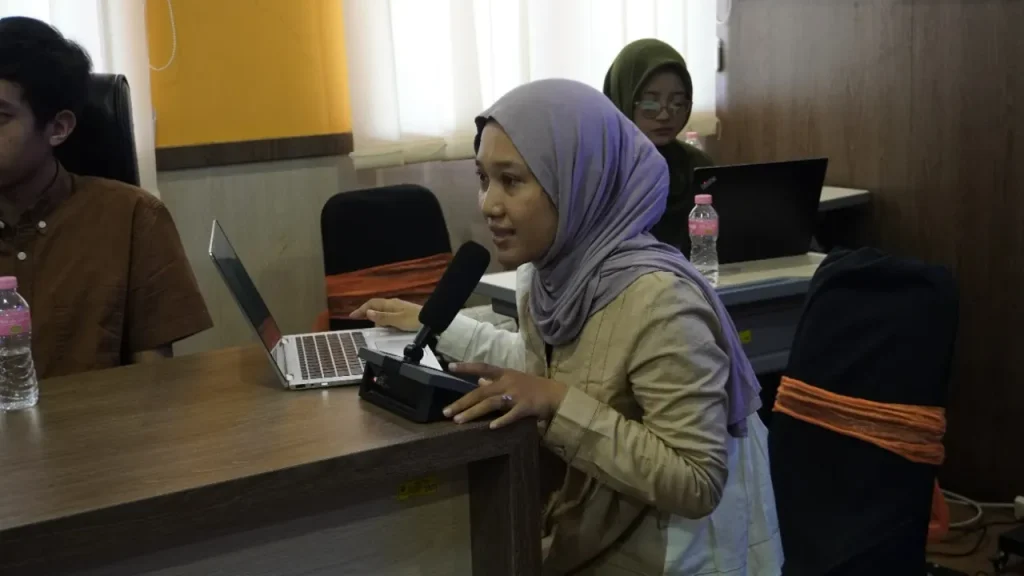 |
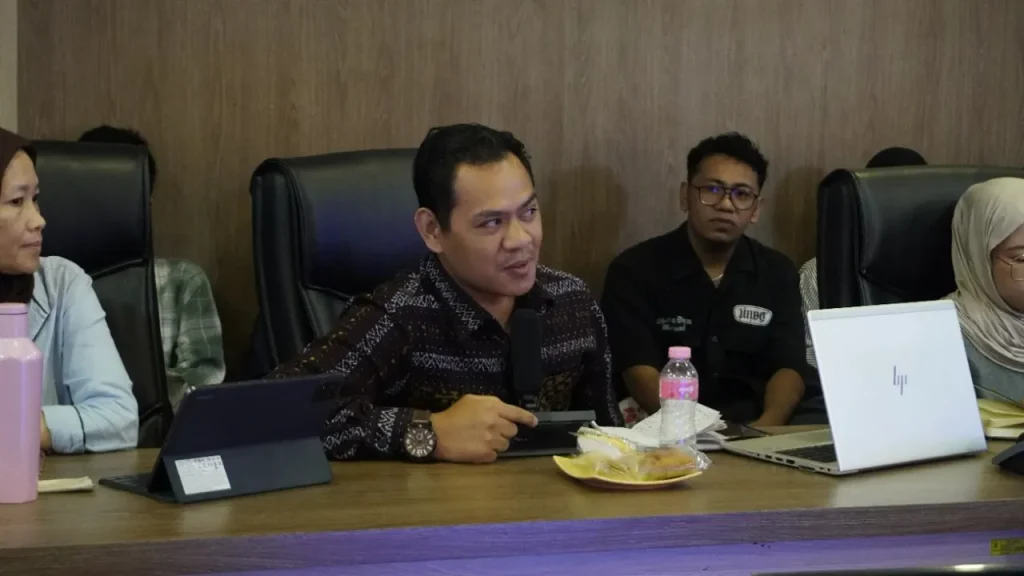
Entering the Q&A session, FISIP Undip postgraduate students enthusiastically raised critical and reflective questions regarding DTSEN implementation, digital governance, and political and social dynamics on the ground. The discussion proceeded dynamically before concluding with a group photo session with all participants and the speaker.
Through this general lecture, the insights gained are expected to offer academic and practical contributions for FISIP Undip postgraduate students in analyzing and formulating solutions to social protection issues that are highly relevant to today’s political and public policy landscape.