

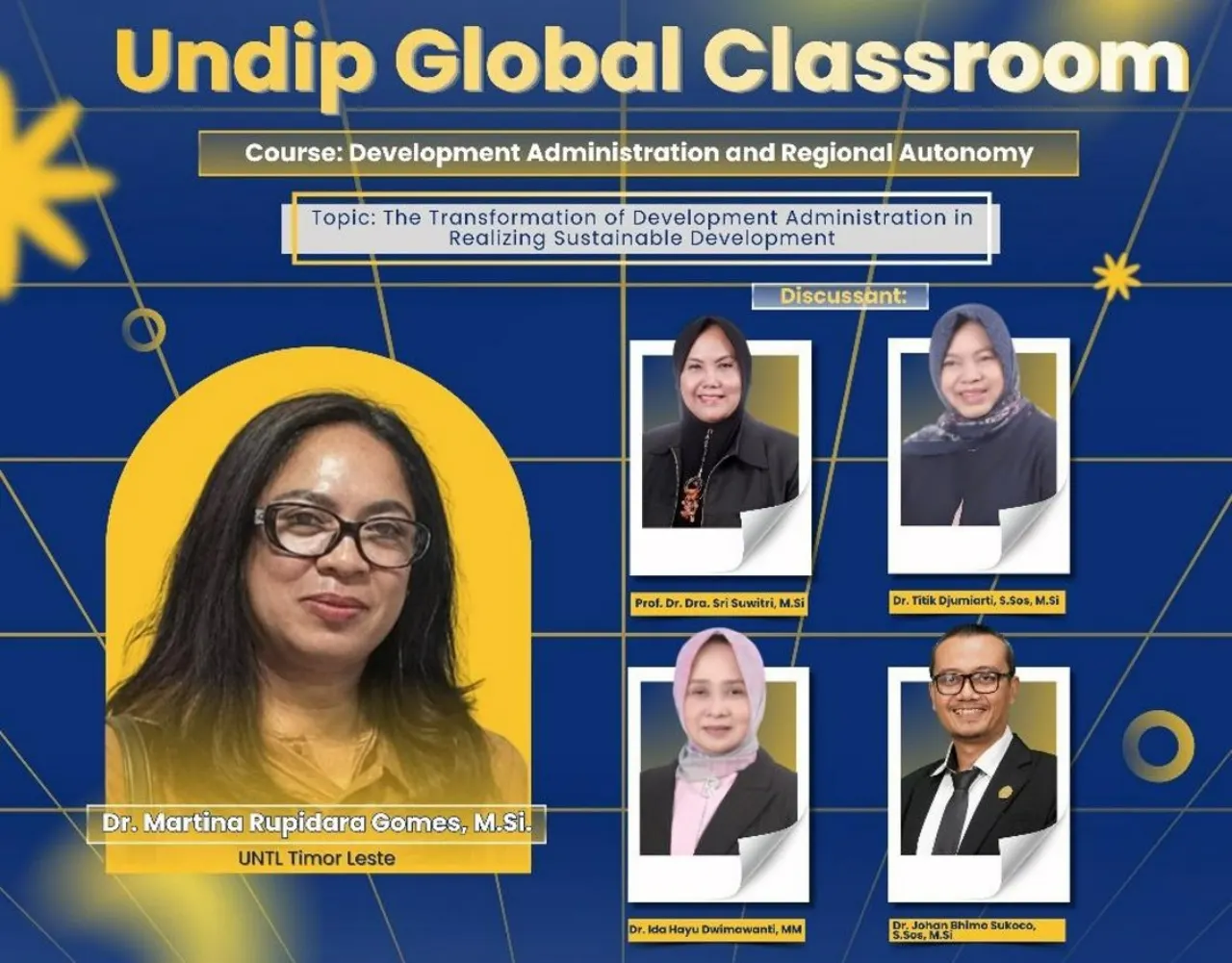
Semarang, November 16, 2026 – In order to support the World Class University (WCU) program and strengthen the internationalization of learning, the Undergraduate Program in Public Administration, Faculty of Social and Political Sciences (FISIP), Diponegoro University (UNDIP), once again held an Undip Global Classroom (UGC) featuring an international academic. The activity, held online, featured Dr. Martina Rupidara Gomes from Universidade Nacional Timor Lorosa’e (UNTL), Timor-Leste, as the keynote speaker with the theme “Transforming Development Administration to Realize Sustainable Development.”
This activity is part of the effort of the Undergraduate Program in Public Administration to strengthen the quality of learning through the exchange of international knowledge and experience. Through a comparative approach, students were invited to understand how countries with different social, political, and institutional capacity contexts face the challenges of development administration and the achievement of the Sustainable Development Goals (SDGs).
Dr. Martina Rupidara Gomes, who is the Director of the Master of Public Policy Program at UNTL and earned her doctorate in Public Policy from the University of Minho, Portugal, explained the importance of transforming development administration in responding to social change and the demands of sustainable development. According to her, development administration is no longer sufficiently understood as a bureaucratic process oriented toward the implementation of government programs but also as an instrument for driving social change, improving institutional capacity, and producing more inclusive development.
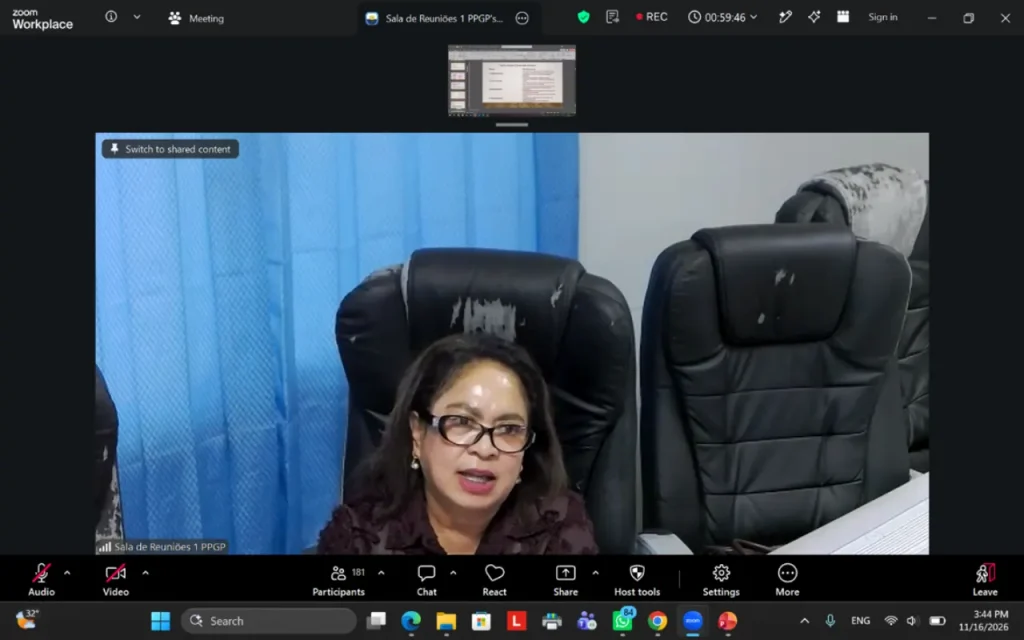
One important aspect of this lecture was the comparison of Indonesia’s and Timor-Leste’s experiences in strengthening public administration capacity. In Indonesia, public administration reform is directed, among other things, toward improving the competence of state civil apparatus through strengthening policy analysis, digital transformation, public service quality, and results-oriented work culture. Meanwhile, Timor-Leste faces the challenge of strengthening public sector capacity through improving technical skills, data management, inter-institutional coordination, and developing services that are more responsive to the needs of society.
The comparison of the two countries provides an important perspective for students that the transformation of development administration cannot be separated from the historical context, state capacity, and institutional characteristics of each country. International experience also shows that there is no single model of public administration reform that can be applied uniformly in all countries. Therefore, comparative learning is important for building students’ ability to analyze development administration policies and practices more critically and contextually.
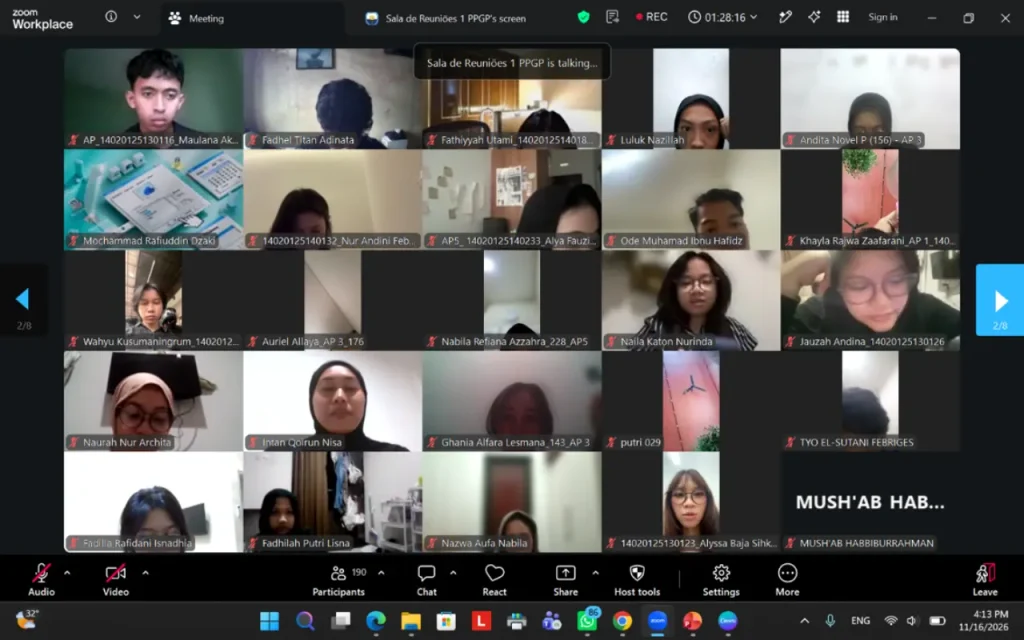
The activity, integrated with the Development Administration and Regional Autonomy course, was moderated by Dr. Johan Bhimo Sukoco, S.Sos., M.Si., and featured three lecturers as discussants, namely Prof. Dr. Sri Suwitri, M.Si., Dr. Ida Hayu Dwimawanti, M.M., and Dr. Titik Djumiarti, S.Sos., M.Si. Approximately 190 participants attended the activity via Zoom, with interactive discussions that enriched students’ understanding of various development administration approaches.
Prof. Dr. Sri Suwitri, M.Si., as the Head of the Teaching Team for the Development Administration and Regional Autonomy course, emphasized the importance of international activities such as this in improving the quality of learning while also expanding academic networks.
“This activity is expected to broaden students’ horizons, strengthen international networks, and create opportunities for collaborative research,” she stated.
Through the organization of the Undip Global Classroom, the Undergraduate Program in Public Administration at FISIP UNDIP continues to strive to integrate global perspectives into the learning process. This activity also strengthens the study program’s contribution to the UNDIP WCU agenda through the development of international academic cooperation, cross-country knowledge exchange, and improving students’ competencies in understanding and analyzing public administration issues in a global context.