

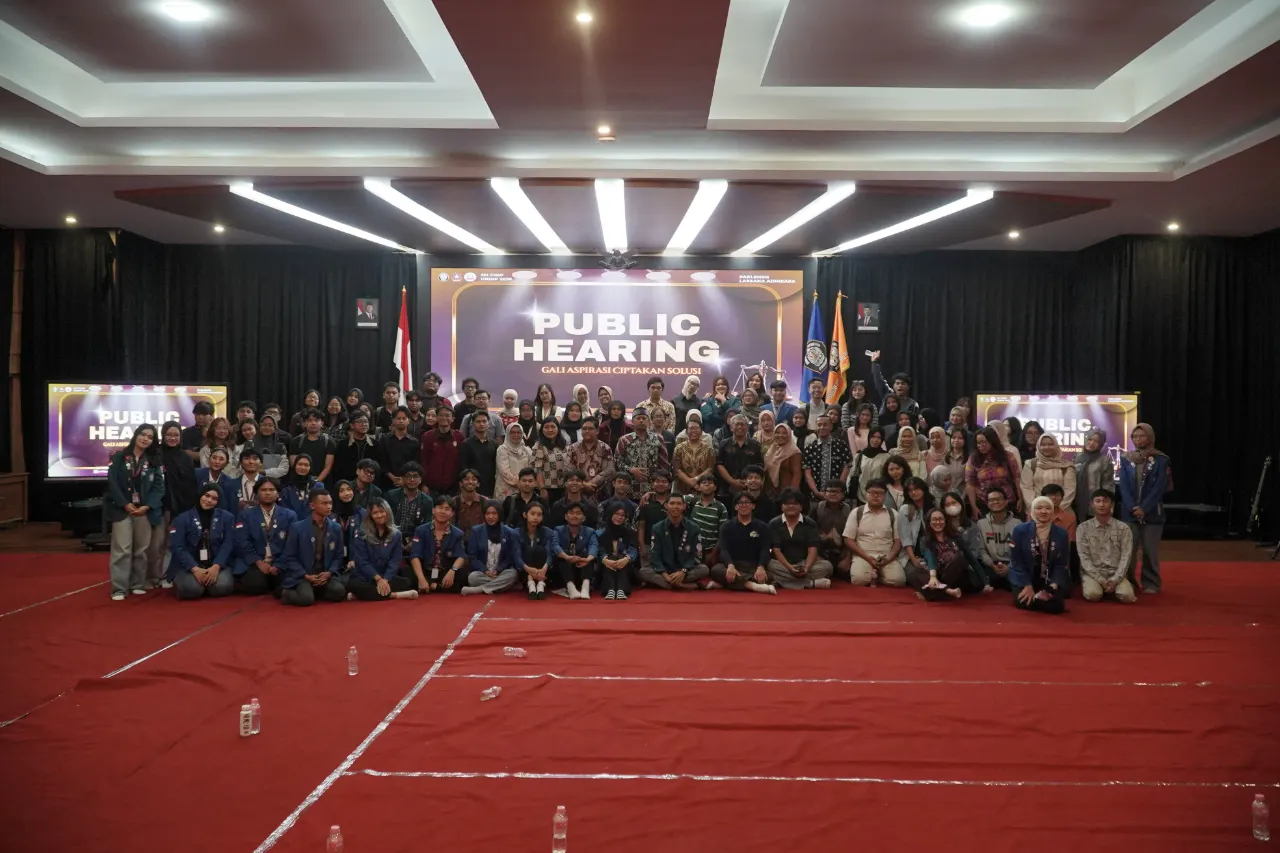
Semarang (11/12) – The Public Hearing represents a commitment to building open, two-way communication between students and the dean’s office. This forum serves as a strategic space for students to convey their aspirations and concerns, while also providing the faculty with a foundation for formulating targeted policies aimed at creating a conducive academic environment.
The 2026 Public Hearing, organized by the Student Senate of FISIP Undip, took place on Thursday, November 12, 2026, in the Auditorium of FIMENA Building A, 3rd floor, at the Faculty of Social and Political Sciences (FISIP) of Universitas Diponegoro (Undip), Tembalang campus. The event was attended by the Dean of FISIP Undip, Prof. Dr. Drs. Teguh Yuwono, M.Pol.Admin., along with the faculty’s leaders, department and study program administrators, and coordinators of units within FISIP Undip.
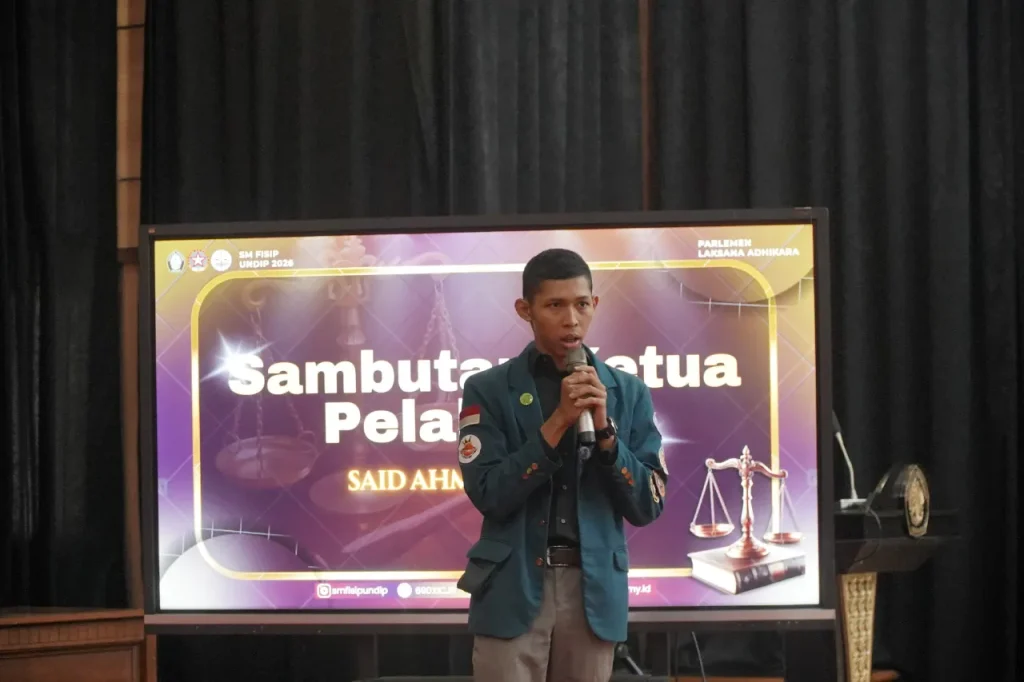
The Chairperson of the 2026 Public Hearing, Said Ahmad Fadlan, stated that the Public Hearing is a discussion forum between students and the dean’s office for conveying students’ aspirations and needs. “It is hoped that our fellow students will participate actively and openly in expressing the various issues or concerns they experience,” he remarked. In a similar vein, the Vice Chairperson of the Student Senate for the 2026 period, Siti Wajihatun, stated, “Today’s public hearing is an open discussion and question-and-answer session, and we hope that all feedback and suggestions from students will be taken into consideration by the Faculty.”
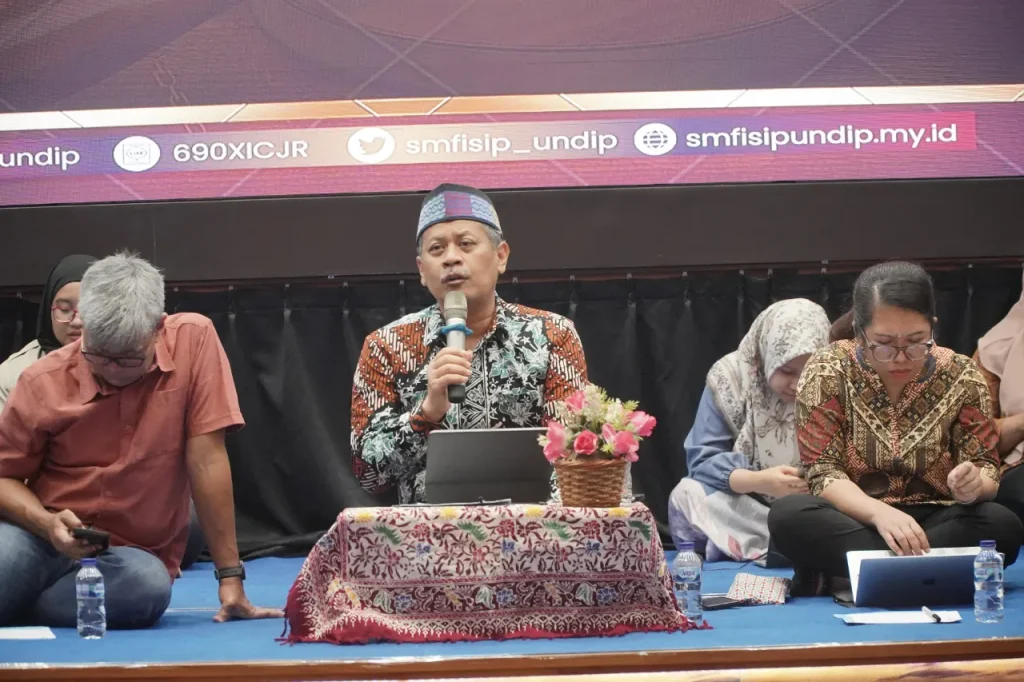
Furthermore, the Dean of FISIP Undip, Prof. Dr. Drs. Teguh Yuwono, M.Pol.Admin., expressed his hope that this forum would serve as a means of seeking solutions together. “I hope this forum is not merely a question-and-answer forum, but a forum for seeking options for the common good, a forum for finding solutions for the common good,” he emphasized. He also conveyed that it was hoped that the expectations of students, lecturers, educational staff, and administrators could find common ground through this forum.
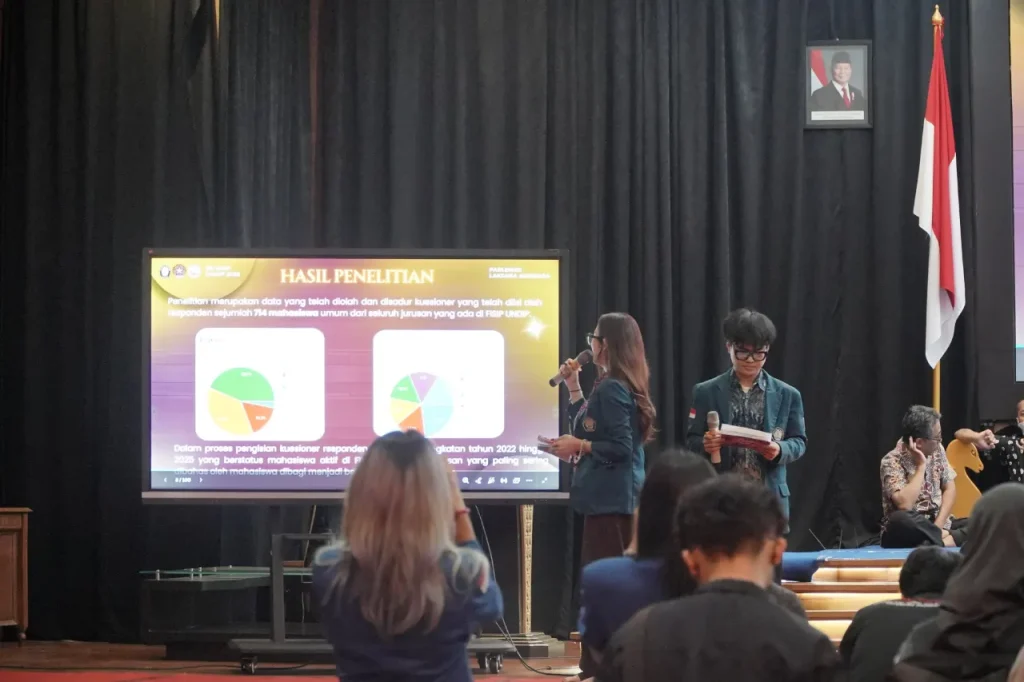
During the presentation session on the results of their study, the Student Senate of FISIP reported that it had conducted an evaluation of student satisfaction through a questionnaire survey distributed to all FISIP Undip students via various platforms. The survey assessed four main aspects: academic matters, such as the quality of the learning process, the lecture system, and other academic services; administration, such as the quality of services provided by educational staff, the speed and clarity of procedures, ease of obtaining information, and service effectiveness; facilities and infrastructure, such as the condition of classrooms, Student Center, the library, internet networks, and other public facilities; and environmental comfort and campus services, such as cleanliness, security, comfort of the learning environment, accessibility of facilities, and the quality of general services. This study was designed to provide an overview of the level of student satisfaction and is expected to serve as evaluation material as well as a basis for formulating recommendations for the faculty in improving service quality and creating an academic environment that supports students’ needs and well-being.
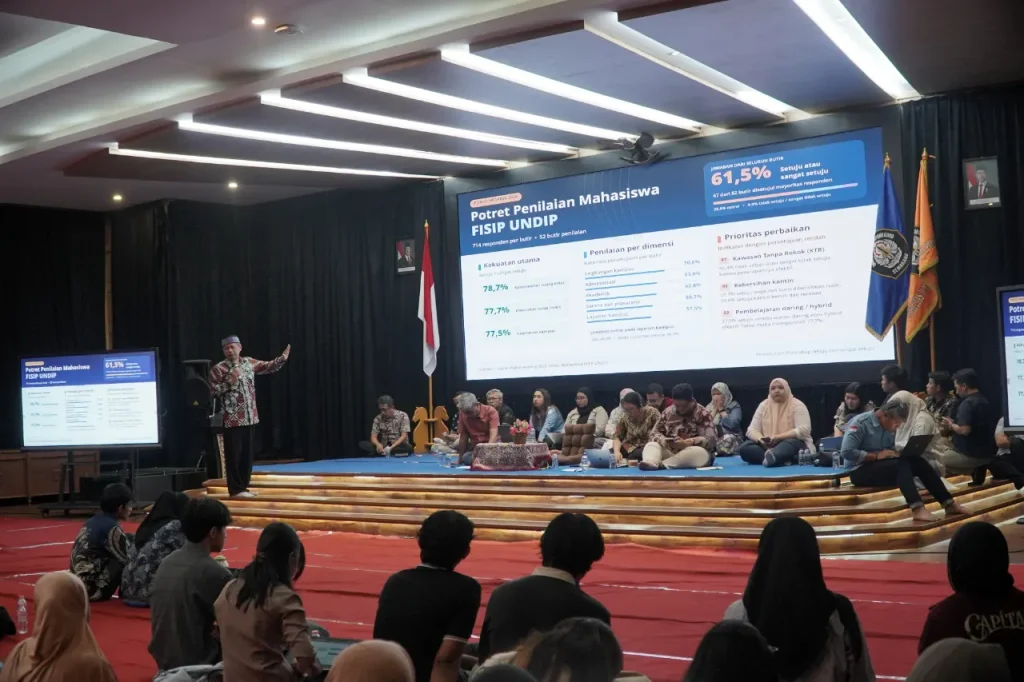
The event continued with a question-and-answer session between students and the faculty leaders, as well as department and study program administrators, and concluded with a group photo session involving all Public Hearing participants, faculty leaders, and department and study program administrators.
Furthermore, the 2026 Public Hearing is expected to serve as momentum for FISIP Undip to continuously improve the quality of academic services, administration, facilities and infrastructure, as well as the comfort of the campus environment. The students’ active participation in this forum demonstrates that open, two-way communication can lead to the best solutions for the entire academic community. Thus, the Public Hearing is not merely an annual agenda, but a tangible manifestation of collaboration between students and the faculty in building a better academic environment.