

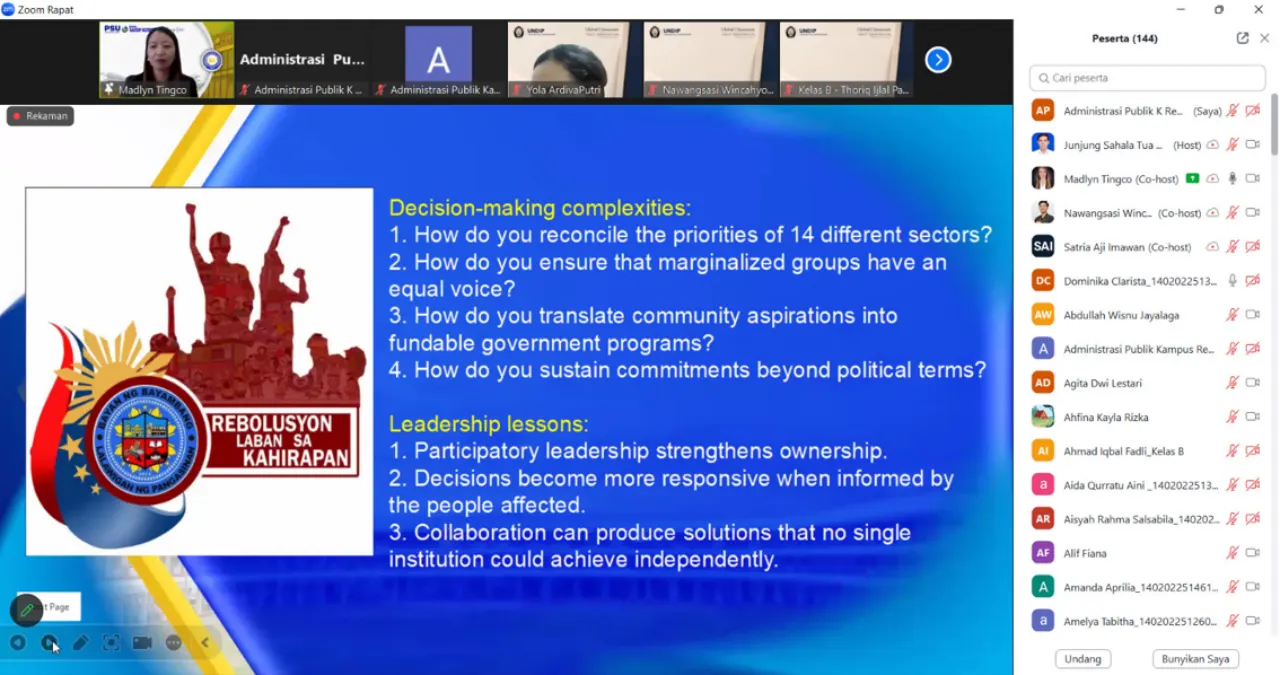
REMBANG, November 5, 2026 – The Undergraduate Program in Public Administration at the Rembang Campus, Department of Public Administration, Faculty of Social and Political Sciences (FISIP), Universitas Diponegoro (UNDIP), organized another international academic session under the UNDIP Global Classroom initiative, themed “Leadership and Decision-Making in Public Organizations,” on Thursday (November 5, 2026).
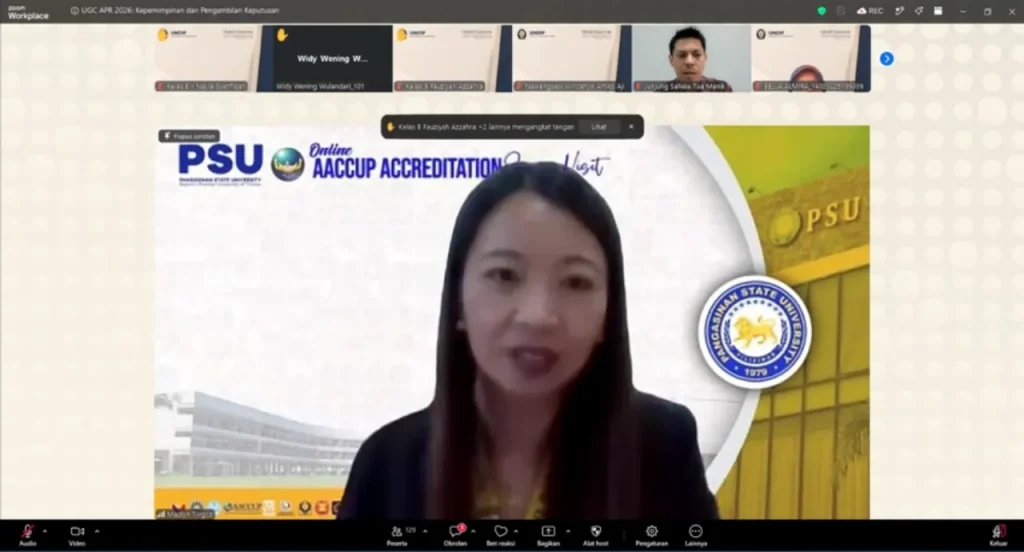
Held virtually, the session featured Dr. Madlyn D. Tingco from Pangasinan State University, Philippines, as the international guest speaker. The event provided an opportunity for students to explore the complexities of public sector leadership and decision-making, particularly in responding to crises, managing public risks, and promoting sustainable development.
Drawing on case studies from Thailand, including typhoon disaster management and the revitalization of an island as a tourism destination, the session examined how government leadership influences policy decisions under uncertainty and how public perceptions of government capacity may shape policy acceptance.
Decisive Leadership and Risk Management in Times of Crisis
During her presentation, Dr. Tingco emphasized the importance of decisive leadership in public organizations, particularly when governments face complex challenges involving uncertainty, substantial risks, and competing public interests.
Through the case of typhoon disaster management in Thailand, she discussed how crisis situations require government leaders to make timely decisions while carefully considering potential consequences and the needs of affected communities.
The discussion also addressed the revitalization of an island in Thailand as a tourism destination, highlighting the challenges governments encounter when balancing economic development, regional recovery, and long-term sustainability.
A central theme of the presentation was that high-risk government decisions do not necessarily result in public opposition. Public acceptance may depend on the extent to which citizens perceive the government as capable of managing risks, addressing emerging challenges, and implementing policies responsibly.
This perspective highlighted the relationship between leadership effectiveness, institutional capacity, and public trust. It also demonstrated that effective public leadership requires more than formal decision-making authority; it involves the ability to demonstrate competence and maintain public confidence when confronting difficult policy choices.
Interactive Discussion: Comparing Public Leadership Practices in Thailand and Indonesia
The session continued with an interactive discussion in which students actively raised questions and shared their perspectives on the issues presented.
Students connected the Thai case studies with Indonesia’s experiences, particularly in disaster management, public sector decision-making, and sustainable tourism development.
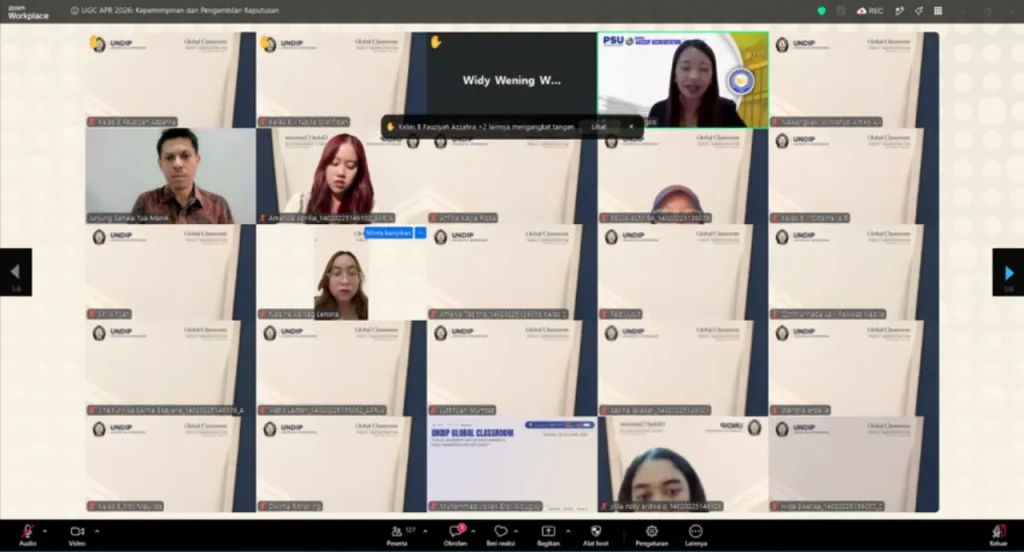
The comparative discussion encouraged participants to examine how different national characteristics, institutional arrangements, and societal conditions influence leadership approaches and government responses to public challenges.
Through this academic exchange, students gained opportunities to critically reflect on the relationship between public leadership, government capacity, risk management, and policy effectiveness.
The discussion also highlighted the importance of understanding leadership as a context-dependent process, recognizing that strategies effective in one country may require adaptation before being applied in another.
Strengthening Global Perspectives on Public Sector Leadership
The UNDIP Global Classroom session contributed to students’ understanding of public administration by connecting leadership theories with international experiences and real-world policy challenges.
The cases presented demonstrated that public sector leadership cannot be understood through a single universal approach. Differences in institutional capacity, national characteristics, and societal expectations may influence how leaders formulate policies, communicate decisions, and respond to crises.
Thailand’s experiences provided valuable comparative perspectives for Indonesian students, particularly in examining government responses to disasters and the challenges of implementing sustainable tourism development policies.
By engaging with these international cases, students were encouraged to strengthen their analytical skills, develop a deeper understanding of risk-informed decision-making, and critically assess the role of public trust in shaping policy implementation.
The session also reflected the commitment of the Undergraduate Program in Public Administration at UNDIP’s Rembang Campus to promoting international academic engagement and integrating global perspectives into higher education.
Through initiatives such as UNDIP Global Classroom, Universitas Diponegoro continues to expand opportunities for cross-border academic exchange and equip students with the comparative knowledge, critical thinking skills, and global perspectives needed to address increasingly complex challenges in public administration.