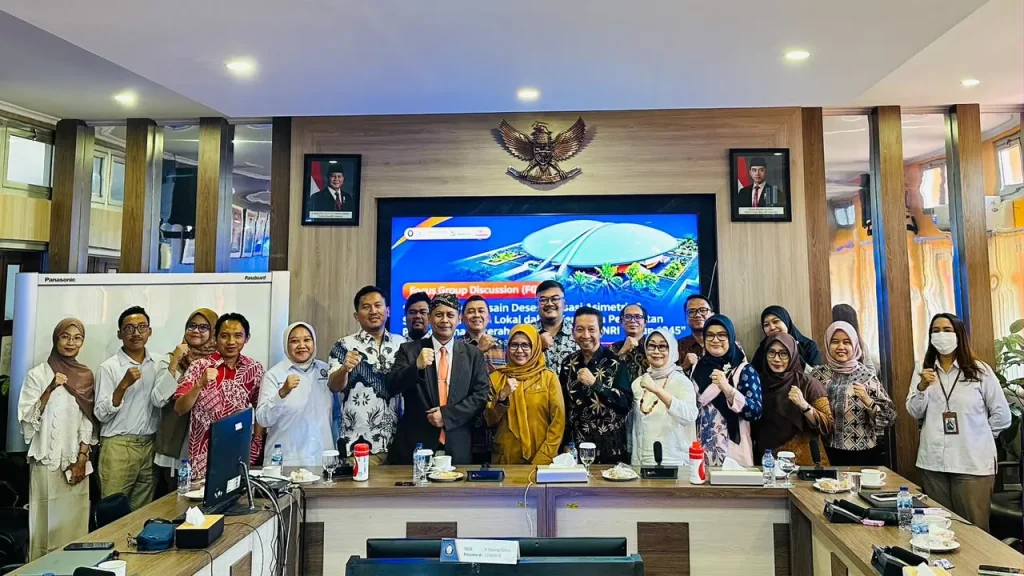

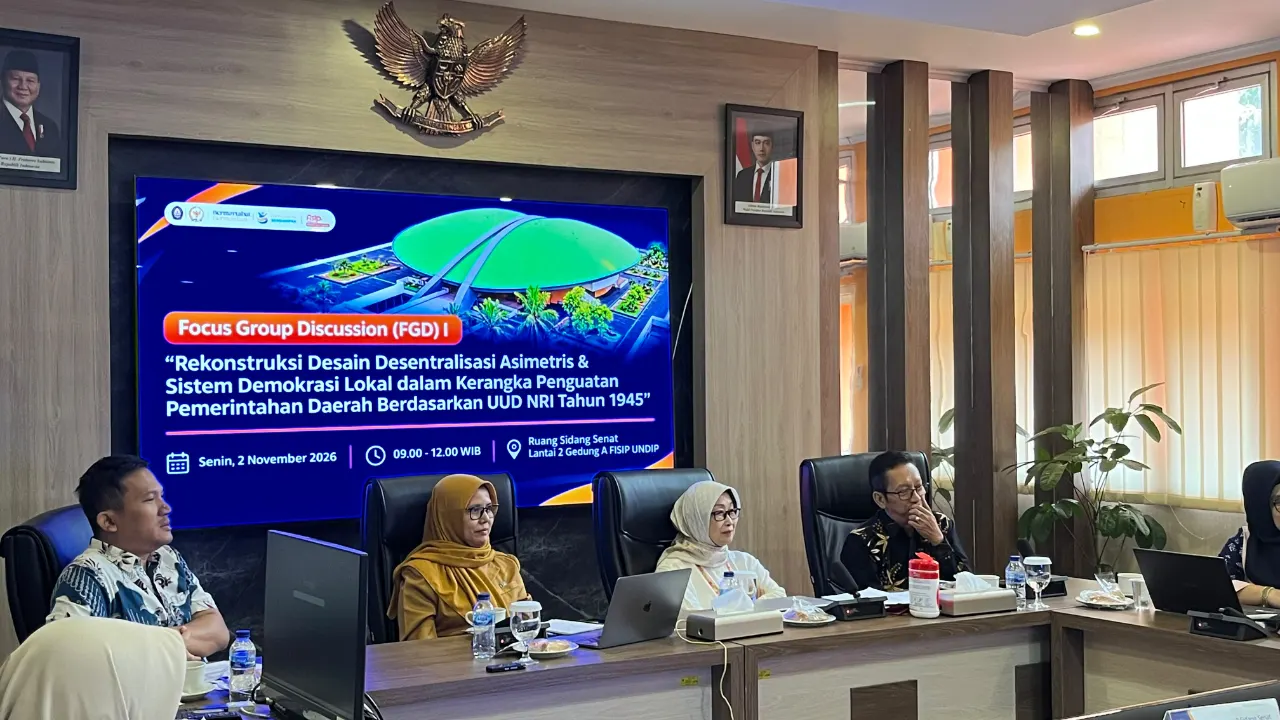
Semarang, November 2nd 2026—The Research Team of the Faculty of Social and Political Sciences (FISIP), Universitas Diponegoro, held a Focus Group Discussion (FGD) titled “Reconstructing the Design of Asymmetric Decentralization and the Local Democracy System in the Framework of Strengthening Regional Government under the 1945 Constitution of the Republic of Indonesia” held at the FISIP Universitas Diponegoro Campus, Tembalang, Semarang. The event featured three resource persons, which are Prof. Dr. Drs. Nugroho Sumarjiyanto Benedictus Maria, M.Si., Professor at the Faculty of Economics and Business (FEB), Undip; Prof. Dr. Lita Tyesta Addy Listya Wardhani, S.H., M.Hum., Professor at the Faculty of Law, Undip; and Marlupi Julianingrum, S.T., QRMP, CIAP, Senior Associate Planner at the Regional Development Planning Agency (Bappeda) of Central Java Province.
The FGD served as a forum for experts to assess how well the design of regional autonomy fits its practice, and to formulate objective and constitutional criteria and mechanisms for asymmetric decentralization. The resource persons’ input will inform the research and policy recommendations for the People’s Consultative Assembly of the Republic of Indonesia (MPR RI) and lawmakers. The event began at 09.00 WIB and was opened by the moderator, Bangkit A. Wiryawan, S.Sos., M.A., Ph.D., with representatives of MPR RI and their team, as well as all members of the FISIP Undip Research Team, in attendance.
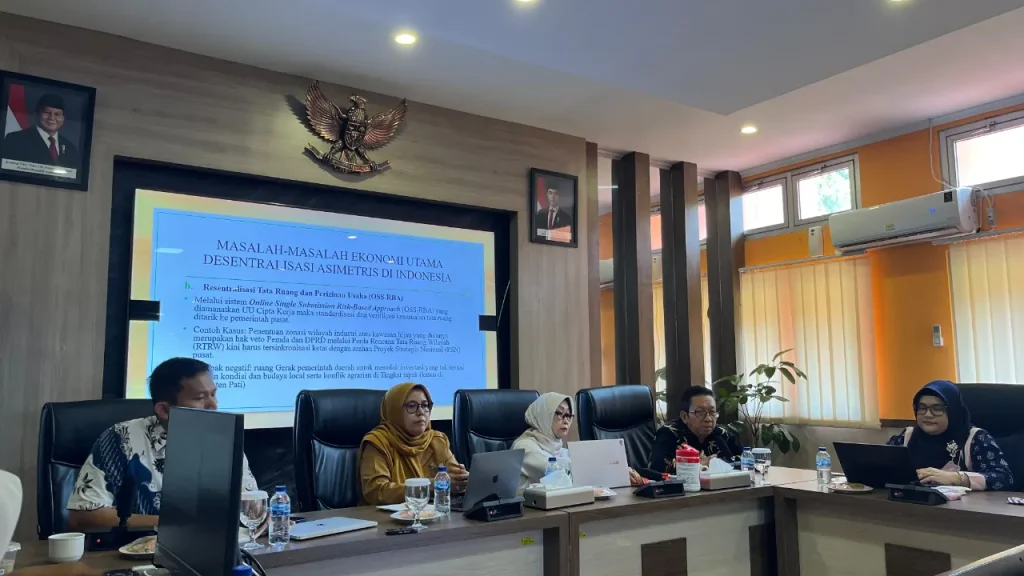
Prof. Nugroho discussed the economic problems of asymmetric decentralization, including regions’ heavy dependence on central government transfers, weak budget accountability and discipline, and the tendency toward recentralization and misalignment between central and regional regulations. He called for incentives for regions that innovate to increase their own-source revenue (PAD), better quality of civil servants (ASN), transparency in the use of funds, and optimization of local potential.
Prof. Lita emphasized that Articles 18, 18A, and 18B of the 1945 Constitution form the constitutional basis for regional autonomy and special status. Drawing on the experiences of Aceh, the Special Region of Yogyakarta, and Papua, she stressed that special powers must follow the reasons for which they were granted. She proposed strengthening the Regional Government Law to include criteria for authority, financing, consultation, and evaluation.
From the perspective of planning and budgeting, Marlupi Julianingrum highlighted the challenges of decentralization in Central Java, from the boundaries of authority between levels of government and limited fiscal space to capacity gaps among regions. She argued that policy differentiation should be an instrument of equity rather than a privilege, through proportional distribution of authority based on regional capacity, targeted support, and phased evaluation.
Through this event, FISIP Undip hopes to gain a comprehensive view from legal, economic, and development planning perspectives to strengthen regional government and produce policy recommendations that can be implemented