

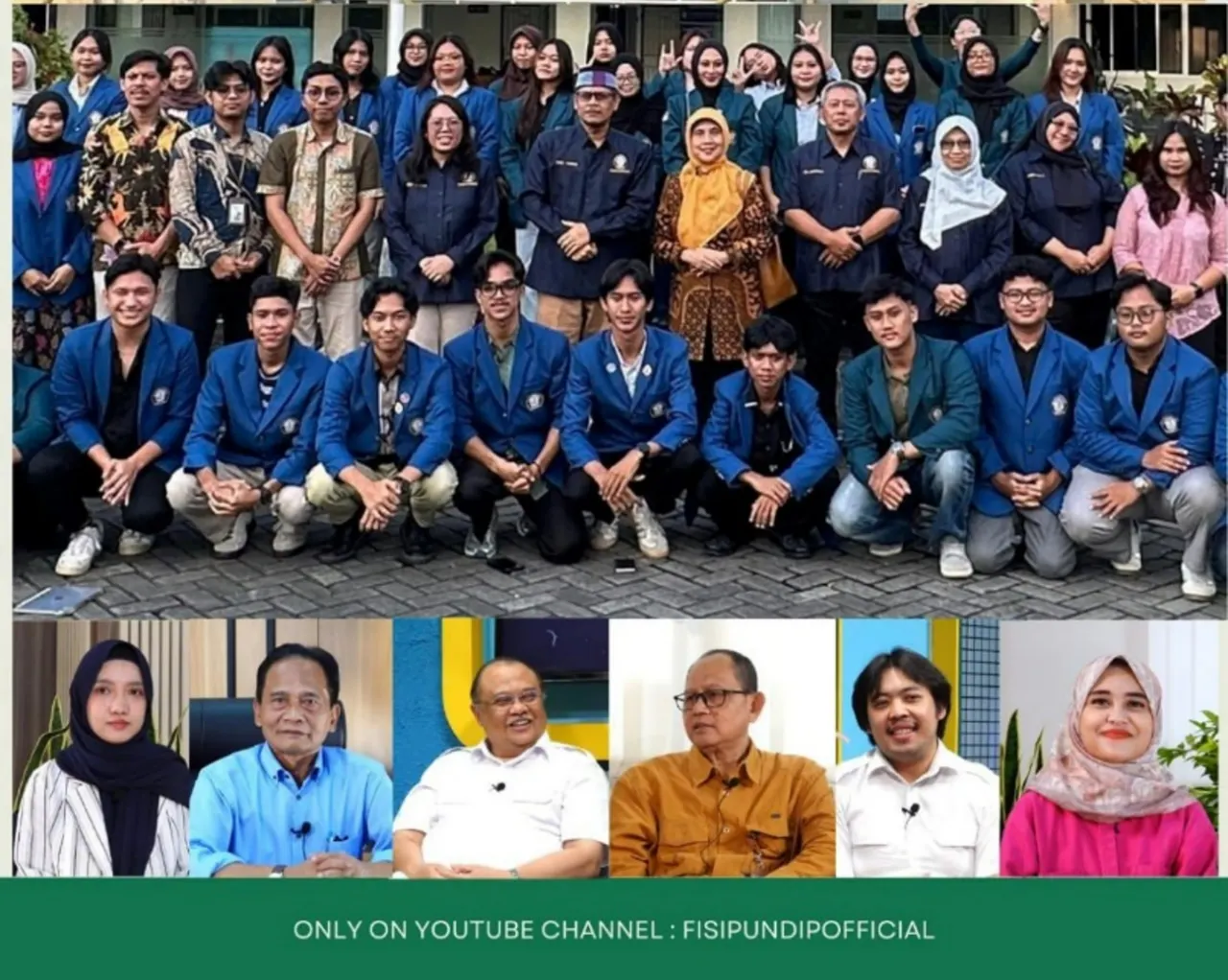
Semarang – FISIP UNDIP CHANNEL, in collaboration with the Sustainable Development Goals (SDGs) Center of Diponegoro University, once again presents SDGs Talk Episode 4, an educational program that provides a platform for knowledge sharing and academic discussions on sustainable development. This fourth episode explores the theme “Cultural Heritage Preservation as the Core of Sustainable Communities,” featuring Prof. Dr. Drs. Dhanang Respati Puguh, M.Hum., a Professor at the Faculty of Humanities, Diponegoro University, as the speaker. The discussion is moderated by Muhammad Rif’at Al-Razi, S.I.Kom., S.Pd., M.I.Kom., a lecturer at the Department of Communication Science, Faculty of Social and Political Sciences (FISIP), Diponegoro University.
The theme highlights the importance of cultural heritage preservation in building sustainable communities. Cultural heritage is not merely a historical legacy that documents the journey of society across generations; it is also an essential part of a community’s identity, values, traditions, and social life. Therefore, cultural preservation must be considered an integral component of development that prioritizes sustainability.

In the context of sustainable development, cultural heritage plays a strategic role in strengthening local identity, maintaining the continuity of traditions, and fostering connections between generations. Preservation efforts extend beyond protecting historic buildings, cultural sites, and historical artifacts. They also encompass safeguarding traditions, local knowledge, social practices, and cultural expressions that remain alive within communities.
Cultural heritage preservation is also closely linked to community participation. Community involvement is essential to ensuring cultural sustainability, allowing heritage to remain relevant amid changing times rather than being treated merely as a symbol of the past. Through the engagement of younger generations, local communities, educational institutions, and various stakeholders, cultural heritage can continue to be passed down and developed responsibly.
Furthermore, cultural preservation can contribute to strengthening the social and economic well-being of communities. The sustainable development of cultural assets can create opportunities for creative economic activities, community-based tourism, and local community empowerment. However, such initiatives must respect cultural authenticity, historical significance, and the interests of the communities that own and maintain the heritage to ensure that its essential meaning is preserved.

The discussion in SDGs Talk Episode 4 aligns with Sustainable Development Goal (SDG) 11: Sustainable Cities and Communities. This goal emphasizes the importance of making cities and human settlements inclusive, safe, resilient, and sustainable. One of its targets, Target 11.4, specifically calls for strengthening efforts to protect and safeguard the world’s cultural and natural heritage.
Through this theme, SDGs Talk encourages the public to understand that sustainable development is not measured solely by infrastructure improvements, economic growth, or the modernization of urban areas. The success of development is also determined by a community’s ability to preserve its identity, historical values, and cultural wealth as integral parts of collective life.
SDGs Talk is one of the initiatives undertaken by FISIP UNDIP CHANNEL and the SDGs Center of Diponegoro University to disseminate academic knowledge to the wider public while increasing awareness of the implementation of the Sustainable Development Goals. Through discussions with academics and experts, the program aims to broaden public understanding of the connections between knowledge, social life, cultural preservation, and the sustainable development agenda.
Through SDGs Talk Episode 4, FISIP UNDIP and the SDGs Center of Diponegoro University reaffirm that cultural heritage preservation is a long-term investment in community sustainability. By safeguarding the legacy of the past, communities not only preserve their cultural identities and values but also establish a strong foundation for creating sustainable cities and communities for present and future generations.