

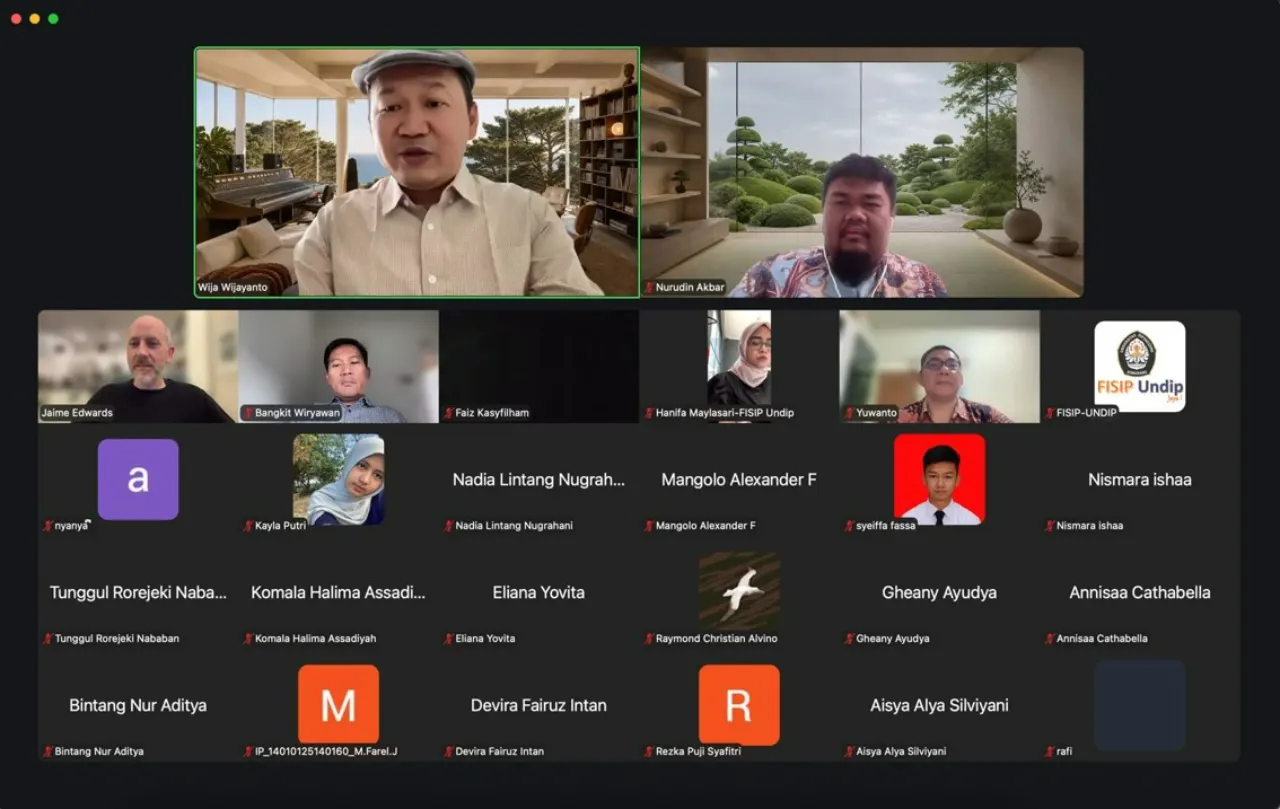
The Department of Politics and Government Science, Faculty of Social and Political Sciences (FISIP), Diponegoro University (UNDIP), held the UNDIP Global Classroom event titled “Power, Freedom, and Inequality: Rethinking Modern Political Life.” This event serves as an academic space to broaden perspectives and promote critical discussion on the dynamics of modern political life, particularly regarding power, freedom, and inequality.
The opening session was delivered by Wijayanto, S.IP., M.Si., Ph.D., Vice Rector for Research, Collaboration, Innovation, and Public Communication as the provider of opening remarks. The discussion also featured Prof. Jaime Edwards from Oberlin College Ohio USA and Drs. Yuwanto, M.Si., Ph.D., Head of the Political Theory and Democracy Expert Cluster. The event was moderated by Nuruddin Al Akbar, M.A., from the Department of Politics and Government Science FISIP UNDIP.
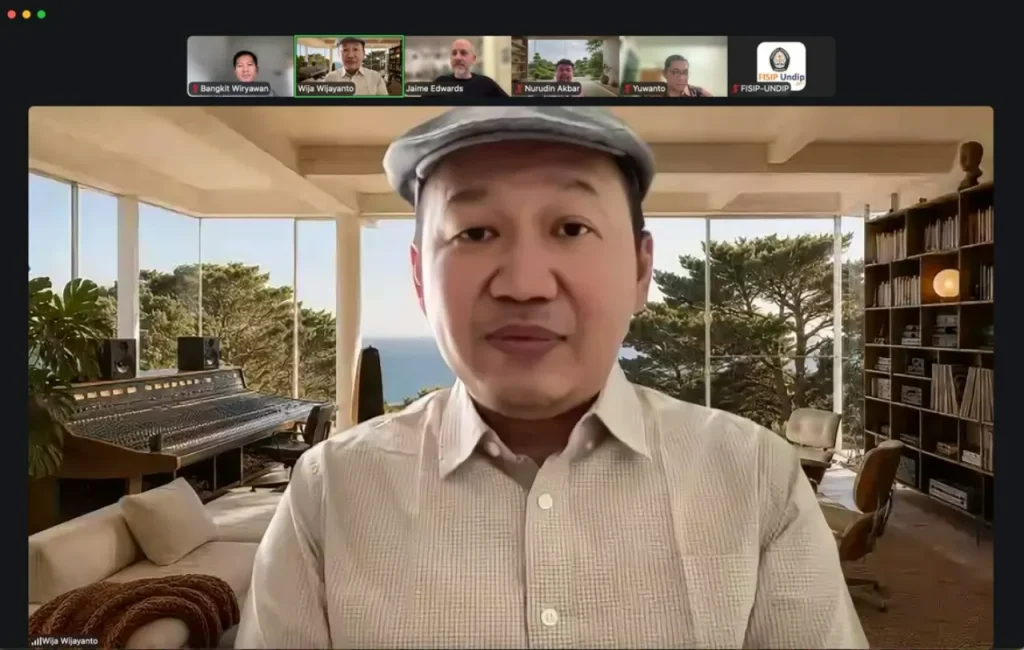
Taking up the theme “Power, Freedom, and Inequality,” Prof. Jaime Edwards discussed power from the perspective of political influence in AI, and how the relationships between individuals, groups, and institutions shape political decision-making. The analysis could also be linked to questions of who has the capacity to set the public agenda, how the legitimacy of power is constructed, and to what extent society can oversee and influence decision-making processes. This perspective is crucial because modern political practice is determined not only by formal rules, but also by interactions between various actors who possess differing interests, resources, and levels of influence.

The discussion on freedom and inequality further provided space to examine the relationship between the principle of equality in democracy and social conditions that affect citizen participation. In political life, every citizen may formally possess the same political rights, but opportunities to exercise those rights substantively may differ. Differences in access to political education, information, economic resources, and social networks can affect citizens’ ability to voice their interests and participate in democratic processes. Therefore, the relationship between freedom and inequality is a critical issue to examine in understanding the quality of modern political life.