

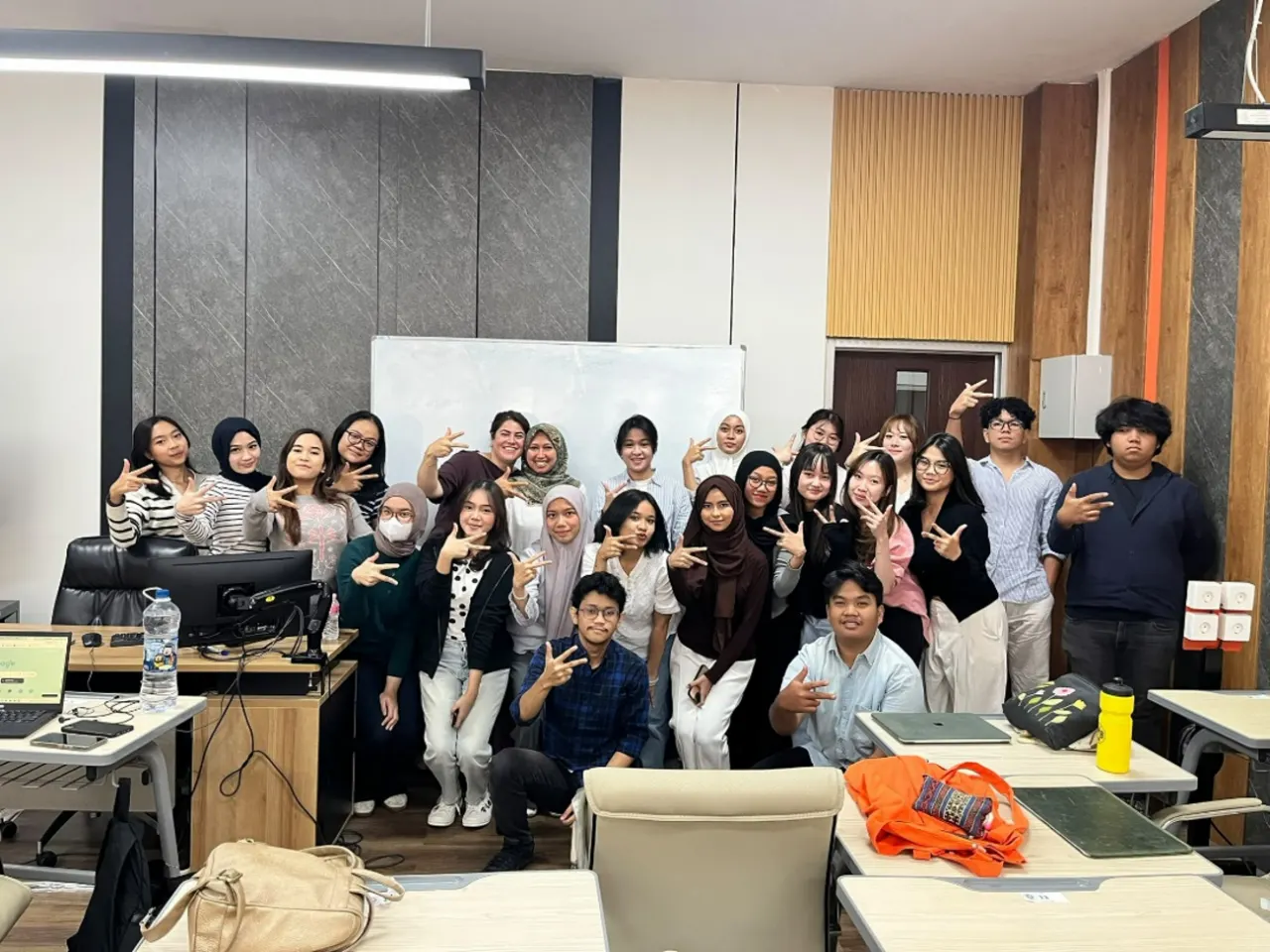
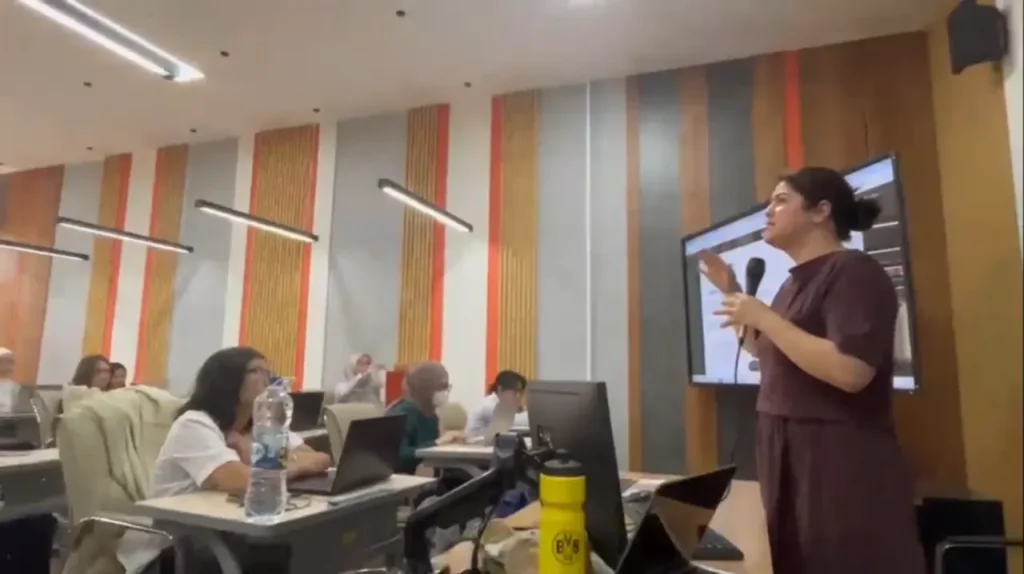
SEMARANG – The Faculty of Social and Political Sciences (FISIP), Universitas Diponegoro (UNDIP), held a Political Campaigning and Inclusion event themed “Why Should People Trust Your Campaign?” on Monday, 19 October 2026. The event featured Selin Aydin, Chief of Staff & Policy Advisor at the Berlin House of Representatives, as the speaker, with Dr. Phil. Nuriyatul Lailiyah, S.Sos., M.I.Kom., Coordinator of the International Undergraduate Program (IUP) of the Undergraduate Communication Science Study Program at FISIP UNDIP, serving as the moderator.
The event provided a learning platform for students to explore the dynamics of political campaigning, political communication strategies, and the importance of building public trust through clear, relevant, and inclusive campaign messages. Drawing on the perspective of a practitioner with experience in political communication and public policy, students gained insights into how campaigns can connect political objectives with the needs and concerns of the public.
In her presentation, Selin Aydin explained that campaigning involves encouraging people to support a person, policy, or particular cause. Therefore, campaign planning needs to address several fundamental questions, including why people should care about the issue being raised, why they should trust the message being delivered, and what actions they can take after receiving the message.
This discussion emphasized that campaign communication is not merely about delivering messages, but also about how those messages are understood and connected to people’s experiences. Clear messages can help link political objectives to issues that matter in people’s daily lives while creating opportunities for public participation.
One of the examples discussed during the event was a campaign in the Gesundbrunnen electoral district of Berlin, which used the message “Eine von uns”, or “One of us.” The message illustrated an effort to establish a connection between political representation and the community by emphasizing that people’s experiences and aspirations have a place in the political representation process.
This example highlighted the importance of understanding audience characteristics when designing campaign communication. Campaigns need to convey messages that are relevant to people’s lives and provide opportunities for diverse experiences to be represented. In this regard, inclusivity becomes an important consideration in developing political communication that can reach communities from different backgrounds.
In addition to message relevance, language was another key aspect of the discussion. Selin Aydin highlighted the use of German, Turkish, and Arabic in campaign communication, as well as the importance of ensuring that messages are accessible and understandable to their intended audiences. Translating a message requires not only preserving its intended meaning but also ensuring that it sounds natural to its recipients. People should also have opportunities to ask questions and receive answers in a language they can understand.
Furthermore, campaign planning needs to be carried out systematically through audience identification, goal setting, participation design, and evaluation. A campaign should establish clear objectives regarding what people need to understand or do, how they can participate, and how the effectiveness of communication can be evaluated. Evaluation may consider whether people understand the message, feel that their concerns are being acknowledged, and respond to the campaign.
In the context of inclusive communication, campaign messages should also take into account the diversity of people’s experiences and ensure that personal stories or individual experiences are used with the consent of the individuals concerned. This approach helps ensure that campaign communication remains respectful of the audiences involved in the communication process.
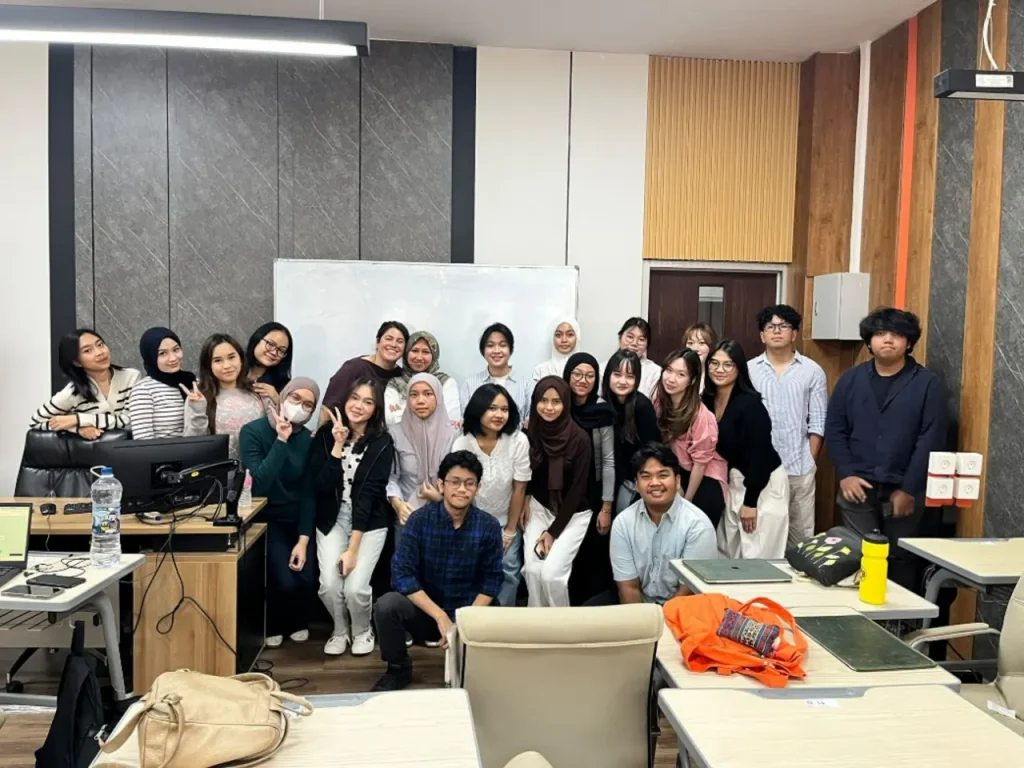
Through discussion sessions and campaign design exercises, participants were also encouraged to apply these concepts to campus life. Students were invited to identify a campus issue, establish a concrete objective, formulate a campaign message, select communication channels and forms of participation, and determine how to evaluate the campaign’s impact. This exercise gave students an opportunity to understand the campaign planning process in a more practical and applicable way.
The Political Campaigning and Inclusion event aligns with FISIP UNDIP’s efforts to strengthen internationally oriented learning by introducing students to political communication and public policy practices from a global perspective. Selin Aydin’s participation provided students with an opportunity to learn about campaigning approaches in the context of Berlin while reflecting on their relevance to political communication and public participation in Indonesia.
Through this event, FISIP UNDIP hopes that students will develop a critical understanding of campaign communication that goes beyond message delivery to encompass transparency, representation, and public engagement. This understanding serves as an important foundation for Communication Science students to develop responsible and inclusive communication strategies that foster meaningful relationships between message senders and the public.