

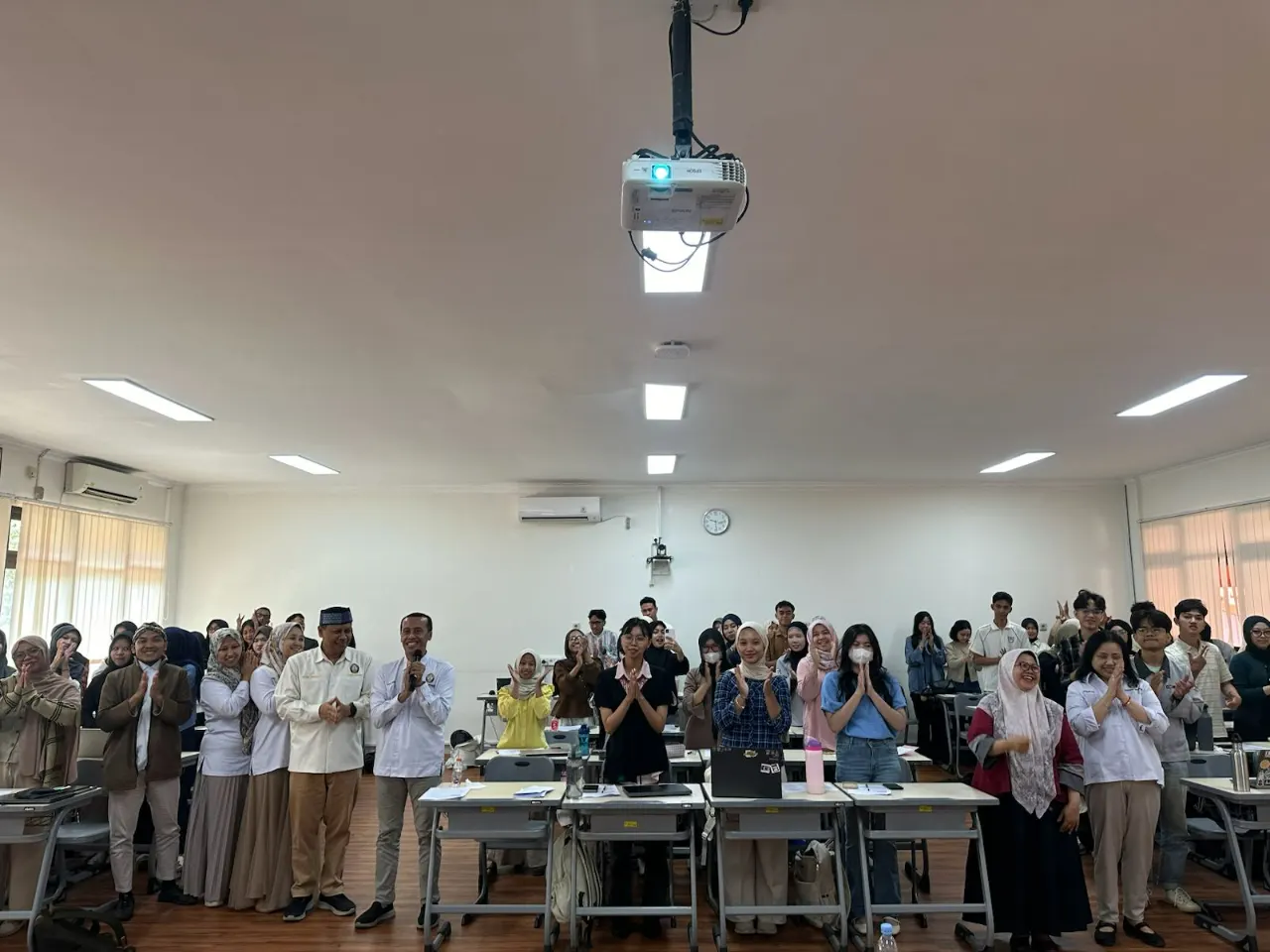
Semarang, October 5, 2026 — The Faculty of Social and Political Sciences, Diponegoro University (FISIP UNDIP), continues to strengthen international exposure and its global academic atmosphere through an academic lecture entitled “Autoethnographic Narratives as Method.” The event, organized by the Media, Culture, and Gender Expertise Cluster (KBK), Department of Communication Science, FISIP UNDIP, featured Nor Ismah, Ph.D., a researcher from the Asia Research Institute, National University of Singapore (NUS), as the speaker.
The academic lecture, held at FISIP UNDIP on Monday, October 5, 2026, opened with opening remarks by the Dean of FISIP UNDIP, Prof. Dr. Drs. Teguh Yuwono, M.Pol.Admin., and was moderated by Dr. Hapsari Dwiningtyas Sulistyani, S.Sos., M.A., M.Si. The activity served as a space for knowledge exchange with an international academic while also broadening the horizons of the FISIP UNDIP academic community regarding developments in research methods within social, media, cultural, and gender studies.
In his remarks, the Dean of FISIP UNDIP, Prof. Dr. Drs. Teguh Yuwono, M.Pol.Admin., emphasized the importance of providing international academic spaces as part of the effort to broaden the horizons of the academic community and strengthen FISIP UNDIP’s global network.
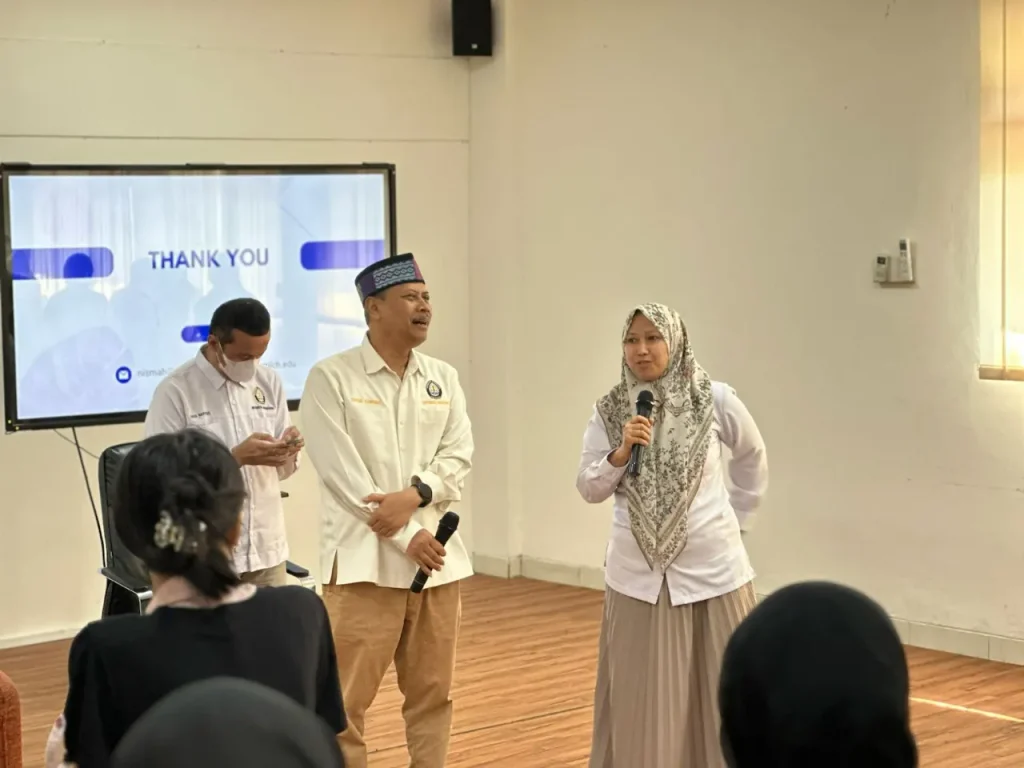
“International academic activities such as this are important for broadening the perspectives of students and lecturers while also enhancing FISIP UNDIP’s international exposure. The presence of an academic from the National University of Singapore opens a space for the exchange of ideas, experiences, and methodological perspectives that can enrich learning and research within FISIP UNDIP,” said Prof. Dr. Drs. Teguh Yuwono, M.Pol.Admin.
He also emphasized that interaction with academics from various international institutions is expected not only to enrich students’ academic experiences but also to encourage the formation of broader collaboration and networks between FISIP UNDIP and the global academic community.
In her presentation, Nor Ismah introduced autoethnography as a research approach that treats personal experience as part of the empirical material for understanding broader social contexts. Autoethnography does not only focus on individual experience but connects that experience with reflection, social context, and analysis. In this way, personal experience can become an entry point for reading various social and cultural issues.
One of the important points discussed was the difference between autobiography, ethnography, and autoethnography. Autobiography focuses on a person’s life journey, while ethnography seeks to understand the practices and experiences of others within a particular social context. Unlike both, in autoethnography, the researcher’s own experience becomes part of the empirical material used to understand the social world in which that experience takes place.
The autoethnographic approach also positions experience as a form of knowledge. In the material presented, Nor Ismah emphasized that this method challenges the idea that researchers can stand entirely outside the social world they are studying. Researchers must instead reflect on how their position, relationships, experiences, and intellectual formation also influence the knowledge that can be produced through the research process.
Reading Women’s Experiences through an Autoethnographic Perspective
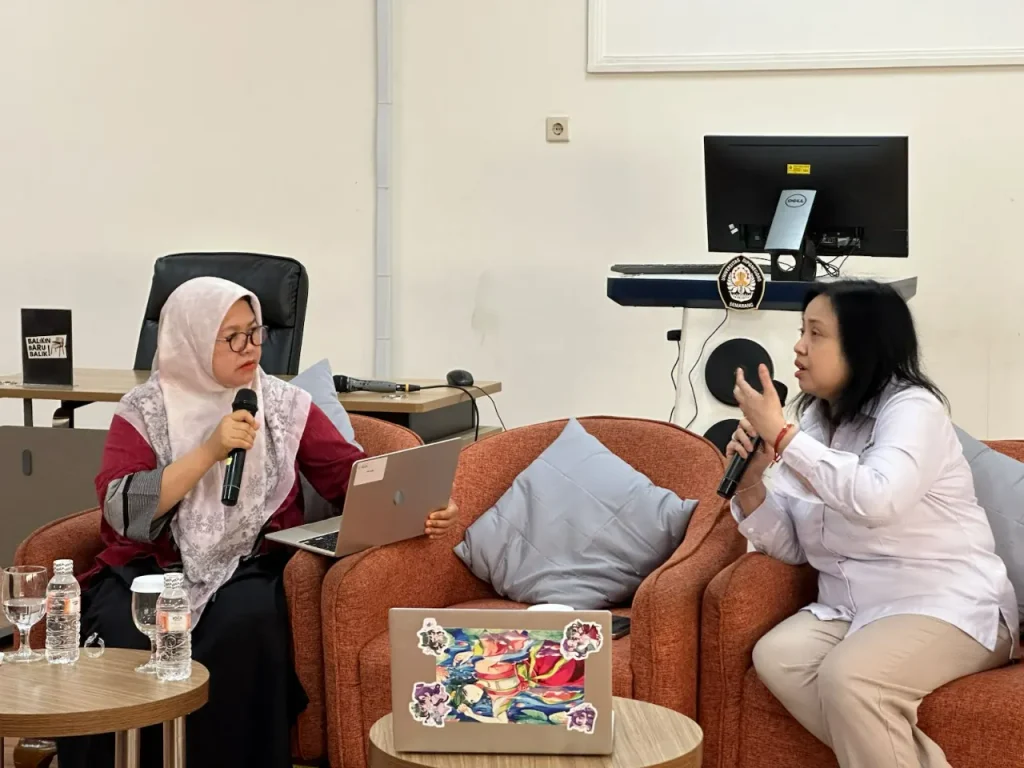
To demonstrate the application of this approach, Nor Ismah presented a study entitled “A Feminist Reading of Lived Mobility“ which used 14 narratives from the book Sekolahlah Tinggi-Tinggi / Study as High as You Can: Women’s Journeys in Pursuit of Their Dreams Across Four Continents (2025), accompanied by in-depth interviews with several women whose stories appear in the book. Women’s narratives were read as a form of situated meaning-making that demonstrates the relationship between individual experience and the social context surrounding it.
Through this perspective, the experiences of women pursuing education across countries can be read further through issues of gender and religious negotiation, changes in perspective after experiencing international mobility, and identity formation amidst family, faith, academic life, and migration.
The discussion also showed that educational mobility is not merely an individual achievement. A person’s academic journey can be shaped by various relationships, ranging from family, social support, negotiation processes, to emotional and moral labor. In this perspective, international education can be understood as a process of transformation involving intellectual, emotional, ethical, and relational aspects.
Broadening the Methodological Perspectives of the Academic Community
In addition to conceptual aspects, participants also gained an overview of the stages of conducting autoethnographic research. The process can begin with identifying a particular experience, formulating questions, reconstructing significant moments, writing them in the form of narratives or scenes, and then moving from experience toward analysis and back to reflection.
The activity “Autoethnographic Narratives as Method” is part of FISIP UNDIP’s effort to provide a learning environment that is increasingly open to global perspectives. The presence of an academic from the National University of Singapore provided an opportunity for students and the academic community to interact directly with international academic perspectives while also becoming acquainted with methodological approaches that are developing in social and cultural research.
Through international academic activities such as this, FISIP UNDIP continues to encourage increased international exposure, the strengthening of global academic networks, and knowledge exchange between the UNDIP academic community and academics from international universities. This activity also strengthens the commitment of the Media, Culture, and Gender Expertise Cluster in developing critical discussions regarding methods, media, culture, gender, and various contemporary social dynamics.