

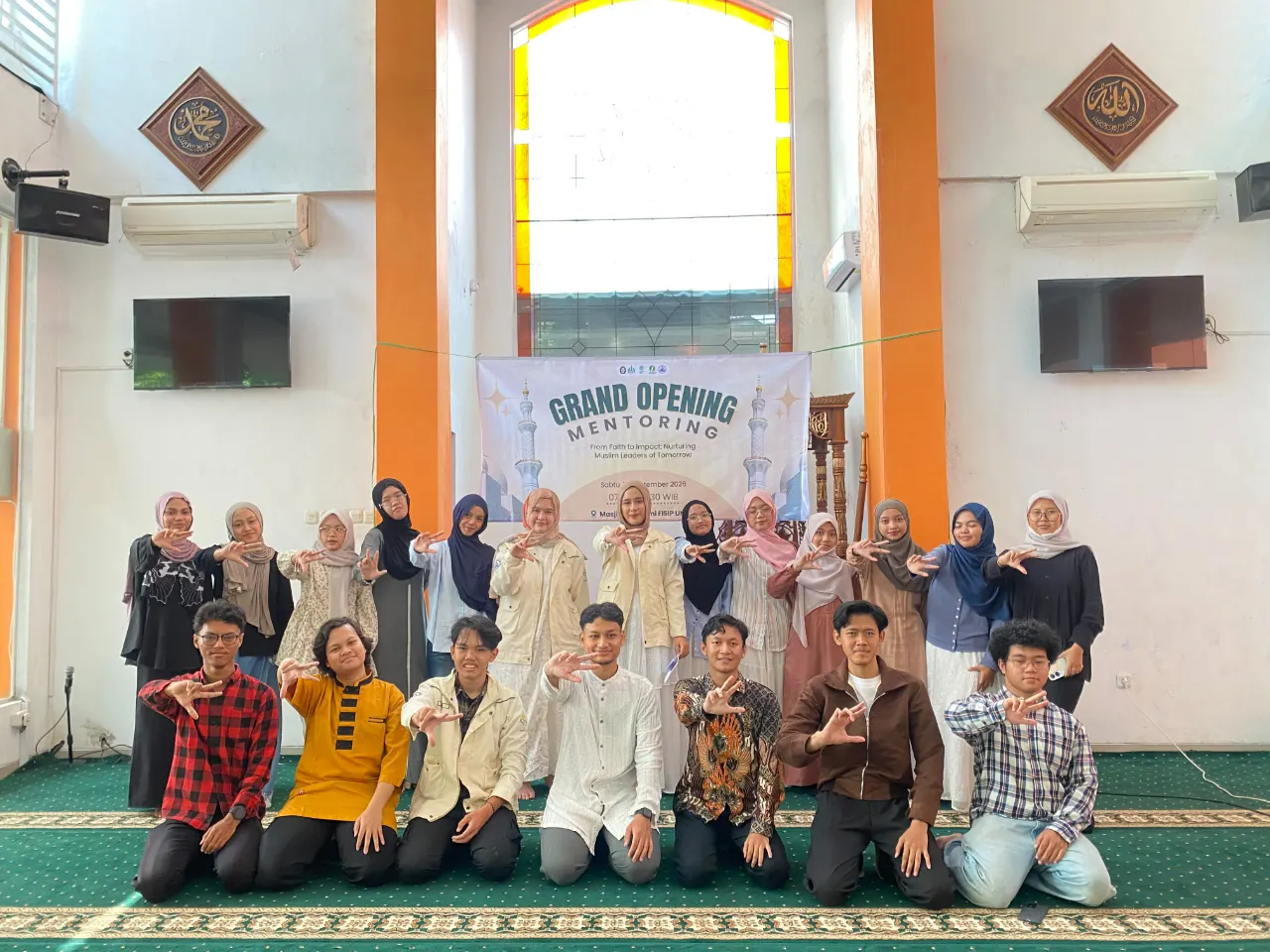
Semarang (19/09) – The Activity Implementation Unit (UPK) of the Muslim Student Family Forum (FKMM) at the Faculty of Social and Political Sciences (FISIP), Universitas Diponegoro, organized the Grand Opening Mentoring (GOM) 2026 as a means of introducing its Islamic development and character-building mentoring program for new Muslim students of FISIP Undip. Carrying the theme “From Faith to Impact: Nurturing Muslim Leaders of Tomorrow,” the event encouraged participants to establish faith values as the primary foundation for generating tangible actions that positively impact both the campus environment and society at large.
GOM 2026 was held offline on Saturday, September 19, 2026, at the Darul Ilmi Mosque of FISIP Undip. The series of events began with participant registration, an opening by the Master of Ceremony (MC), the recitation of verses from the Holy Qur’an, and remarks from the Chairperson of the Organizing Committee, Nisrina Tesarona, and the Mas’ul of FKMM FISIP Undip 2026, Mohamad Labib Fikri Akmal. Prior to the main session, participants completed a pre-test to measure their initial understanding of faith and Islamic leadership.
The material presentation session featured Muhammad Farhan Syahdaffa, S.T., a speaker with considerable experience in da’wah and mentoring institutions. At the beginning of the session, the speaker emphasized the importance of purifying one’s intention in seeking knowledge, in accordance with the hadith “Innamal a’malu bin niyyat,” and reminded participants of humanity’s true purpose of creation—to worship solely for the sake of Allah (based on QS. Az-Zariyat: 56 and QS. Al-An’am: 162). The speaker also connected spiritual awareness with Maslow’s Hierarchy of Needs Theory, which outlines five levels of needs that must be fulfilled progressively: physiological needs, safety needs, esteem needs, and self-actualization.
The speaker explained that basic needs such as physiological and safety needs must be met first before an individual can socialize and actualize their potential to the fullest extent.
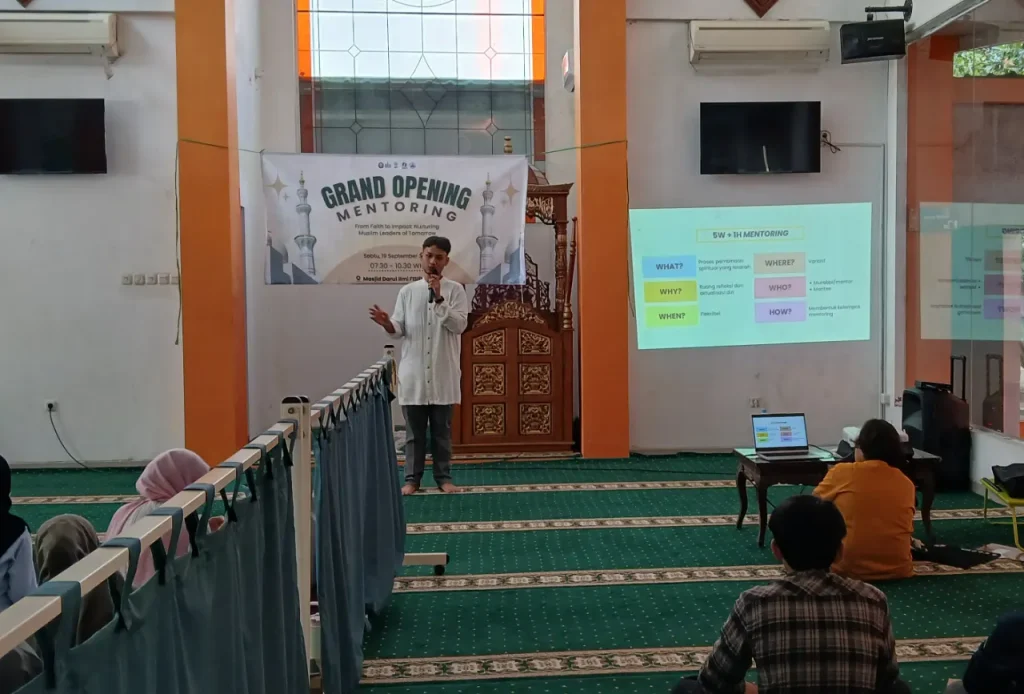
Furthermore, the speaker elaborated on three driving energies of change within a Muslim: loving Allah (first love) through acquiring knowledge and following the Sunnah of the Prophet, loving Islam (second love) as a way of life, and loving da’wah (third love) as an obligation to spread goodness. This understanding underpins the urgency of mentoring within the campus environment as a directed, efficient, and flexible development process. Mentoring is viewed not merely as a routine agenda, but as a space for reflection, a vessel for nourishing the intellect and heart, and a means of producing future leaders who are righteous and concerned with the issues of the ummah. In addition, participants were equipped with the ethics of an Islamic student, including the adab of seeking knowledge, social interaction, dress code, and the qualities of hayyin (tranquility of the soul), layyin (gentleness and courtesy), qarrib (friendliness and a propensity to smile), and sahl (easing the affairs of others). The speaker also addressed productivity and self-management as important focal points through time management guidance using the Eisenhower Matrix, as well as the SMART Goals method (Specific, Measurable, Attainable, Realistic, and Timely) for designing academic and organizational targets each semester. At the end of the session, the speaker invited students to become proactive individuals through three steps: nurturing restlessness (awareness), building collective consciousness, and maintaining a positive perspective to produce tangible works.
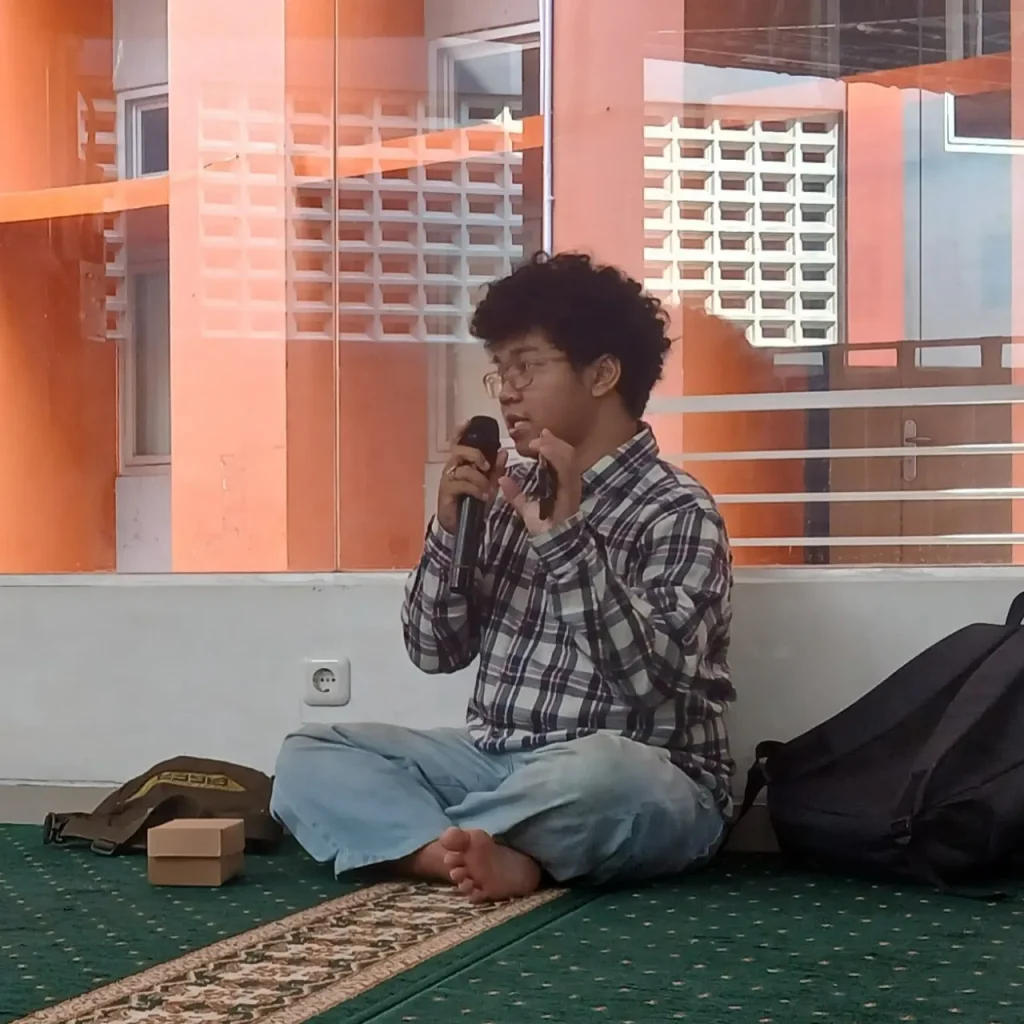
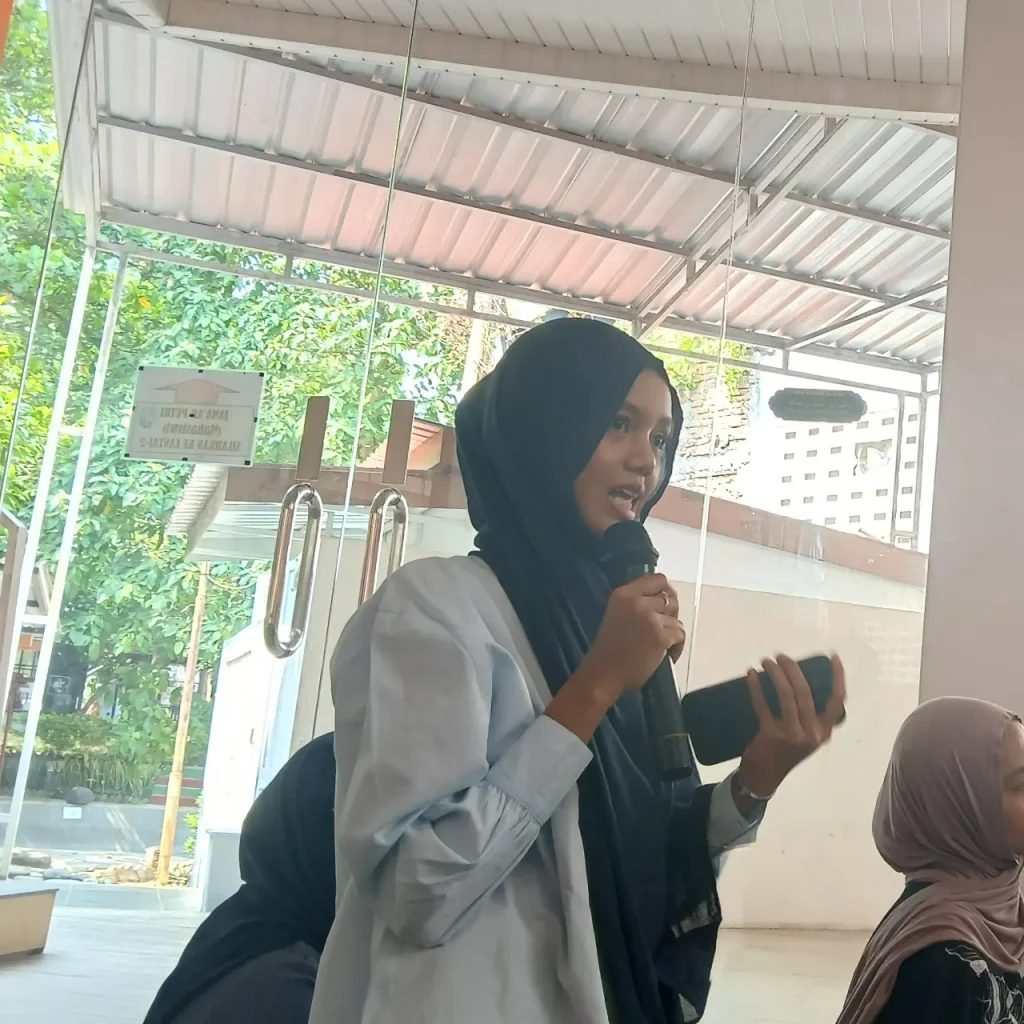
The session continued with an interactive discussion and Q&A. In response to the first question regarding how to build self-confidence as a Muslim amid low perceptions from the outside world, the speaker explained that non-Muslims often judge Islam not by the arguments presented, but by the behavior of Muslims themselves. Therefore, Muslims must create a positive impression on others. This can be achieved through accomplishments in innovation, scholarship, and discovery (following in the footsteps of Ibn Sina), active diplomacy in international forums to introduce Islam on the world stage, and strengthening da’wah through writing (bil qalam), speech (bil lisan), and concrete action (bil hal). Furthermore, in response to a question about strategies for making friends in the heterogeneous environment of FISIP without losing Islamic values, the speaker advised students to be able to adapt without being rigid, not to be quick to judge others, and to remain firmly grounded in their own principles (stay in character). Addressing a question about Maslow’s hierarchy of needs, the speaker reaffirmed that the sequence of basic needs must be fulfilled first for subsequent levels to proceed smoothly.
 |
 |
Following the presentation of material and the awarding of a certificate to the speaker, participants completed a post-test and an activity evaluation survey. As a concrete step toward sustainable development, the event continued with the division of mentoring groups for new students. Through this group division, participants gained a forum to learn, discuss, and nurture ukhuwah together with their murobbi and peers. The event concluded with a group photo session involving all participants and committee members.
Through the Grand Opening Mentoring (GOM) 2026, UPK FKMM FISIP Undip hopes that new Muslim students of FISIP Undip can utilize the mentoring program as a space for growth and inspiration to become agents of change who possess strong character, are visionary, and are able to translate their faith into tangible impact (“faith to impact”). (Syakila Fayyaza Luthfunnisa/FKMM)