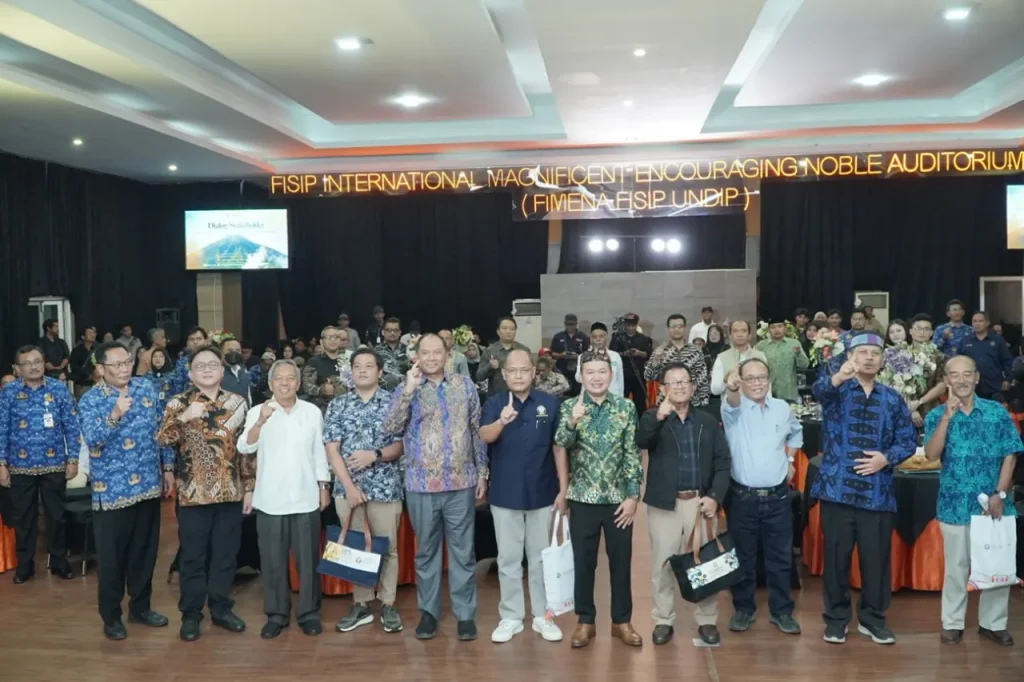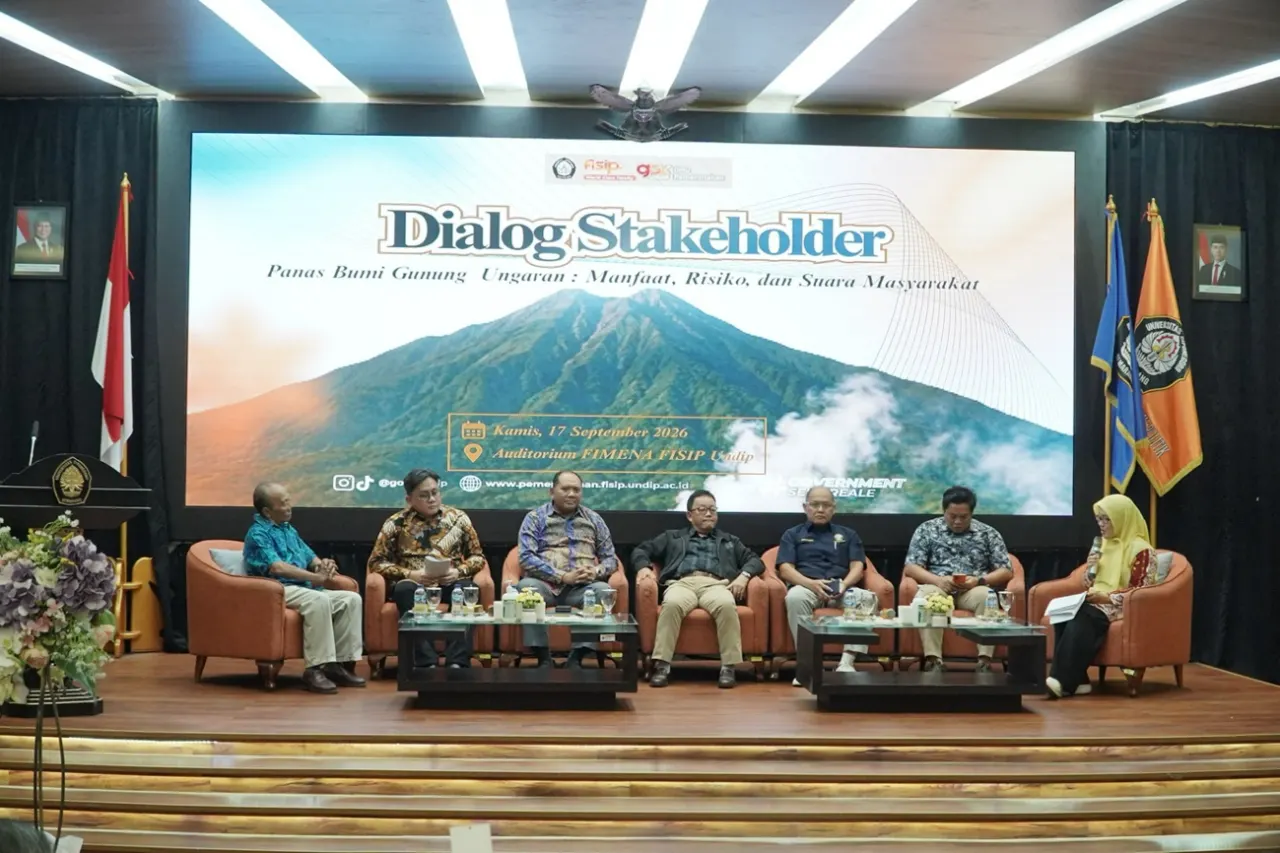
SEMARANG — September 17, 2026, the Department of Politics and Government Science, Faculty of Social and Political Sciences, Diponegoro University (Undip), served as a discussion forum in the agenda entitled “Gunung Ungaran Geothermal Stakeholder Dialogue: Benefits, Risks, and Community Voices, 2026”. The event began with a warm welcome from the Dean of FISIP Undip, Prof. Dr. Drs. Teguh Yuwono, M.Pol.Admin., and was officially opened by the Vice Rector for Research, Innovation, Collaboration, and Public Communication at Diponegoro University, Mr. Wijayanto, S.IP., M.Si., Ph.D.. University and faculty leadership were also present to welcome the speakers and invited guests.
As a platform bridging aspirations and ideas, this discussion forum presented speakers from various perspectives—regulators, technical implementers, academics, and community facilitators: Government & Regulators: Deputy Chair of Commission 12 DPR RI (Mr. Sugeng Suparwoto, M.T.) and Director of Geothermal, Directorate General of New, Renewable Energy and Energy Conservation, Ministry of Energy and Mineral Resources (ESDM) RI (Mr. Dr. P. Hadi Wijaya, S.T., M.T.); Energy Providers: Executive Vice President of Geothermal Management PT PLN (Mr. John Rembet); Experts & Academics: Geothermal Expert Undip (Prof. Dr. Eng. Agus Setyawan) and Cultural Heritage Expert FIB Undip (Dr. Eko Punto Hendro); Civil Society & Environment: Director of WALHI Central Java (Fahmi Bastian). The dialogic and interactive discussion session was moderated by Lecturer of the Department of Politics and Government Science FISIP Undip, Dr. Dewi Erowati, M.Si.
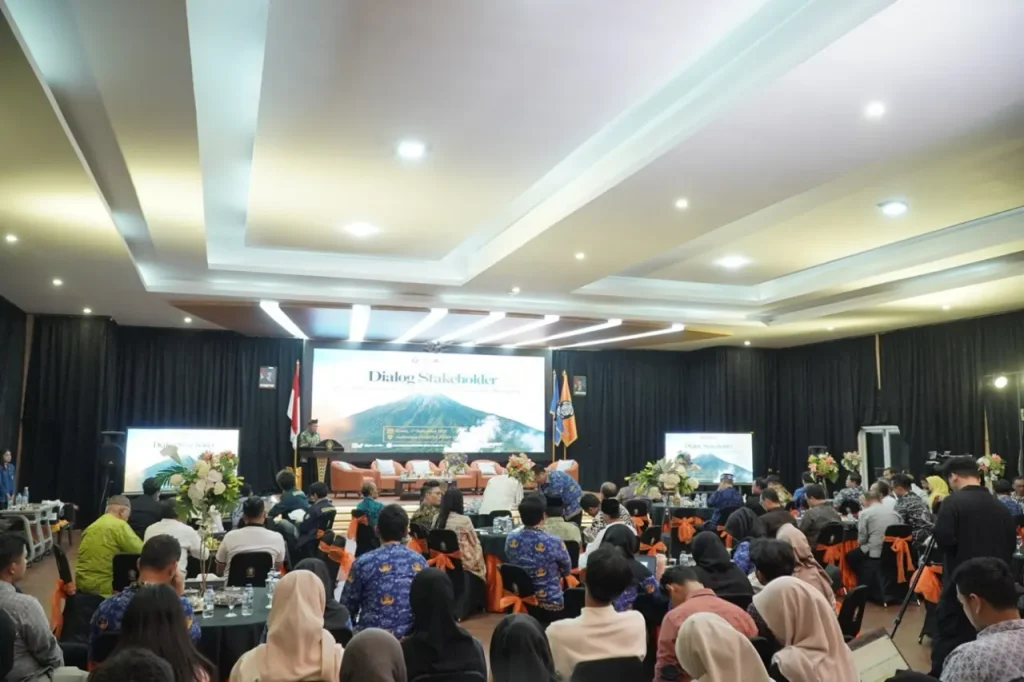
The campus’s role as a bridge to society was further highlighted by the presence of participants from diverse backgrounds. The forum was attended by the Special Envoy of the Deputy Governor of Central Java (Ir. H. Hariyanto), representatives from the Provincial Government and DPRD of Central Java, the Semarang Regency Government and Semarang Regency DPRD, village heads from the Bandungan area, religious leaders, representatives from Undip and Unnes academics, student representatives (BEM Undip, BEM Unnes, BEM Undaris), the Bandungan Business Association, the Gedong Songo Temple Traders Association, NGOs, environmental activists, and media colleagues.
Through this stakeholder dialog, the campus not only acts as a center of knowledge but also takes an active role in connecting the voices and hopes of the community to the government and PLN. In this way, every policy and step in utilizing renewable energy can be thoroughly understood, considering both risks and benefits, and consistently aligned with the welfare and sustainability of the local community.