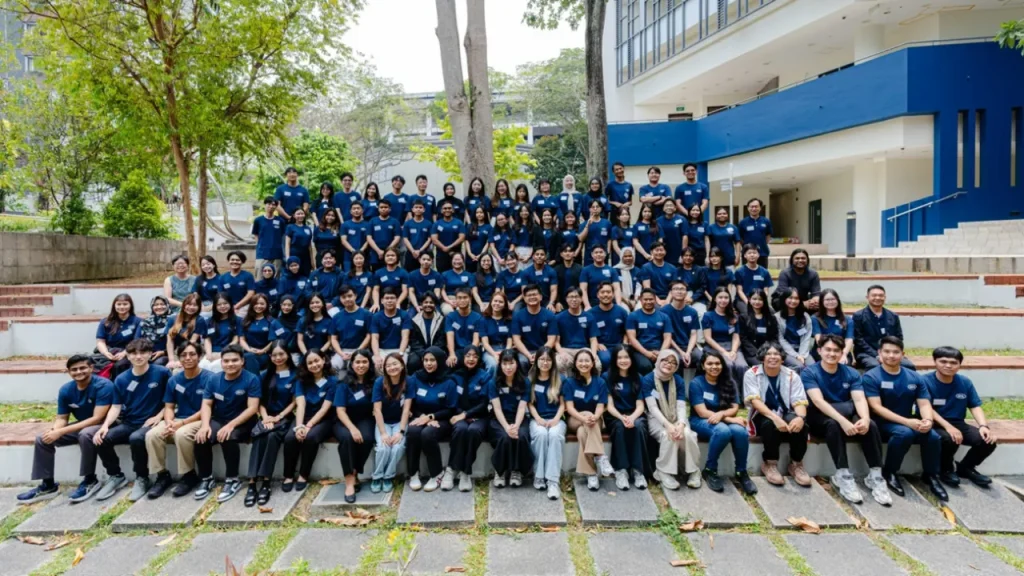

Singapore – Titania Dwi Ardana, a student of the Department of Public Administration, Faculty of Social and Political Sciences (FISIP), Universitas Diponegoro, represented Indonesia at the ASEAN Symposium for Youth Leaders (ASYL) 2026, organized by the Lee Kuan Yew School of Public Policy, National University of Singapore (NUS), from 10–12 September 2026. During her participation, Titania was mentored by Yoga Aldi Saputra, S.A.P., MPA, a lecturer at the Department of Public Administration, FISIP Undip.
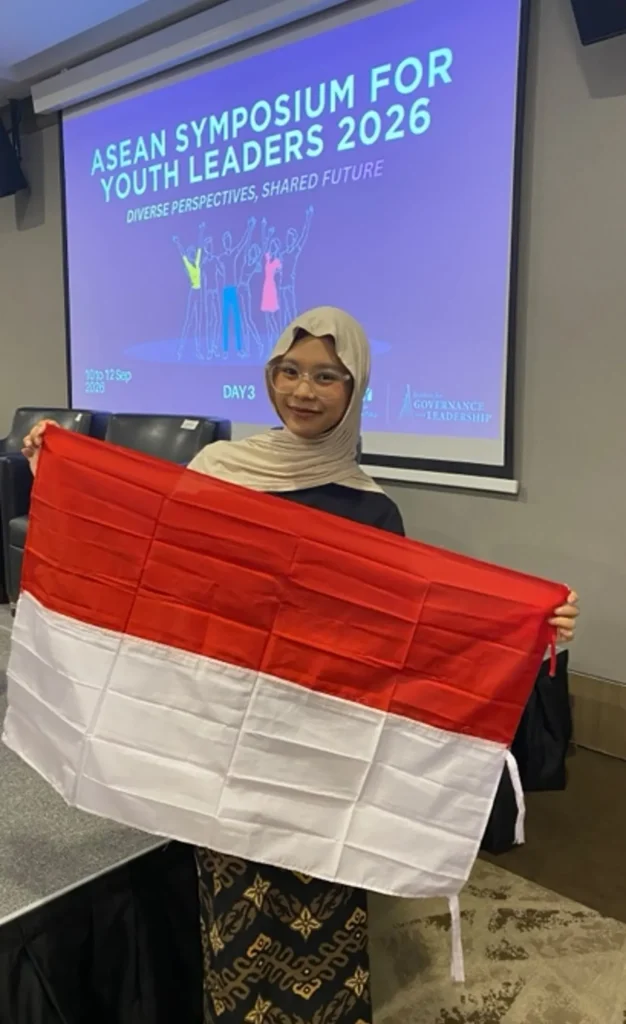
Under the theme “Diverse Perspectives, Shared Future,” ASYL 2026 brought together students and young people from across ASEAN to exchange perspectives on public issues and development challenges facing the region. As part of the program, participants also took part in a collaborative project that encouraged them to apply a futures thinking approach to envision possible futures and develop strategies to achieve them.
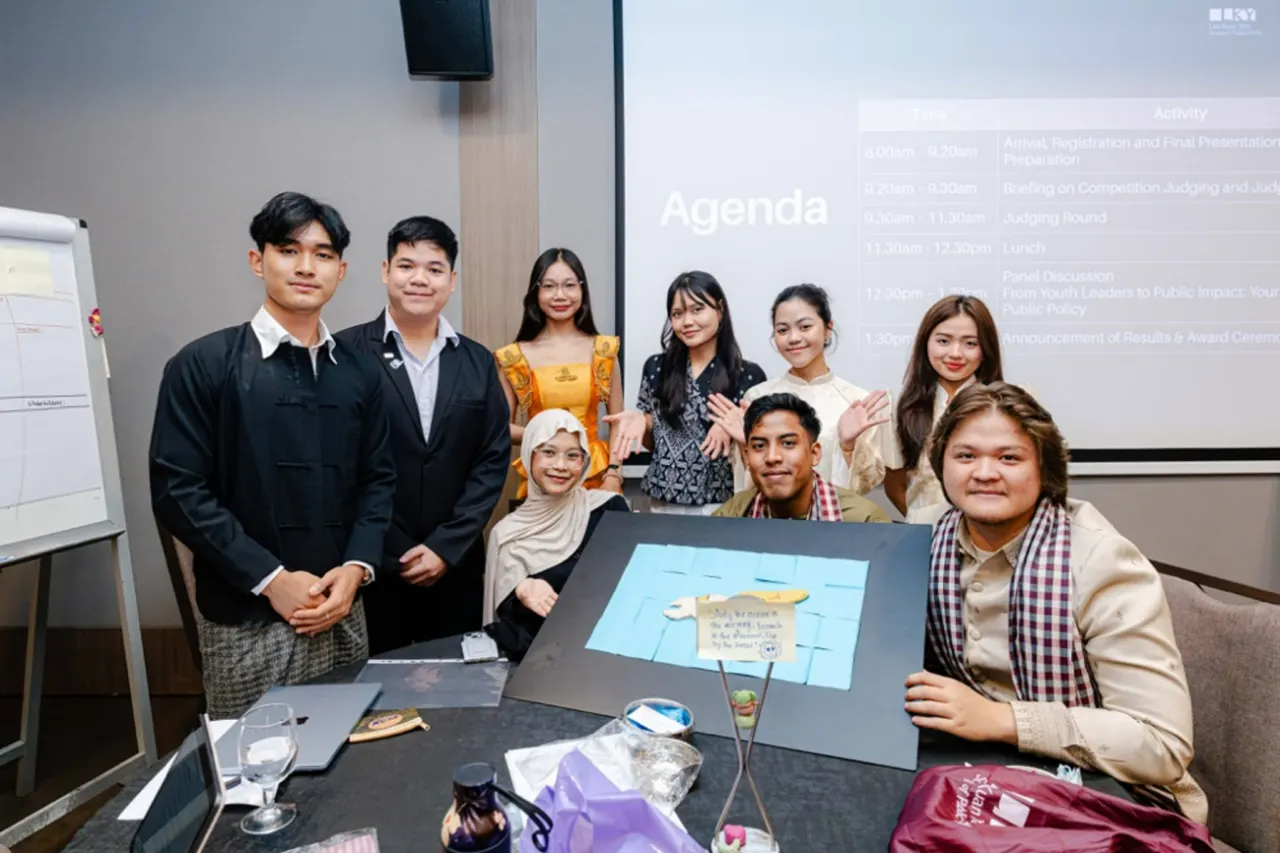
For her group project, Titania and participants from different countries focused on Dili, Timor-Leste, examining its potential for marine-based development and the need for economic diversification. The project developed a vision entitled “Dili 2050: The Blue Jewel of Asia,” envisioning Dili as a high-value blue-economy city with a strong marine science ecosystem, sustainable tourism destinations, and the development of new ocean-based industries.
To achieve this vision, the project applied a backcasting approach, beginning with the desired conditions for Dili in 2050 and working backwards to identify the steps needed to achieve them. The roadmap was divided into three phases: Build (2026–2030), focusing on establishing the necessary foundations; Prove (2030–2040), focusing on testing and developing various initiatives; and Scale (2040–2050), focusing on expanding successful initiatives to enable Dili to achieve the envisioned future.
The project centered on two main areas. The first was the development of Dili as a regional center for marine education and research in Asia, through improvements in educational quality, partnerships with universities, scholarship opportunities, research facilities, and the development of skills and innovation in the marine sector. The second was the development of Dili as a sustainable coastal tourism city, through waterfront development, nature and culture-based tourism experiences, improved connectivity, and enhanced human resources in the tourism sector.
The two areas were designed to complement one another. Investment in marine education and research could generate knowledge, skills, and human resources, while sustainable tourism could create new experiences, employment opportunities, and economic activities. By integrating these two areas, the project identified the ocean as a potential foundation for creating new employment opportunities while reducing Dili’s dependence on its traditionally dominant economic sectors.
Participation in ASYL 2026 provided Titania with an opportunity to learn and collaborate with young people from different ASEAN countries. The development of the Dili 2050 project also created a space for participants to bring together diverse perspectives in developing a more focused and context-sensitive vision for Dili’s future.
Her participation in ASYL 2026 represents an important part of Titania’s academic experience and capacity development in understanding public issues from a regional perspective. In addition to expanding her international network, the program provided an opportunity to strengthen her skills in policy thinking, cross-cultural collaboration, and futures thinking for exploring and designing alternative futures.
Through the participation of its students in international forums such as ASYL 2026, FISIP Universitas Diponegoro continues to expand students’ learning opportunities at the regional level while encouraging young people to contribute to shared perspectives on the future of ASEAN.