

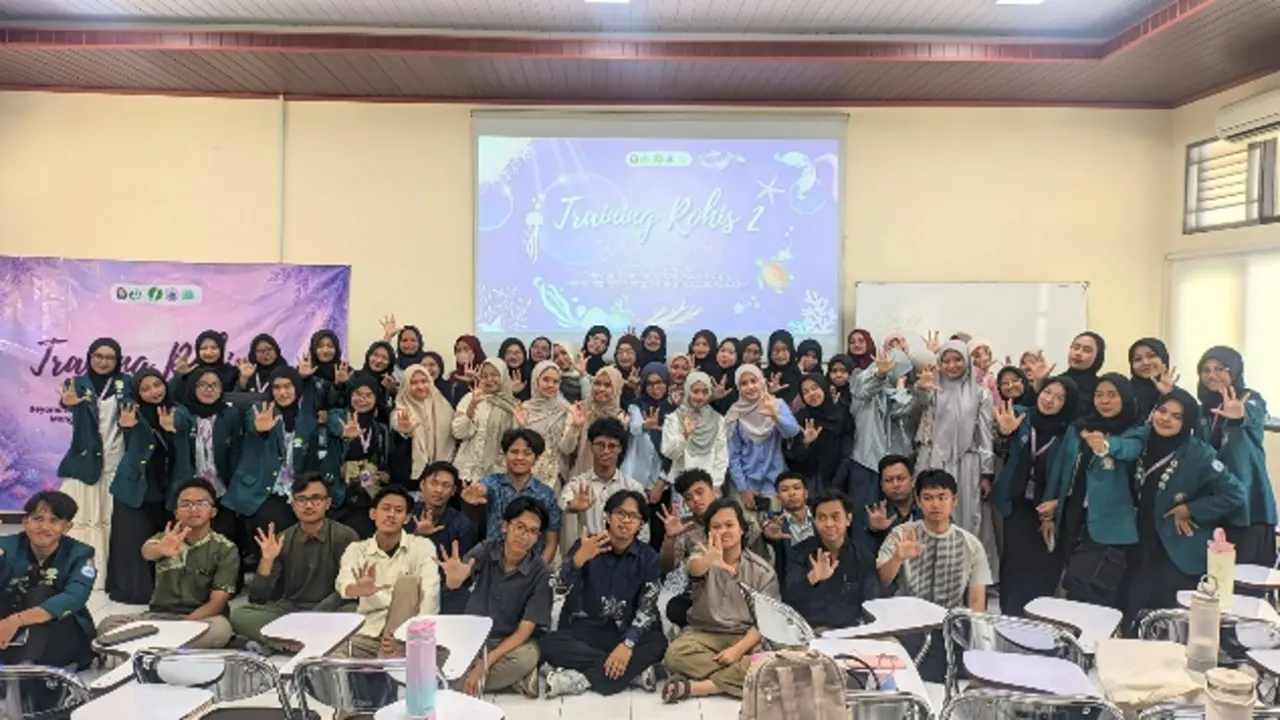
The Muslim Student Family Forum (Forum Keluarga Mahasiswa Muslim / FKMM) of the Faculty of Social and Political Sciences (FISIP), Universitas Diponegoro, successfully organized Rohis Training (TR) II. This event served as a vital platform for Muslim students at Universitas Diponegoro to deepen their understanding of Islamic teachings while simultaneously honing their leadership acumen. Carrying the theme “Reclaiming the Meaning of Da’wah Leadership: Ethical Authority, Intellectual Responsibility, and Movement Strategies in Contemporary Campus Dynamics,” the training aligned seamlessly with its core objective: to cultivate participants into progressive leaders capable of steering both personal and collective life toward meaningful change, particularly within the realm of da’wah (Islamic advocacy).
The two-day Rohis Training (TR) II was held on Saturday, August 29, 2026, and Sunday, August 30, 2026. The program commenced with an opening ceremony led by the master of ceremonies, followed by the recitation of verses from the Holy Qur’an and welcoming remarks from the Faculty Advisor, the Chair of the Student Activity Unit, and the Unit’s Supervisor. The event then continued with a talk by students from Universitas Diponegoro, followed by a question-and-answer session and a focus group discussion.
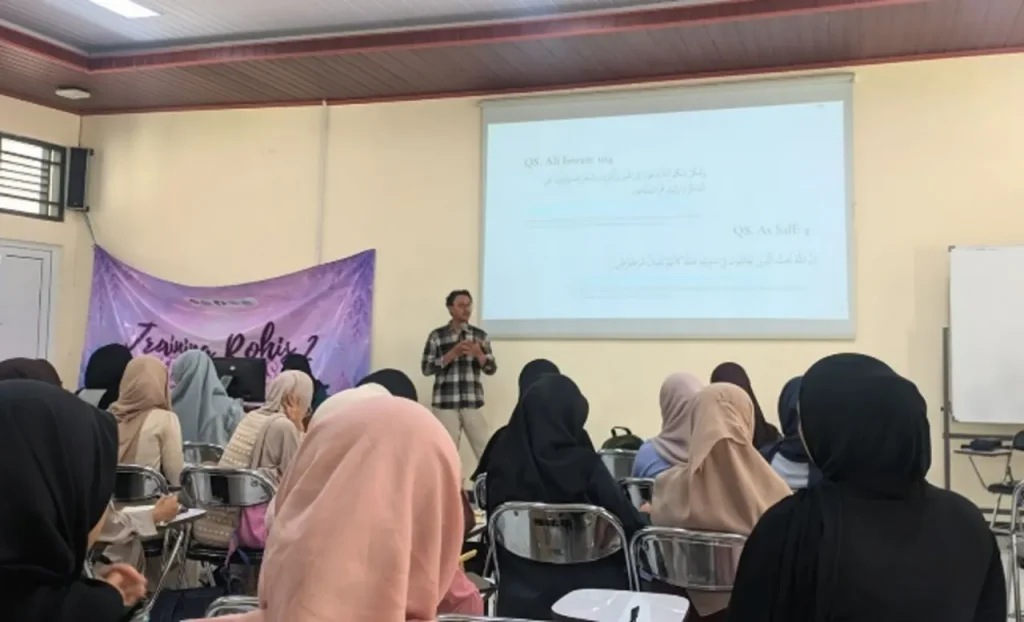
On the first day, participants engaged with a presentation titled “Fiqh of Da’wah and Amal Jama’i,” featuring brother Bagas Syed Aziz Bimonov as the speaker. The session underscored the importance of viewing da’wah as a collaborative process aimed at achieving shared objectives. It emphasized that differences of opinion are a natural part of organizational life, making collective effort (amal jama’i) essential—since no organization can thrive on the will of a single individual alone.
The second session featured sister Fathiyah Hanan, who presented “Keda’wahkampusan” (Campus-Based Da’wah). This talk explored how da’wah within university settings can be tailored to meet the evolving needs of students. It highlighted that campus da’wah extends beyond conventional religious activities, offering a dynamic space that provides tangible benefits and responds to the diverse academic, social, and personal challenges faced by students.
The final session of Day One was delivered by brother Muhammad Arsyad Dwi Rahadianto on “Konsep Kepemimpinan Islam” (The Islamic Concept of Leadership). This discourse examined the essence of leadership from an Islamic perspective, reaffirming humanity’s role as khalifah (stewards) on Earth. Leadership, it was argued, is not a privilege but a sacred trust (amanah) that must be exercised with unwavering responsibility, integrity, and moral consciousness.
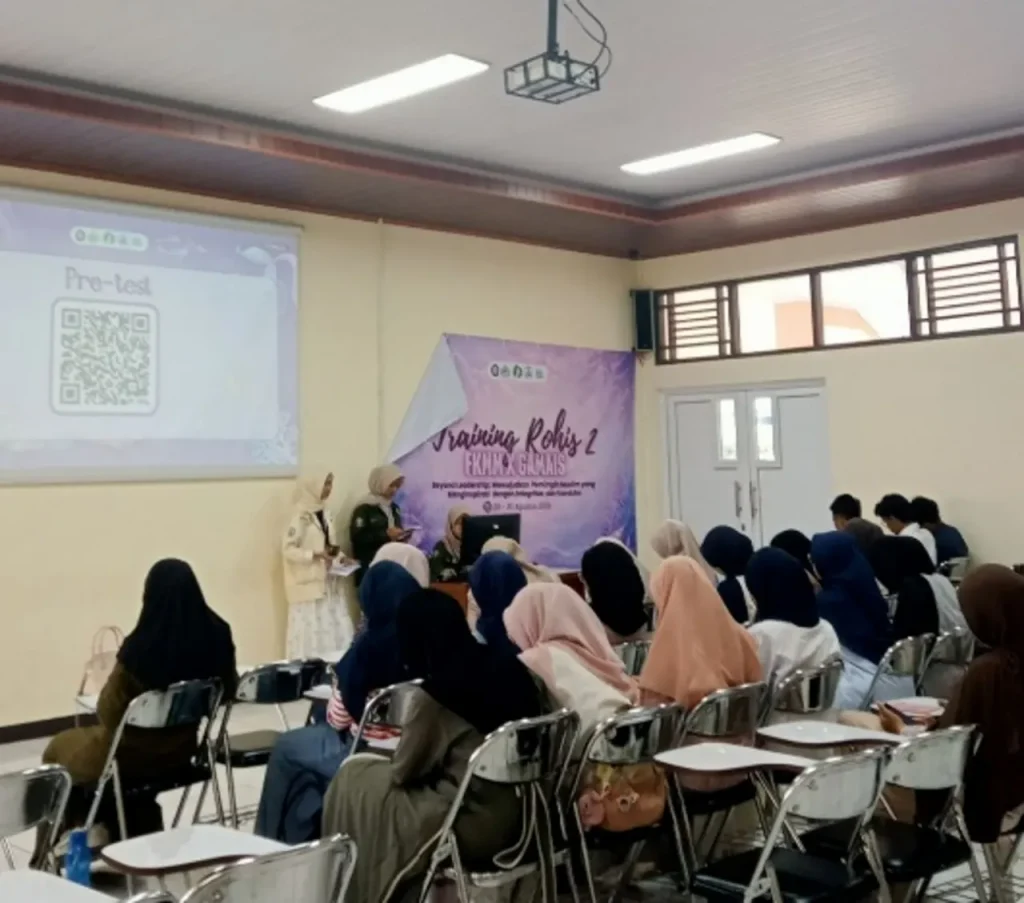
The second day featured an insightful session by brother Atqia Ghifari Muhammad on “Manajemen SDM LDK & Analisis Masalah” (HR Management in Campus Da’wah Organizations and Problem Analysis). The presentation elaborated on the essential processes of attracting, developing, motivating, and retaining members to achieve organizational goals effectively and efficiently. It also provided practical frameworks for managing human resources within Campus Da’wah Institutions (LDK) and diagnosing—along with resolving—various challenges that frequently arise within organizational structures.
Following each material session, participants engaged in structured group discussions, fostering collaborative exchange and critical thinking among pre-assigned teams. The event concluded with a group documentation session, capturing the spirit of camaraderie and shared purpose.
Through Rohis Training (TR) II, FKMM FISIP Undip aspires to serve as a transformative space where participants not only enrich their Islamic knowledge but also refine their leadership qualities—ultimately driving a progressive life movement rooted in ethical conviction, intellectual responsibility, and collective action in the service of da’wah.