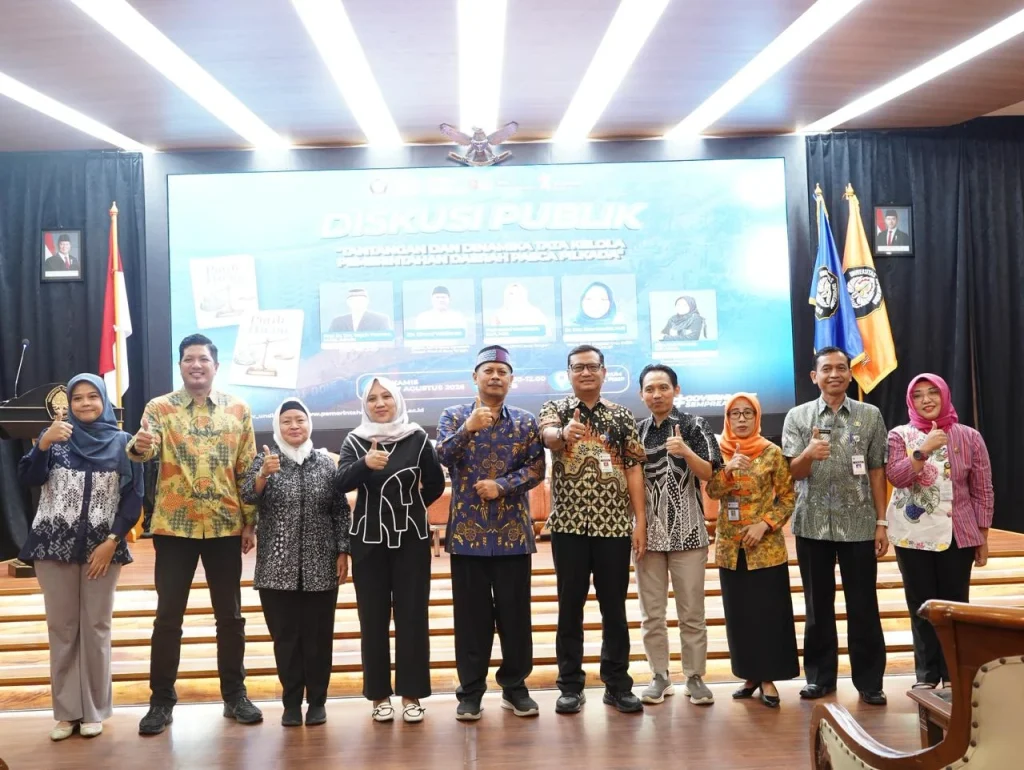
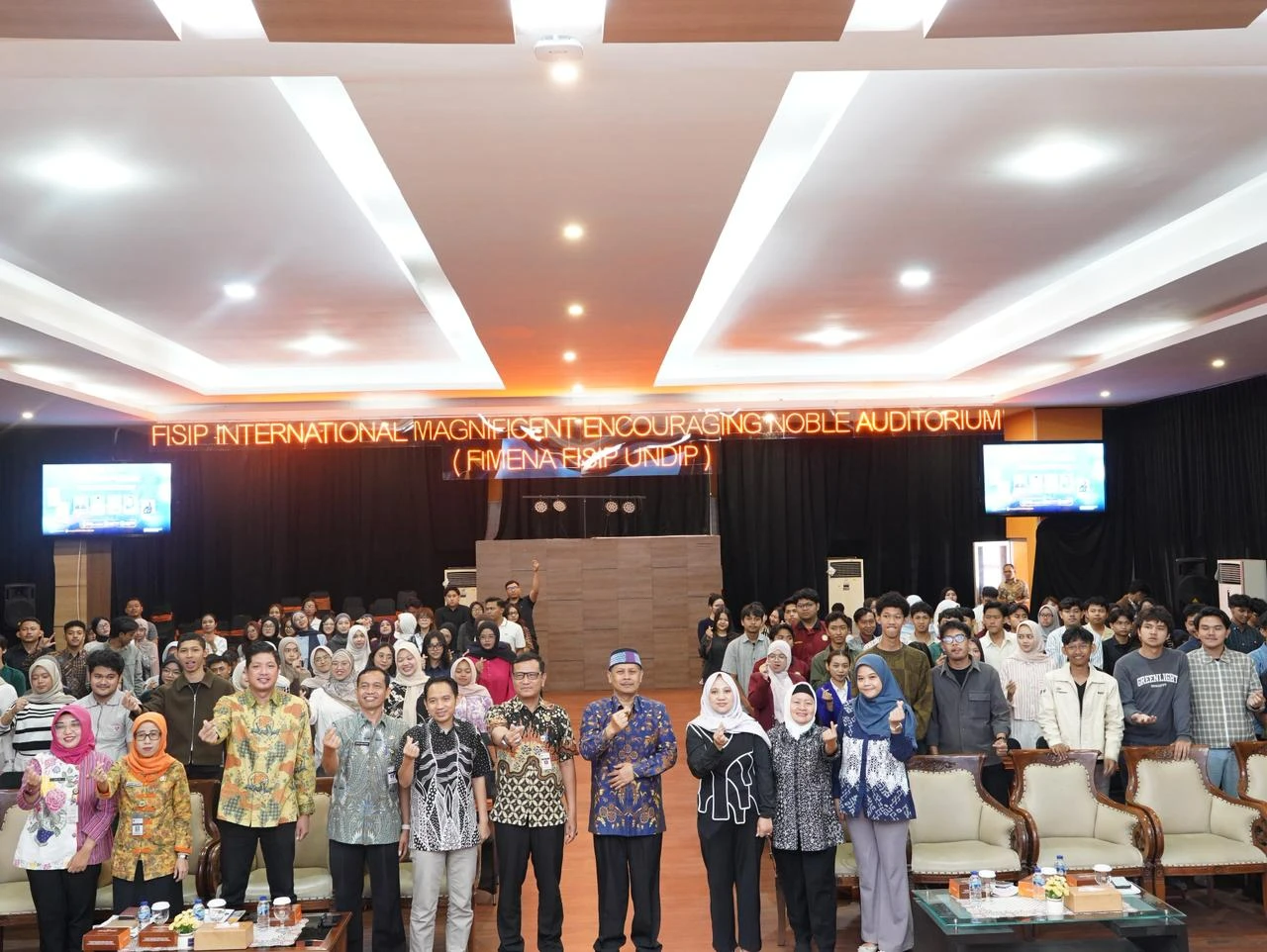
Semarang – The dynamics of local government following the 2024 Simultaneous Regional Elections were the main topic of discussion at the “Black and White: Regional Dynamics Following the Simultaneous Regional Elections” Book Discussion Forum, held at the FIMENA Auditorium, FISIP UNDIP, on Thursday (August 27). The book, authored by Dhoni Widianto, Joko Mulyono, and Dr. Phil. Wahid Abdulrahman, examines the various challenges faced by local governments following a leadership transition—ranging from bureaucratic restructuring and local financial management to corruption prevention, as well as innovation and public communication in the digital age.
The 2024 Simultaneous Regional Elections not only produced a new political landscape but also marked the beginning of a government consolidation process. Elected regional heads are expected to translate their electoral legitimacy into effective, professional, and integrity-driven governance that is responsive to the needs of the community.
During the forum, Angga Arrasyid, S.IP., M.Si., Vice Chair of IKA ILPEM, emphasized the importance of understanding Public Administration in budget management. According to him, the budget is not merely an administrative matter but serves as a crucial instrument in determining policy priorities and the distribution of public resources.
The “White and Black Book” divides its discussion into four main issues. First, the dynamics of local civil service, particularly the challenge of maintaining a merit-based system amid changes in political leadership, as well as the consequences of the PPPK restructuring on local fiscal capacity.
Second, the dynamics of local finances, particularly fiscal constraints, the optimization of Local Original Revenue (PAD), and the importance of considering public acceptance in tax policy. The book also highlights the tension between village autonomy and the prioritization of Village Fund usage.
Third, corruption prevention. The issue of corruption is viewed not only as a matter of individual integrity but also as one related to the political system and governance. The results of the Integrity Assessment Survey (SPI) should be utilized as an early warning system to drive improvements in governance.
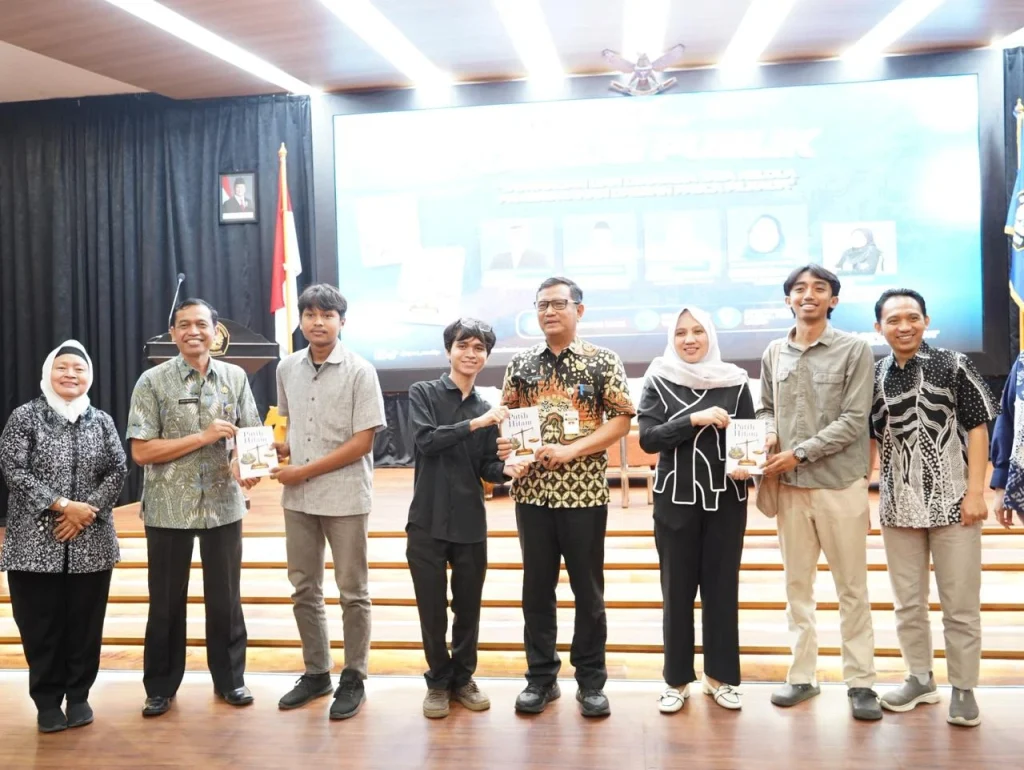
Fourth, innovation and local government communication in the digital age. Local governments need to develop policies based on data and research and establish two-way public communication. BRIDA plays a strategic role in strengthening the innovation ecosystem by engaging the government, universities, the business sector, and the community.
In her analysis, Dr. Dra. Rina Martini, M.Si., noted that the book maintains consistency between its title, content, and conclusion. However, several issues could be further explored, including the continuity of bureaucratic reform following a change in local leadership, the dilemma of fiscal constraints versus political promises, and the follow-up to SPI findings through the question “what next?”
The forum also highlighted the importance of gender mainstreaming in local government—not only in terms of women’s representation but also regarding women’s influence in the policymaking process and how patriarchal culture affects governance.
Overall, the forum emphasized that regional elections are not the end of local democracy, but rather the beginning of a test of governance. Once the political competition ends, regional heads are required to build governmental consolidation, political consolidation, reconciliation, conflict management, and consistency in implementing policies.
From this perspective, the success of regional elections cannot be measured solely by the democratic conduct of the electoral process, but by the ability of the resulting government to transform electoral legitimacy into a professional, accountable, innovative, and community-oriented administration.***