

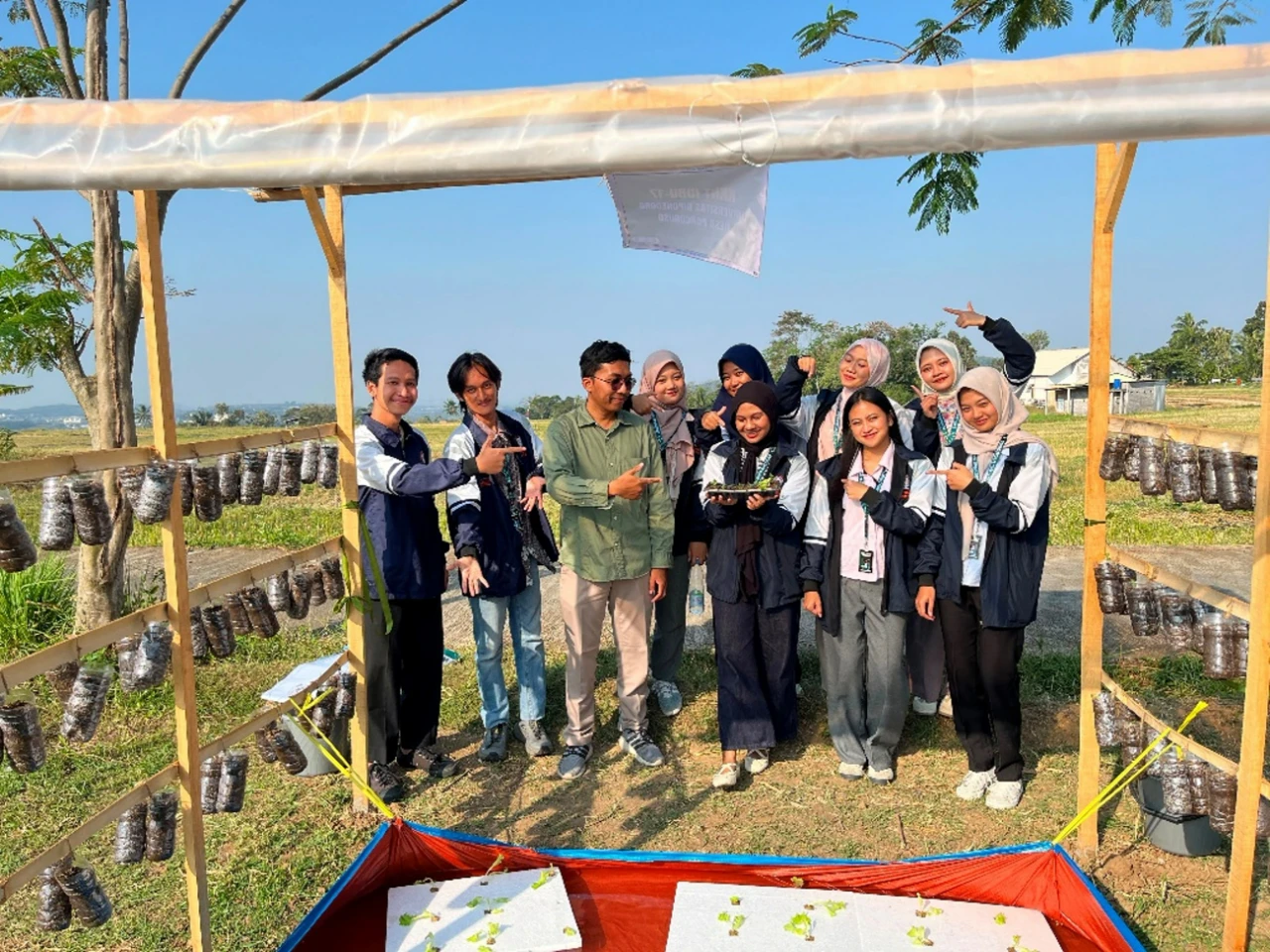
Semarang Regency, 8 August 2026 — Universitas Diponegoro (Undip) is strengthening agricultural productivity and community food security through its Thematic Community Service Program (KKN Tematik Iptek) for fostered villages, implemented in Poncoruso Village, Semarang Regency. Carrying the theme “Eco-Farm Community: Pioneering an Eco-Conscious Farmers’ Initiative to Enhance Productivity and Food Security in Poncoruso Village, Semarang Regency,” the initiative is designed to foster productive, self-reliant, and environmentally sustainable agriculture.
The program, conducted on August 8, 2026, is led by Irfan Murtadho Yusuf, S.A.P., MPM, with member Anugrah Robby Pratama, S.Pt., M.Pt. This initiative forms part of Undip’s commitment to advancing the Sustainable Development Goals (SDGs), particularly SDG 2: Zero Hunger, through community capacity building and the optimal utilization of local potential.
The Eco-Farm Community concept integrates three primary approaches: strengthening farmer group institutions, harnessing local resources, and applying simple agricultural technologies. A central activity involved organizational management training for farmer groups, providing community members with a critical understanding of role distribution, activity planning, resource management, coordination, and the collective development of agricultural enterprises.
Transforming Waste into Fertilizer
The environmental dimension was reinforced through training on household organic waste processing using the bokashi method. Community members were introduced to techniques for converting waste into reusable materials for agricultural purposes.
This approach encourages a paradigm shift—transforming waste from mere refuse into a valuable resource. The utilization of bokashi is also expected to help supply organic matter for farming, reduce dependence on purchased production inputs, potentially lower agricultural costs, and mitigate organic waste issues within the community.
Greenhouse as a Community Agricultural Laboratory
Another program component involved the introduction of a simple greenhouse serving as an agricultural laboratory for the Poncoruso community. This facility is designed not only for crop cultivation but also as a learning space for experimenting, observing, and evaluating various farming techniques under more controlled conditions.
Residents also gained knowledge about floating planting techniques as an alternative cultivation innovation. The greenhouse is expected to evolve into a living laboratory, enabling continuous agricultural learning through hands-on practice beyond the scope of formal training sessions.
Village Head: Potential to Boost Agricultural Yields
The Village Head of Poncoruso, Haryoko, welcomed the program with enthusiasm. He noted that the community service activities offer tangible benefits to villagers, particularly those engaged in the agricultural sector.
“This program is highly beneficial for our village community. We hope that the knowledge imparted through this education can be directly applied by residents, especially farmers, so that it may contribute to increased agricultural output,” said Haryoko.
He emphasized that agricultural development should be supported by the utilization of local resources and technologies that are easily adoptable by the community.
“Through waste management and simple agricultural technologies, residents can also become more self-reliant in developing their farming enterprises,” he added.
Haryoko expressed his hope that the collaboration between Undip and the Poncoruso community would continue to grow, ensuring that the knowledge and technologies introduced yield long-term, sustainable impacts.
Farmers: A Means to Reduce Production Costs
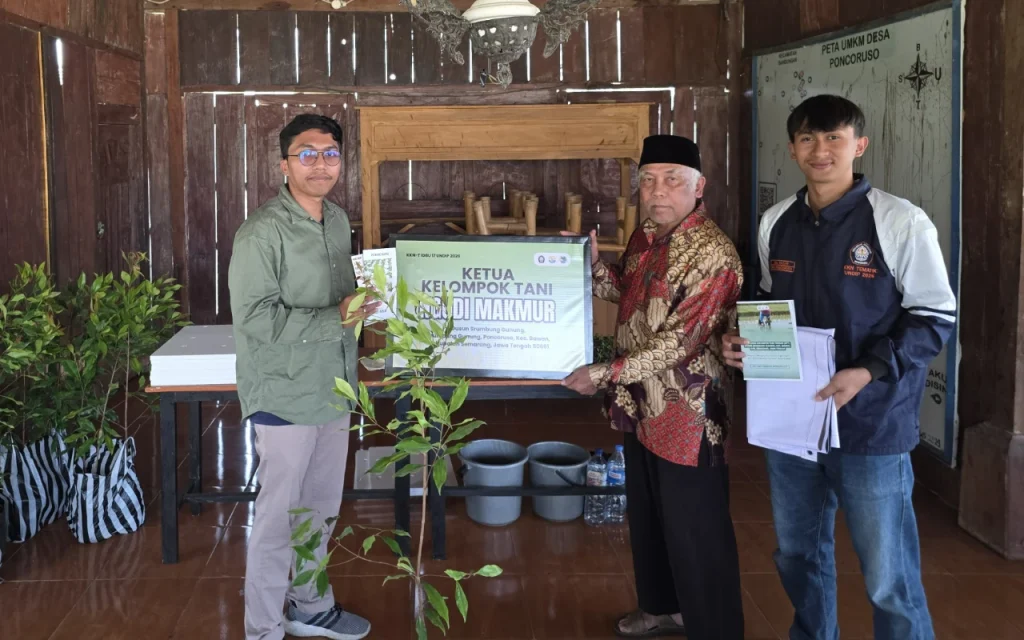
Enthusiasm was also voiced by Ali Turkhamun, Chairman of the Srumbung Gunung Farmer Group. He expressed his appreciation for acquiring new knowledge that can be directly applied in farming activities.
“We are truly delighted with this agricultural training. We gained so much new insight—especially on how to utilize the waste around us to produce our own fertilizer,” said Ali.
According to him, converting waste into fertilizer helps farmers reduce production expenses.
“This greatly assists farmers by cutting planting costs and reducing our reliance on commercially purchased fertilizers,” he continued.
Ali also lauded the introduction of floating planting techniques and the greenhouse system, which he described as offering fresh perspectives to the community.
“The floating planting technique and the greenhouse are entirely new to us. The greenhouse, in particular, can serve as a place to trial and learn farming techniques before wider application,” he explained.
He expressed hope that the program would be followed by continued mentoring, ensuring that the knowledge gained is truly implemented by the farmer group.
Toward Village Agricultural Self-Sufficiency
The comprehensive Eco-Farm Community program—encompassing the strengthening of farmer group governance, organic waste processing into bokashi, independent fertilizer production, floating planting techniques, and greenhouse utilization—is designed as an integrated system to enhance community capacity.
This initiative is oriented not only toward increasing productivity but also toward empowering the community to manage local resources autonomously. Household waste can be transformed into agricultural inputs, simple technologies support cultivation activities, and farmer groups serve as platforms for organizing and collectively advancing knowledge.
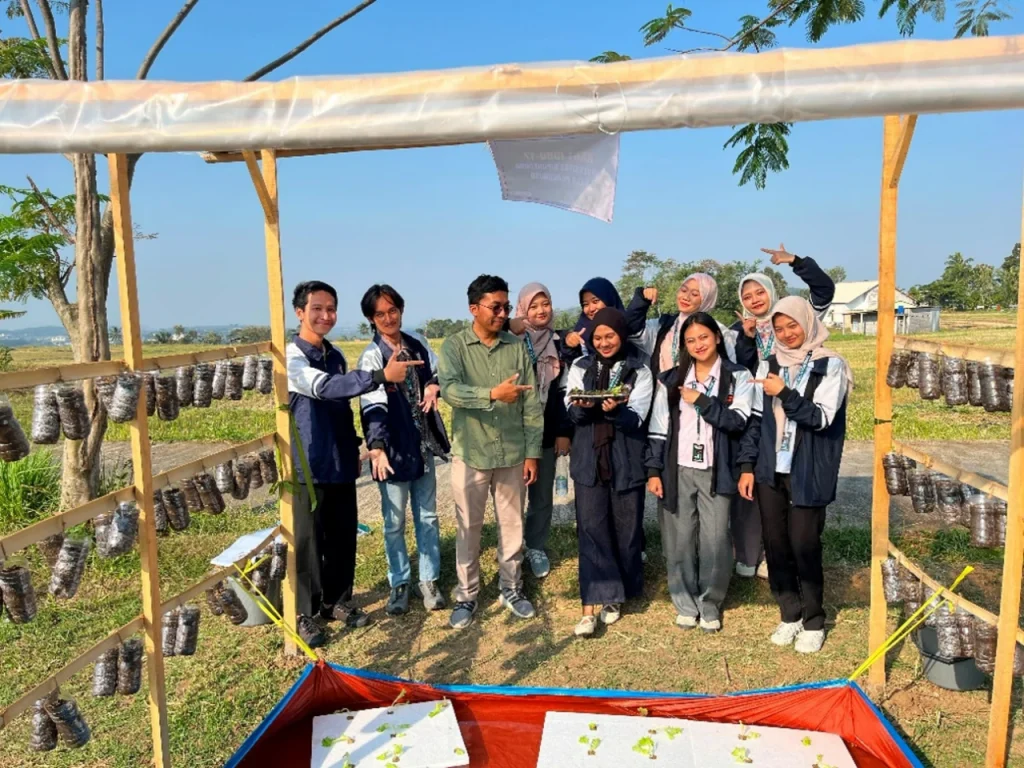
Looking ahead, the Eco-Farm Community is expected to evolve into a center for learning, innovation, and agricultural collaboration in Poncoruso Village, while simultaneously strengthening networks among the community, village government, higher education institutions, and various relevant stakeholders.
Through this program, Undip is fostering a sustainable empowerment ecosystem. The reinforcement of institutional structures, waste utilization, and the application of appropriate technologies are intended to work in synergy to build a more productive, self-reliant, and environmentally sustainable agricultural system in Poncoruso Village, ultimately supporting long-term food security.