

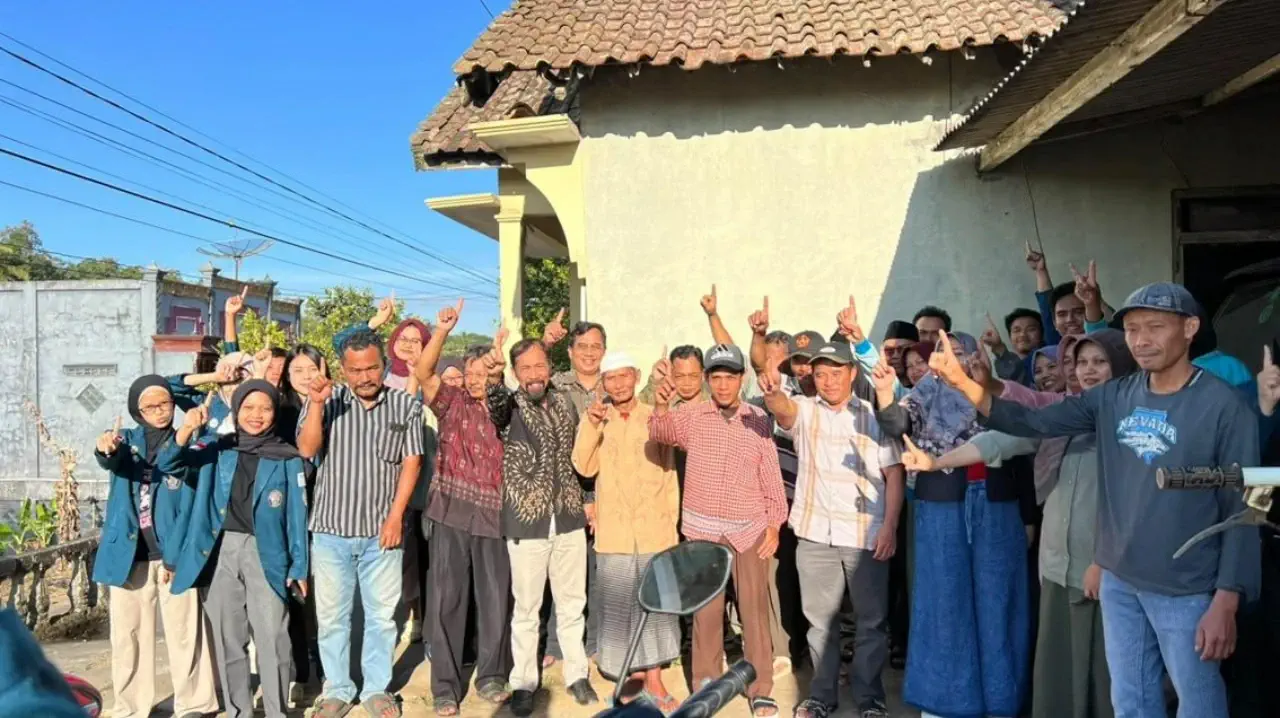
SEMARANG – The Student Organization Capacity Strengthening Program (PPK Ormawa) Team of BEM, Faculty of Social and Political Sciences, Diponegoro University, held a Coffee Farming Practice Assistance session on Thursday (July 23, 2026) at the home of Mr. Saromin, Head of Kalibanger Hamlet, Lanjan Village, Sumowono Sub-district, Semarang Regency. This activity is part of the Gerakan Kopi Berdaya (GKB) or “Empowered Coffee Movement” Program, which aims to enhance farmer capacity through direct field assistance in coffee cultivation.
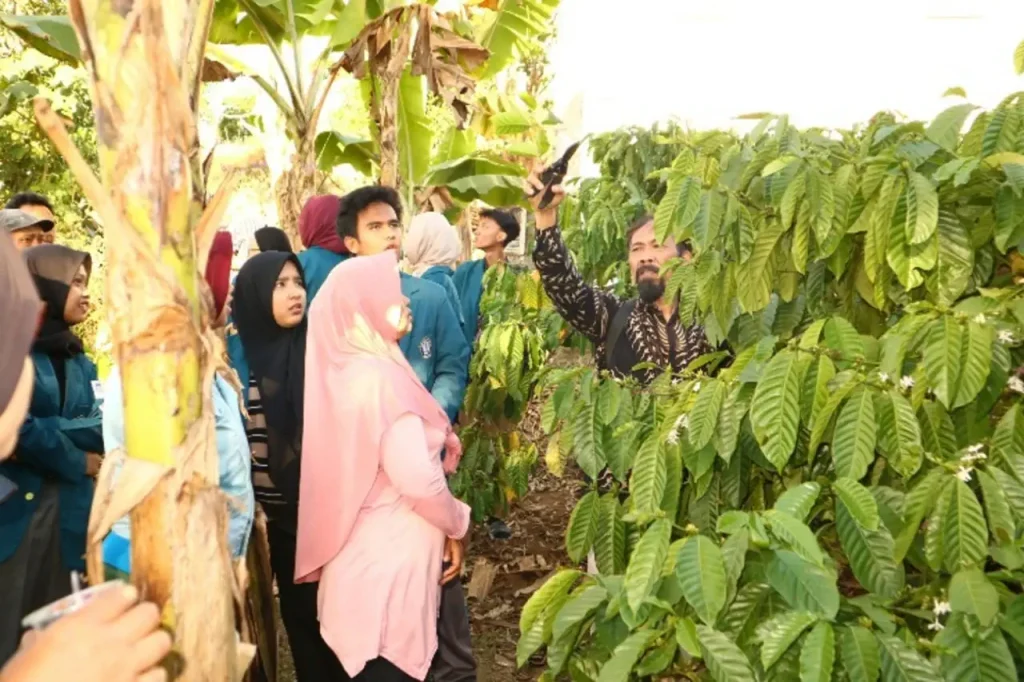
The activity featured two speakers: Mr. Jumariyadi, S.TP., a Practitioner and Field Facilitator for Coffee Plants in Central Java, and Mr. Sutiyo Amin, S.Tr.P., from the CO Working Space of Semarang Regency. The assistance session began with an indoor presentation. Mr. Jumariyadi delivered material on proper Coffee Cultivation Techniques, covering seed selection, planting, maintenance, and fertilization. Meanwhile, Mr. Sutiyo Amin presented on Plant Pest Organisms (OPT), including types of pests and diseases affecting coffee plants, as well as prevention and control measures. After the presentation session, the activity continued with hands-on practice in the coffee plantation to help participants understand how to apply the material in actual field conditions.
Before the material presentation, participants first completed a pre-test to assess their initial knowledge of coffee cultivation and pest control. After the entire series of activities, participants completed a post-test as a form of evaluation to measure the improvement in their understanding after participating in the assistance.
During the field practice session, participants were directly guided by both speakers to observe the condition of coffee plants and practice the cultivation techniques that had been taught. Participants received guidance on plant pruning, proper spacing, fertilization methods, and the importance of knowing soil acidity (pH) levels as a basis for determining appropriate cultivation treatments. In addition, the speakers also explained how to identify symptoms of Plant Pest Organisms (OPT) commonly found in coffee plants and the steps for handling them. As a practical exercise, participants conducted soil pH tests using litmus paper to determine the soil conditions in the coffee plantation.
Mr. Jumariyadi emphasized that the involvement of the younger generation is a crucial factor in driving the advancement of the agricultural sector in rural areas.
“This activity is very good and highly relevant to the conditions in the village, where rural areas need the involvement of the younger generation to strengthen institutional capacity, especially in coffee cultivation and food security in general,” said Mr. Jumariyadi.
Meanwhile, Mr. Sutiyo Amin expressed his hope that this activity could reignite the enthusiasm of coffee farmers to continue growing.
“My hope for this activity is to revitalize farmer groups and coffee farmers in general, empowering them to become more self-reliant. My message to the younger generation is to truly understand the importance of agriculture, especially coffee farming, because coffee itself holds great potential in improving the standard of living for the people of Lanjan Village,” said Mr. Sutiyo Amin.
The participants’ enthusiasm was evident throughout the activity, both during the presentation and field practice sessions. One of the participants, Mrs. Siti Nurhayati, acknowledged that she gained a great deal of new knowledge through the activity.
“Today’s activity was very interesting and also broadened my insight into coffee plant care and maintenance. It has further motivated me to start a business again,” said Mrs. Siti Nurhayati.
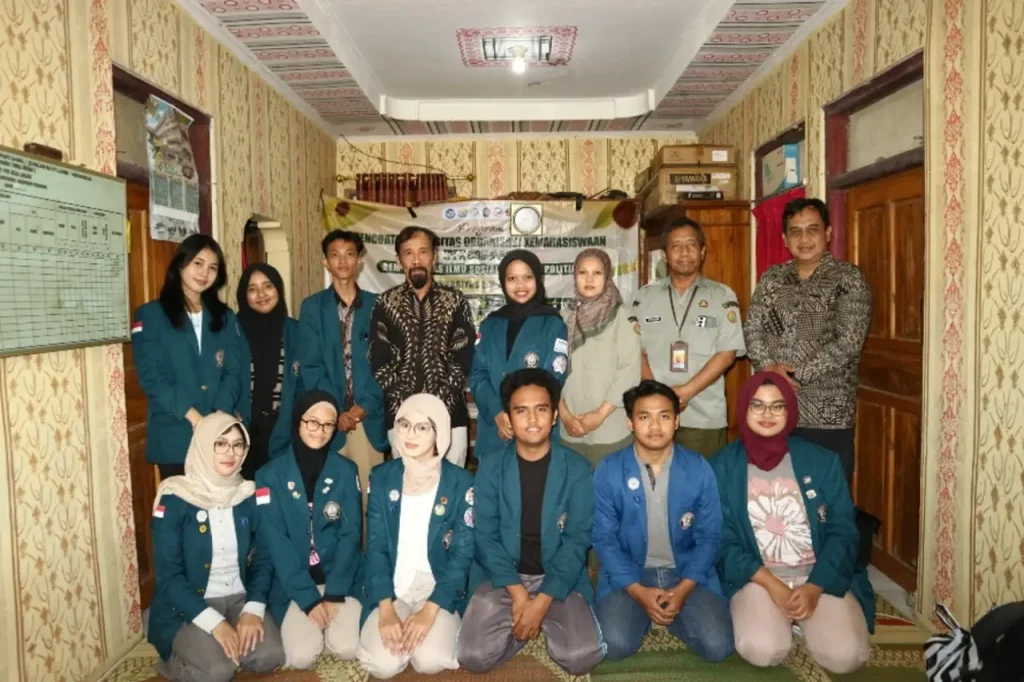
Through this activity, the PPK Ormawa Team of BEM FISIP, Diponegoro University, hopes that the farmers of Lanjan Village will be able to apply better coffee cultivation techniques to improve both the productivity and quality of their harvest. This practical assistance is also part of an effort to strengthen farmers’ capacity while supporting the sustainability of the Gerakan Kopi Berdaya (GKB) Program in realizing community economic empowerment based on local coffee potential.