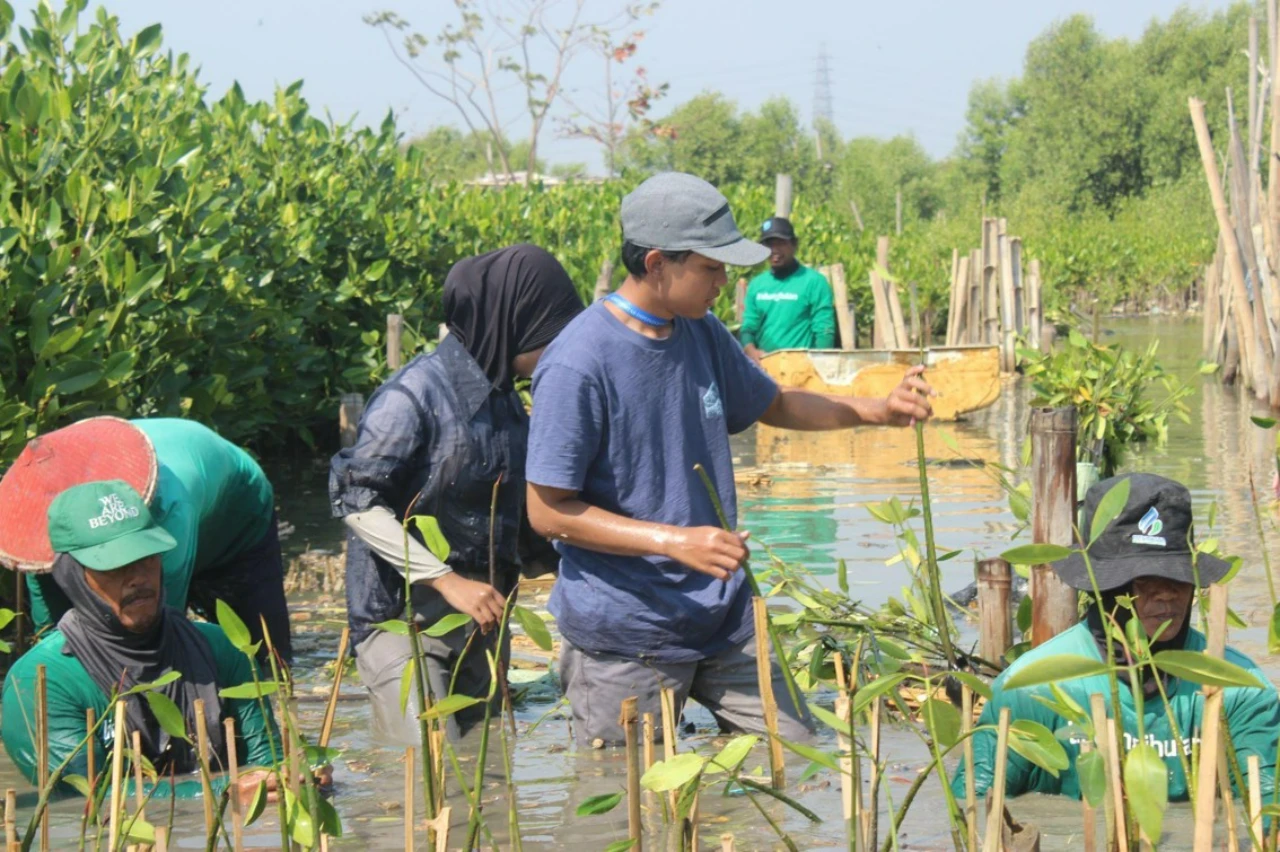
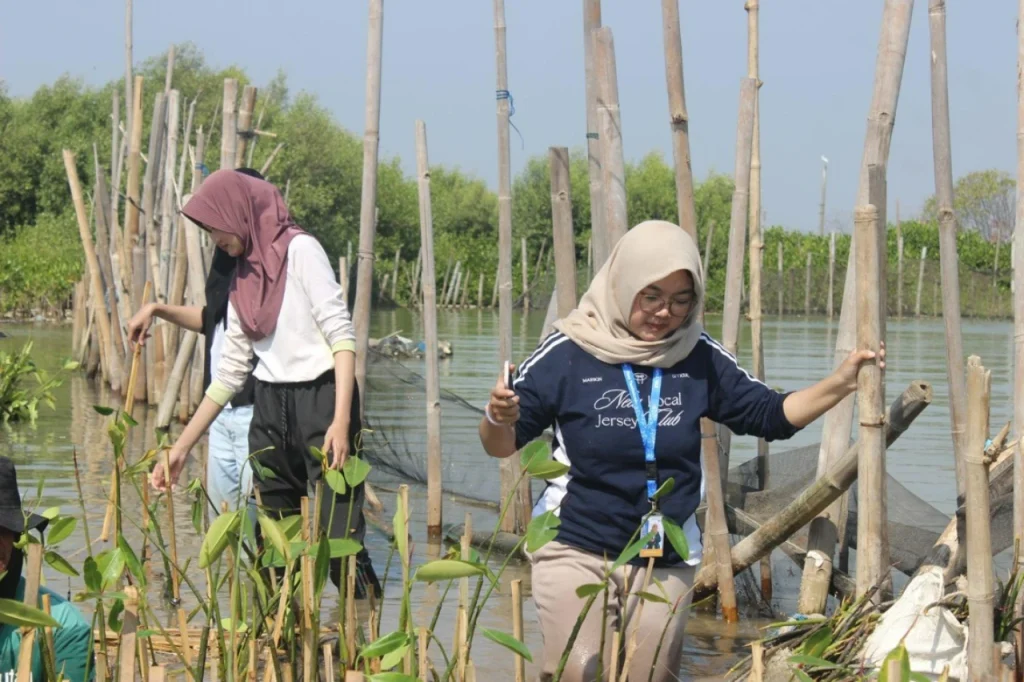
SEMARANG – As a concrete action to mitigate climate change, the KKN-T IDBU 16 team from Universitas Diponegoro, together with local residents, held a mangrove planting activity in the Tambak Lorok conservation area, located in the coastal region of Tanjung Mas, North Semarang, on Tuesday (14/7/2026). Under the guidance of three field supervisors—Robetmi Jumpakita Pinem, S.AB., M.B.A., Ph.D., Dinalestari Purbawati, S.E., M.Si., Akt., and Yudi Eko Windarto, S.T., M.Kom.—the activity used seedlings of the mangrove species Rhizophora mucronata, Rhizophora apiculata, and Avicennia marina to strengthen the coastal ecosystem of northern Semarang. The community group Lindungi Hutan participated as a partner providing seedlings and technical planting assistance, completing the collaboration between academics and the local community.
Mangroves as Blue Carbon and Coastal Defenses
This mangrove planting activity is a tangible manifestation of SDG 17: Partnerships for the Goals, which emphasizes the importance of strengthening cross-sectoral partnerships to achieve sustainable development goals collectively. The collaboration between the university, field supervisors, environmental communities such as Lindungi Hutan, and the coastal community of Tambak Lorok in this activity serves as a concrete example of how synergy between academics and residents can go hand in hand in preserving coastal ecosystems.
Beyond its partnership value, this activity also brings significant ecological benefits. Mangrove ecosystems are known as blue carbon—the world’s largest natural carbon sinks—because they are capable of storing substantial amounts of carbon in their stems, roots, and underlying sediments, far surpassing the capacity of terrestrial forests in general. In addition to being carbon sinks, the mangrove forests in Tambak Lorok function as natural barriers that protect the coast from abrasion and tidal flooding, which frequently affect North Semarang. The dense and sturdy mangrove roots dampen wave action while trapping sediment to maintain shoreline stability, thereby enhancing the resilience of coastal areas against sea-level rise and extreme weather.
Seawall: A Space for Climate Adaptation and the Coastal Community’s Economy
In addition to the mangrove area, climate change adaptation efforts in Tambak Lorok are also visible in the Seawall area in RW 15 and RW 16. Field observations in this area were conducted by the KKN-T IDBU 16 team on Wednesday (15/07/2026) under the guidance of the three field supervisors. This academic mentoring is part of strengthening the synergy between universities and communities in supporting both climate change mitigation and adaptation programs in coastal areas.
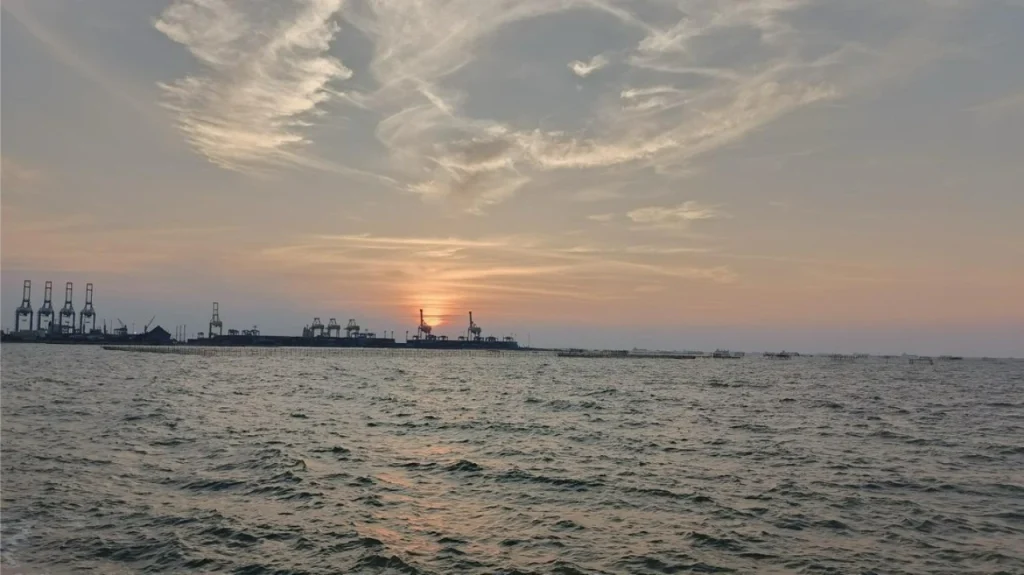
This seawall was originally built as mitigation infrastructure to withstand high tides and prevent tidal flooding. Today, its function has evolved into a public space that supports the socio-economic resilience of the community. The prime spot is at Seawall RW 15, a favorite location for watching the sunset with a parking fee of IDR 2,000, while local fishermen have turned their docked boats into marine tourism rides at a rate of around IDR 25,000 per person. RW 16, on the other hand, offers a gently sloping sandy area overgrown with mangroves, suitable for playing in the water, similar to Marina Beach. This combination of mitigation infrastructure and community-based economy exemplifies how cross-sector partnerships, as mandated by SDG 17, can go hand in hand with the welfare of coastal communities.
Cross-Sector Synergy for Ecosystem Sustainability
The mangrove planting and the development of the Seawall area are the results of cross-sector synergy involving the government, universities, environmental communities such as Lindungi Hutan, private companies, and local residents—a pentahelix collaboration model that is central to SDG 17. This collaboration is crucial to ensure that conservation actions do not stop at ceremonial activities but continue through maintenance, monitoring, and environmental education for the younger generation. In addition to preserving ecological aspects and the habitat of marine life that supports local fishermen, this area has also spurred local economic growth through MSMEs and supporting services for coastal ecotourism.
Through the combination of mangrove planting and the utilization of the Seawall, built on the foundation of cross-sector partnerships, Tambak Lorok has successfully transformed into an independent tourism village. This integrated development serves as concrete evidence that community-based collaboration between academics, government, and local communities can create broad and tangible impacts. The success of this area also serves as a model for how multi-stakeholder partnerships can promote environmental sustainability while improving the welfare of coastal communities, in line with the achievement of SDG 17: Partnerships for the Goals.