

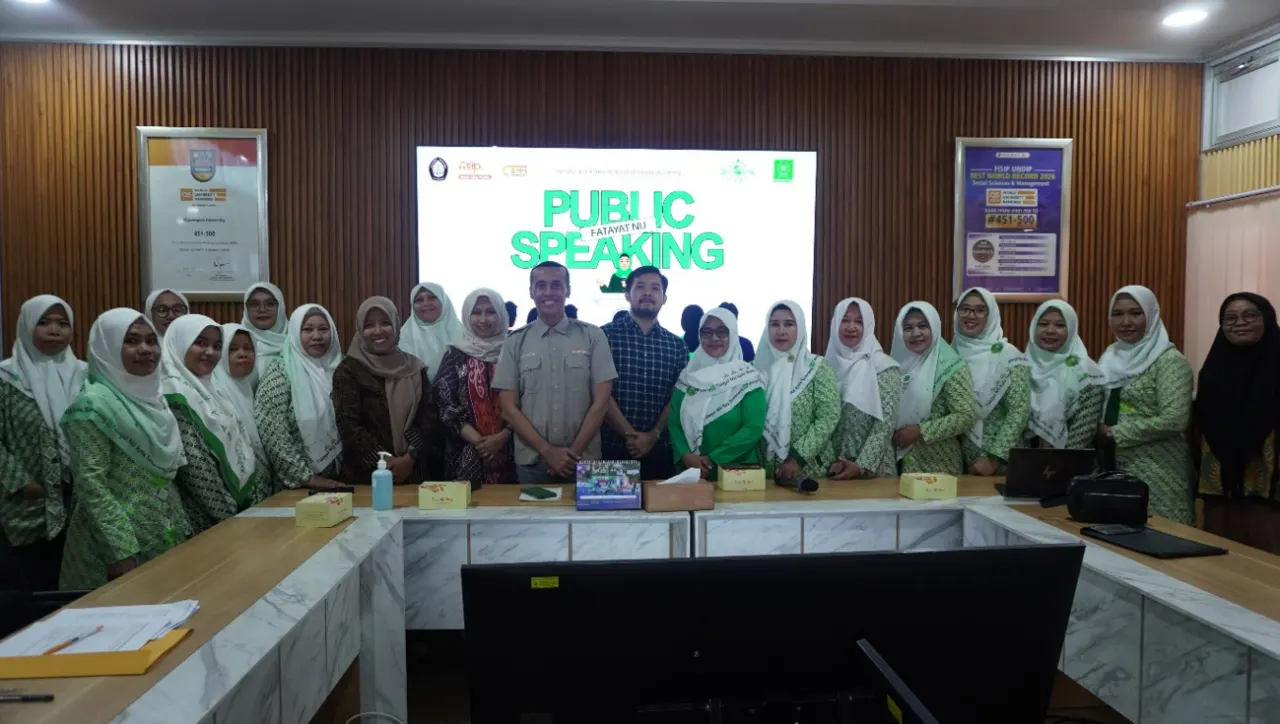
Semarang, Indonesia — The Media Sociology Research Group (Kelompok Bidang Keahlian or KBK Sosiologi Media) of the Department of Communication Science, Faculty of Social and Political Sciences (FISIP), Universitas Diponegoro (UNDIP), conducted a community engagement program in collaboration with Fatayat Nahdlatul Ulama (NU) in Semarang on July 8, 2026. The program focused on strengthening digital literacy and communication skills to enhance women’s capacity to navigate the challenges of the digital communication era.
The program was coordinated by the Media Sociology Research Group, chaired by Dr. Nurul Hasfi, M.A. The community engagement team comprised seven members of the research group: Dr. Nurul Hasfi, M.A.; Dr. Agus Naryoso, S.Sos., M.Si.; Dr. Yanuar Luqman, M.Si.; Muchamad Yuliyanto, S.Sos., M.Si.; Dr. Phil. Nuriyatul Lailiyah; Herlina Kusumaningrum, S.Sos., M.A.; and Muhammad Rif’at Al-Razi, S.I.Kom., M.I.Kom. Their involvement reflects the department’s commitment to applying communication and media scholarship to address community needs.
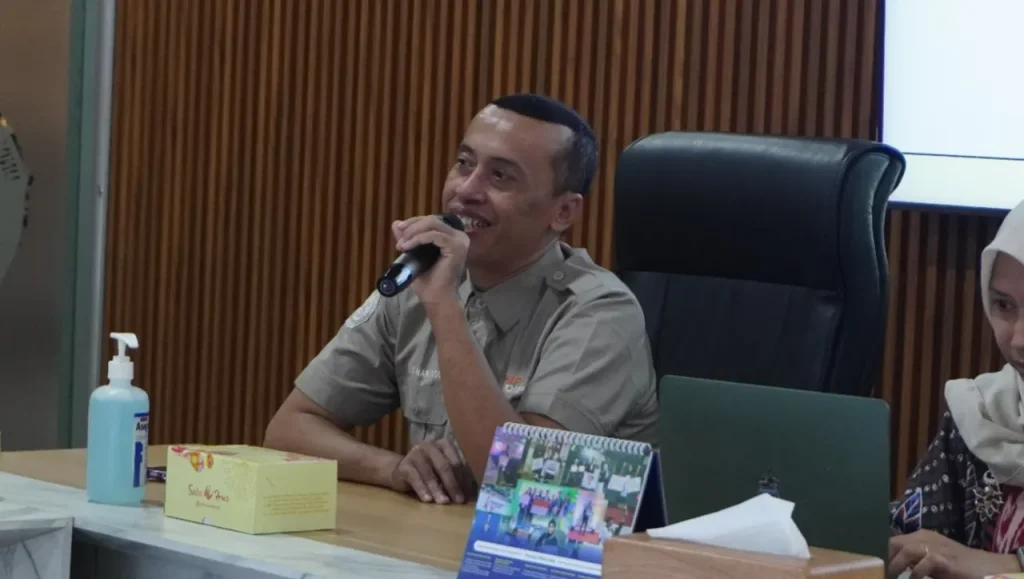
The Head of the Department of Communication Science at FISIP UNDIP, Dr. Agus Naryoso, S.Sos., M.Si., expressed his support for community engagement initiatives that connect communication scholarship with practical societal needs. The collaboration with Fatayat NU in Semarang is expected to provide a platform for knowledge sharing while strengthening women’s capacity to communicate effectively, manage information, and participate actively in social and digital environments.
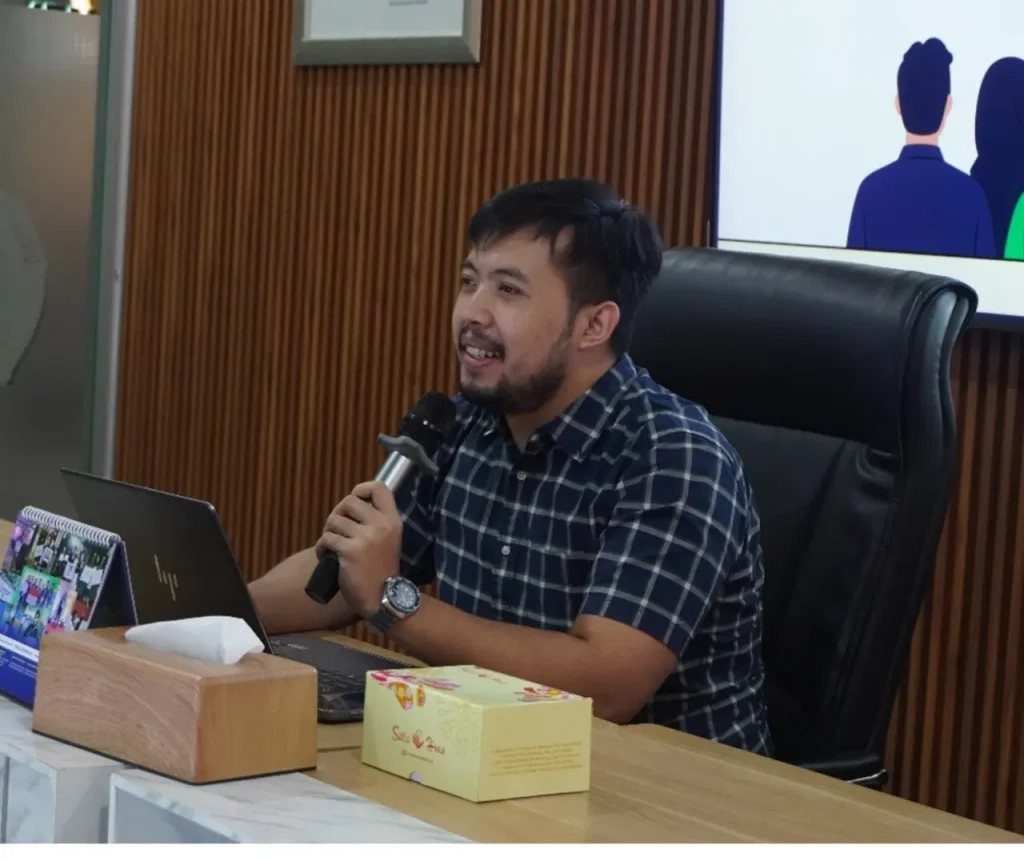
The training sessions were delivered by three members of the Media Sociology Research Group: Muhammad Rif’at Al-Razi, S.I.Kom., M.I.Kom.; Dr. Phil. Nuriyatul Lailiyah; and Muchamad Yuliyanto, S.Sos., M.Si. The sessions focused on digital literacy and communication skills relevant to the participants’ needs, including responsible digital media use, the ability to identify and evaluate information, and effective message delivery.
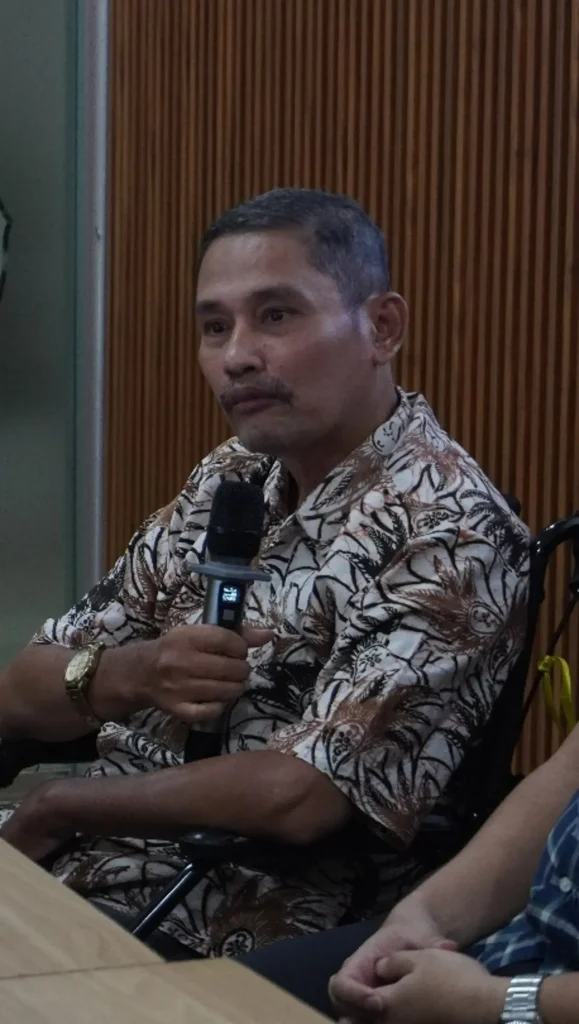
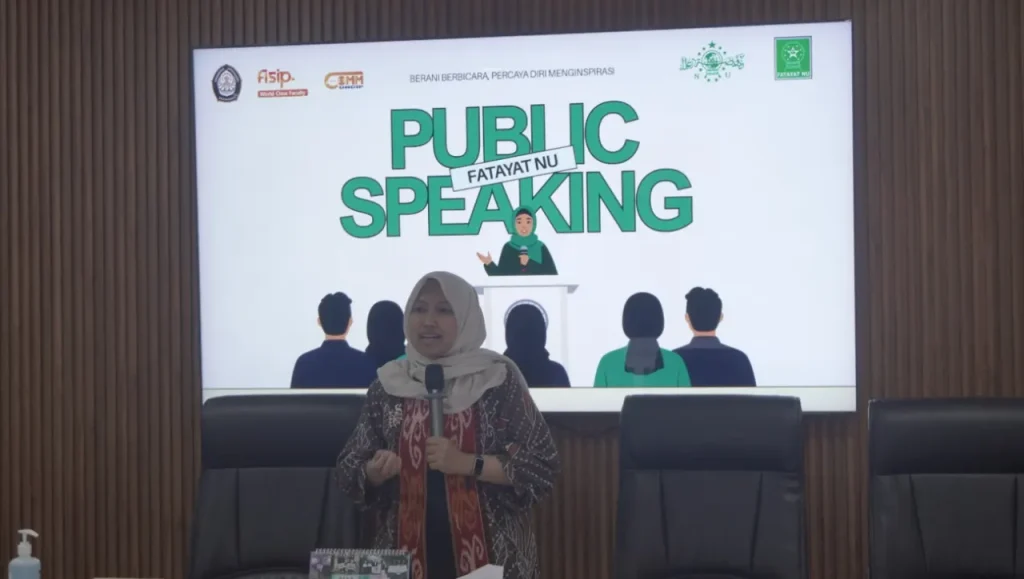
The program incorporated participatory discussions and public speaking training. The discussions provided opportunities for participants to share experiences and identify communication challenges in their organizational activities. Meanwhile, the public speaking sessions focused on building confidence, structuring messages, understanding audiences, and using vocal techniques and body language effectively.
Digital literacy was an essential component of the program, as developments in information technology present both opportunities and challenges for society. The ability to access and evaluate information, communicate ethically, and use digital media responsibly is increasingly important, particularly for community organization members who contribute to public education and community empowerment.
For the Media Sociology Research Group, this initiative represents an application of scholarly perspectives on the relationship between media, society, and everyday communication practices. Community members are viewed not merely as media users, but also as active participants who can contribute to building an informative, inclusive, and responsible communication environment.
Through its collaboration with Fatayat NU in Semarang, the Media Sociology Research Group of the Department of Communication Science, FISIP UNDIP, hopes to generate lasting benefits by strengthening women’s digital literacy and communication skills. The initiative also reinforces the university’s role in connecting academic knowledge with the practical needs of the community.
This program aligns with FISIP UNDIP’s commitment to advancing social and communication sciences that respond to societal challenges and generating meaningful contributions through education, research, and community engagement.
Writer: Muhammad Rif’at Al-Razi