

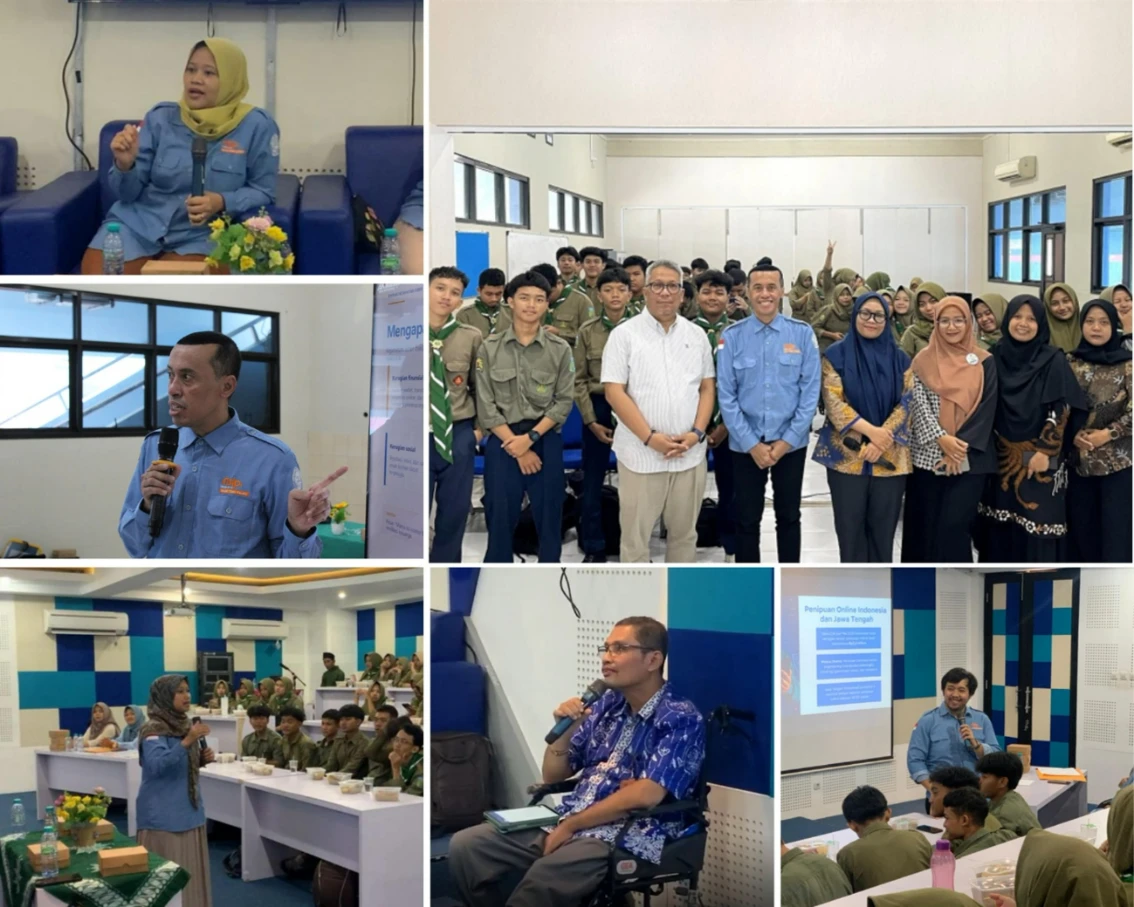
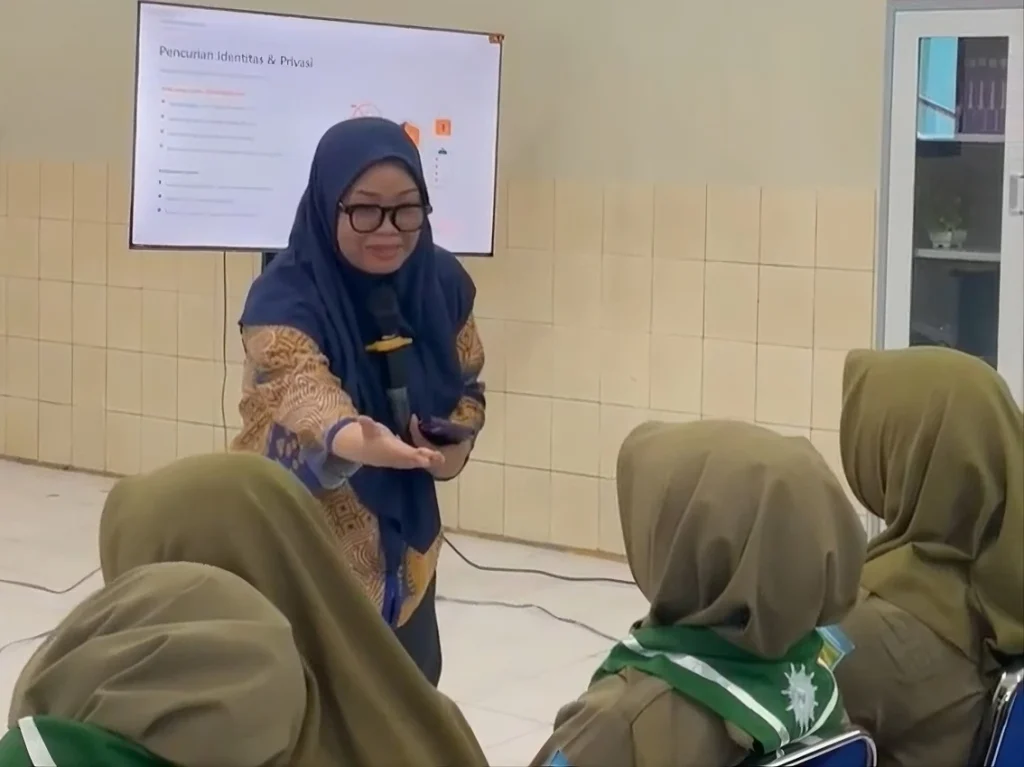
Semarang –The growing number of online scams, online gambling cases, misuse of personal data, and online gender-based violence has highlighted the urgent need to strengthen digital literacy among the public. In response to these challenges, the Department of Communication Science, Faculty of Social and Political Sciences (FISIP), Universitas Diponegoro (UNDIP), through its Media Sociology Research Group, organized a community engagement program focusing on digital literacy and cybercrime prevention at Muhammadiyah Vocational High School 1 Semarang (SMK Muhammadiyah 1 Semarang) on May 21. The program was attended by students and teachers.
The program, led by Dr. Nurul Hasfi, S.Sos., M.A., Head of the Media Sociology Research Group, featured two teams of lecturers who provided educational sessions on digital competence and awareness of various cyber threats in today’s digital environment.
In the first session, Muhammad Rif’at Al-Razi, S.I.Kom., M.I.Kom. delivered a presentation on digital literacy, moderated by Dr. Phil. Nuriyatul Lailiyah, S.Sos., M.I.Kom. The session addressed a wide range of challenges faced by modern digital society, including misinformation and disinformation, online gambling, illegal online lending platforms, gadget addiction, online gender-based violence, and the rapid development of artificial intelligence (AI).
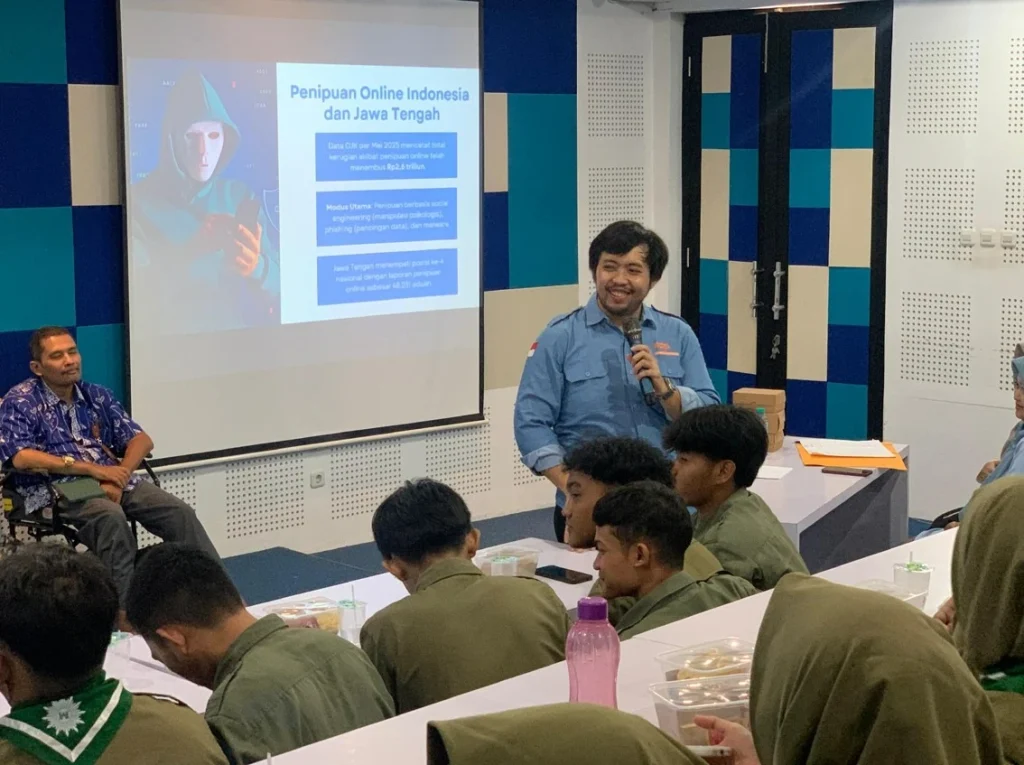
According to Rif’at, the widespread use of the internet must be accompanied by the ability to evaluate information critically, protect personal data, and understand ethical behavior in digital environments.
“Young people today live in a highly connected environment. Therefore, critical thinking skills and an understanding of technological risks are essential so that individuals do not easily fall victim to various problems in the digital sphere,” he explained.
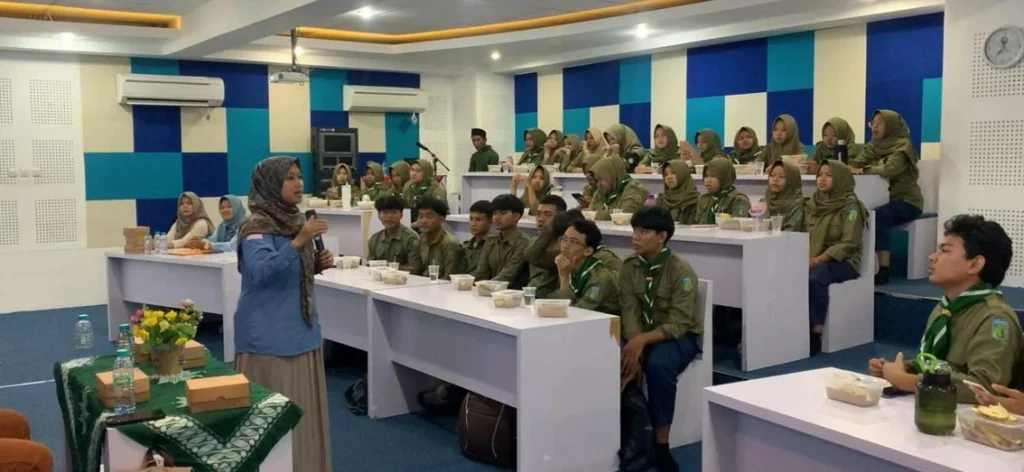
The session, moderated by Dr. Nuriyatul Lailiyah, was highly interactive and engaging. In addition to facilitating the presentation, she encouraged participants to reflect on their daily experiences with digital media. Through a series of thought-provoking questions, participants discussed challenges related to social media use, access to digital information, and the increasing integration of AI technologies into everyday life.
The discussion became even more dynamic as participants raised questions regarding social media security, the use of AI in education, the growing phenomenon of online gambling, and strategies for combating misinformation and disinformation. During the discussion, Dr. Nurul Hasfi also responded to participants’ questions and shared insights on current digital issues.
Nurul emphasized that digital literacy is not solely an individual responsibility but requires the involvement of multiple stakeholders, including families, schools, communities, governments, and media organizations.
“Technological development brings numerous benefits, but it also creates new risks. Therefore, the ability to understand and manage digital risks should become an essential life skill in today’s society,” she stated.
The second session featured a team of lecturers consisting of Dr. Agus Naryoso, S.Sos., M.Si., Muchamad Yulianto, S.Sos., M.Si., Dr. Yanuar Luqman, S.Sos., M.Si., and Herlina Kusumaningrum, S.Sos., M.A., who discussed various forms of cybercrime that increasingly target members of the public.
The session covered different forms of digital crime, including phishing, identity theft, malware attacks, online transaction fraud, online gambling, and the exploitation of children through digital platforms. Participants were also introduced to various social engineering techniques commonly used by cybercriminals to manipulate victims and gain unauthorized access to personal information.
In addition, the speakers addressed the growing concerns surrounding child grooming and sextortion across digital platforms. Through real-life case studies, participants learned how to identify warning signs, implement preventive measures, and take appropriate action when encountering cybercrime incidents in their communities.
According to Dr. Agus Naryoso, advances in digital technology have made cybercrime increasingly sophisticated and difficult to recognize without adequate knowledge and awareness.
“Today, cybercriminals do not rely solely on technical skills. They also exploit victims’ psychology through various forms of social engineering. Therefore, people need to be more vigilant and avoid sharing personal information with unknown or unverified parties,” he explained.
Agus added that digital security education must be conducted continuously, as cybercrime methods continue to evolve alongside technological developments and changing online behavior.
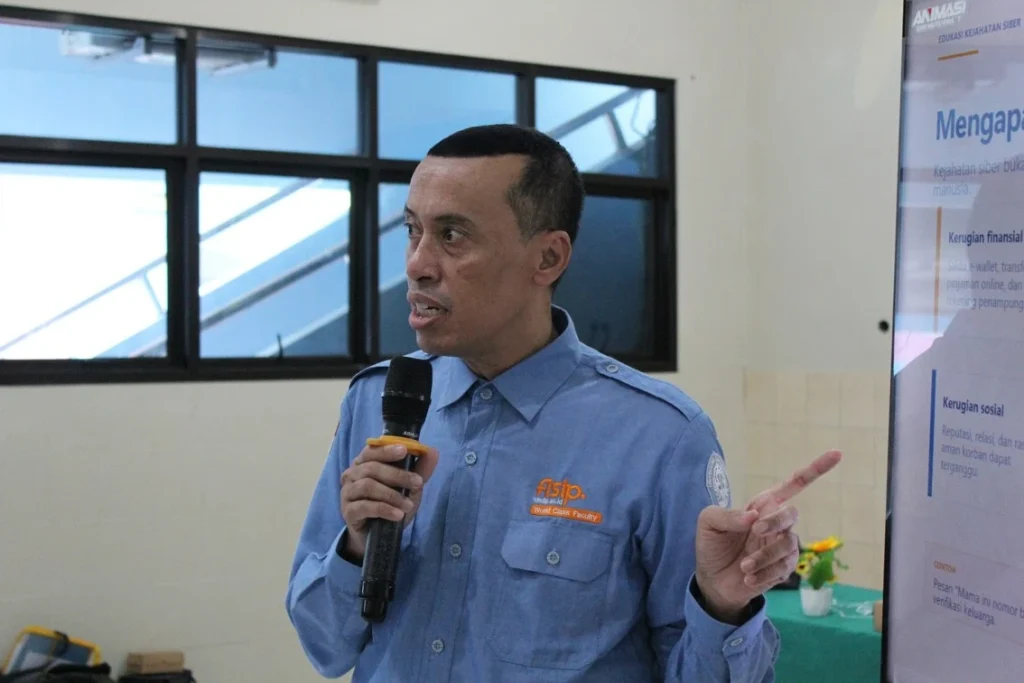
Participants showed great enthusiasm during the question-and-answer session, which covered issues such as fraud conducted through messaging applications, digital transaction security, personal data protection, and methods for securing social media accounts against hacking attempts. The speakers explained common cybercrime schemes and shared practical strategies to help individuals avoid becoming victims.
The lecturers also stressed the importance of fostering a culture of vigilance and reporting as part of broader cybercrime prevention efforts. Participants were encouraged to be more cautious when sharing personal information and to verify online information and transactions before taking action.
Through this community engagement initiative, the Department of Communication Science at FISIP UNDIP hopes to strengthen the ability of students and community members, particularly young people, to utilize technology in a smart, safe, and responsible manner. Enhancing digital literacy is considered a crucial step toward building a resilient society amid the rapid advancement of information and communication technologies.
At the conclusion of the program, Dr. Nurul Hasfi reaffirmed that digital literacy has become a fundamental necessity in the digital era.
“Digital literacy is not only about the ability to use technology, but also about the ability to use it wisely, critically, and responsibly. Through this community engagement program, we hope that society will be better prepared to face challenges while taking advantage of the opportunities offered by digital transformation,” she concluded.
Author: Muhammad Rif’at Al-Razi