
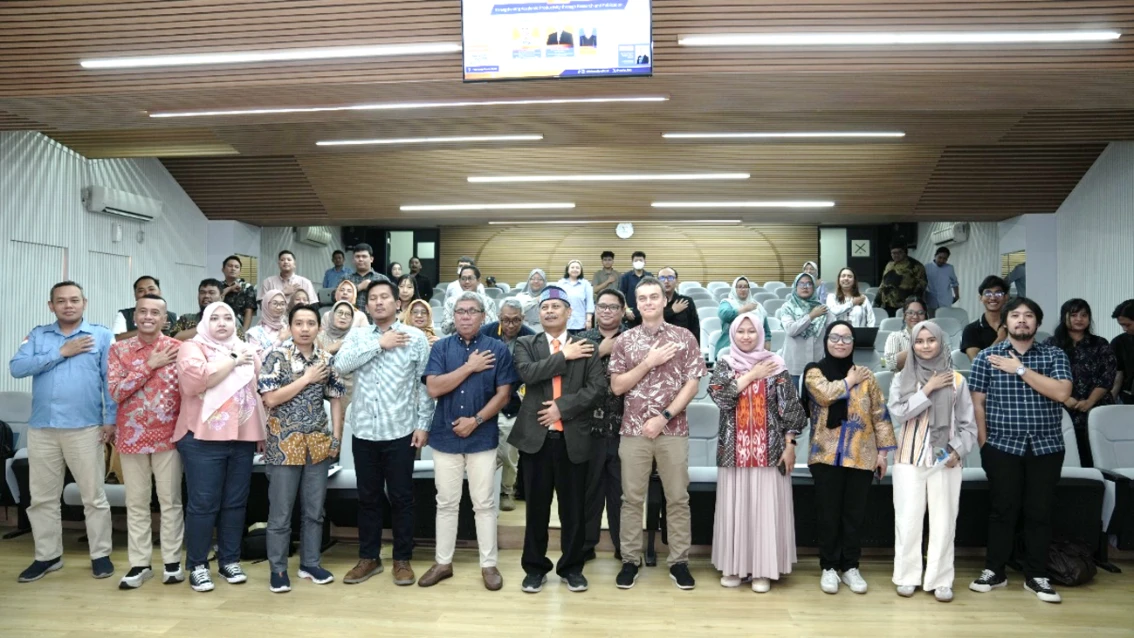
Semarang (6/3) – The Faculty of Social and Political Sciences (FISIP), Universitas Diponegoro (UNDIP), reaffirmed its commitment to strengthening academic culture and international academic engagement through a General Lecture entitled “Strengthening Academic Productivity through Research and Publication.” Held at the FISIP UNDIP Theater Room, the event featured Dr. Micah R. Fisher from the University of Hawaiʻi at Mānoa, United States, as the keynote speaker.
The event was organized by the Department of Communication Science through its Media Sociology Research Group (KBK Sosiologi Media), chaired by Dr. Nurul Hasfi, S.Sos., M.A., with support from the UNDIP Equity Program 2026. The forum was attended by faculty leaders, lecturers, researchers, students, and members of the academic community who were eager to explore issues related to academic productivity, research quality, and publication impact.
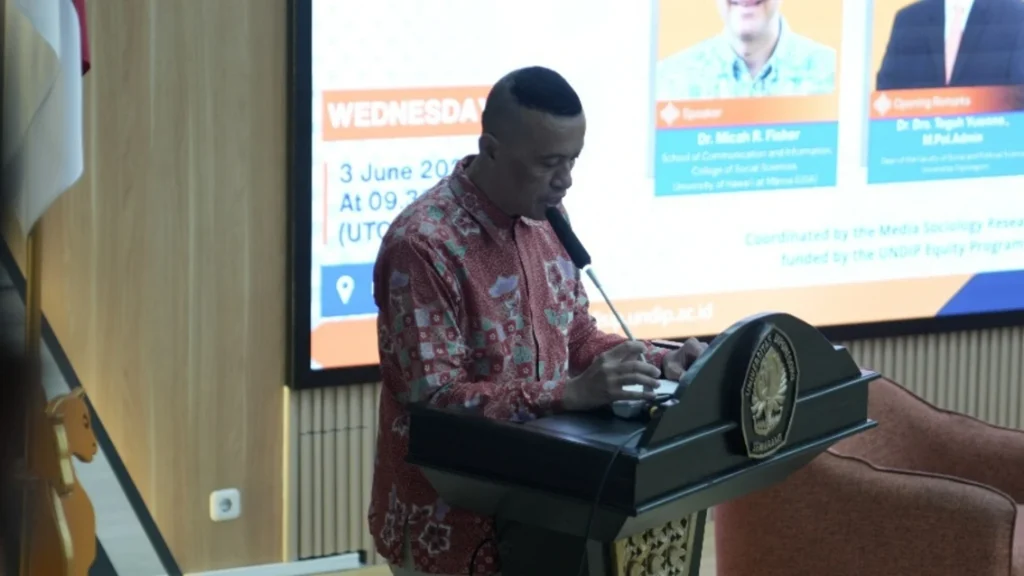
In his welcoming remarks, the Head of the Department of Communication Science, Dr. Agus Naryoso, S.Sos., M.Si., emphasized that international academic initiatives such as this are part of ongoing efforts to strengthen academic culture within FISIP UNDIP. According to him, a strong academic culture serves as an important foundation for producing high-quality research, expanding scholarly collaboration, and enhancing universities’ contributions to society.
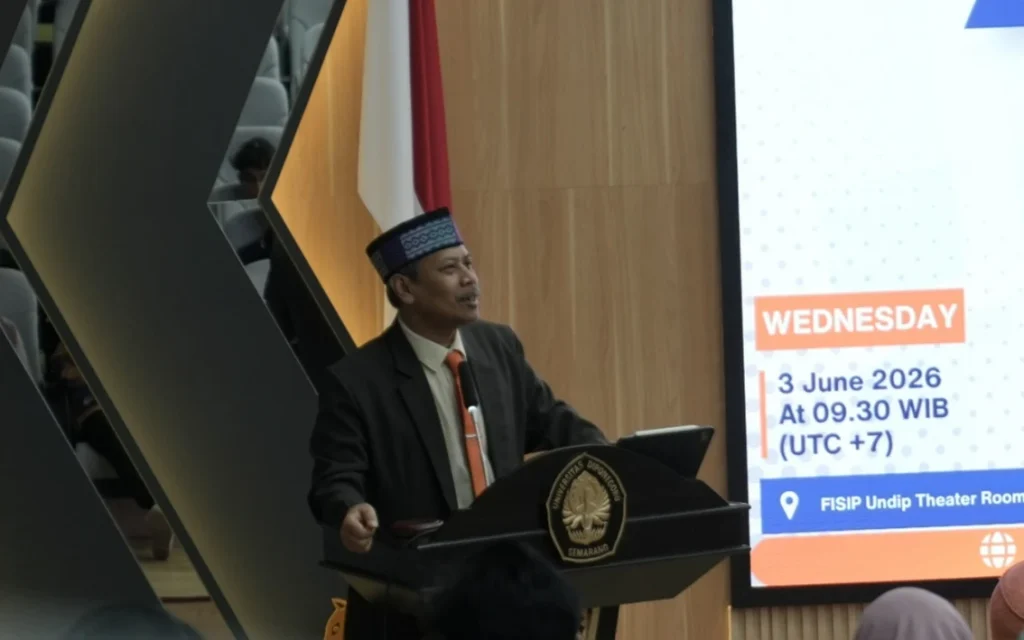
Meanwhile, the Dean of FISIP UNDIP, Dr. Drs. Teguh Yuwono, M.Pol.Admin., expressed his appreciation to all parties involved in organizing the event, particularly Dr. Agus Naryoso and Dr. Nurul Hasfi as Chair of the Media Sociology Research Group. He also thanked Dr. Micah for sharing his expertise and academic experiences with the FISIP UNDIP community.
According to the Dean, initiatives such as this are expected to further strengthen academic culture while enhancing the academic reputation of FISIP UNDIP at both national and international levels.
During his lecture, Dr. Micah presented “Making Magic: 10 Keys to Academic Productivity, Quality, and Impact.” He encouraged participants to view research not merely as an academic obligation, but as an intellectual journey driven by curiosity, consistency, and a commitment to creating meaningful societal impact.
According to Dr. Micah, increasing academic productivity is not simply about publishing more papers. It is also about cultivating critical thinking, fostering scholarly discussion, and producing work that contributes to both academic knowledge and society. He emphasized that impactful research always begins with meaningful questions and sustained intellectual curiosity.
Dr. Micah also shared insights from his academic career at the School of Communication and Information, College of Social Sciences, University of Hawaiʻi at Mānoa. His expertise focuses on environment, equity, and social change, and he previously served as a researcher at the East-West Center in Honolulu, Hawaiʻi. His experience provided participants with a global perspective on building sustainable academic productivity amid the increasingly competitive landscape of higher education.
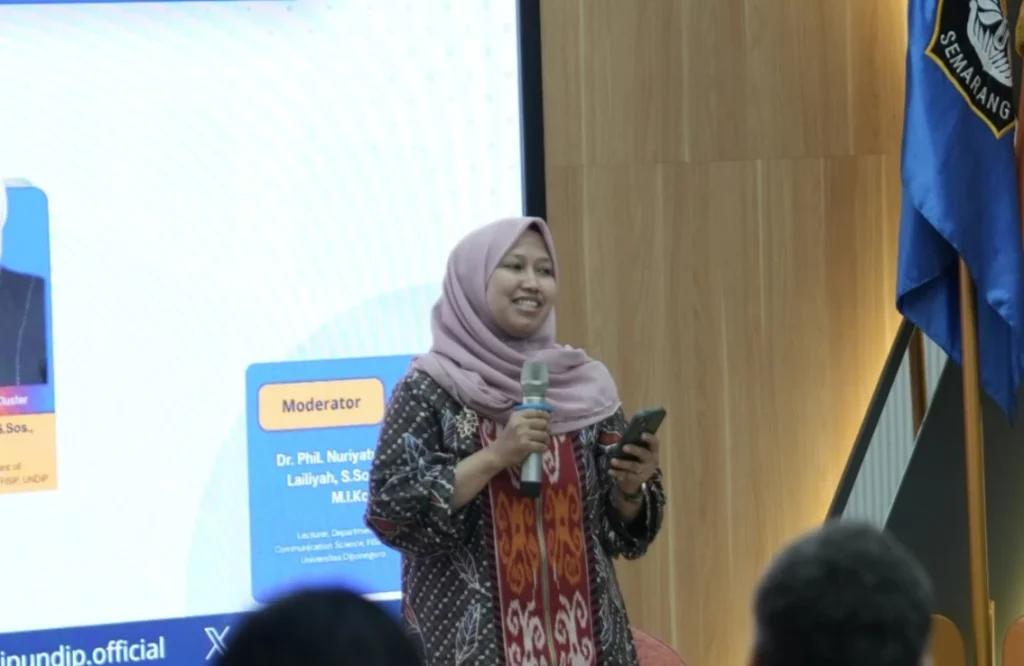
The General Lecture was moderated by Dr. Phil. Nuriyatul Lailiyah, S.Sos., M.I.Kom., a lecturer in the Department of Communication Science, FISIP UNDIP. Under her moderation, the session featured active discussions on academic productivity, research development, and strategies for increasing the quality and impact of scholarly publications.
Through this General Lecture, lecturers, researchers, and students of FISIP UNDIP had the opportunity to engage in in-depth discussions on strategies for improving research quality, increasing publication productivity, and addressing the challenges of a rapidly globalizing academic environment. The discussion extended beyond technical aspects of writing to include the importance of creating an academic ecosystem that supports collaboration, creativity, and innovation.
Dr. Micah expressed his appreciation for the enthusiasm of participants and the strong institutional support demonstrated throughout the event.
“I am very excited by the tremendous enthusiasm and support shown by both the Department of Communication Science and FISIP UNDIP,” he remarked.
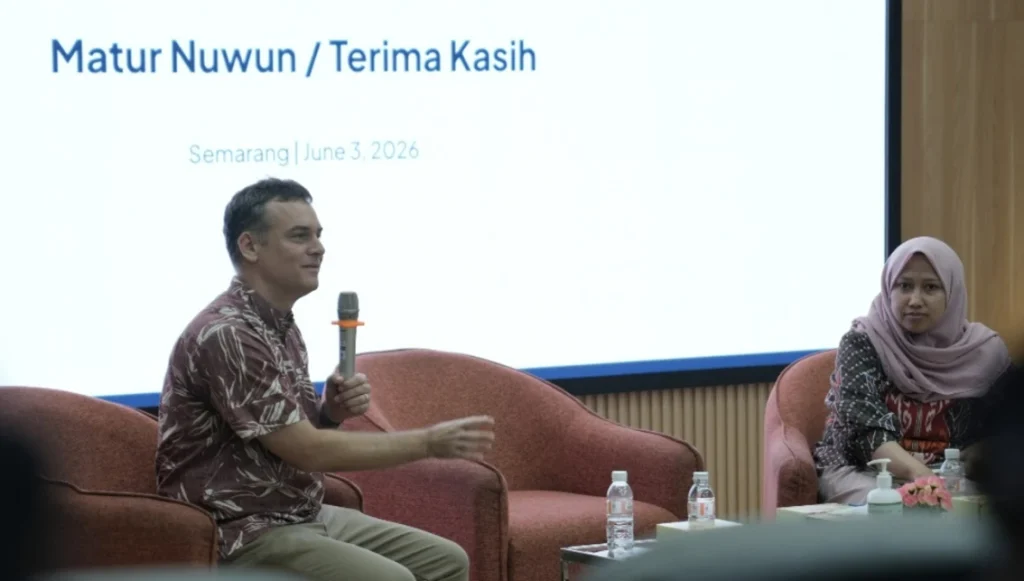
He further noted that institutional support is one of the most important foundations for building a productive and sustainable research ecosystem. When faculties, departments, and academic communities work collectively to support research and publication, the quality and impact of scholarly outputs can significantly increase.
The event formed part of the Joint Supervision Program under the UNDIP Equity Program 2026 coordinated by the Media Sociology Research Group of the Department of Communication Science, FISIP UNDIP. The program serves as a strategic initiative to expand international collaboration, strengthen academic capacity, and enhance research and publication quality across Universitas Diponegoro.
Through initiatives such as this, FISIP UNDIP continues to strengthen academic culture, increase research productivity, and expand international academic networks. The spirit of collaboration, innovation, and scholarly excellence remains central to FISIP UNDIP’s mission to contribute to society and support Universitas Diponegoro’s vision of becoming a World Class University.
Writer: Muhammad Rif’at Al-Razi