

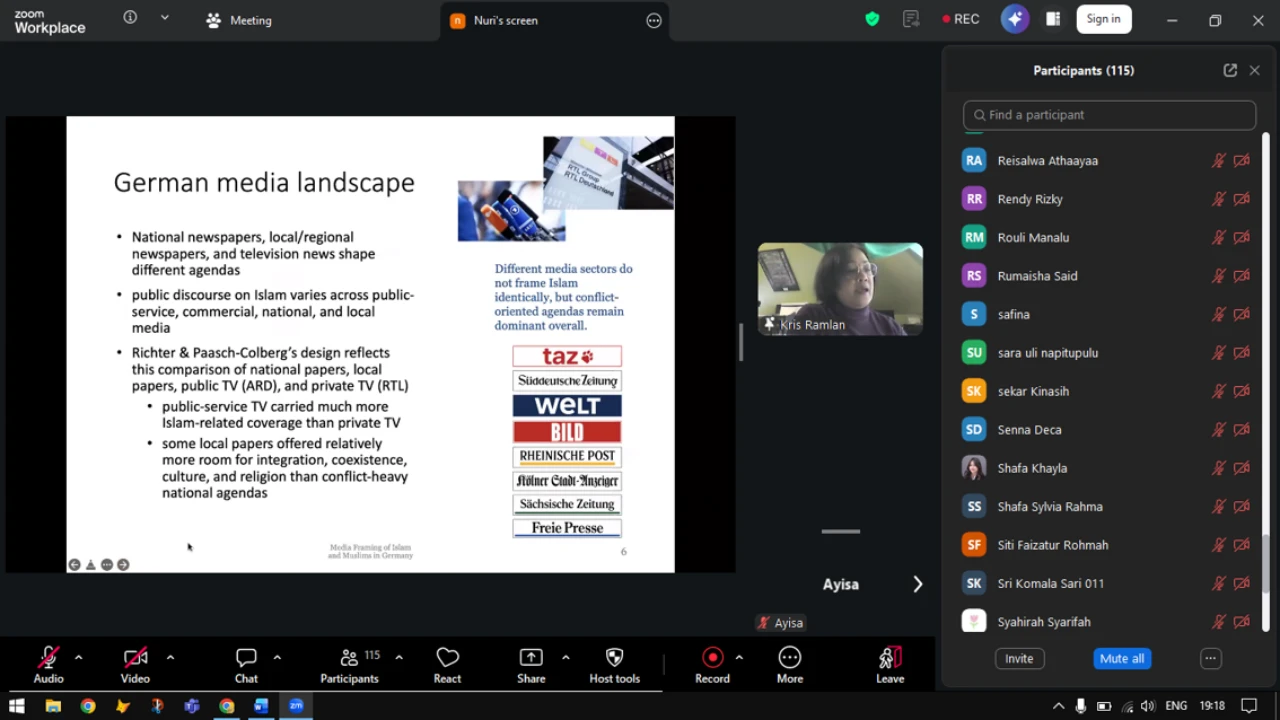
SEMARANG, MAY 25, 2026 – The Department of Communication Studies at the Faculty of Social and Political Sciences, Diponegoro University, through the Media Sociology Study Program, held an Undip Global Classroom (UGC) program as part of an international lecture series titled “Media Framing of Islam and Muslims in Germany: From Crisis Narratives to Everyday Citizenship.” The event, held on May 25, 2026, featured Dr. Kris Ramlan, Research Fellow in Southeast Asian Studies at Goethe University Frankfurt, as the keynote speaker.
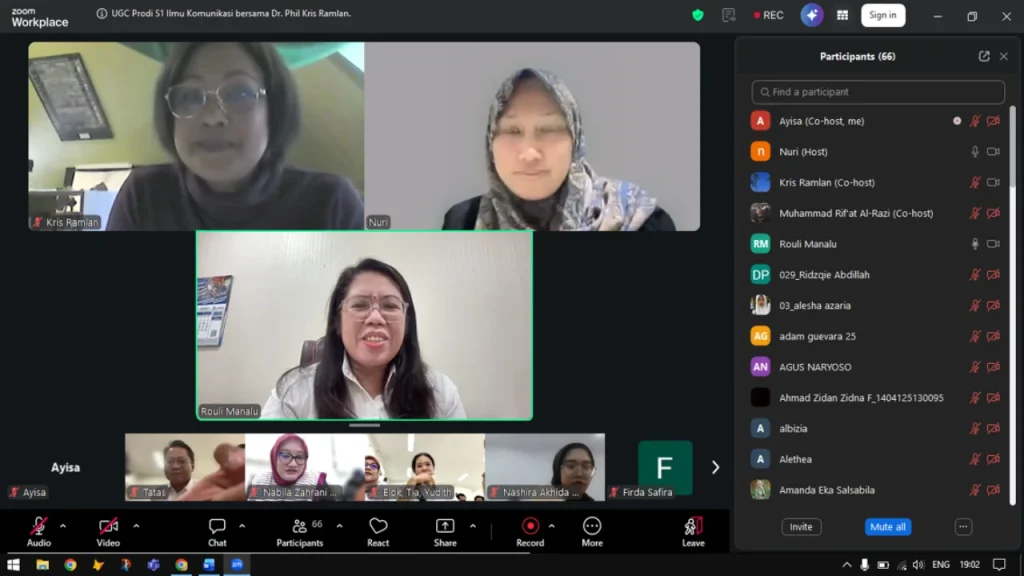
The event was opened by S. Rouli Manalu, Ph.D., Vice Dean for Academic and Student Affairs at the Faculty of Social and Political Sciences (FISIP), Diponegoro University, representing the Dean of FISIP UNDIP. In his opening remarks, he emphasized the importance of international academic collaboration to broaden students’ perspectives amid the highly dynamic developments in the fields of communication and media driven by the advancement of digital technology.
She further explained the connection between the guest lecture’s theme and the course on the philosophy of science: “In the introductory course on the philosophy of science, we learn how to perceive reality and how we present reality in academic and research contexts. Therefore, it is crucial to listen to Dr. Kris Ramlan’s presentation.”
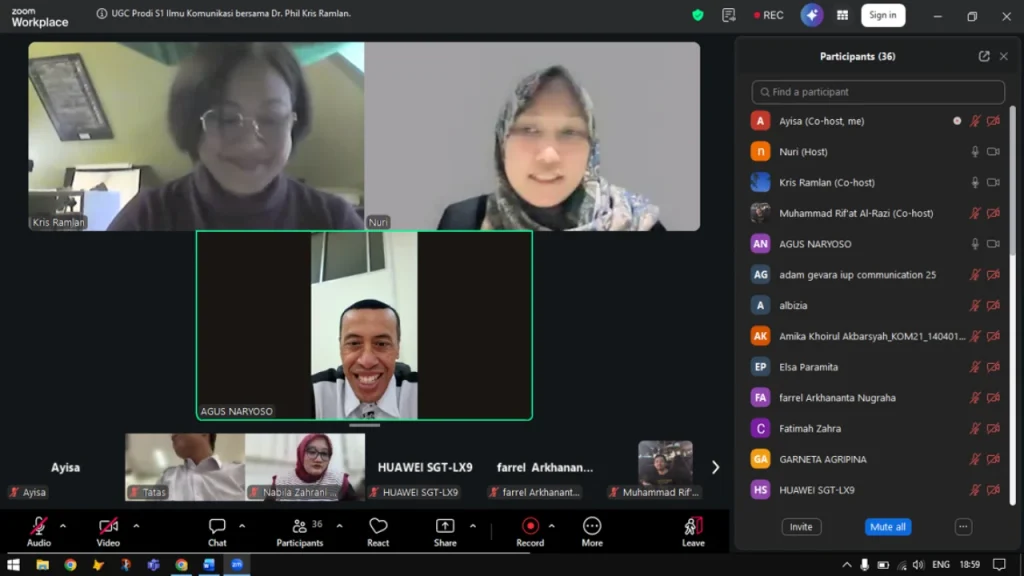
The event was attended by the Chair of the Department of Communication Studies, Dr. Agus Naryoso, M.Si., the Media Sociology KBK Team, and 117 students from the Department of Communication Studies at FISIP UNDIP.
In his presentation, Dr. Kris Ramlan noted that while German media portray Islam in diverse ways, a conflict-oriented agenda remains the dominant theme overall. Furthermore, mainstream media still frequently frame Islam solely through narratives of crisis and conflict. This results in a lack of diverse information regarding the daily lives of Muslim residents in Germany.
Through this event, the Department of Communication Studies at FISIP UNDIP hopes that the UNDIP Global Classroom Program can serve as a space for international academic exchange capable of enriching students’ understanding of media development trends on the global stage.