
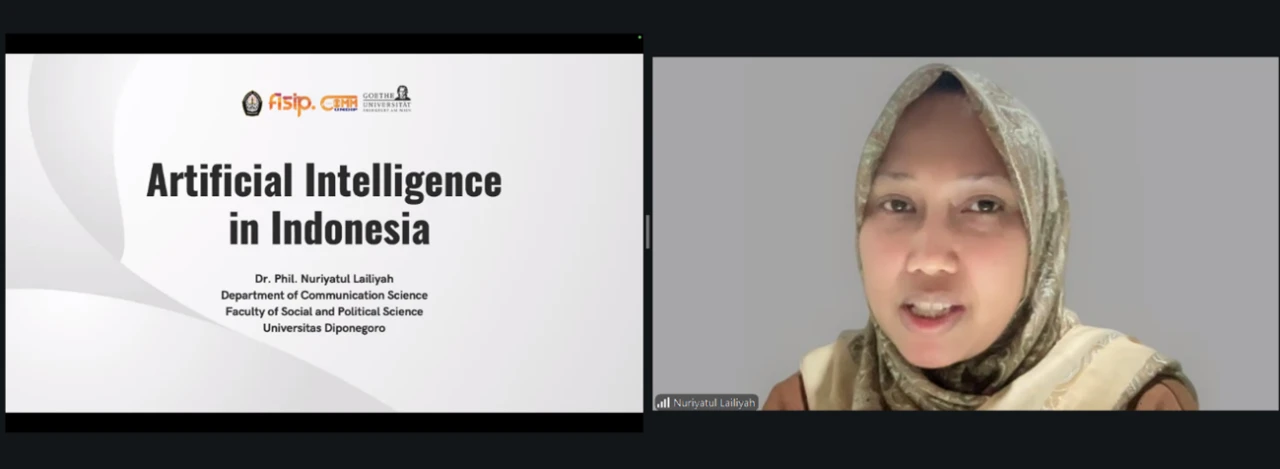
Semarang – A lecturer from the Communication Science Program, Faculty of Social and Political Sciences at Universitas Diponegoro (FISIP UNDIP), Dr. Phil. Nuriyatul Lailiyah, presented her research at an international colloquium held at Goethe University Frankfurt, Germany.
In her presentation, she explored the development of Artificial Intelligence (AI) in Indonesia, highlighting the gap between national policy frameworks and practical implementation.
She explained that Indonesia has established a national AI roadmap covering infrastructure and data readiness, talent development, research and innovation, as well as ethics and governance. However, challenges remain in terms of implementation, including data security issues, technological readiness, and uneven adoption across sectors.
She also examined the social dimensions of AI adoption. While there is widespread enthusiasm – both at individual and institutional levels – there are also growing concerns related to ethics, privacy, and data protection.
Furthermore, she addressed critical issues such as AI-driven crime, including deepfake-based misinformation, data breaches, and digital manipulation. These challenges highlight that AI is not merely a technological issue but also a complex social and communication phenomenon.
 |
 |
In the Indonesian context, she emphasized the role of social media in accelerating AI adoption. High engagement in digital platforms has enabled rapid dissemination of AI practices, where users actively exchange prompts, create AI-generated content, and participate in emerging digital trends.
Despite these challenges, AI development also opens significant opportunities for academic research, particularly in digital communication, media studies, and societal impacts of technology. Growing public awareness regarding AI’s implications – ranging from privacy to environmental concerns – offers a rich area for future scholarly exploration.
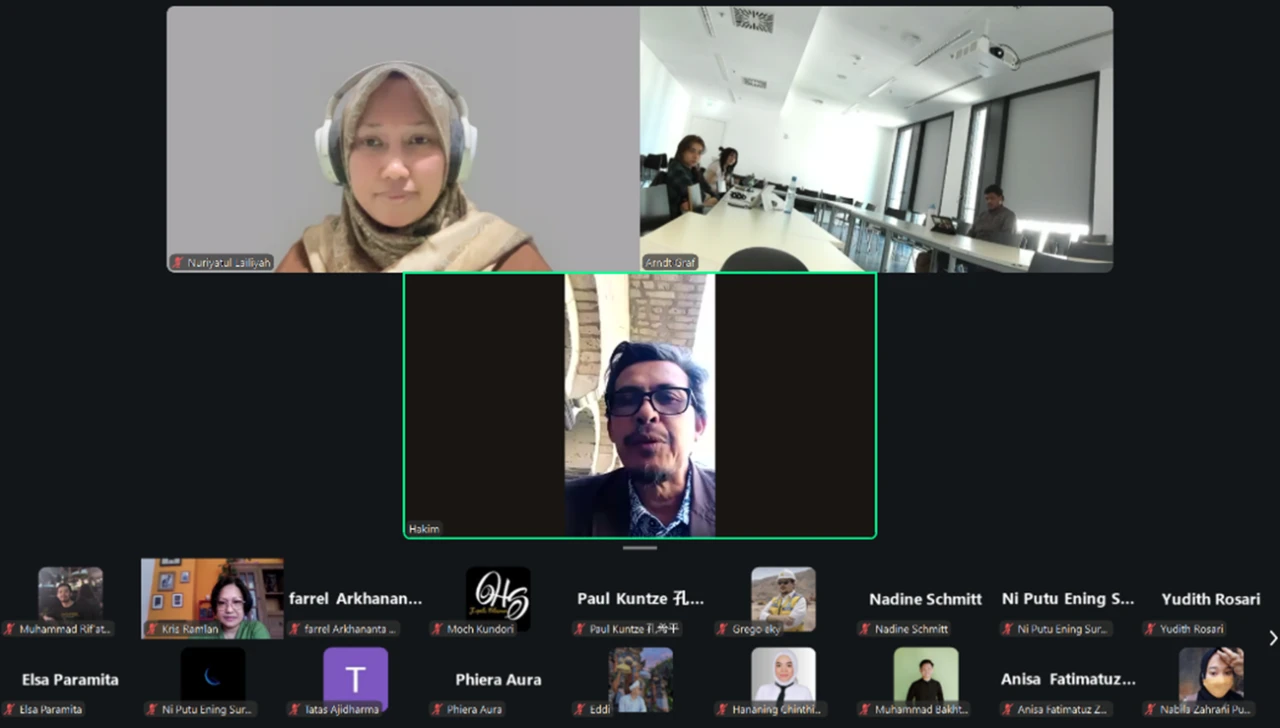
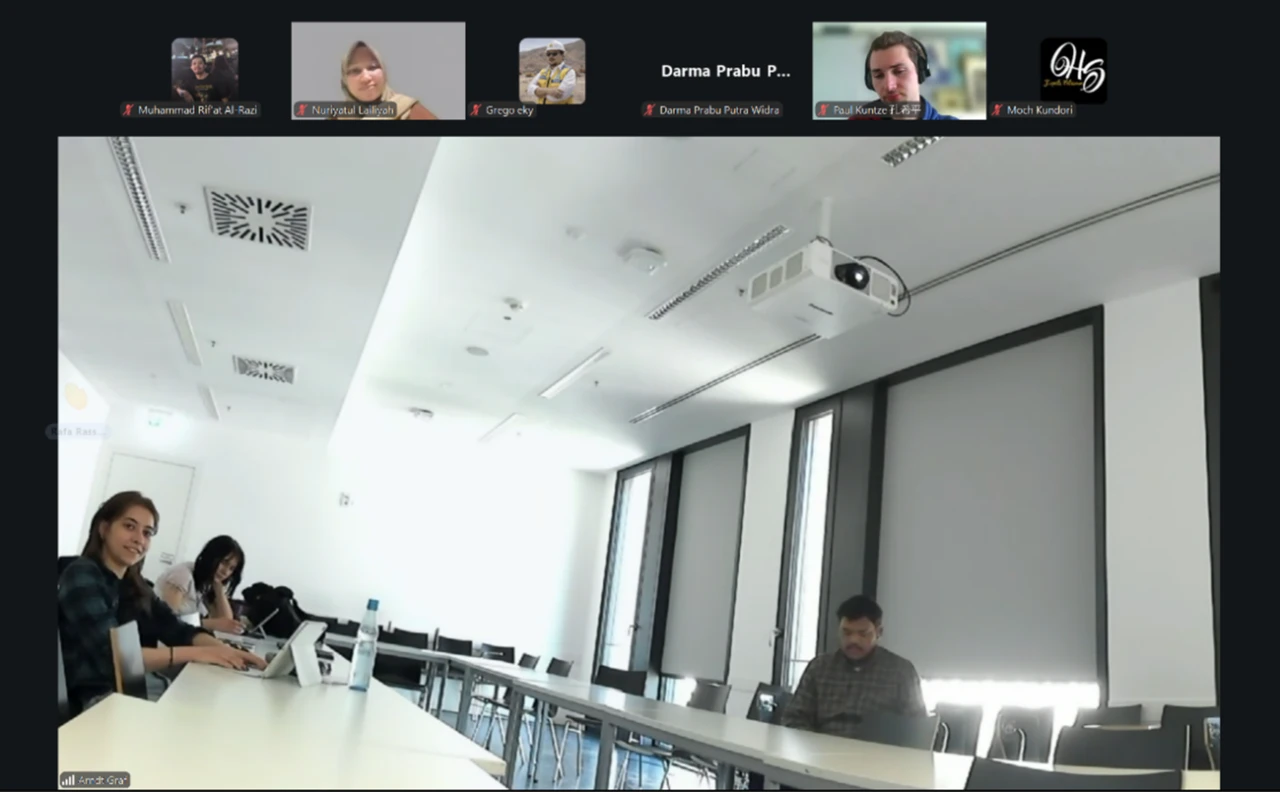
The colloquium was led by Prof. Arnd Graf, Head of the Department of Southeast Asian Studies at Goethe University Frankfurt. The forum also featured Dr. Abd. Hakim Mohad @ Mohamad Ramli from Universiti Sains Islam Malaysia, who presented insights on AI in Malaysia.
This participation reflects FISIP UNDIP’s contribution to global academic discourse on digital technology and society, while strengthening its international academic reputation. ( Muhammad Rif’at Al-Razi )