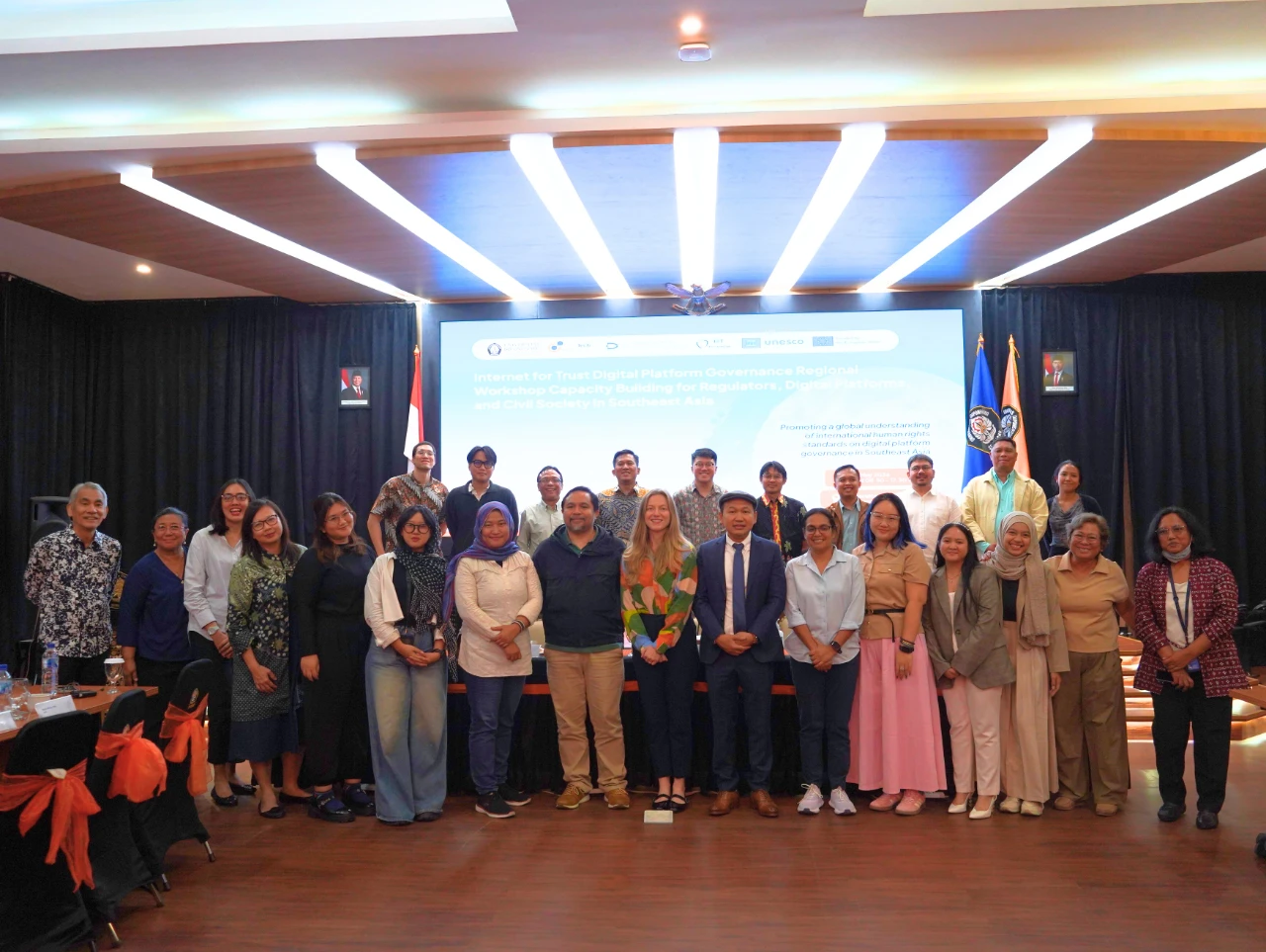
Semarang, May 6, 2026 – The first day of the UNESCO Guidelines for the Governance of Digital Platforms: Capacity Building Workshops for Southeast Asia Regulators, Digital Platforms, and Civil Society officially commenced today at the Faculty of Social and Political Sciences, Universitas Diponegoro (FISIP UNDIP). The workshop was organized by UNESCO in collaboration with Universitas Diponegoro, the Asia Media Information and Communication Center (AMIC), and Civic Tech Lab. The event brought together participants from regulatory bodies, digital platforms, and civil society organizations to strengthen human rights-based digital platform governance across Southeast Asia.
The program welcomed regulators, representatives of digital platforms, and civil society organizations from various Southeast Asian countries, including Indonesia, the Philippines, Singapore, Thailand, and Malaysia, with the aim of enhancing regional capacity in implementing human rights standards within digital platform governance.
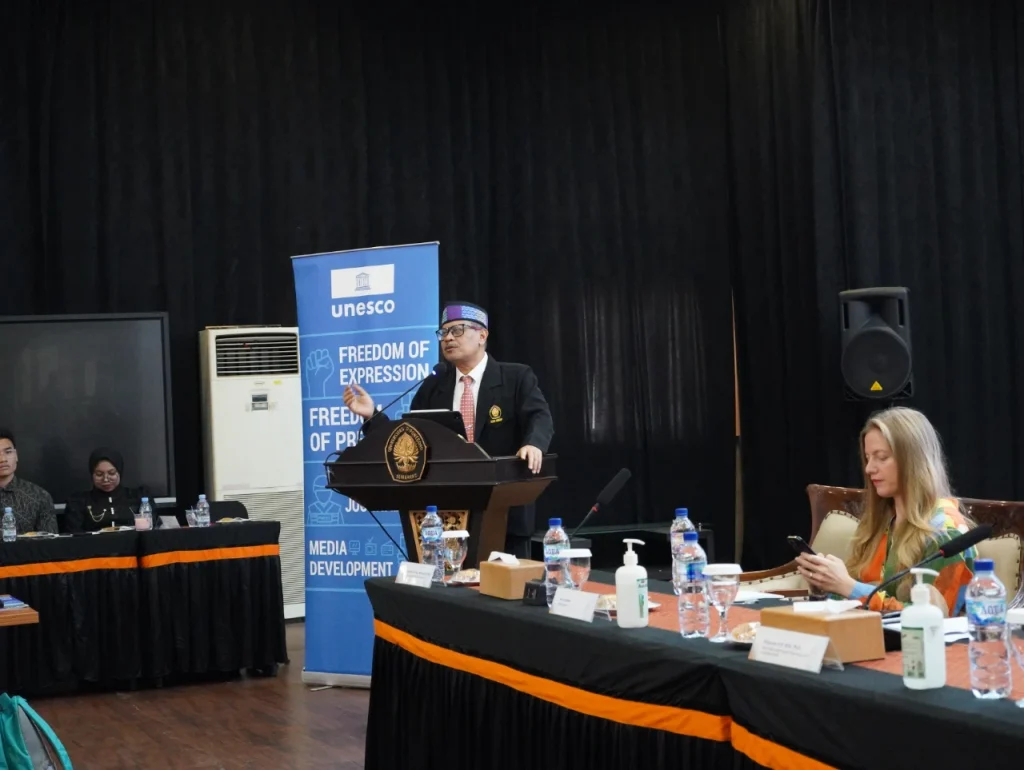
The event opened with welcoming remarks from Dr. Drs. Teguh Yuwono, M.Pol.Admin, Dean of FISIP UNDIP. In his address, he expressed the faculty’s full support for the workshop, reflected in the active involvement of the entire FISIP UNDIP academic community, including lecturers, administrative staff, and students.
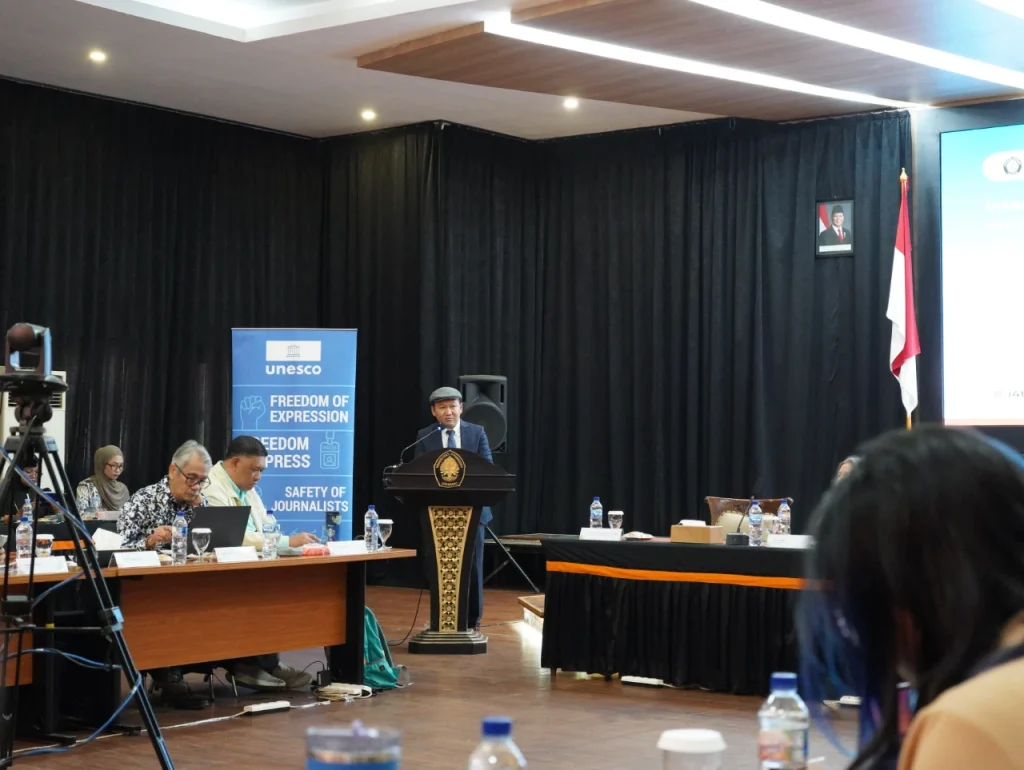
The opening session continued with a keynote speech delivered by Universitas Diponegoro’s Vice Rector for Research, Innovation, Collaboration, and Public Communication, Wijayanto, Ph.D. In his remarks, he emphasized the importance of cross-sector collaboration in building safe and inclusive digital platform governance.
“This process must be multi-stakeholder, because trust cannot be built by one actor alone. It requires collaboration between regulators, civil society and digital platforms, working together to ensure that digital spaces are safe, inclusive and accountable,” he stated.
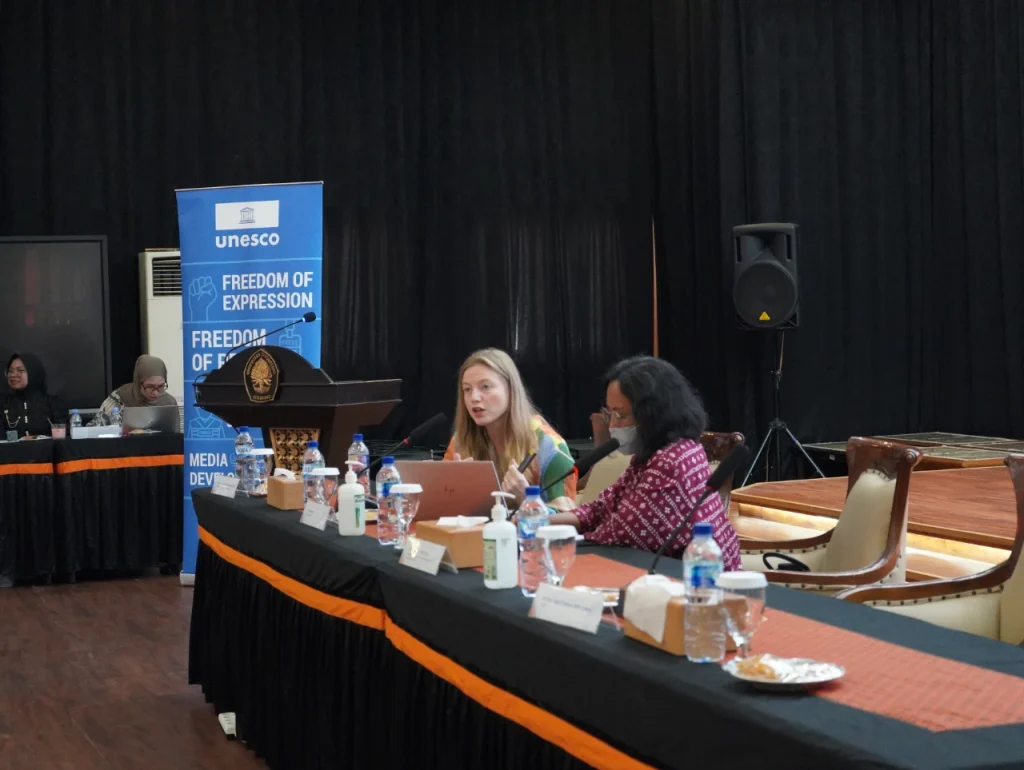
The workshop then proceeded with the first civil society session led by UNESCO representatives, Ana Lomtadze and Yekthi Hesthi Murti. The session, titled “Guidance on Conducting Human Rights Impact Assessment,” introduced participants to the Human Rights Impact Assessment (HRIA) framework, which assists organizations in evaluating human rights risks associated with digital platforms, including protections for journalists, human rights defenders, and vulnerable groups. The session covered risk identification, impact mitigation, and inclusive and secure stakeholder engagement approaches. Participants also engaged in group exercises to map the vulnerabilities and capacities of civil society organizations in Southeast Asia in addressing digital rights risks.
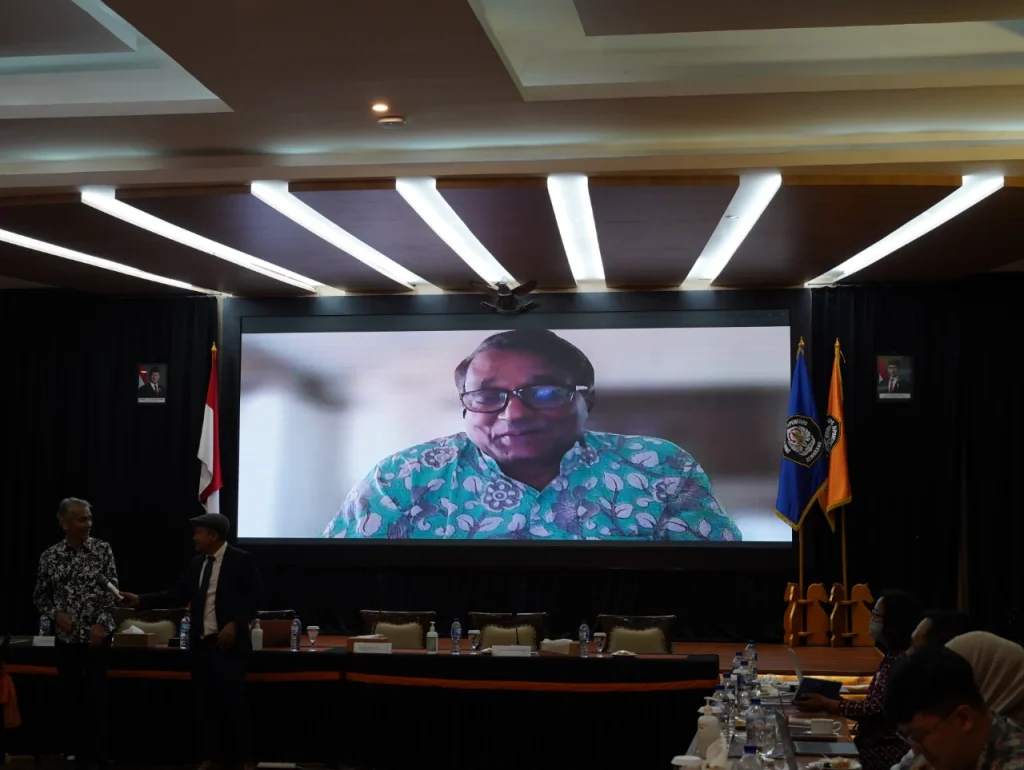
The second session featured Chandrabanu Pattanayak from Centurion University of Technology and Management, who delivered a presentation on “Sub-regional Toolkit for South Asia: The Role of Civil Society.” Participants explored UNESCO’s practical toolkit designed to support civil society organizations in monitoring digital platform practices, advancing policy advocacy, and strengthening media and information literacy. As part of the discussion, Chandrabanu highlighted five essential steps for promoting digital platform governance: monitor, document, analyze, advocate, engage platforms, and pursue policy reforms.
The first day of the UNESCO and FISIP UNDIP collaborative workshop underscored the importance of a multi-stakeholder approach, in which civil society plays a central role in promoting transparency, accountability, and the protection of digital rights across Southeast Asia. The workshop series, running from May 6 to May 8, 2026, also includes multi-stakeholder dialogue sessions and specialized workshops for regulators, all aimed at strengthening the regional implementation of the UNESCO Guidelines for the Governance of Digital Platforms. (WNIS)