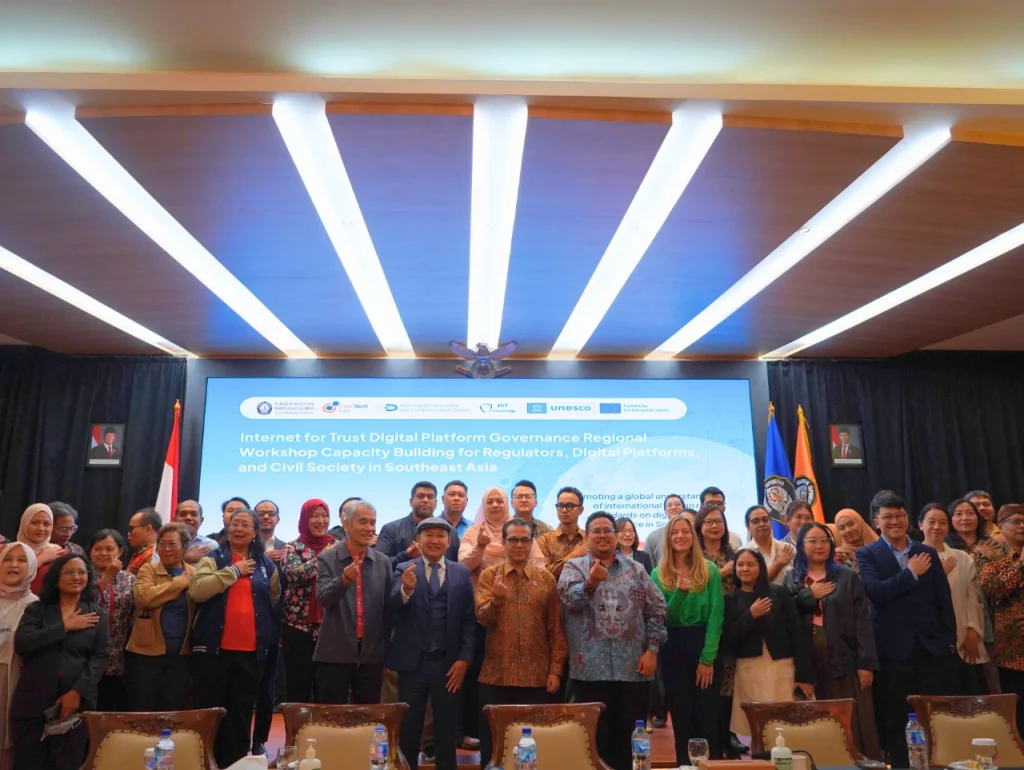
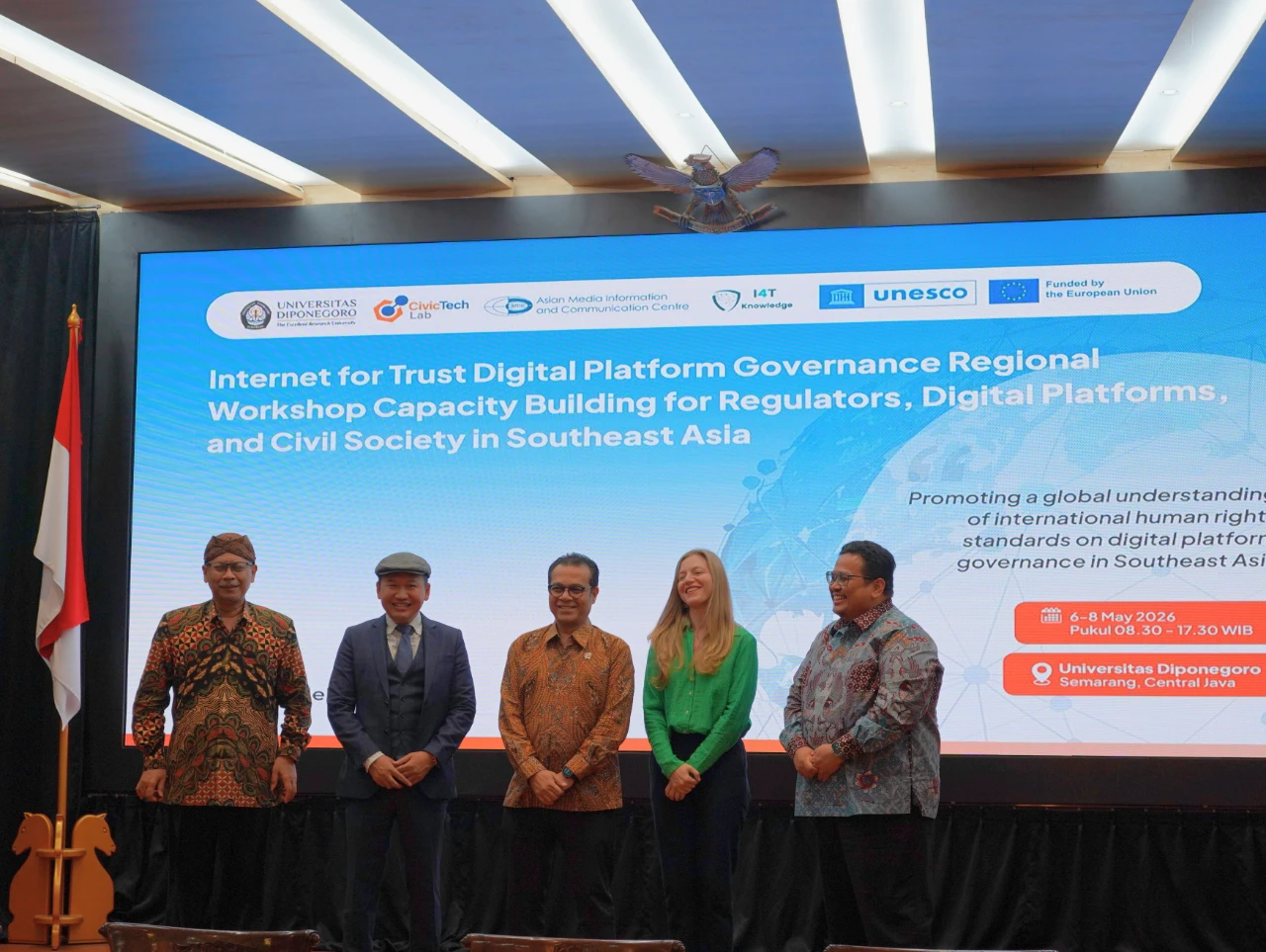
Semarang, 7 May 2026 – During the Multi-Stakeholder Dialogue (MSD) session on the second day of the workshop, UNESCO and UNDIP brought together regulators, digital platforms, and civil society to discuss the implementation of the Sub-Regional Toolkit for Digital Platform Governance. The dialogue provided a crucial forum for identifying best practices, regulatory gaps, and strategies to operationalize UNESCO guidelines in Southeast Asia.
The session was opened by Prof. Dr. Suharnomo, Rector of UNDIP, Ana Lomtadze from UNESCO Jakarta, and Dr. Sander Haepperts from the European Union Embassy. Panelists included Nezar Patria, Vice Minister of Communication and Digital Affairs of Indonesia, Amelia Anggraini from Indonesia’s House of Representatives, and Anita Wahid from the Inter ASEAN Commission of Human Rights. Discussions highlighted the importance of multi-stakeholder collaboration and shared responsibility in digital platform governance, including safeguarding the digital rights of vulnerable groups and implementing platform accountability mechanisms.
The Vice Minister highlighted platform regulations in Indonesia, noting the current government approach using system-level instruments. On child protection, he stated, “We have introduced the Online Child Protection Regulation called PP Tunas,” aligning with UNESCO and UNDIP’s efforts through this workshop.
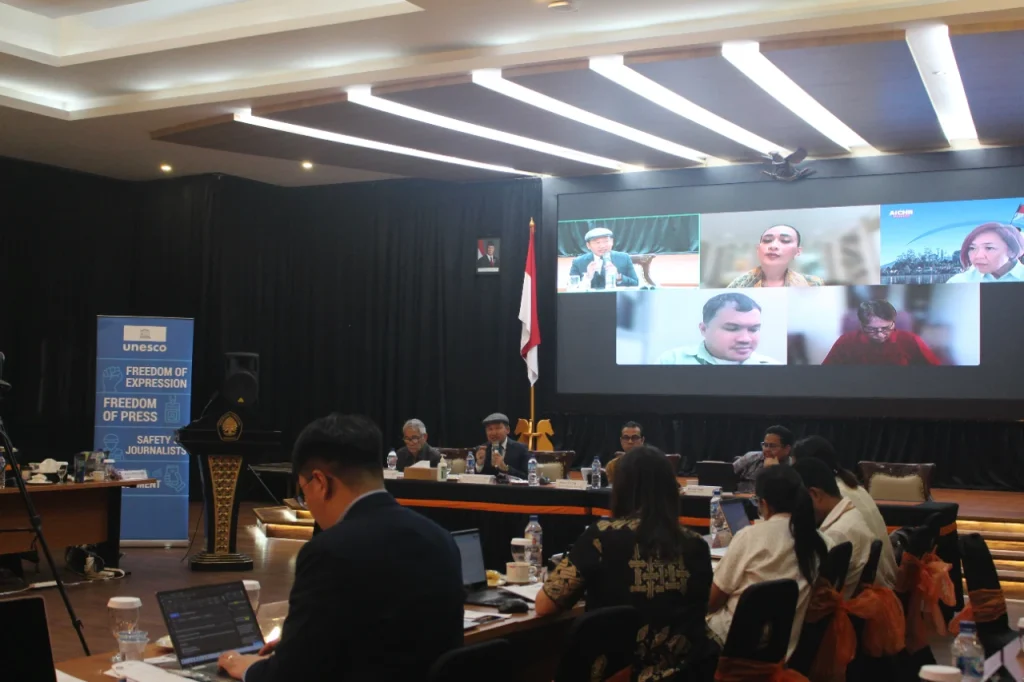
Dean of UNDIP FISIP, Dr. Drs. Teguh Yuwono, M.PolAdmin, reiterated in a media interview that the initiative aims to strengthen digital security in Southeast Asia through collaboration among stakeholders. “Collaboration among multiple stakeholders is essential to ensure protection for users and society,” he said.
The second panel addressed platform implementation practices and compliance with UNESCO’s transparency and accountability standards, followed by recommendations for the Sub-Regional Toolkit. The discussions provided practical guidance for regulators, platforms, and civil society to effectively implement human rights-based digital governance, including mitigating misinformation risks and enhancing user rights.
Overall, the MSD session reaffirmed that successful digital platform governance in Southeast Asia depends on alignment between government policies, platform responsibilities, and active civil society participation, ensuring digital spaces remain safe, inclusive, and supportive of democratic processes. (WNIS)