
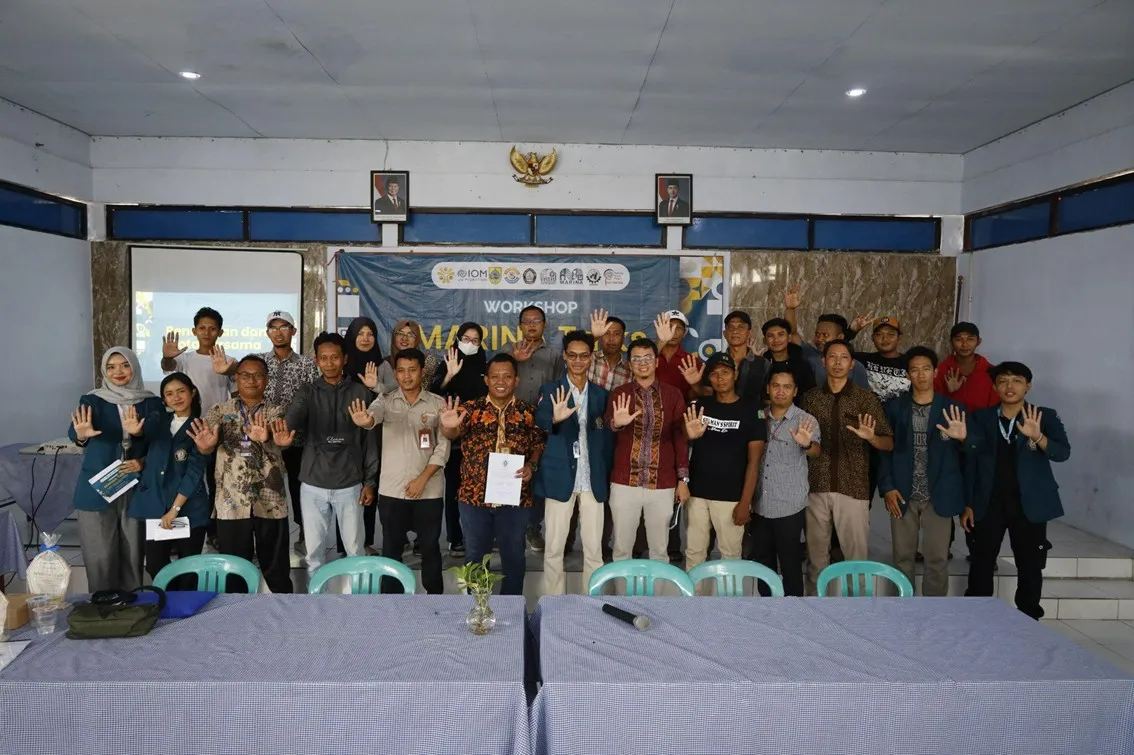

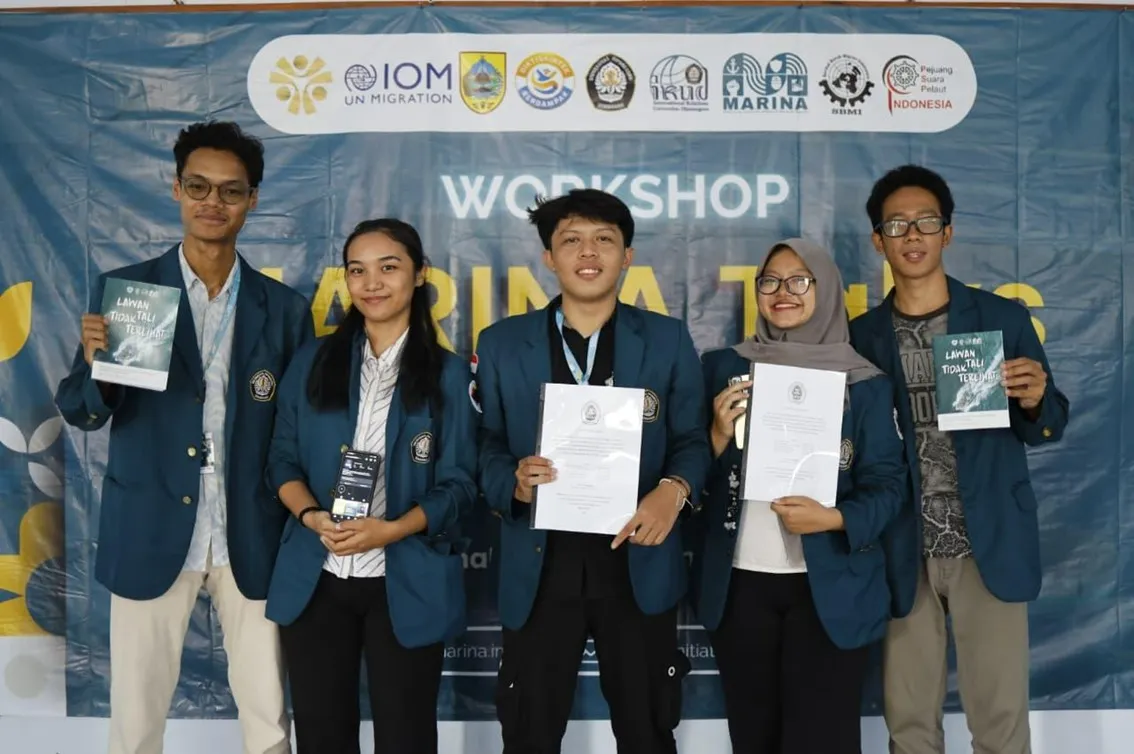
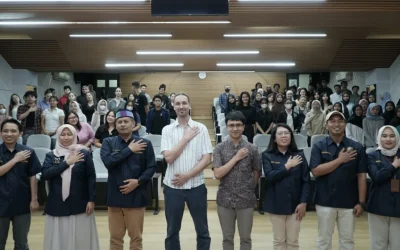
Pemalang, November 23, 2025 — The SDGs Student Group (KMS) from the International Relations Department, FISIP, Diponegoro University, named MARINA (Mobilizing Actions for Rights of Nautical Workers), consisting of Arini Emmanuella Riswanti, Izzatiddiena Nur Safira, I Gede Gohan Adiputra, Hizkia Abednego Pakpahan, and Ganendra Zhalifunnas Heda Oksaga, organized a workshop titled “MARINA Talks: Strengthening Cross-Sector Collaboration to Protect Migrant Fishing Vessel Crew (AKP) from Central Java from Exploitative Practices.” The event was held at the Lawangrejo Village Hall, Pemalang. Attendees included academics from FISIP UNDIP, the Central Java Indonesian Migrant Worker Protection Agency (BP3MI), IOM Indonesia, labor union organizations, representatives of migrant AKP, and the Lawangrejo Village community, demonstrating the strengthening of community participation in protecting migrant fishing vessel crew (AKP) from Central Java.
In their presentation, the MARINA KMS team shared the results of their field research on the situation of migrant AKP in Central Java, revealing that the majority of prospective migrant AKP lack sufficient information about labor rights, the risks of exploitation on foreign-flagged vessels, and case referral mechanisms. Outputs such as a Migrant AKP Protection Pocketbook, a research report, and digital publications via @marina.initiative were developed to strengthen information access for workers, their families, and the general public.
A panel discussion featured representatives from Central Java BP3MI, Perdana Anggit Prasetyo, and IOM Indonesia, Muhammad Yasser. The speakers highlighted concrete challenges faced by prospective migrant AKP. “Many migrant AKP sign contracts without understanding their content or language, while information about placement fees is often not disclosed transparently,” stated Muhammad Yasser. Furthermore, the lack of easily accessible public data on problematic companies or lists of credible official agents remains a challenge in the field. These conditions indicate that providing uniform, accurate, and easily accessible legal information is a pressing need that remains unmet.
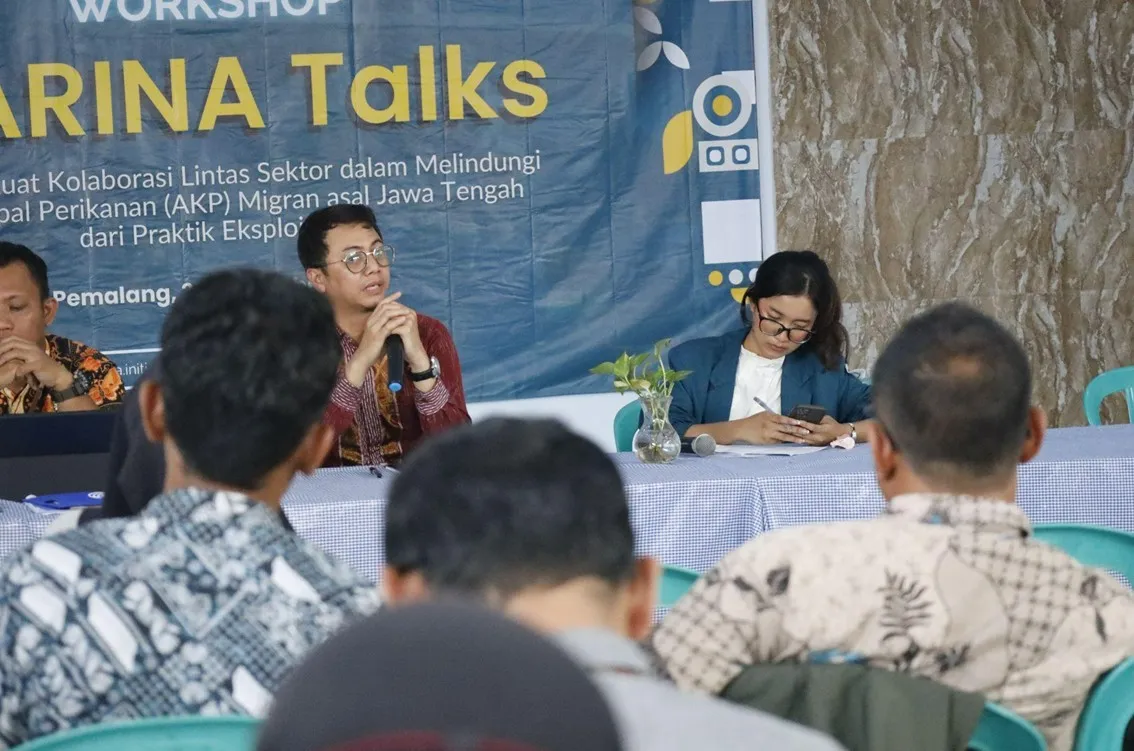
The Coordinator of P4MI Pemalang, representing Central Java BP3MI, Perdana Anggit Prasetyo, emphasized that workers’ understanding of all migration documents and placement processes must be a priority to minimize the potential for exploitation. “Prospective AKP must clearly know the documents, their rights, and all consequences before departure. Misinformation often becomes the entry point for exploitation,” he explained. He also stressed the need for integrated collaboration between village governments, supporting institutions, and placement companies to strengthen case handling.
Another important perspective came from community-based protection. Village governments are considered the frontline in migrant protection as they are the starting point of the worker placement process. The panel moderator emphasized that villages should not act alone but must have access to clear referral SOPs and a measurable network of partner organizations. On the other hand, the roles of international organizations and academics are also needed to ensure sustainable risk education, worker rights advocacy, and psychosocial and economic recovery services for migrant AKP after repatriation.
The outcomes of this workshop will serve as a foundation for refining the Migrant AKP Protection Pocketbook, using a more visual approach and language that is easier for coastal communities to understand. Additionally, the MARINA KMS team will continue public education campaigns in village communities and support the development of village and district government-based protection standard procedures. These efforts are expected to make Lawangrejo Village a model for community-based migrant worker protection that can be replicated in other coastal areas of Central Java.
Media Contact:
Instagram: @marina.initiative
Email: marina.initiative@gmail.com
0 Comments