
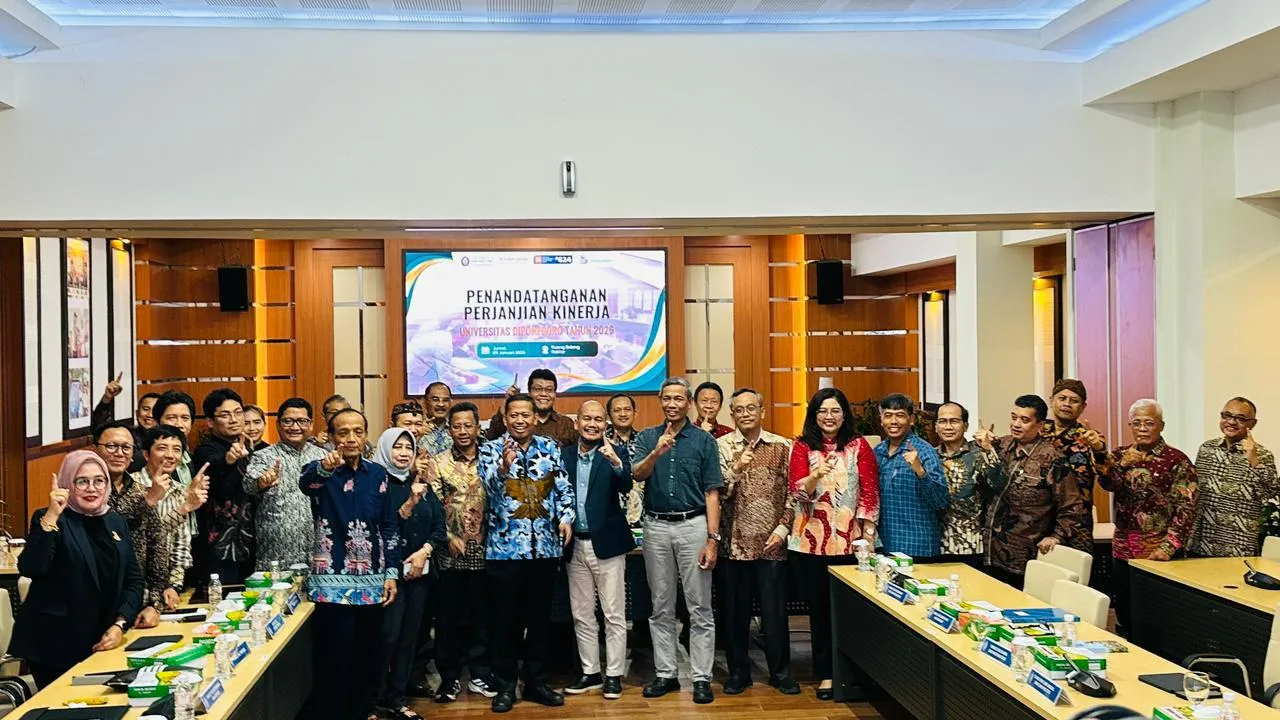
Semarang, January 9, 2026 – The Faculty of Social and Political Sciences of Diponegoro University (FISIP UNDIP) participated in the series of signings for the Diponegoro University 2026 Performance Agreement alongside the Rector of Diponegoro University and all faculty leaders and other work units. The event was held in the Rector’s Meeting Room, 2nd Floor of the Widya Puraya Building, Tembalang Campus, and served as an important moment for institutional performance consolidation for this year. This activity aimed to align the targets, strategies, and performance indicators of all work units in supporting the achievement of Diponegoro University’s Key Performance Indicators (IKU) throughout 2026.
This event was part of the Performance Agreement Signing agenda organized by Diponegoro University, where the Rector of Diponegoro University, Prof. Dr. Suharnomo, S.E., M.Si., provided strategic guidance to the ranks of faculty and work unit leaders, including the Dean of FISIP UNDIP, Dr. Drs. Teguh Yuwono, M.Pol.Admin. In his remarks, the Rector emphasized the importance of collaboration, innovation, and synergy between units to support the university’s performance targets while strengthening UNDIP’s position toward the world’s top 500 ranking.
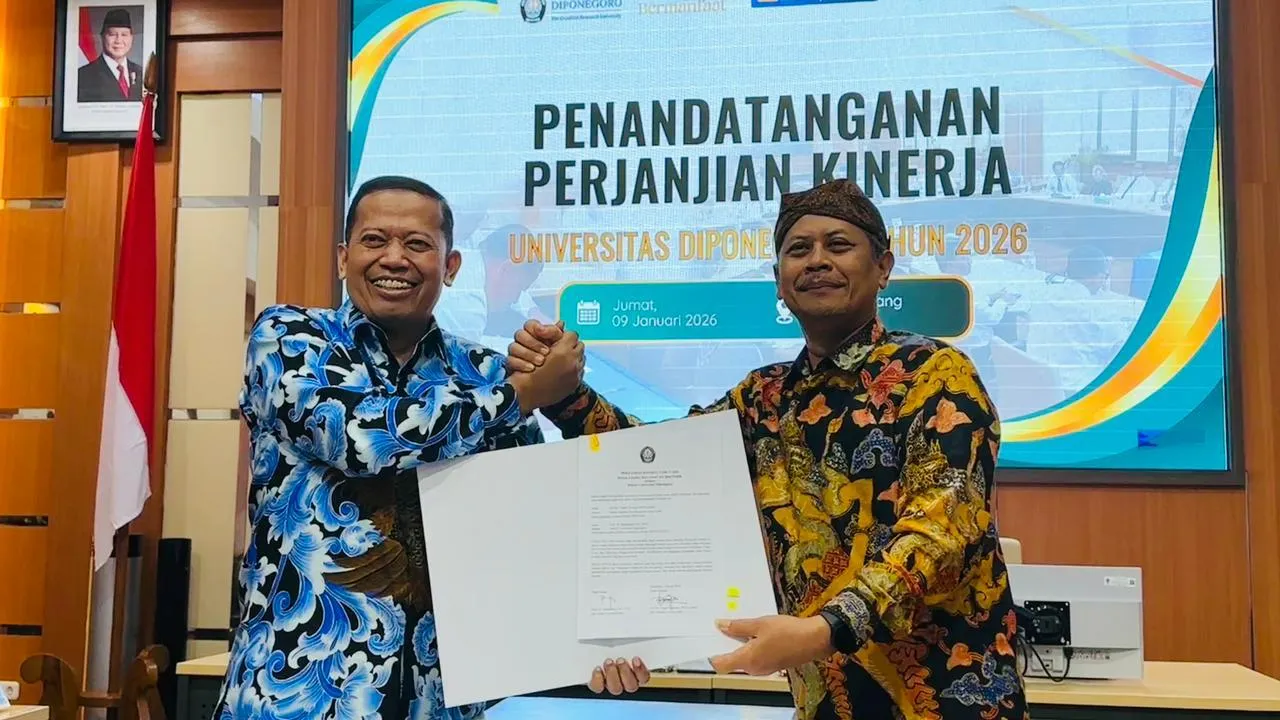
The signed performance agreement serves as the foundation for the implementation, monitoring, and annual performance evaluation of each work unit (including FISIP UNDIP) so that the achievement of the university’s Key Performance Indicators (IKU) can be carried out effectively throughout 2026.
The event was also attended by Vice Rectors for Areas I–IV, Deans of Faculties and Schools, as well as leaders of bodies and work units within the UNDIP environment. During the signing session, the Dean of FISIP UNDIP formally received the Performance Agreement document witnessed by the Rector and other university leaders, demonstrating the faculty’s commitment to holistically supporting the institutional strategy.
Through the signing of this Performance Agreement, FISIP UNDIP reaffirms its commitment to realizing transparent, accountable, and quality-oriented academic and administrative governance, aligned with UNDIP’s vision of becoming an Excellent Research University.