
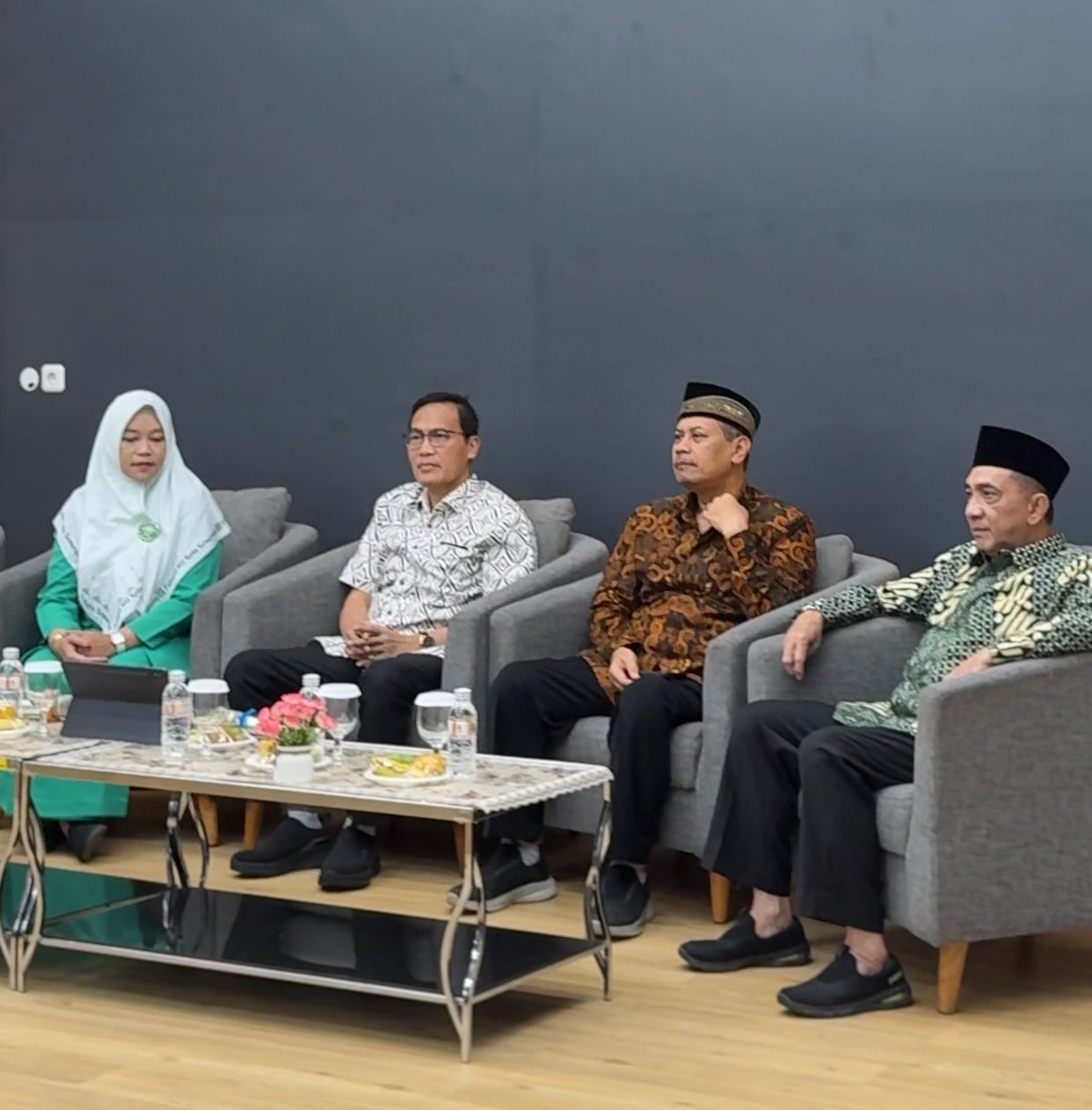

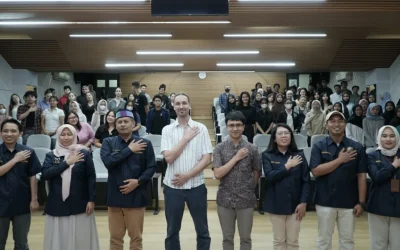
Semarang, October 4, 2025 – The Faculty of Social and Political Sciences at Universitas Diponegoro (FISIP Undip), in collaboration with the Ministry of Population and Family Development/National Population and Family Planning Board (Kemendukbangga/BKKBN) and the Semarang City Branch Leadership of Fatayat Nahdlatul Ulama (PC Fatayat NU), organized a community service seminar entitled “The Active Role of Women and Young Female Islamic Students in Preventing Stunting and Early Marriage.” The event was held at the Theater Room, Building C, 1st Floor, FISIP Undip.
The government’s efforts to realize a Golden Indonesia 2045 require support from human resources free from the problem of stunting. Stunting prevents individuals from achieving optimal growth and development. One of the leading causes of stunting in children is early marriage. Therefore, strategic cooperation from various stakeholders is essential to address these interconnected issues.
The seminar commenced with a keynote address from the Secretary of Kemendukbangga/BKKBN, Prof. Budi Setiyono, S.Sos., M.Pol.Admin., Ph.D. He elaborated on the targets for Golden Indonesia 2045, which require the support of key stakeholders. “As a nation, we aim to celebrate 100 years of independence by becoming a golden country, meaning we liberate ourselves once again to stand as an equal among other developed nations, including our former colonizers,” stated Prof. Budi Setiyono.
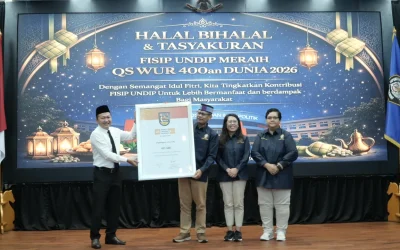
Following the keynote address, the event proceeded with the signing of a Cooperation Agreement between FISIP Undip and the Central Java Representative Office of Kemendukbangga/BKKBN. The signing, witnessed directly by the Secretary of Kemendukbangga/BKKBN, solidified the shared commitment to achieving the Golden Indonesia 2045 vision.
In the seminar session, the first speaker, Eka Sulistia Ediningsih, S.H., Head of the BKKBN Central Java Representative Office, highlighted the importance of reducing the stunting rate in Central Java through direct medical check-ups. “BKKBN Central Java has the ‘Jateng Gayeng, Ngincer Wong Meteng’ program as a concrete effort to create quality human resources,” Eka concluded.
The second speaker, Nyai Hj. Istighfaroh Mamnuhin, Chairperson of PC Fatayat NU Semarang City, explained her organization’s role in stunting prevention, such as the “Sambung Simbok Sambang Bocah” initiative, which provides education by visiting adolescents about to be married. Furthermore, Fatayat NU also actively socializes the prevention of early marriage among teenagers.
Meanwhile, the third speaker, Dr. KH. Muhammad Adnan, M.A., the caretaker of the Kebangsaan Islamic Boarding School and a lecturer at the Department of Politics and Governmental Science, FISIP Undip, provided an elaboration on the link between early marriage and stunting within the pesantren (Islamic boarding school) tradition. He noted that many cases of early marriage occur in traditional Salafi pesantren. Kyai Adnan cited Quran Surah An-Nisa verse 9, where Allah SWT commands humanity to leave behind a strong generation and not leave children in a weak state due to poverty—be it material, empathetic, or intellectual. He also urged people to speak truthfully and be devout. In this context, Kyai Adnan emphasized the crucial responsibility of parents to prepare a resilient next generation, strong in faith, morals, and survival skills.
The question-and-answer session was highly enthusiastic, with participants consisting of male and female students from Islamic boarding schools and members of Fatayat NU from across Semarang City. Herlambang, Chairperson of the Nahdlatul Ulama Student Association at Undip (KMNU Undip), raised a question regarding a belief held by some communities that “many children bring abundant fortune,” which ironically is often prevalent among lower-middle-income families.
Kyai Adnan responded with clarity and humor, “many children bring abundant fortune” is not a hadith, so it does not need to be practiced. What is most important is that abundant charity brings abundant fortune.” His answer was met with laughter and appreciation from the attending seminar participants.***
0 Comments