
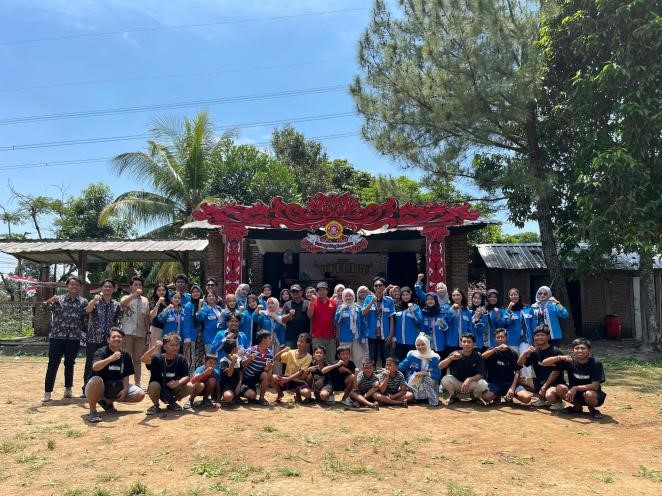

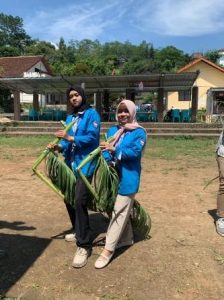
Semarang, 31 August 2025 – D’Kelabu, a work programme of the Arts and Culture Division, provides a platform for FISIP Universitas Diponegoro students to get directly involved in the arts and culture village in Keji Village, West Ungaran. This activity is carried out as a shared responsibility to preserve the existing culture. The D’KELABU (Pulse of Cultural Continuity) activity by the Socially Conscious Student Association, themed “Colours of Culture: Celebrating Art, Craft, and Heritage,” proceeded smoothly overall. This activity was held offline on Sunday, 31 August 2025, in Suruhan Hamlet, Keji Village, West Ungaran Sub-district, Semarang Regency, Central Java, 50519. The activity featured karawitan and kuda debog dance performances by the art team from the Langen Budi Utomo Art Studio. The departure to the event location was divided into two groups, with the first group departing at 07:00 and the second group departing ten minutes later at 07:10. The journey to the location took approximately 40 minutes, and upon arrival, all participants and organisers registered.
D’KELABU began at 08:15, starting with an opening by the Master of the Ceremony and a joint prayer. After that, from 08:25 to 08:50, there were speeches by the Chief Executive, the Head of HIMPS, the Supervising Lecturer, the Head of the Hamlet, and the Head of the Suruhan Hamlet Cultural Community. Then, from 08:50 to 09:05, there was a presentation, question and answer session on culture by the Head of the Arts Community and participants. Then, from 09:05 to 09:45, the event continued with a karawitan performance and kuda debog dance by the children of the studio. Then, the event continued with ice breaking and participants practised playing gamelan and dancing kuda debog with the children of the studio. After that, the event proceeded to the final series of events, namely the presentation of certificates to the village and studio, followed by documentation. Following that, the event concluded with a closing ceremony led by the Master of the Ceremony at 11:00. At 11:20, all participants and organisers proceeded to return to campus and conduct an evaluation.
The D’Kelabu 2025 event featured a guest speaker, Mr Suradi, Head of the Keji Village Cultural Community. Mr Suradi presented material on the arts in Keji Village, particularly at the Langen Budi Utomo Studio. He explained the history of the studio’s establishment and the types of arts and culture in Keji Village, such as ‘dolanan anak’ (children’s games), which include dakon, kuda debog, karawitan, and others. Mr Suradi also shared his experiences in the world of art, from watching various performances in several regions to the establishment of the Langen Budi Utomo Studio. The studio has been maintained and developed together with the youth organisation and the community, including the children in Keji Village. The village government also assists in terms of facilitation and maintenance. They work together to preserve their unique local culture.
After several presentations, a question and answer session followed, with the committee and delegates actively participating in the session. Several questions were raised, such as those related to the challenges of preserving culture in the modern era, how Mr Suradi motivates children and young people to remain active in cultural arts activities, and Mr Suradi’s hopes for the future of the D’Kelabu work programme. Mr Suradi answered these questions clearly, starting with the challenges of preserving culture in the modern era, which include some children not yet having the desire to join in preserving the culture there, with some choosing to play games on their own rather than participating in preserving their arts and culture. Meanwhile, the way to motivate them is to continue inviting youth organisations and children to participate in training sessions, which will become a habit for them and also develop their talents in arts and culture. Mr Suradi’s hope for the future D’Kelabu work programme is that it will become a way to make the culture of Keji Village better known to many people, so that more people will want to learn more about the culture of Keji Village.
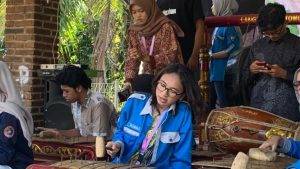
D’Kelabu, with the theme ‘Colours of The Culture: Celebrating Art, Craft, and Heritage’, was held to celebrate the diversity of art, craftsmanship, and cultural heritage in the archipelago, as well as emphasising that culture must not only be preserved but can also develop and adapt to modernisation without losing its original identity. This event aims to raise awareness of the surrounding environment, particularly in the fields of art and culture. By getting directly involved in the environment, it is hoped that it will contribute to preserving art and culture. In addition, this event is held to appreciate and encourage public awareness of the rich culture of the archipelago, build a sense of identity and cultural pride among the community, especially the younger generation, to protect and enrich this cultural heritage.
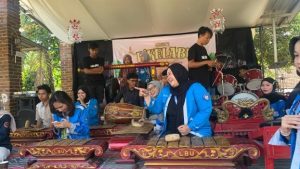
The D’KELABU event ran smoothly and provided many benefits for participants. Through this event, participants became more familiar with the HIMPS organisation and its work programmes, particularly the Arts and Culture Division. Additionally, participants gained a deeper understanding of karawitan music and kuda debog performances. These two traditional arts not only provide entertainment but also showcase important cultural values that need to be preserved. From this activity, participants developed an awareness of the importance of preserving traditional arts and culture to ensure they remain alive amidst the progression of time.
The hope for the continuation of the D’Kelabu work programme, organised by the Universitas Diponegoro Faculty of Social and Political Sciences Student Association for Social Issues, is that this activity will become a forum for students to become more familiar with the various cultures that exist around them and also to participate in preserving them. It is also hoped that the D’Kelabu work programme will become an educational and inspirational means of raising student awareness of the importance of knowing and learning about the arts and culture around us. It is hoped that this event will not only be a work programme that is completed solely because it is a ‘requirement’, but will become a sustainable work programme that is able to bring partner villages to become more advanced and independent. In addition, it is hoped that this work programme can create a positive impact that can be felt by the community and students, so that there is a need for better coordination in preparing the next D’Kelabu event.***


0 Comments