
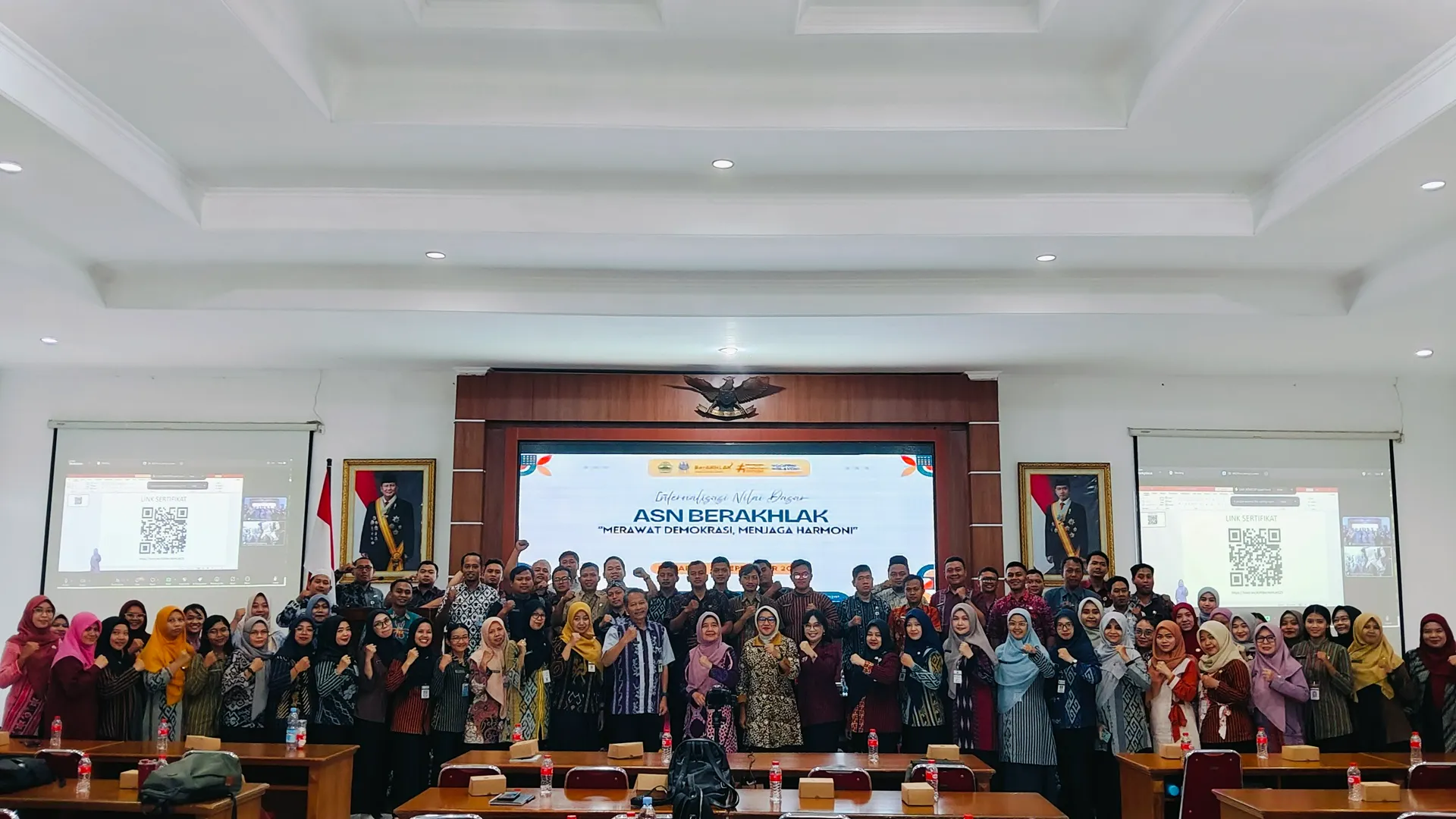

Semarang, September 23, 2025 — The Central Java Provincial Civil Service Agency (BKD) organized a socialization event titled “ASN BerAKHLAK: Nurturing Democracy, Preserving Harmony” on Tuesday, September 23, 2025, at Wisma Jateng Hall (PKK Building of Central Java Province), Ungaran, Semarang Regency. This activity is part of BKD’s 2025 work program as well as a concrete effort to internalize the Core Values, Code of Ethics, and Code of Conduct of Civil Servants (ASN), as mandated by Law No. 20 of 2023 on State Civil Apparatus.
The hybrid event was attended by 70 offline participants from the PPPK Regional Office I of Central Java and around 800 online participants from the Central Java Provincial Government ASN community. Moreover, the event was live-streamed through the official BKD Central Java channel, making it widely accessible to the public. In her remarks, the Head of BKD Central Java Province, Raden Rara Utami Rahajeng, S.H., M.M., emphasized that civil servants are the backbone of bureaucracy and the glue of national unity. “In the face of serious democratic challenges such as political polarization, the spread of hoaxes, and rising social tensions, civil servants are required to remain neutral, act with integrity, and set an example in maintaining social harmony. ASN are not merely policy implementers, but also drivers of good governance,” she asserted.
Undip Academics Highlight Substantive Democracy
One of the main speakers at this event was Retna Hanani, S.Sos., MPP., Head of the Bachelor of Public Administration Program at Diponegoro University. In her presentation titled “The Role of Civil Servants in Nurturing Democracy and Building Harmony,” Retna stressed that genuine democracy is not only procedural but also substantive. “Substantive democracy is about how the state strives to achieve common goals. Civil servants hold a crucial role in shaping a democratic Indonesia. Through improved public service delivery, they can strengthen public trust in the government. This is the essence of substantive democracy—the real presence of the state in fulfilling the people’s needs,” she explained.Therefore, ASN are expected not only to perform administrative tasks but also to actively reinforce democratic legitimacy through inclusive, transparent, and fair public services.
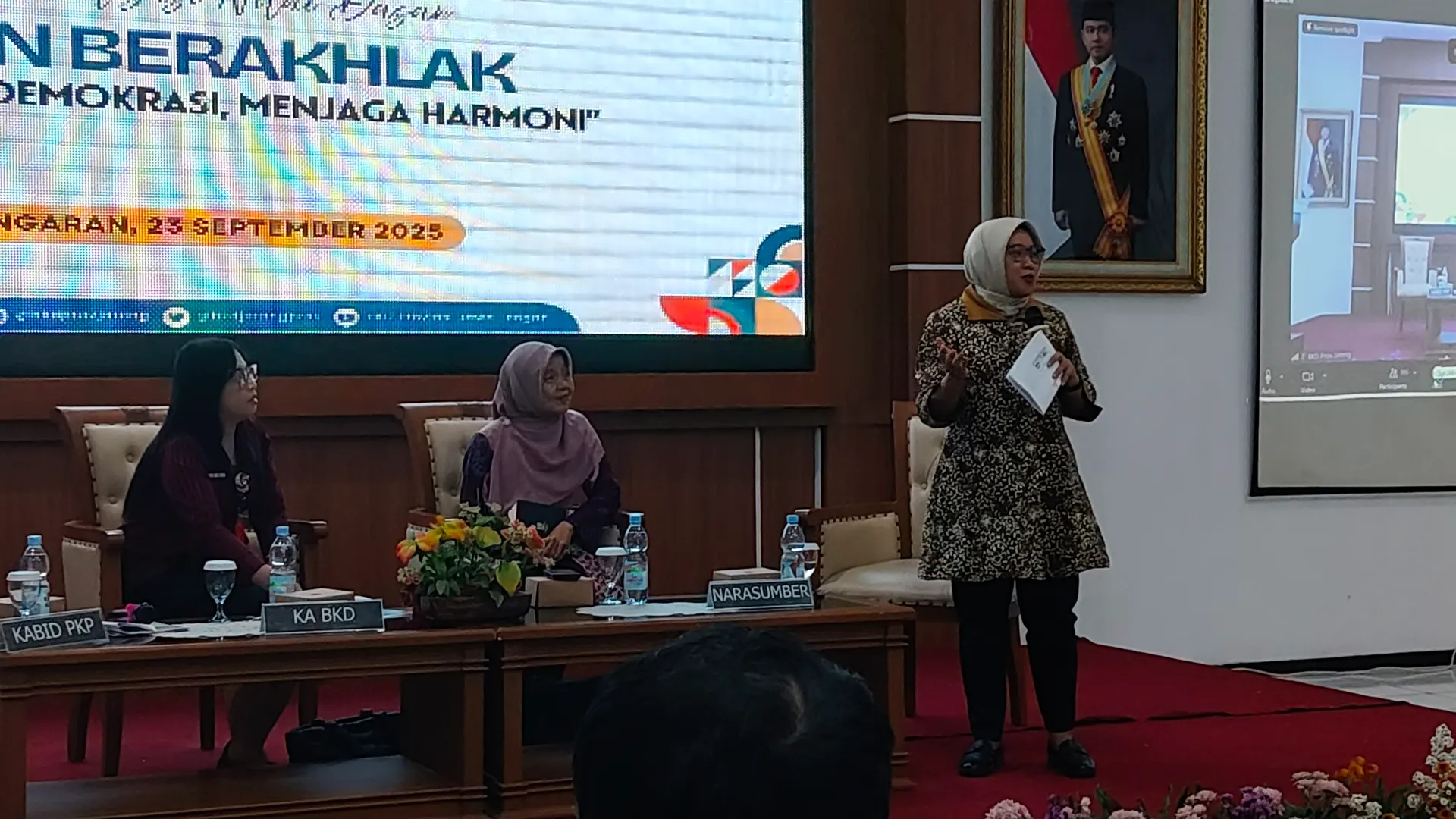
In addition to the presentation from Undip, the event also featured Dr. Martuti, M.M. from the Corien Centre Human Resources Institute, who delivered a session on “BerAKHLAK Values in Bureaucratic Practice.” She emphasized the importance of applying the seven core values of ASN BerAKHLAK—Service-Oriented, Accountable, Competent, Harmonious, Loyal, Adaptive, and Collaborative—in everyday bureaucratic life. These values serve as the foundation for civil servants to be seen not only as rule enforcers but also as agents of change who bring about a bureaucracy that is friendly, solution-oriented, and responsive to public needs.
FISIP Undip’s Continued Contribution to Strengthening ASN and Democracy
The presence of FISIP Undip academics in this activity underscores the strategic role of universities in building synergy between academic knowledge and bureaucratic practice. As an educational institution focusing on the development of public administration, FISIP Undip is committed to supporting the creation of a professional, high-integrity civil service that prioritizes public interest.
“Through this program, FISIP Undip contributes to strengthening civil servants’ understanding of democratic values and the importance of public trust. Academics must continue to collaborate with bureaucracy so that public policy and service delivery align with societal needs,” Retna added.
This initiative reaffirms that civil servants not only carry technical-administrative duties but also bear a social function in safeguarding democracy and harmony. With quality public service, public trust in government will grow, thereby reinforcing the legitimacy of democracy in Indonesia. Through this socialization, BKD Central Java hopes that all civil servants will internalize BerAKHLAK values in their duties and responsibilities. In doing so, civil servants will not merely act as policy executors but also as unifying agents of the nation who play a vital role in realizing an inclusive, just, and sustainable government.
The event concluded with a key message: civil servants are the face of the state in the eyes of the people. Their success in delivering quality public service will determine the strength of public trust in democracy and in the government.


0 Comments