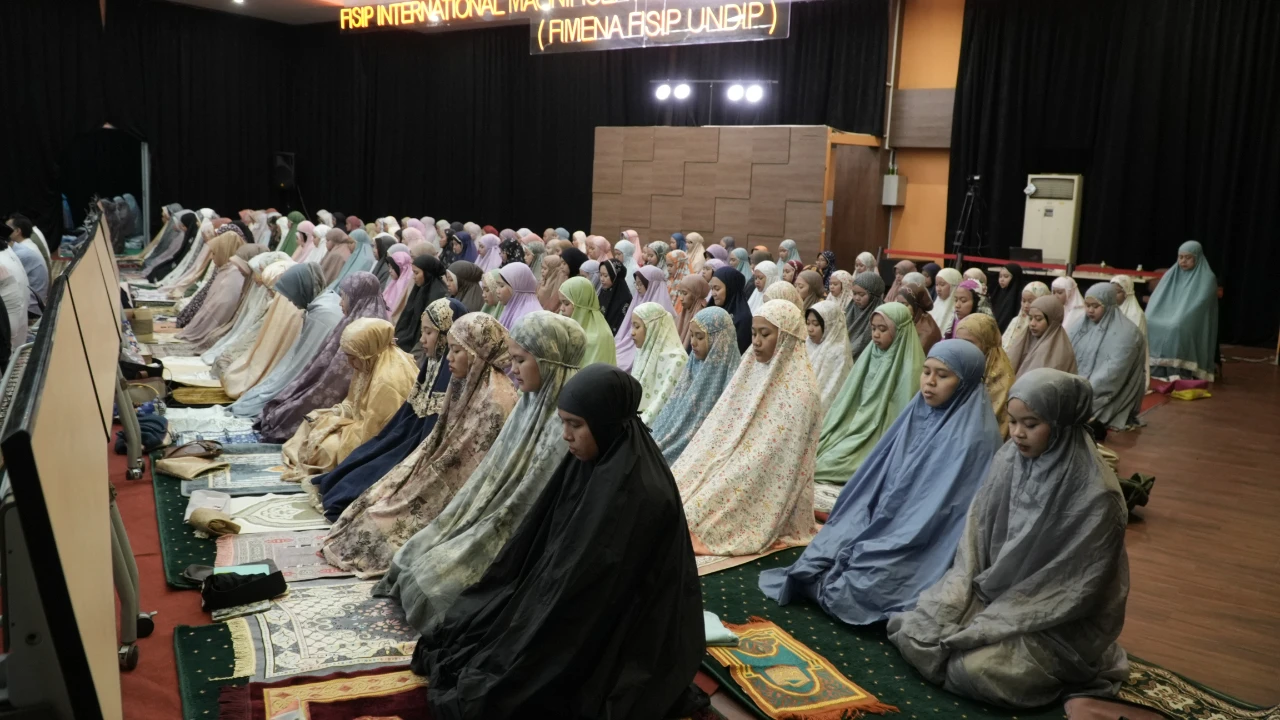

Semarang (03/10) – A warm and reverent atmosphere enveloped the “Tarawih Keliling & Silaturahim” (Tarkhim) event organized by Universitas Diponegoro (Undip) for the holy month of Ramadan 1447 H/2026 M, held at the Faculty of Social and Political Sciences (FISIP). Taking place on Monday, March 9, 2026, in the FIMENA Auditorium on the 3rd Floor of Building A at the FISIP Undip Campus in Tembalang, the gathering served as a pivotal moment to strengthen communal bonds and foster scholarly reflection amidst diversity. On this occasion, FISIP, alongside the Vice Rector for Research, Innovation, Collaboration, and Public Communication and the Faculty of Humanities (FIB), had the honor of acting as the Shohibul Bait or host.
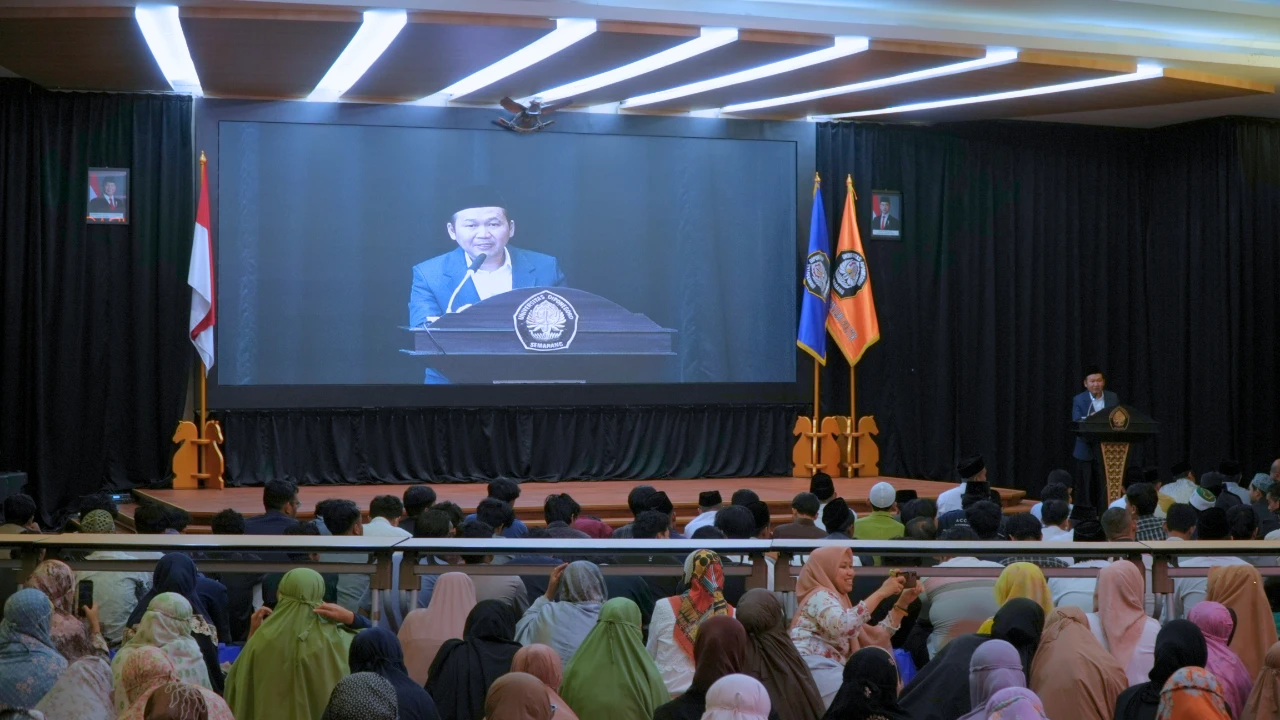
In his opening remarks, the Vice Rector for Research, Innovation, Collaboration, and Public Communication, Wijayanto, S.IP., M.Si., Ph.D., delivered a profound message on the importance of gratitude during this blessed month. He invited the entire academic community present to continually give thanks for every blessing bestowed by Allah SWT, notably the gift of health that enables everyone to perform their devotions during Ramadan smoothly. Concluding his speech, he expressed a hope and prayer highly relevant to the university’s role: “May this Ramadan be a time for all of us to renew our intentions in every task we undertake on this campus. May the research we conduct not only yield publications but also provide solutions for our nation.”
The atmosphere grew more solemn as the event proceeded to the main sermon delivered by Prof. Dr. Musahadi, M.Ag. His discourse centered on the theme of maturity in navigating the dynamics of religious life. He highlighted the reality of differing opinions in understanding jurisprudence (fiqh) within society. According to him, such differences should not be viewed as division but rather as a form of intellectual assets to be cherished. “Although we may differ in our understanding of fiqh rulings, we should be grateful, for it is through these very differences that we mature,” he remarked. He emphasized that this signifies an extraordinary level of religious maturity that must be nurtured, considering that humanity, throughout its history, continuously experiences complex dynamics.
Prof. Musahadi then guided the congregation to contemplate the essence of diversity itself, citing the words of Allah in Surah Al-Hujurat, verse 13. This verse, he explained, encapsulates a fundamental concept of diversity, beginning with the creation of humans as male and female, and extending into various nations and tribes. “Differences of opinion are a natural occurrence, but what is most important is our attitude in facing those differences,” he asserted. He elaborated that the primary purpose of this diversity is for people to come to know one another, enabling different groups to learn from each other, foster mutual understanding, cultivate love and compassion, and collaborate synergistically to achieve common goals.
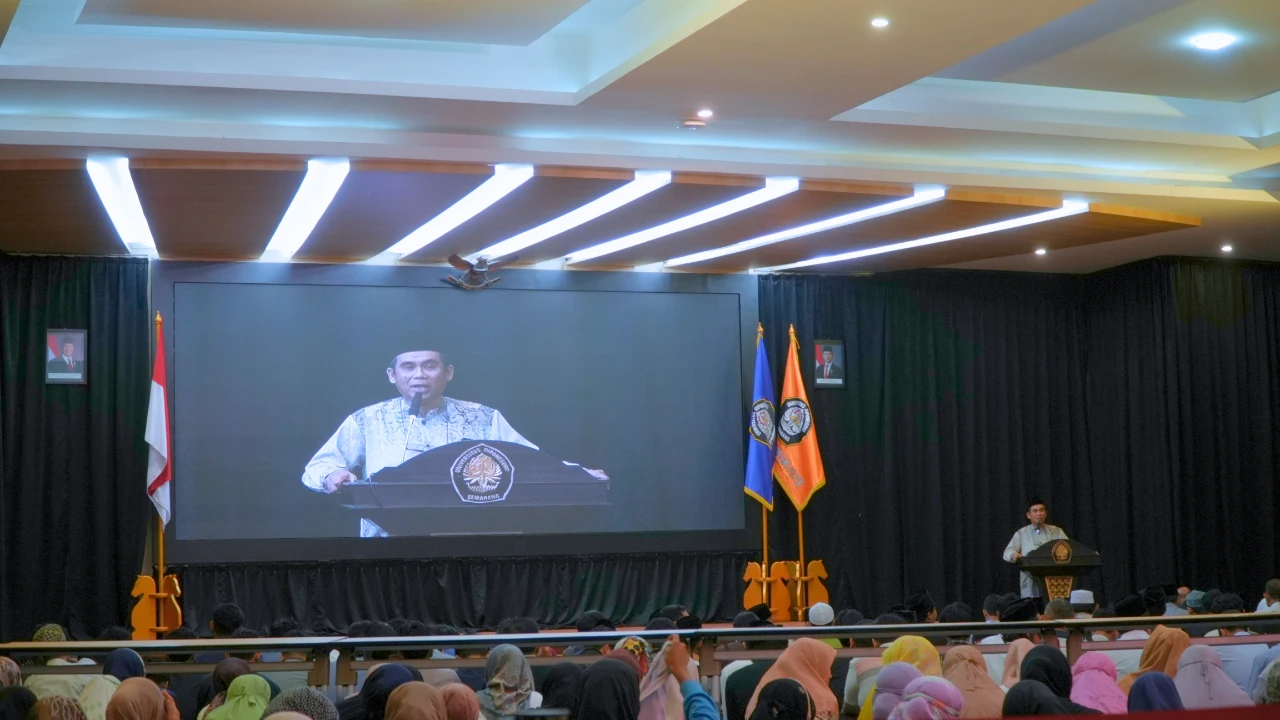
The core message conveyed was one of accepting the existence of others who are different. According to him, the ultimate measure is not the absolute truth of a particular opinion, but rather how we respond to the difference itself. “The most important thing is not that opinions differ, but how we approach that difference—which is through accepting the existence of the other party who is different from us,” he added. Concluding his sermon, he reminded the audience that Allah SWT provides space for humanity to explore their intellectual capacity through religious teachings. The aim is for every individual to discern the essence and ultimate objectives of Shariah, which are intended for the benefit and well-being of all humanity on earth.
The Tarkhim event concluded on a warm and harmonious note. Through this gathering, Universitas Diponegoro hopes that the values of reflection, maturity in navigating diversity, and a spirit of dedication to the nation will continue to be cultivated and implemented in the daily life of the campus community.