

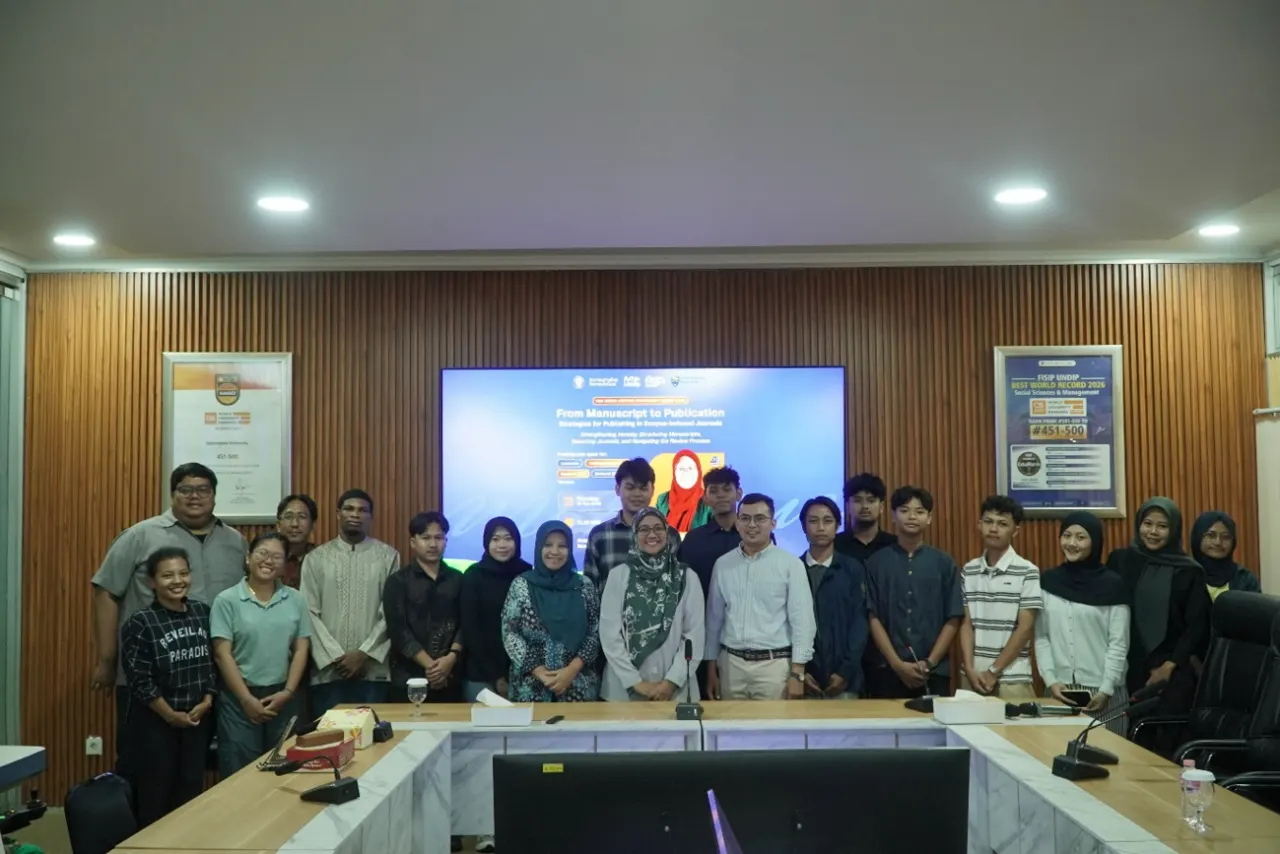
SEMARANG – The Department of Business Administration, Faculty of Social and Political Sciences, Diponegoro University (FISIP UNDIP), through its Human Resource Management Strategy Research Cluster (KBK), organized a Manuscript Clinic & Scopus program entitled “From Manuscript to Publication: Strategies for Publishing in Scopus-Indexed Journals: Strengthening Novelty, Structuring Manuscripts, Selecting Journals, and Navigating the Review Process.” The event was held on Thursday, November 26, 2026, at the Antawirya Room, FISIP UNDIP.

This academic initiative was organized by the Human Resource Management Strategy Research Cluster, chaired by Prof. Dr. Dra. Ari Pradhanawati, M.S., with members Dr. Reni Shinta Dewi, S.Sos., M.Si., Dr. Hari Susanta Nugraha, S.Sos., M.Si., Dhaifina Idznitia Apriyani Naimi, S.M., M.B.A., and Wildan Avian Pratama, S.A.B., M.A.B. The program served as a platform for strengthening academic capacity, particularly in improving the quality of academic writing and scientific publications in internationally reputable Scopus-indexed journals.
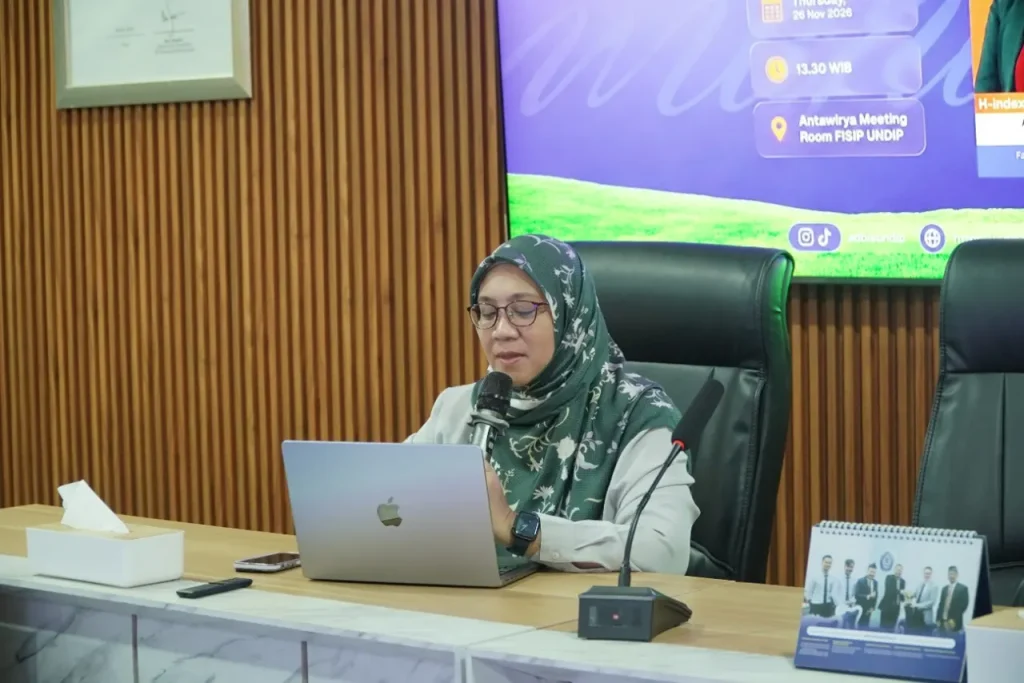
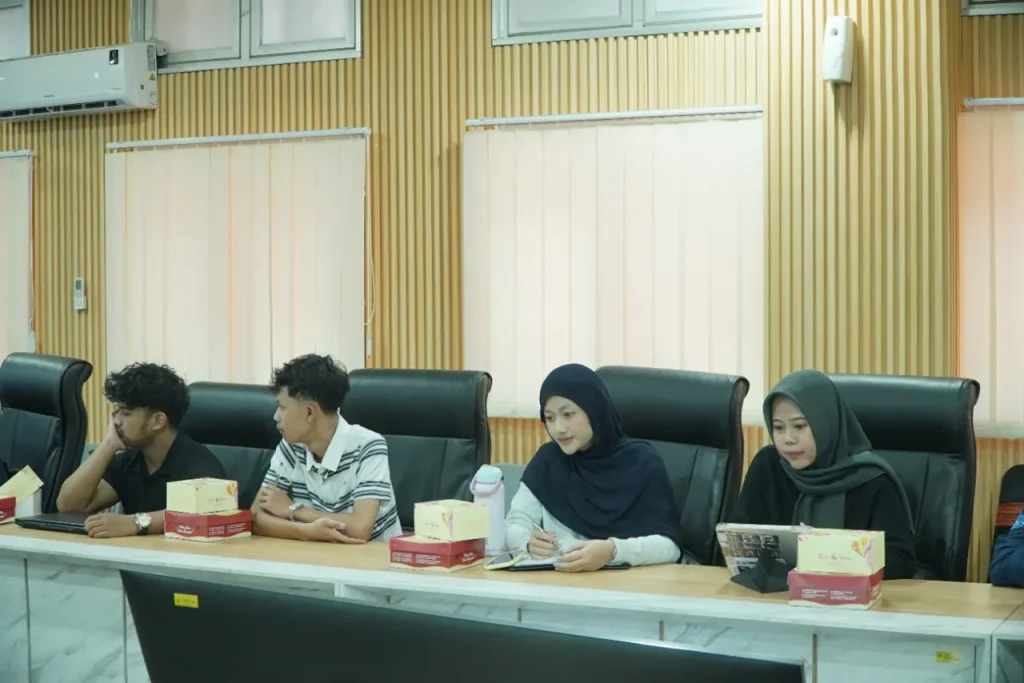
The event featured an international speaker, Assoc. Prof. Dr. Norizah Binti Mohd Mustamil from the Faculty of Business and Economics, Universiti Malaya, Malaysia. It was attended by lecturers and undergraduate (S1), master’s (S2), and doctoral (S3) students of FISIP UNDIP who are interested in developing their research capabilities and improving the quality of their scientific publications.
During her presentation, Assoc. Prof. Dr. Norizah Binti Mohd Mustamil discussed various essential strategies for publishing scientific articles through her presentation entitled “From Manuscript to Publication: Strategies for Publishing in Scopus-Indexed Journals.” The presentation outlined the research publication journey, starting from idea development and manuscript preparation to selecting appropriate journals and navigating the peer-review process.
One of the key points emphasized was the importance of establishing research novelty. Novelty is not merely about demonstrating differences from previous studies but also about providing a clear contribution to the advancement of knowledge. Such contributions may take the form of theoretical, empirical, methodological, contextual, or practical contributions. Therefore, researchers need to identify research gaps while clearly articulating the actual contributions of their studies.
Furthermore, the speaker highlighted the importance of developing well-structured manuscripts with strong and coherent arguments. A scientific article should connect its introduction, literature review, methodology, research findings, discussion, and conclusion into a cohesive research narrative. Consistency between the research problem, research questions, methodology, findings, and contributions is essential to producing a high-quality manuscript.
Journal selection was another important topic discussed during the session. The speaker emphasized that researchers should not focus solely on targeting the highest-ranked journals. Instead, they should consider the journal’s scope, target readership, credibility, previously published articles, as well as publication fees and timelines. Researchers were also encouraged to verify a journal’s indexing status through Scopus Sources and SCImago rather than relying solely on indexing claims displayed on journal websites.
Furthermore, participants gained insights into the stages following manuscript submission, beginning with the initial editorial screening and peer-review process, followed by editorial decisions regarding rejection, revision, or acceptance, and concluding with the production and publication stages. The speaker also explained how to respond to reviewers’ comments professionally, specifically, and based on evidence. The revision process was presented as an integral part of the publication journey and an opportunity for researchers to improve the quality of their scholarly work.
Equally important, academic integrity was highlighted as a fundamental principle that must be maintained throughout every stage of the publication process. This includes honesty in presenting research evidence, originality of scholarly work, transparency in authorship, and the responsible use of artificial intelligence (AI) in accordance with the policies of the targeted journals.
Following the presentation, the event continued with an interactive question-and-answer session and discussion. Participants demonstrated great enthusiasm by raising questions and engaging directly with the speaker regarding various challenges encountered in conducting research and publishing scientific articles. This session provided participants with opportunities to gain valuable insights and practical recommendations based on the speaker’s academic experience. The event concluded with a group photo session as a form of documentation and a reflection of the participants’ shared experience.
Through this Manuscript Clinic & Scopus program, FISIP UNDIP hopes that the knowledge and experience gained will benefit all participants, both lecturers and students, in developing high-quality research and producing scientific publications that make meaningful contributions to the advancement of knowledge. The program is also expected to strengthen the research culture, enhance academic publication capacity, and create opportunities for sustainable international research collaborations.
This initiative represents one of FISIP UNDIP’s strategic efforts to strengthen the quality of the university’s three pillars of higher education, particularly in research and scientific publications, while supporting the enhancement of the faculty’s academic reputation at both national and international levels.