
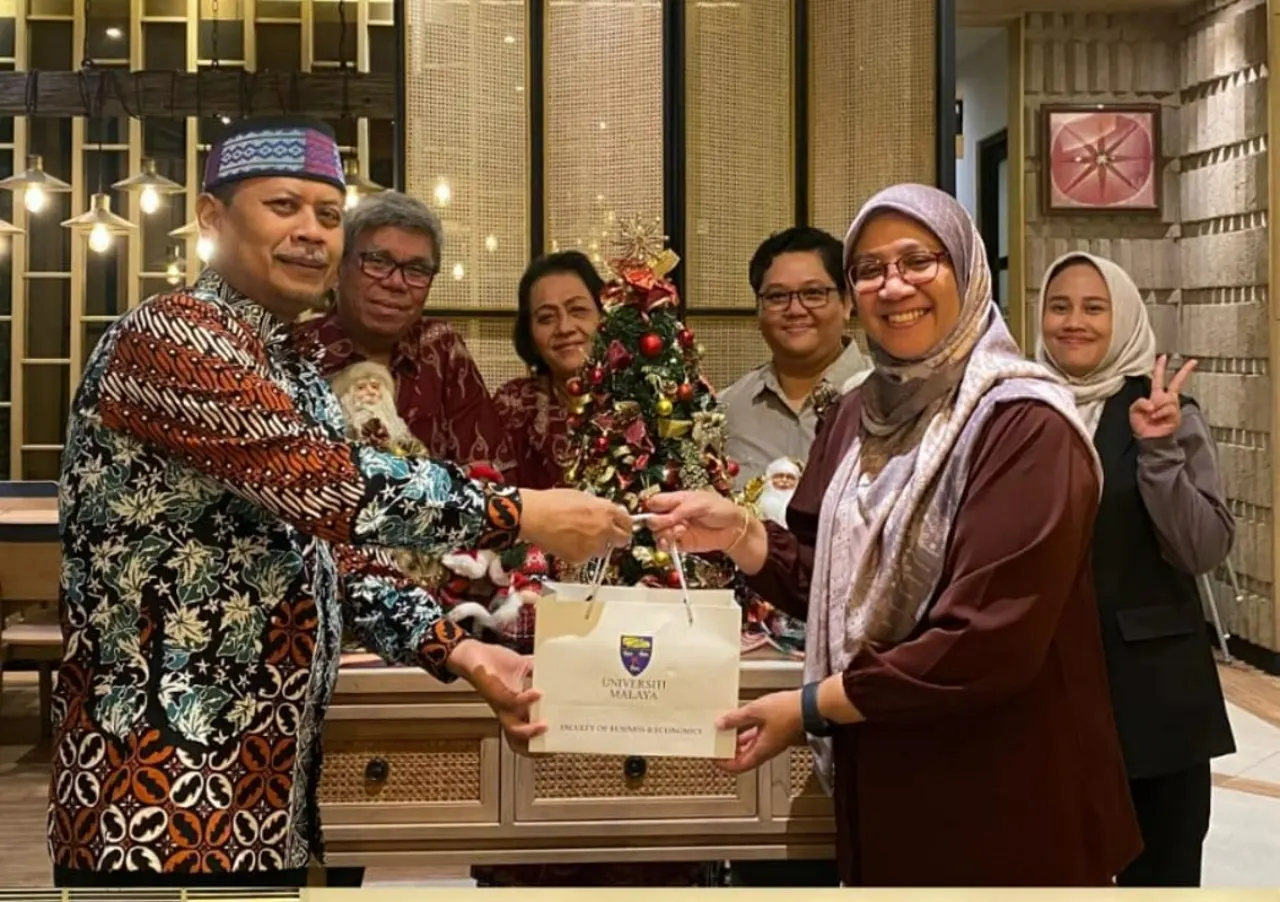
Semarang – Department of Business Administration FISIP UNDIP once again held an international academic event through the Visiting Professor Guest Lecture titled “Leadership in Human Resource Management Developing People and Driving Performance: Perspectives from Indonesia and Malaysia” on Thursday, November 26, 2026, at the FISIP UNDIP Theater Room. This event was initiated by the Human Resource Management Strategy Expertise Group (Kelompok Bidang Keahlian / KBK) of FISIP UNDIP, chaired by Prof. Dr. Dra. Ari Pradhanawati, M.S., alongside team members Dr. Reni Shinta Dewi, S.Sos., M.Si., Dr. Hari Susanta Nugraha, S.Sos., M.So., Dhaifina Idznitia Apriyani Naimi, S.M., M.B.A., and Wildan Avian Pratama, S.A.B., M.A.B.
Serving as the keynote speaker was Assoc. Prof. Dr. Norizah Binti Mohd Mustamil from the Faculty of Business and Economics, Universiti Malaya, Malaysia. The guest lecture was attended by lecturers as well as undergraduate (S1) and postgraduate (S2) Business Administration students, who closely followed how leadership and human resource management (HRM) intertwine amid the dynamics of the modern workplace.
Leadership That Brings HRM Systems to Life
In her presentation, Assoc. Prof. Dr. Norizah Binti Mohd Mustamil invited participants to reflect on the meaning of leadership early on—even before holding a formal title, ranging from leading a group assignment to serving as a student volunteer. Leadership is understood as a process of influencing, providing direction, building influence, and offering support so that others can move toward a common goal.
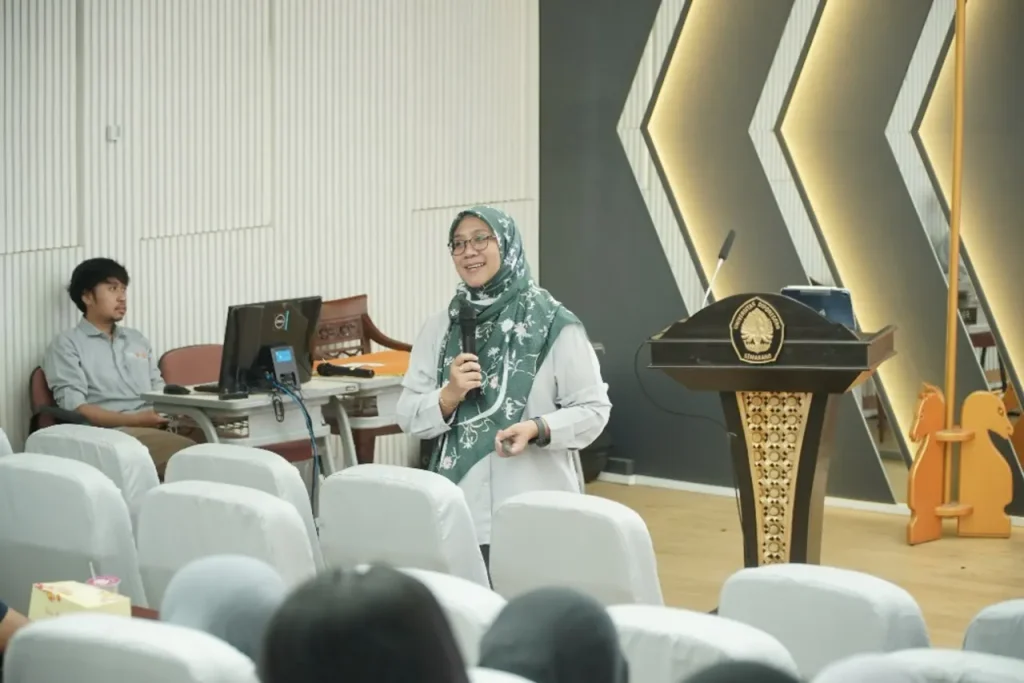
She also emphasized that managers and leaders play complementary, rather than competing, roles: managers focus on assigning tasks, monitoring work, and ensuring results are completed, whereas leaders inspire commitment, help people improve, and develop problem-solvers. Within the Human Resource Management (HRM) framework, systems such as recruitment, training, rewards, and performance management serve as the structure, while leaders bring these practices to life so they are genuinely experienced by employees, driving both people development and organizational performance.
Developing People and Driving Performance Sustainably
The core of the lecture highlighted the importance of developing people rather than merely completing tasks. This development encompasses building capability, fostering confidence, and nurturing independence so individuals can solve problems on their own.
Through an illustration comparing two types of leaders for fresh graduates, the speaker contrasted a rigid, directive approach against an open, guiding approach that views mistakes as learning opportunities. Four key pillars in developing people were outlined as follows:
- Teach: Help people acquire knowledge and skills
- Coach: Guide people to find their own solutions
- Empower: Give people opportunities and responsibility
- Support: Create an environment where people feel safe to learn, ask questions, and improve
The speaker also reminded the audience that the best leaders create more leaders rather than more followers, and view the growth of their team members as an integral part of a leader’s own success.
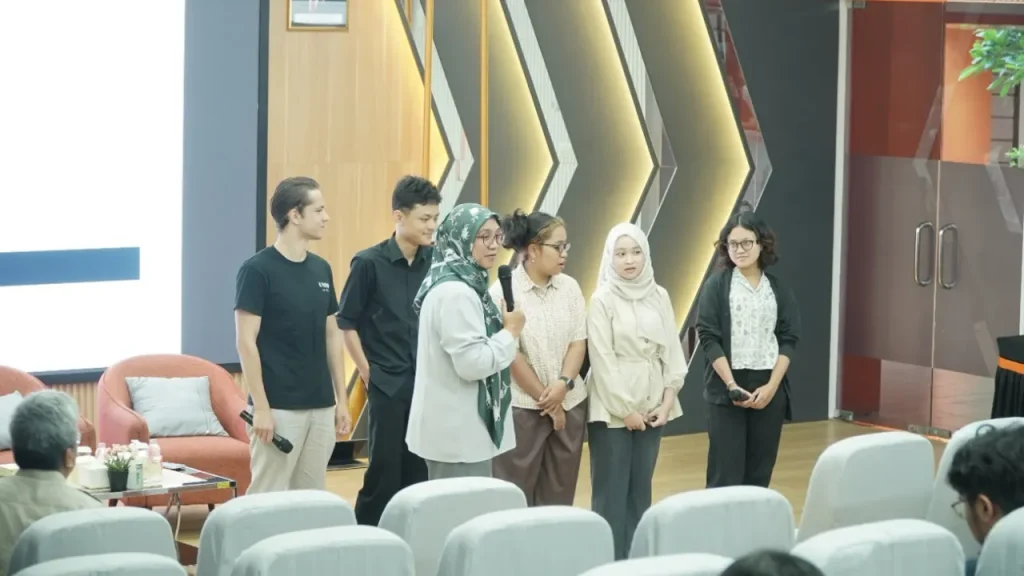
To drive performance, organizations need to examine Ability, Motivation, and Opportunity (AMO) before blaming individuals for underperformance. Effective leaders combine high support with high performance expectations—creating an environment of growth and performance—while ensuring that achieving results goes hand in hand with sustainable well-being and ethics.
Cross-Cultural Perspectives of Indonesia and Malaysia and Engaging Discussion
Comparing the contexts of Indonesia and Malaysia, the speaker noted that both countries share rich cultural traditions, diverse communities, and evolving workplace expectations. Cultural values such as respect for seniority and authority, harmony, and collective responsibility raise shared questions on how to encourage younger employees to speak up, deliver honest feedback, recognize individual effort, and foster new ideas without stereotyping. The interactive discussion also explored real-world workplace dilemmas, including how to respond when a manager is wrong, top priorities in a first job, and the significance of a leader who admits mistakes.
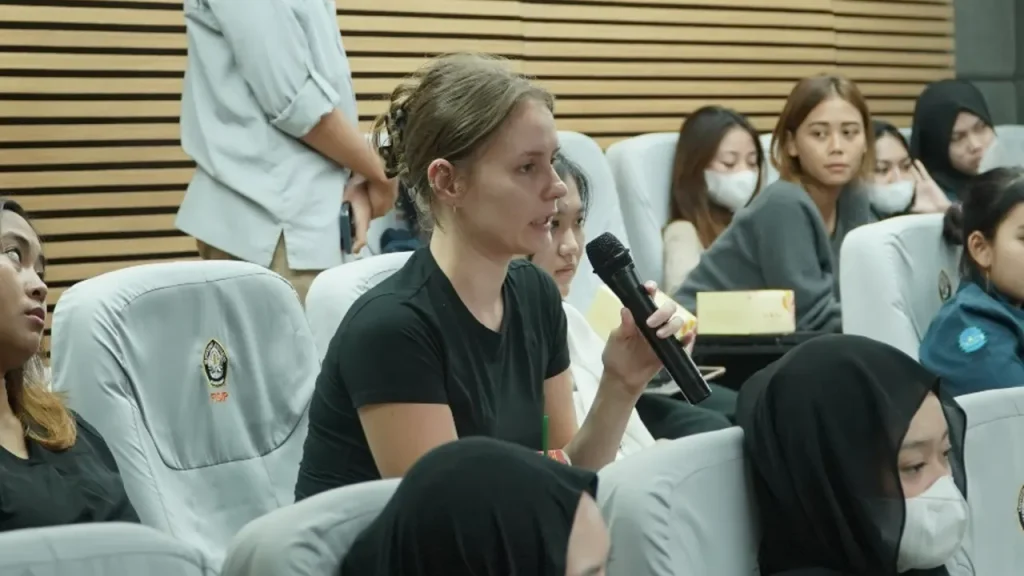
Following the presentation, the event continued with a lively Q&A session. Participants from among the lecturers as well as undergraduate and postgraduate Business Administration students enthusiastically asked questions and discussed the application of leadership and HRM concepts in organizational realities. The program concluded with a group photo session marking the academic collaboration between FISIP UNDIP and Universiti Malaya.
Through this event, the insights gained on empowering leadership and ethically driven performance are expected to serve as valuable takeaways for Business Administration lecturers and students, given their strong relevance to today’s business landscape.