

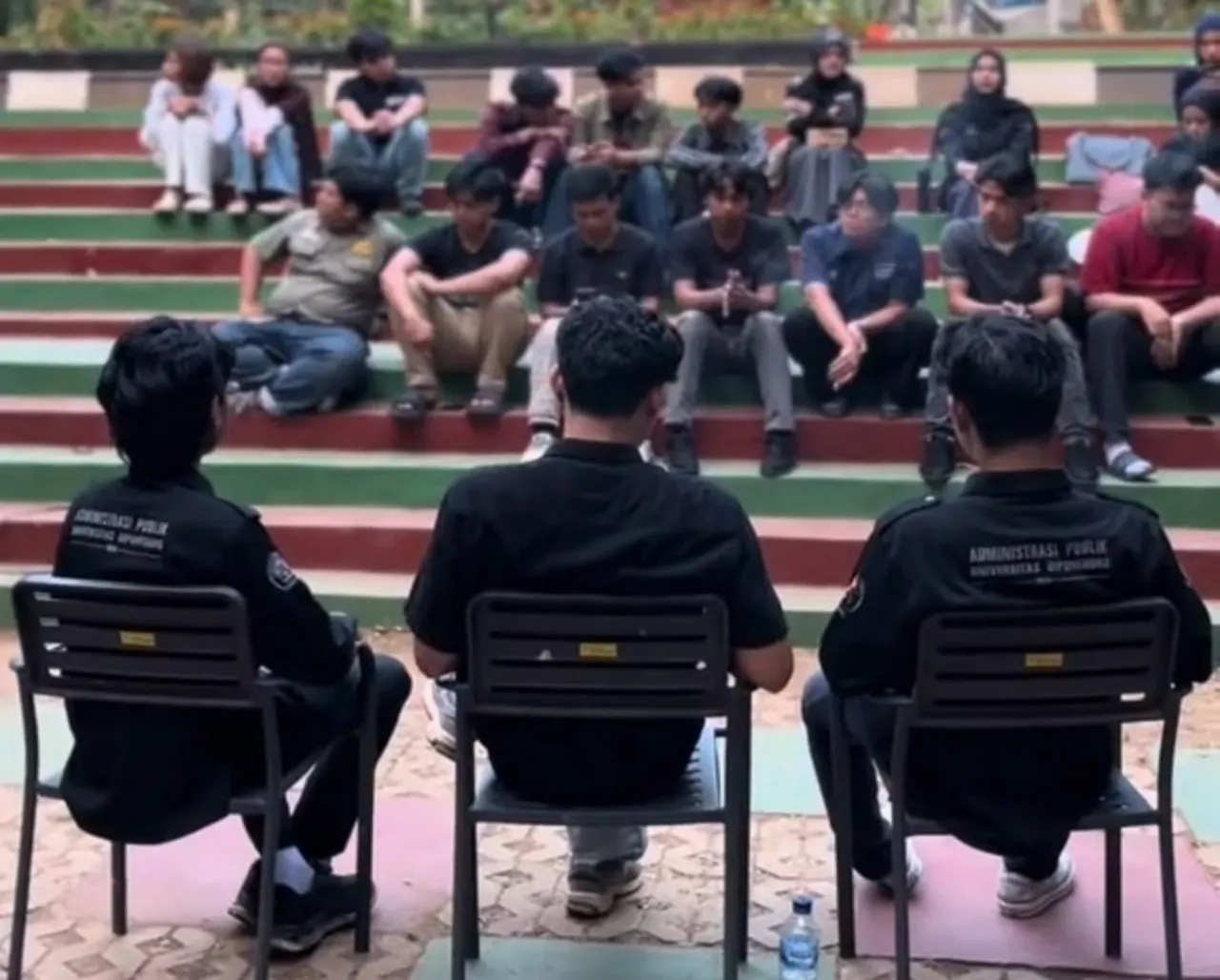
On Wednesday, September 30, 2026, the E-Content WHIP (What’s Happening in Public) session titled “The ‘Nongkrong’ Culture and the Commercialization of Public Space” was held. The program was organized by the Scientific Research and Socio-Political Department (RISPOL) of the Public Administration Student Association (HMPS Administrasi Publik) in collaboration with UPK Aufklarung FISIP Undip.
Based on the discussion findings, nongkrong—the Indonesian tradition of informal hanging out—should not be viewed merely as a aimless activity. Instead, it serves as a dynamic space for socializing, exchanging ideas, fostering closeness and solidarity, and discussing pressing socio-political issues. Thus, the significance of nongkrong is defined not just by its physical setting, but by its underlying purpose, dialogue, and how the space is utilized.
The session also examined shifts in how society builds interaction and solidarity. While in-person gatherings historically laid the groundwork for collective consciousness, technological advancements now enable these processes to occur across digital channels, including social media, messaging groups, and community platforms. Despite these changing modes of interaction, the fundamental need for dialogue and social connection remains vital.
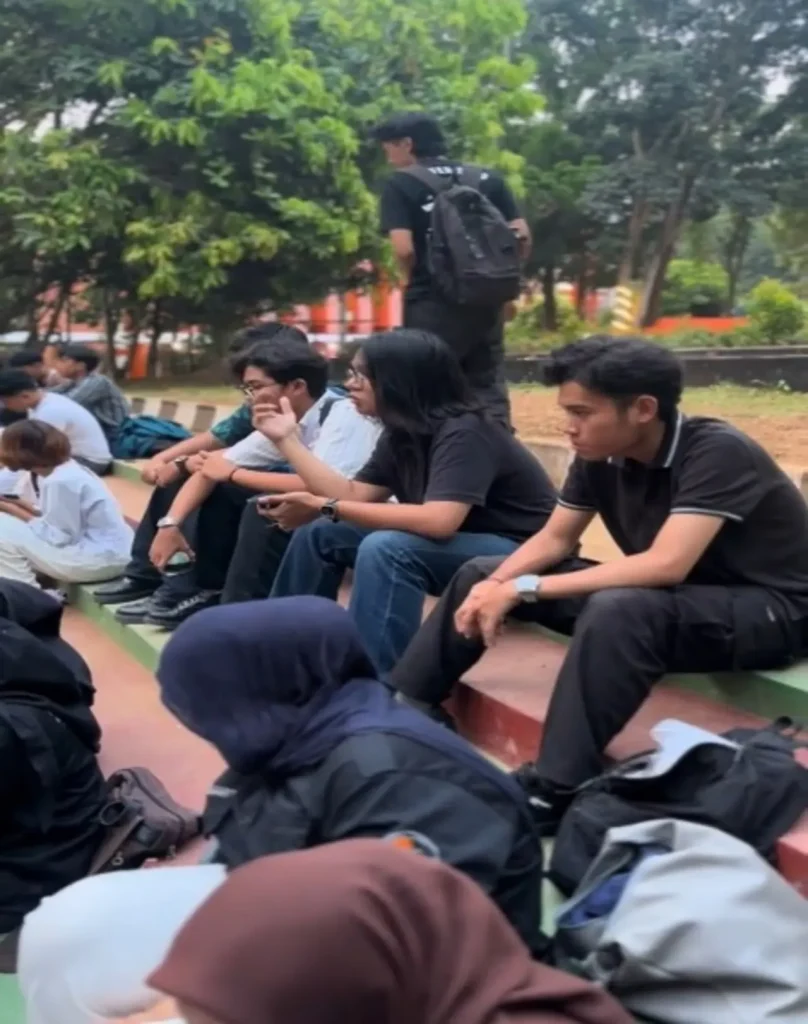
On the other hand, contemporary nongkrong culture is significantly influenced by economic factors and FOMO (fear of missing out). The choice of venue—particularly commercial spaces like coffee shops—is driven not only by comfort but also by economic capability and prevailing trends. This dynamic demonstrates that nongkrong functions both as a lifestyle choice and as a mechanism to sustain social relationships and gain group acceptance.
From these discussions, it can be concluded that nongkrong is not the sole catalyst for social or political change. Broader transformations are driven by economic and political conditions, public consciousness, solidarity, organization, and the capacity to mobilize collective action. Therefore, gathering spaces should be evaluated based on how they are utilized rather than merely where they are located. Open public spaces—such as parks, campus areas, and other civic facilities—can serve as viable environments for socializing and interacting without relying exclusively on commercial establishments. This highlights the importance of utilizing public spaces as inclusive domains for social connection, intellectual exchange, and community solidarity.