

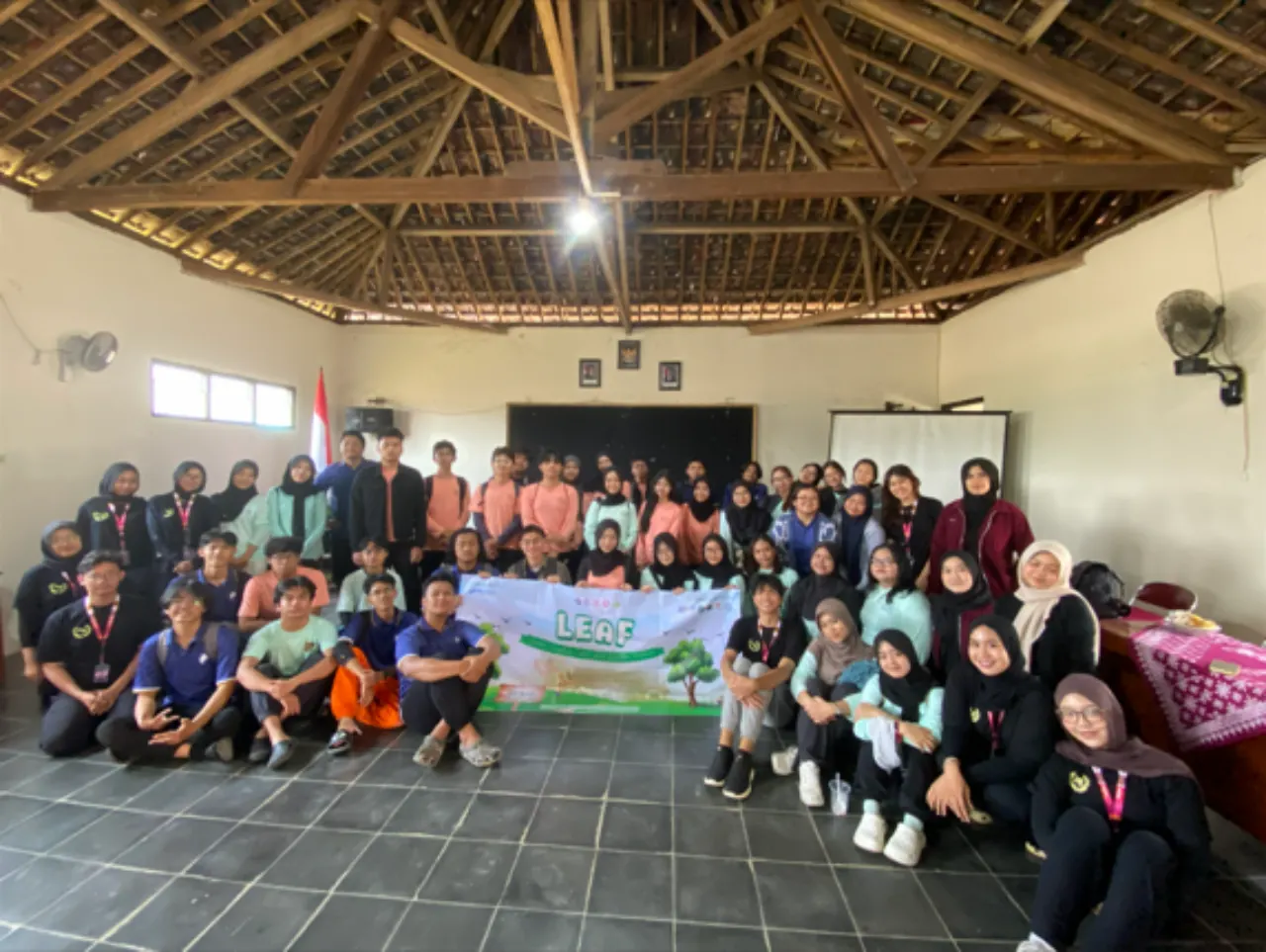
SEMARANG – The Organizational Social Responsibility (OSR) Department of the Business Administration Student Association (HMPS Administrasi Bisnis), Faculty of Social and Political Sciences (FISIP), Universitas Diponegoro, has successfully organized the Learn, Explore, and Act for Future (LEAF) 2026 program series in Kesongo Village, Tuntang District, Semarang Regency, Central Java. Driven by a spirit of collaborative action, this initiative was designed to address environmental challenges through educational sessions and the installation of biopore infiltration holes, while simultaneously strengthening the preservation of local art and culture within the community.
The LEAF 2026 program series commenced with strategic coordination and administrative preparation for partnerships. This included drafting volunteer guidelines, finalizing detailed operational rundowns, and executing partnership agreements alongside land-use templates for partner schools in Kesongo Village.
The core implementation of the program on school grounds began with an environmental awareness and education session for school representatives. Following the workshop, the Undip student team engaged in direct action by installing biopore infiltration holes across designated school areas. These specific sites were selected to ensure the installed biopore devices could be maintained, monitored, and utilized sustainably by the school community. The presence of village officials and school authorities further strengthened synergy, highlighted by the symbolic handover of biopore tools as a concrete contribution from the university to the local educational environment.
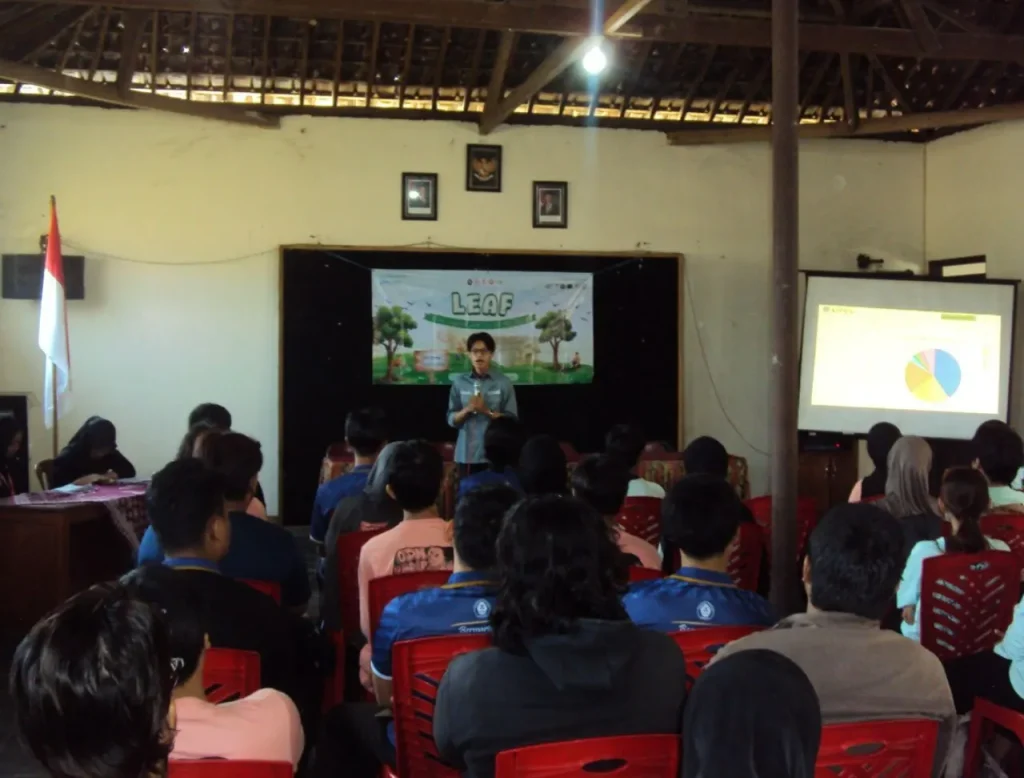
The main environmental activities were concentrated at a school located in Kesongo Village. The agenda opened with an in-depth environmental education session, where the organizing committee and volunteers received specialized training on groundwater conservation, organic waste management, and proper biopore installation techniques.
This educational segment was further enriched by expert speakers from the Environmental Engineering Student Association (HMTL) of Universitas Diponegoro, who facilitated technical training for the volunteers. The participation of HMTL Undip representatives provided a comprehensive environmental engineering perspective, equipping Business Administration student volunteers with both theoretical and practical insights into the hydrological functions of biopores—specifically in mitigating standing water and improving soil fertility.
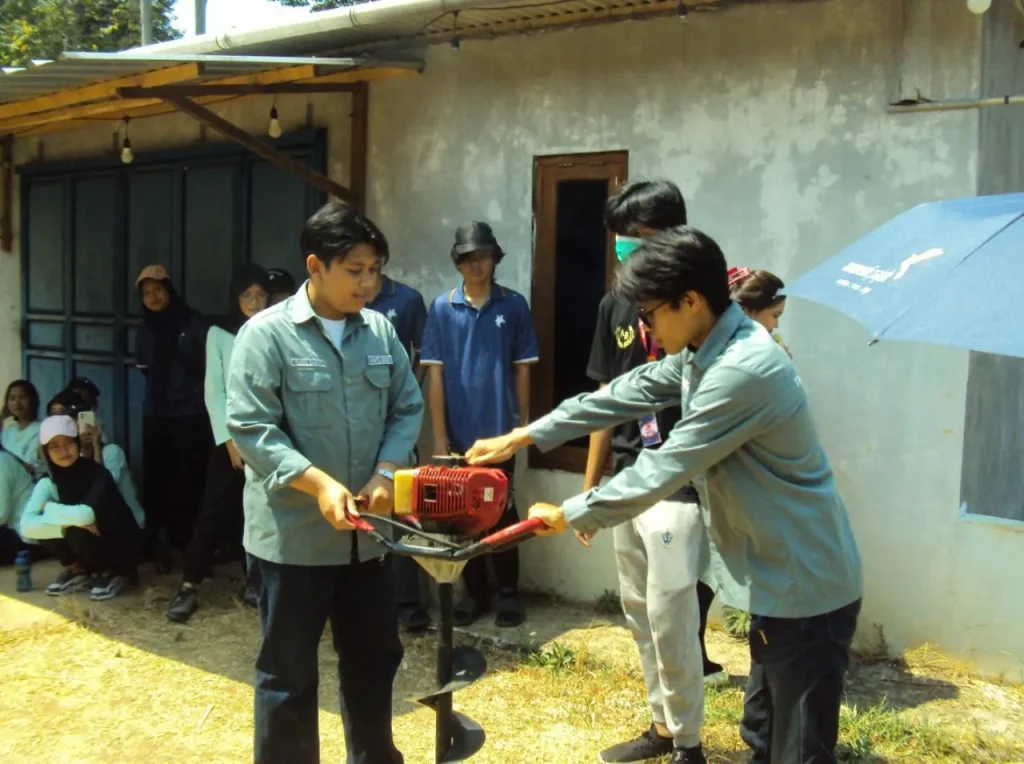
Following the educational session, the event proceeded with direct field action. The Undip student team alongside volunteers engaged in soil drilling to install 20 biopore infiltration holes across the approved school grounds. Utilizing the school’s land was a strategic choice to ensure the installed biopore units can be continuously maintained, monitored, and utilized sustainably by the school community as a daily ecological learning tool. This segment concluded with the symbolic handover of biopore equipment to school authorities, marking a concrete contribution from the academic community toward improving the environmental quality of local educational institutions.
To close the overarching LEAF 2026 program series, the committee shifted its focus toward the socio-cultural dimension through a hands-on approach targeting cultural preservation and local community empowerment in the Tuntang area. This initiative was designed to address growing concerns over the fading of traditional art identity amidst the tide of global modernization.
Collaborating with local artists, cultural figures, and youth representatives, this final phase centered on reintroducing and mentoring traditional performing arts. Through engaging and inclusive interactive sessions and cultural workshops, the LEAF team provided a platform for the younger generation to learn fundamental movements, instruments, and the deep philosophies embedded within local traditional arts.
This approach was chosen to ensure the transfer of cultural knowledge proceeds harmoniously without disrupting the residents’ daily activities, while reigniting a sense of pride and belonging among the younger generation toward their ancestral heritage. The presence of this program is expected to serve as a catalyst for independent and sustainable traditional art preservation in the future.
Through the success of this entire event series, the OSR Department of HMPS Administrasi Bisnis FISIP Undip reaffirms the academic community’s strong commitment to implementing the Tri Dharma of Higher Education, particularly the pillar of community service. The LEAF 2026 program demonstrates that cross-disciplinary collaboration and concrete actions aligned with genuine community needs can deliver constructive, long-term impacts on both environmental sustainability and national culture.