

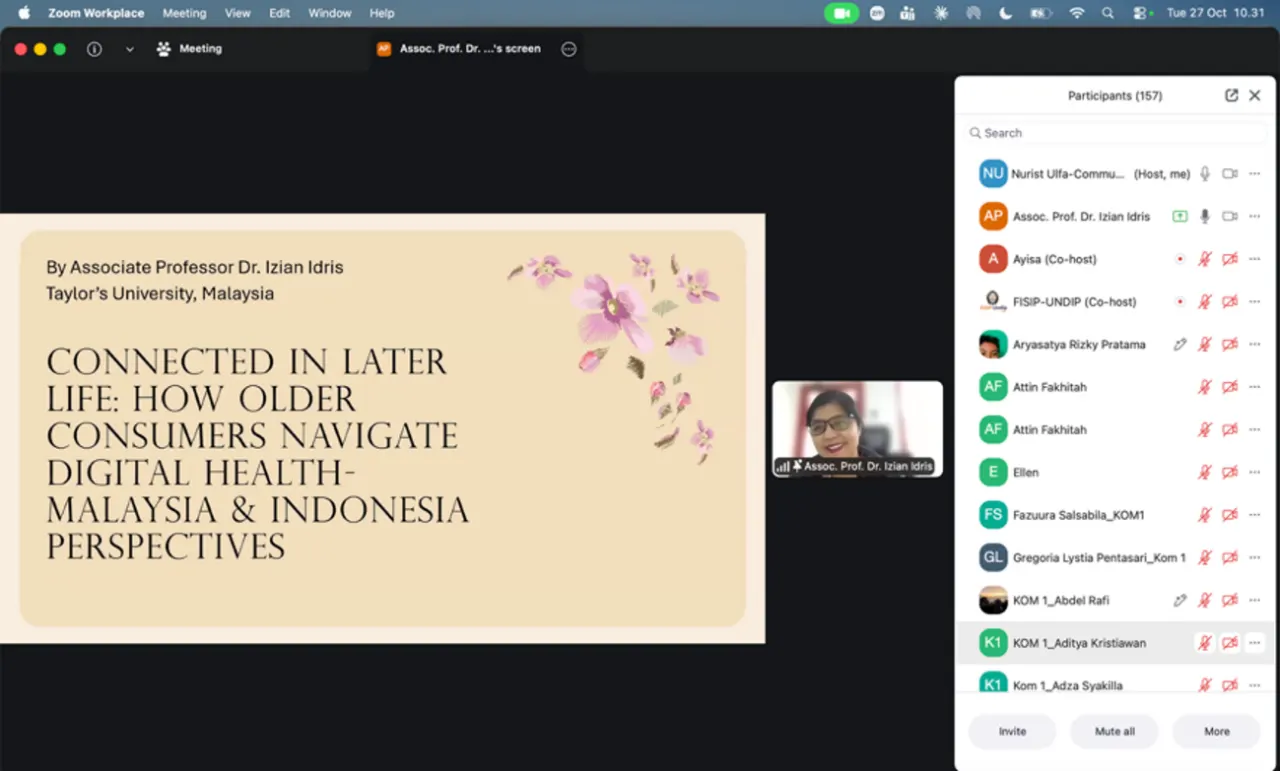
Semarang, 27 October 2026 — What helps older adults feel confident enough to try an online medical consultation and make it part of their healthcare routine? This question was at the centre of an UNDIP Global Classroom guest lecture hosted online by the Bachelor of Communication Science Programme, Faculty of Social and Political Sciences, Universitas Diponegoro, as part of the Consumer Behaviour and Culture course.
The lecture, “Connected in Later Life: How Older Consumers Navigate Digital Health,” featured Associate Professor Dr Izian Idris from the School of Management and Marketing at Taylor’s University, Malaysia, as the keynote speaker. Dr Nurist S. Ulfa, the course lecturer, moderated the session, which was held as part of the activities of the Digital Communication Technology and Society Research Cluster.
Drawing on examples from Indonesia and Malaysia, Dr Izian discussed how older consumers use digital tools to book appointments, consult doctors online, order medication, and monitor their health. These services can reduce the need to travel and make routine health monitoring more convenient. Their value, however, depends on whether people can access them, understand how to use them, and trust providers to handle their health information responsibly.
Dr Izian highlighted barriers that can arise from the first attempt to use a service. These include limited digital literacy, fear of making mistakes, device costs, unreliable internet access, and concerns about fraud and privacy. In Indonesia, the country’s archipelagic geography adds another challenge to providing equitable access. Family support can make a practical difference: a relative may install an app, explain how it works, or accompany an older family member during a first online consultation.
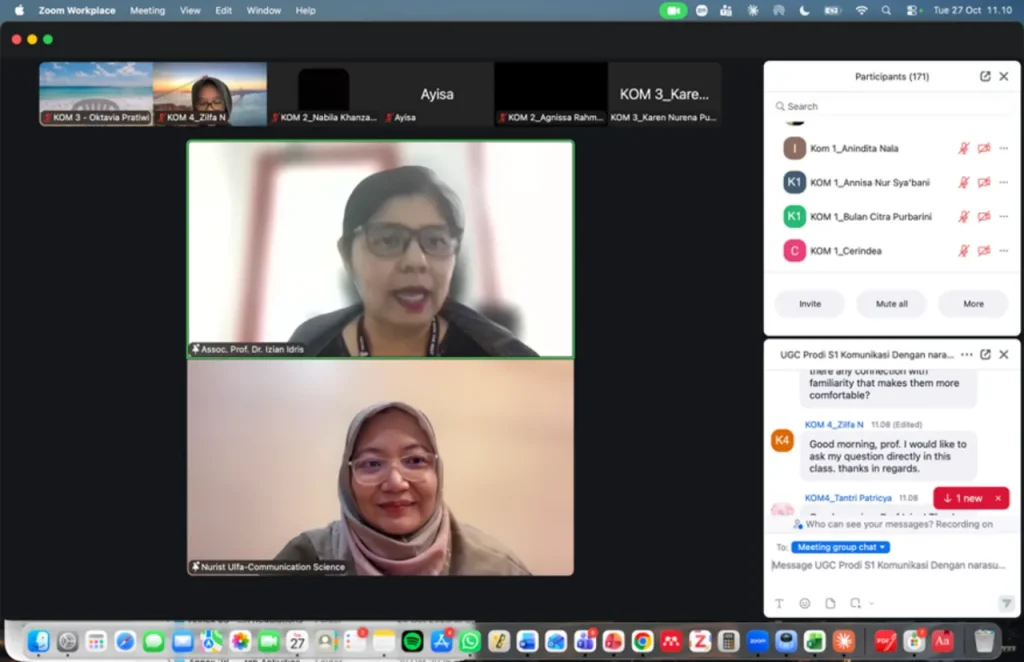
For communication students, the lecture showed how the way a service communicates can influence whether people feel able to use it. Clear instructions in a familiar language, readable text, and simple navigation can make digital services easier to use. Keeping in-person assistance available gives users another way to get help when they need it. In the discussion that followed, students connected these examples with their study of consumer behaviour in later life.
Dr Izian has more than 20 years of experience in teaching, research, and academic leadership. She earned her PhD from the University of Liverpool, United Kingdom, and worked in the corporate sector before entering academia. Her research spans marketing, consumer behaviour, and marketing gerontology, with a particular interest in older consumers’ everyday practices, well-being, and digital engagement.
Through UNDIP Global Classroom, students had the opportunity to examine a shared issue from Indonesian and Malaysian perspectives. The session encouraged them to consider how trust, family support, and the design of digital services shape older adults’ decisions about when and how to use technology for their health.