

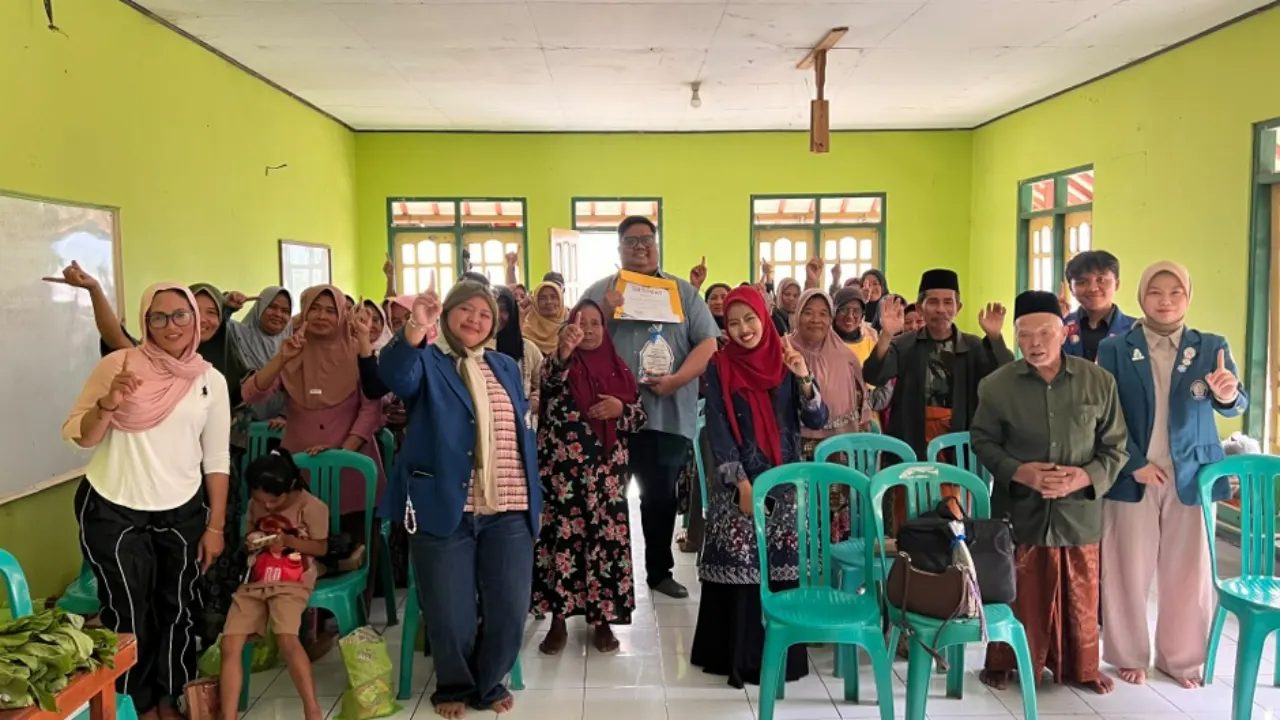
Semarang, October 11, 2026 — The Student Executive Board (BEM) of the Faculty of Social and Political Sciences, Universitas Diponegoro (FISIP Undip) SDGs Student Team organized a community service activity titled “Lanjan Sustainable Vegetable Hub: Strengthening Farmer Capacity through Integrated Plant Health Management and SDGs-Based Partnerships” on Sunday (11/10), from 10:00 A.M. to 12:00 P.M. at TPQ Dusun Tegalroto, Lanjan Village, Sumowono District, Semarang Regency. The activity was attended by the local farmer group as an effort to strengthen farmers’ knowledge in plant health management and agricultural product marketing.
The program was motivated by the importance of strengthening farmer capacity in maintaining production quality while enhancing the market appeal of harvests. In practice, the sustainability of agricultural enterprises is determined not only by cultivation processes but also by farmers’ ability to manage plant health and adapt marketing strategies to consumer needs. Through this program, the BEM FISIP Undip SDGs Student Team sought to deliver education that connects production and marketing aspects as part of developing sustainable vegetable farming businesses.
In the first session, the activity featured Norinda Dwi Andiyantari, a plant pest organism control officer, as a speaker in the agricultural field. The materials presented covered the introduction of plant pests and diseases as well as Integrated Pest Management (IPM). This discussion provided an understanding of the importance of recognizing plant disorders and applying appropriate control measures to support healthy crop cultivation.
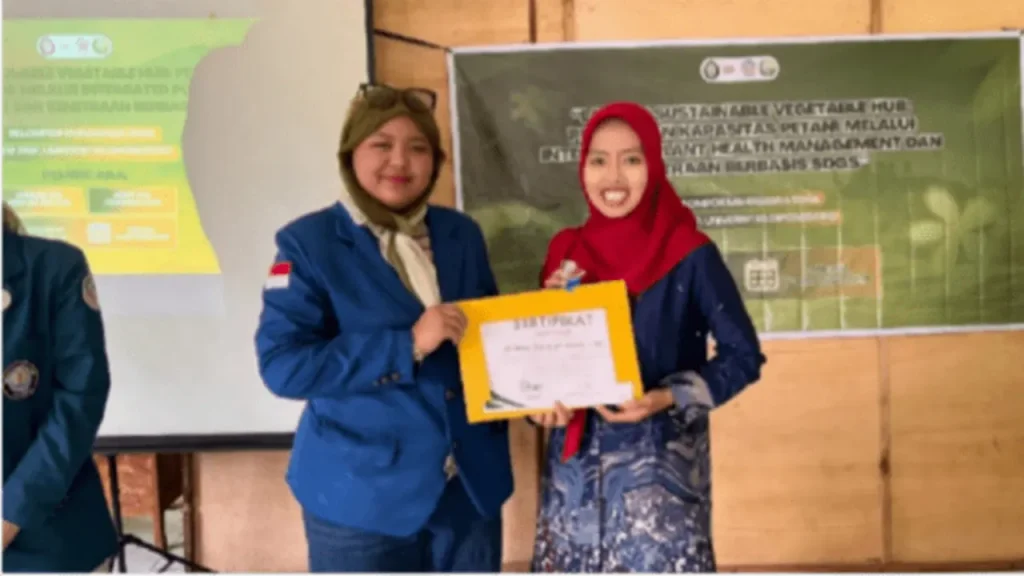
In addition to the material presentation, participants received agricultural inputs including activators, molasses, Trichoderma, and dolomite. The distribution of these materials formed part of the program’s support in introducing inputs related to agricultural management. The materials delivered were aligned with the healthy crop cultivation approach, which emphasizes proper plant management and the application of more environmentally friendly pest control.
The activity then continued with a marketing session featuring Rendy Ega Pradhana, M.A.B., an academic from Universitas Diponegoro. In this session, participants received education on vegetable packaging strategies that take into account the characteristics of target consumers. The material emphasized that packaging not only serves to protect products but also forms part of a marketing strategy that must be adapted to buyers’ needs and preferences.
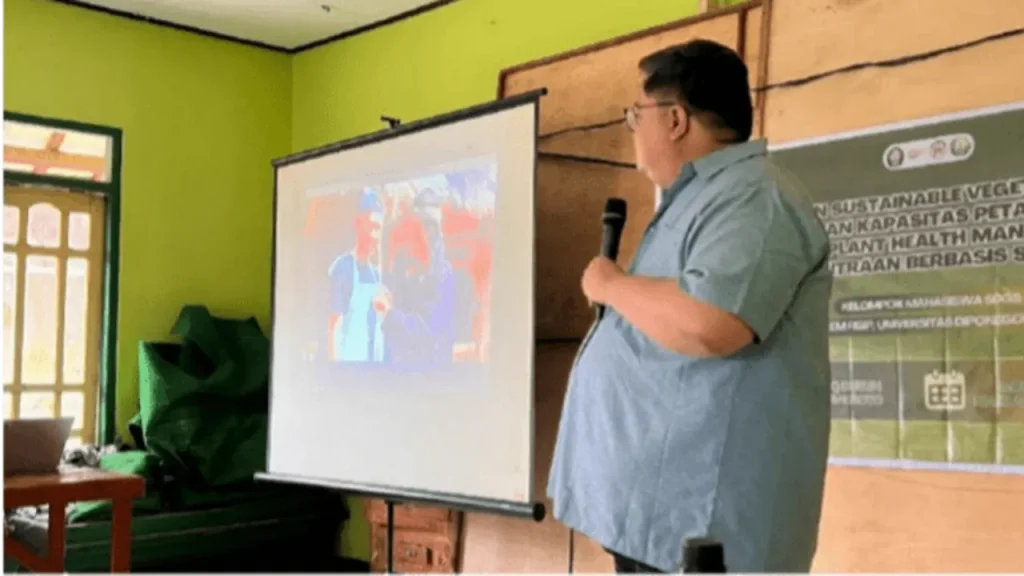
Through this discussion, farmers were encouraged to understand the importance of determining consumer targets before selecting a packaging approach. This adjustment represents one step toward presenting agricultural products that are more attractive and relevant to the intended market. As a form of support for the application of the material, participants also received packaging tools to support efforts in developing the marketing of agricultural products.
Throughout the activity, participants demonstrated enthusiasm through their active engagement in asking questions and participating in discussions. The interaction between speakers and participants served as a space to deepen understanding of plant health management and harvest packaging strategies. The activity was also complemented by an evaluation through pre-tests and post-tests to assess participants’ comprehension of the materials provided.
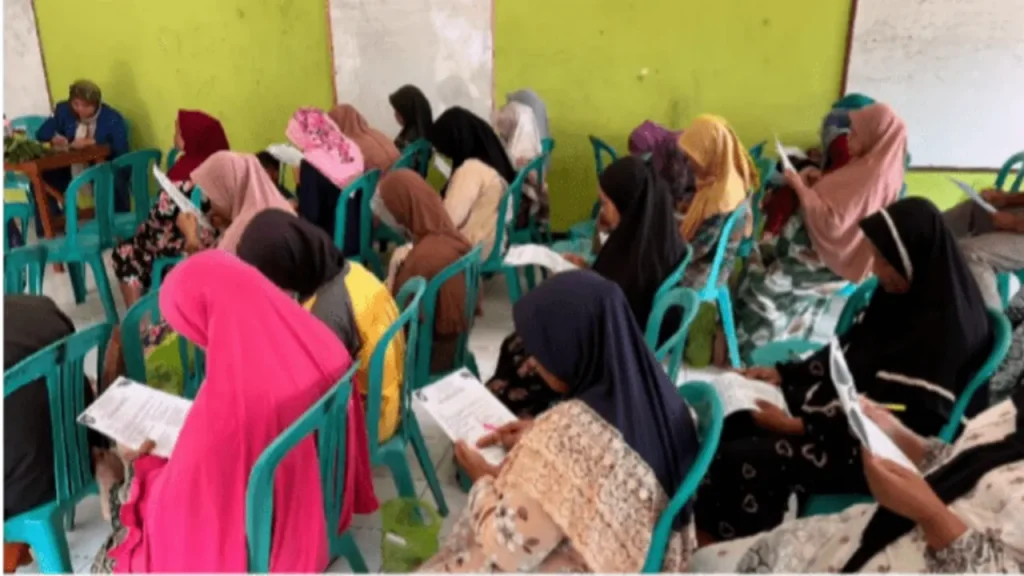
Based on the evaluation results reported by the organizers, participants’ post-test scores were better than their pre-test scores. These results serve as an initial indication of improved understanding following the educational activity. However, the magnitude of the improvement has not been stated in numerical terms. Participants also gained new knowledge, agricultural inputs, and packaging tools that can support efforts to apply the materials according to their respective needs.
The implementation of this program was supported by the involvement of speakers from the agricultural sector and academia, as well as assistance from the local Youth Organization (Karang Taruna) in supporting the activity. Meanwhile, the BEM FISIP Undip SDGs Student Team acted as the organizer, involving the farmer group as the primary participants. This collaboration served as a meeting space for knowledge, experience, and community needs in developing the agricultural sector.
Through Lanjan Sustainable Vegetable Hub, the BEM FISIP Undip SDGs Student Team seeks to contribute student-led initiatives oriented toward community needs. The integration of plant health education and marketing strategies is expected to serve as a foundation for farmers in Lanjan Village to develop more adaptive farming businesses, improve the quality of harvest management, and pay attention to potential added value through packaging that suits target consumers. This program also represents a manifestation of student engagement in supporting sustainable development through strengthening community capacity at the local level.