

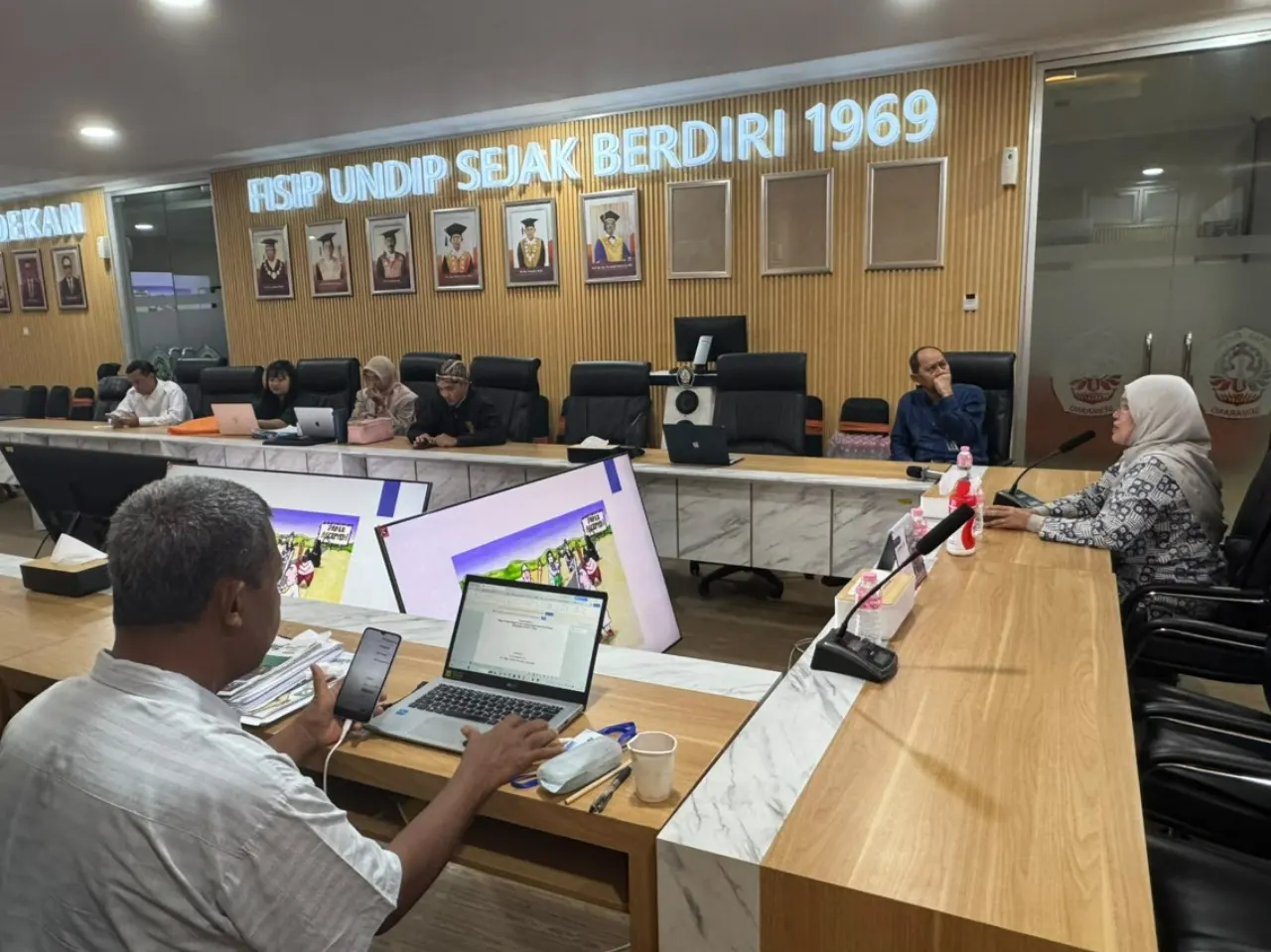
SEMARANG, October 29, 2026 – The Faculty of Social and Political Sciences (FISIP), Universitas Diponegoro (UNDIP), continues to strengthen its commitment to improving the quality and productivity of international research publications. Through the Digital Communication Technology and Society Research Group, the Department of Communication Science organized an academic sharing session featuring Dr. Bahiyah Omar, Dean of the School of Communication, Universiti Sains Malaysia (USM), on Thursday (October 29, 2026).
Held at the Antawirya Room, FISIP UNDIP, the session was organized under the theme “Sustaining Research Productivity and Publication Strategies Amid Multiple Academic Duties,” featuring a presentation entitled “Writing for High Impact Journals: Sharing of Experience.” The event formed part of the ongoing Joint Research Collaboration Visit between the Digital Communication Technology and Society Research Group at FISIP UNDIP and Dr. Bahiyah Omar, aimed at strengthening academic collaboration and enhancing international research publication capacity.
Unlike the previous guest lecture involving undergraduate students, this session was specifically designed for faculty members of the Department of Communication Science. Through an interactive discussion, participants exchanged experiences, explored publication challenges, and discussed practical strategies for improving their chances of publishing in prestigious international journals.
During her presentation, Dr. Bahiyah Omar shared her academic publishing experiences, including navigating various stages of the publication process, from desk rejection and rejection following peer review to major revisions based on reviewers’ feedback.
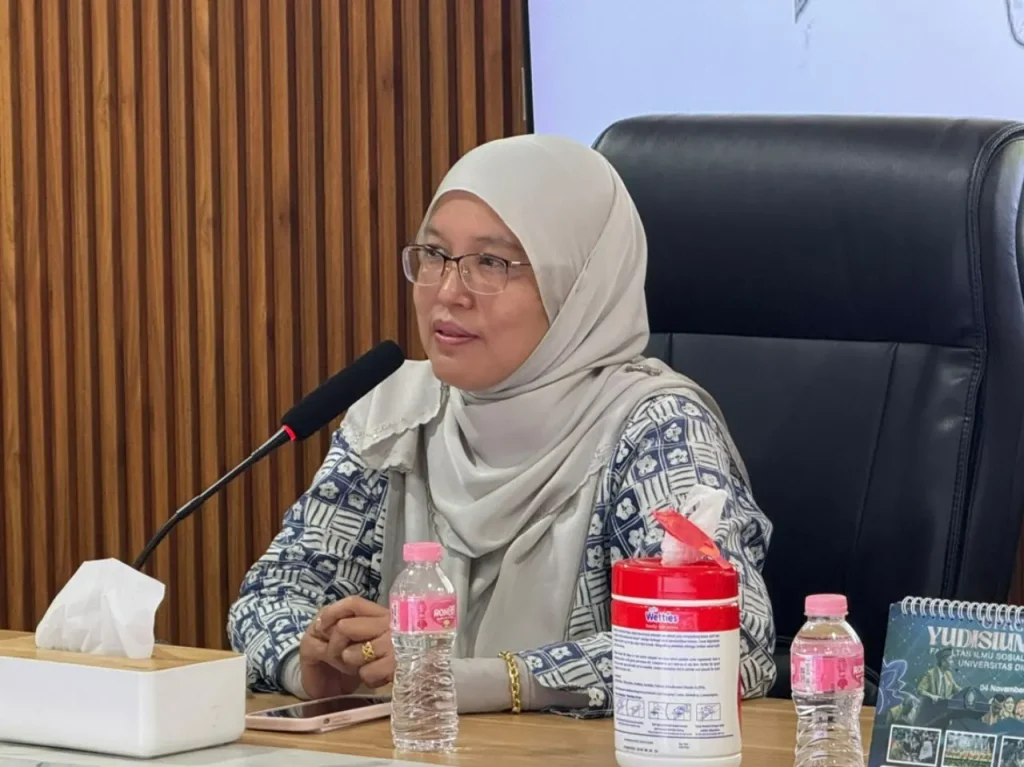
Drawing on these experiences, Dr. Bahiyah outlined ten essential aspects of preparing manuscripts for high-impact journals. These included developing a compelling research narrative, clearly demonstrating novelty and scholarly contributions, applying theoretical frameworks appropriately, ensuring methodological rigor, and highlighting the theoretical and practical implications of research findings.
Her presentation emphasized that the quality of a scholarly article is determined not only by the novelty of its topic but also by the author’s ability to explain why the research matters and how its findings contribute to the advancement of knowledge.
She also highlighted the importance of crafting clear and engaging titles and abstracts, developing coherent arguments, and understanding the characteristics and expectations of target journals. Additionally, responding thoughtfully and constructively to reviewers’ comments was identified as a crucial part of improving manuscript quality.
Using examples from published articles and her own publication experiences, Dr. Bahiyah demonstrated how researchers can strengthen their manuscripts by establishing clear arguments, articulating scholarly contributions, and connecting research findings to broader academic discussions.
The discussion session featured several questions directly related to the challenges faculty members encounter when preparing manuscripts for international publication.
Arfika Pertiwi Putri, M.I.Kom., a lecturer at the Department of Communication Science, FISIP UNDIP, raised an important question concerning the geographical scope of research in Indonesia.
Given Indonesia’s extensive geographical diversity and its varying social and cultural contexts, Arfika asked whether research conducted in a single region could still meet the expectations of high-impact international journals or whether researchers should expand their geographical coverage to strengthen their studies’ contributions.
In response, Dr. Bahiyah emphasized that geographical scope alone does not determine a study’s quality or publication potential. Instead, researchers must establish a strong academic justification for their selected research context.
When focusing on a particular region, researchers should clearly explain why the context is significant and how the findings contribute to broader theoretical discussions or relevant social issues. However, when the justification for selecting a specific geographical area is insufficient, expanding the research scope may be a more appropriate approach.
Another question came from Dr. Nurist Surayya Ulfa, a lecturer at the Department of Communication Science, FISIP UNDIP, who highlighted the challenges of mentoring postgraduate students in preparing manuscripts for high-impact journals.
She explained that encouraging postgraduate students to write for high-impact journals was a relatively new development in their academic environment. She therefore asked about effective practices for guiding students to meet the standards and expectations of international scholarly publishing.
Dr. Bahiyah suggested that one of the most effective strategies is encouraging students to read and closely examine articles already published in their target journals.
By studying these publications, students can identify common writing patterns, argument structures, presentation styles, and other characteristics expected by particular journals.
In this process, academic supervisors play a critical role, particularly in helping students identify and access relevant scholarly literature. Such guidance is especially important because some students enter postgraduate programs with limited experience in academic research and scholarly publishing.
The discussion highlighted that successfully publishing in high-impact journals requires not only improving individual researchers’ writing skills but also strengthening academic mentoring practices and fostering a supportive research culture within higher education institutions.
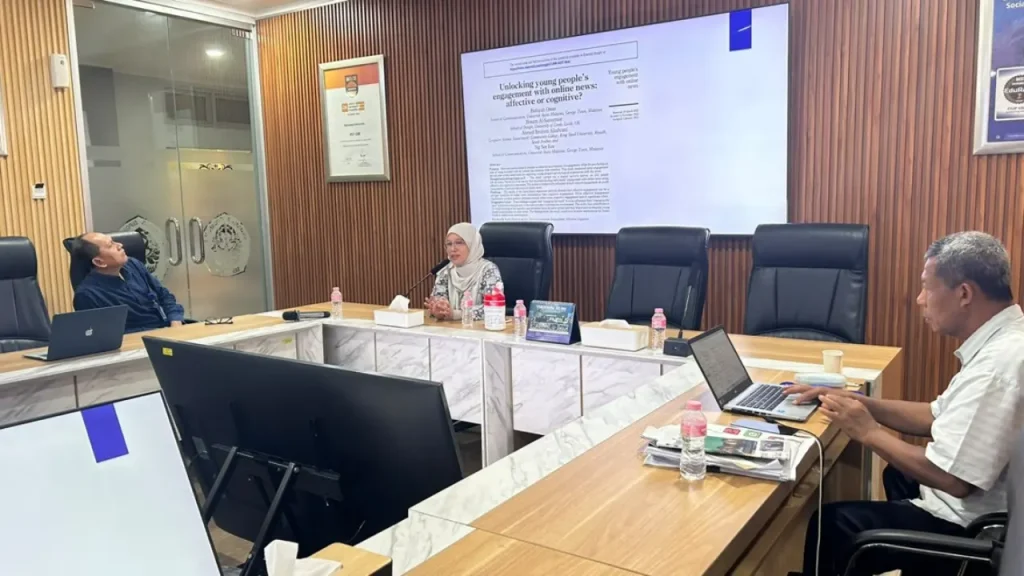
Concluding the sharing session, Dr. Bahiyah Omar encouraged faculty members to translate the insights and strategies discussed into meaningful improvements in their research and publication practices.
“I encourage my fellow academics in the Department of Communication Science at FISIP UNDIP to make improvements based on what we have learned and discussed together today,” said Dr. Bahiyah Omar.
Meanwhile, Kholidil Amin, M.I.Kom., representing the Digital Communication Technology and Society Research Group and serving as Head of the Reputable Publication Services Unit (Unit Layanan Publikasi Bereputasi, ULPB) at FISIP UNDIP, expressed his appreciation for the session and its potential contribution to faculty members’ publication strategies.
“We hope this session will further equip our lecturers with the knowledge and strategies needed to publish in high-impact journals. Our faculty members are already producing excellent scholarly work; perhaps what we need now is to collectively upgrade our publication strategies,” said Kholidil Amin.
His statement reinforced the importance of strengthening publication strategies, from selecting appropriate journals and sharpening research contributions to preparing manuscripts that align with the standards and expectations of target publications.
Dr. Agus Naryoso, S.Sos., M.Si., Head of the Department of Communication Science at FISIP UNDIP, also expressed his full support for the initiative. He emphasized the importance of academic capacity-building activities in encouraging more faculty members to publish their research in reputable, high-impact international journals.
Through its collaboration FISIP UNDIP continues to facilitate international academic exchange and opportunities for collaborative learning. The initiative is expected not only to enhance faculty members’ scholarly writing competencies but also to strengthen a productive, collaborative, and impact-oriented research culture.
Ultimately, this international academic collaboration aims to move beyond knowledge exchange by encouraging tangible improvements in research quality and publication outcomes, contributing to the advancement of communication scholarship at both national and global levels.