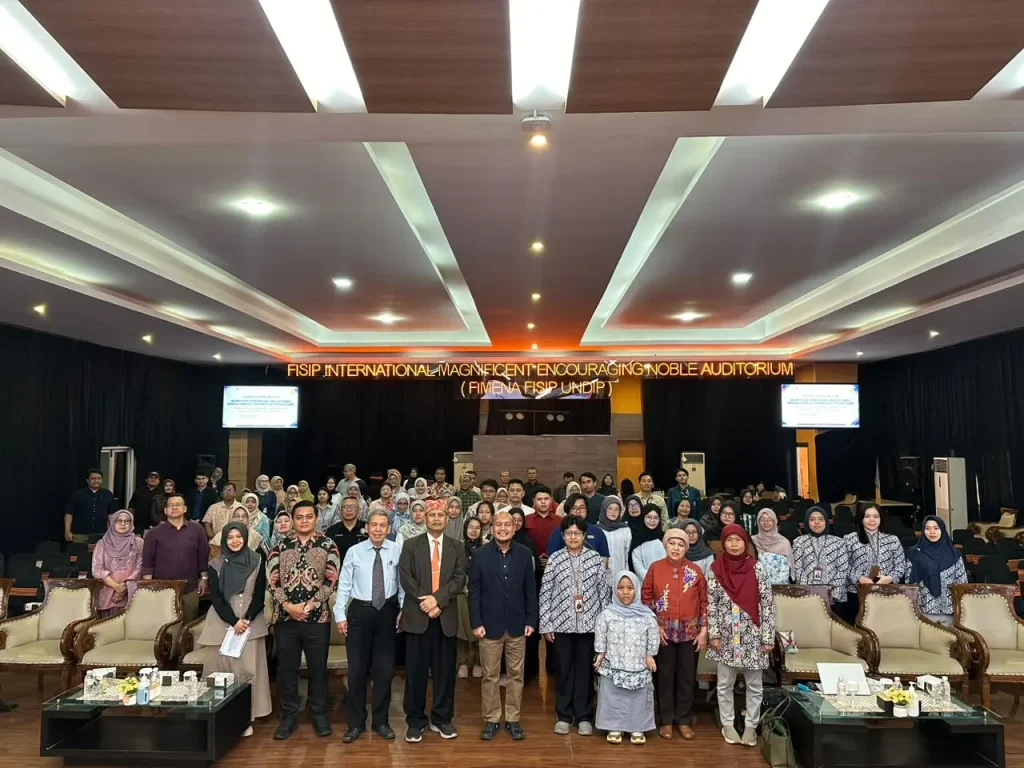
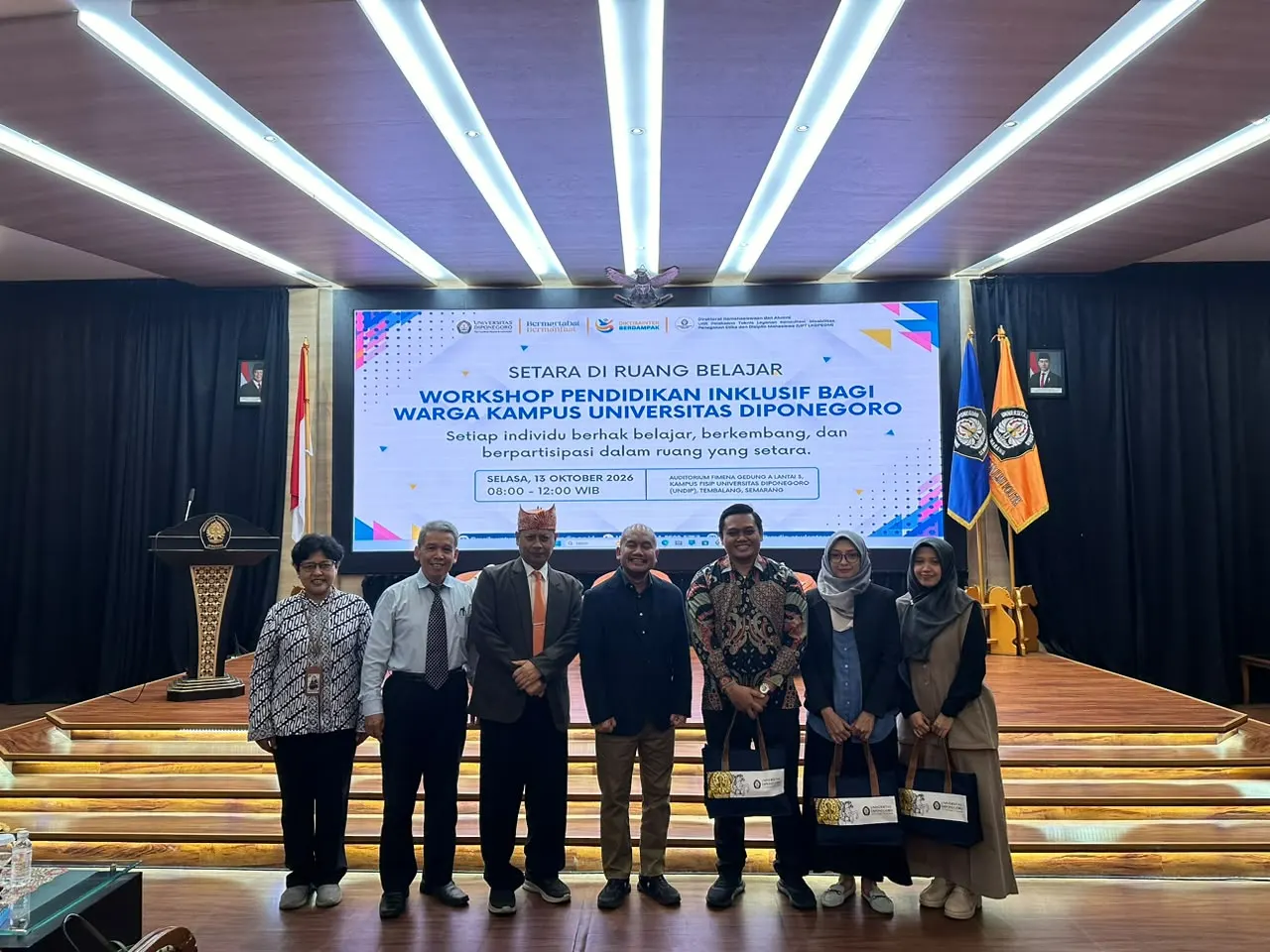
Semarang – Diponegoro University (UNDIP) continues to promote an inclusive and equitable higher education environment through the workshop titled “Equal in the Learning Space: An Inclusive Education Workshop for the UNDIP Campus Community.” The event was organized by the Counseling, Disability, Student Discipline and Ethics Services Unit (UPT LKDPDDEM) under the Directorate of Student Affairs and Alumni on Tuesday, October 13, 2026, at the FIMENA Auditorium, 3rd Floor, Building A, Faculty of Social and Political Sciences (FISIP), UNDIP Tembalang Campus, Semarang.
The workshop served as an effort to enhance awareness and understanding among members of the university community regarding the importance of inclusive education in higher education. Through this initiative, the academic community is expected to gain a deeper understanding of the principles of equality, the needs of students with disabilities, and the importance of creating learning environments that are welcoming, accessible, and supportive of all students’ participation.
The event began with participant registration at 8:30 a.m. Western Indonesia Time (WIB), followed by the opening ceremony, the singing of Indonesia Raya and UNDIP’s march and hymn, the presentation of the activity report, welcoming remarks and the official opening by university leaders, and a group photo session. The program continued with a video presentation featuring testimonials from students with disabilities at Diponegoro University, moderated by Aldani Putri Wijayanti, S.Psi., M.Sc.
The first session, entitled “Inclusive Education in Higher Education: Concepts, Regulatory Frameworks, and the Importance of Awareness among the Campus Community,” was delivered by Dr. Mohammad Anwar, M.Pd., Secretary of the Central Java Provincial Branch of the Indonesian Association of Orthopedagogical Professionals (APOI) and a lecturer in Special Education at the Faculty of Teacher Training and Education, Sebelas Maret University (UNS). The session discussed the concept of inclusive education, the regulatory frameworks supporting its implementation, and the importance of raising awareness among members of the campus community to create an equitable educational environment.
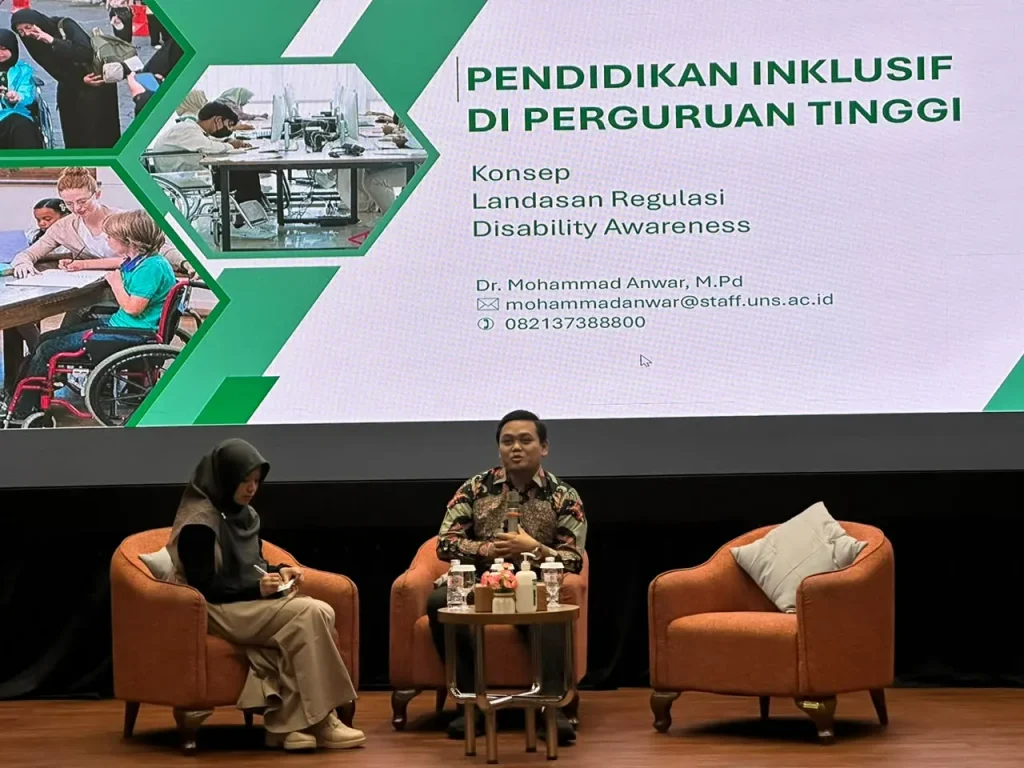
The second session addressed the theme “Excellent Disability-Friendly Services: Practices in Classrooms, Academic Services, and Student Affairs.” It was delivered by Arsy Anggrellanggi, S.Pd., M.Pd., a sign language expert and lecturer in Special Education at the Faculty of Teacher Training and Education, UNS. This session highlighted the importance of implementing disability-friendly services in teaching and learning, academic administration, and student affairs to ensure that students receive support tailored to their individual needs.
Together, the two sessions provided perspectives on inclusive education, ranging from conceptual understanding and regulatory frameworks to the implementation of services that support accessibility for students with disabilities. Inclusive education, therefore, is not merely about providing access to higher education but also about creating learning experiences that enable every student to participate on an equal basis.
Following the presentations, the workshop continued with a question-and-answer session, the formulation of key conclusions, and the closing ceremony. These activities provided participants with opportunities to deepen their understanding and discuss how the principles of inclusive education can be applied in everyday academic life.
Through the “Equal in the Learning Space” workshop, UNDIP emphasized the importance of involving all elements of the university in building a campus culture that respects diversity and upholds equality. Awareness of the needs of people with disabilities should become an integral part of teaching and learning, academic services, and social interactions across the campus environment.
Creating an inclusive campus requires a shared commitment, not only through policies and the provision of services but also through changes in attitudes, increased understanding, and the implementation of disability-friendly practices. Through these efforts, the university environment is expected to become a more open and equitable learning space that supports every student in developing their potential.