

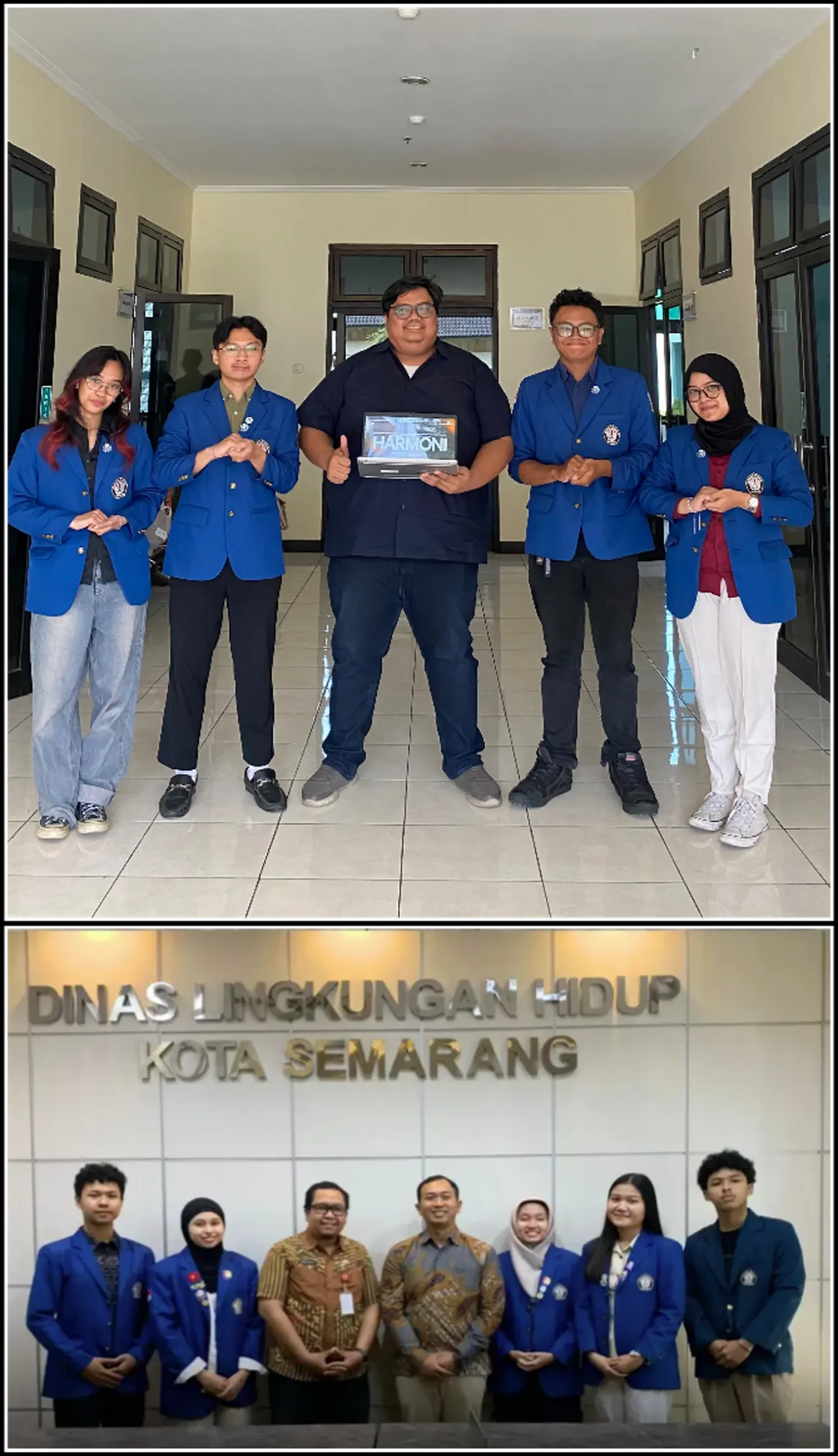
SEMARANG – The Faculty of Social and Political Sciences at Universitas Diponegoro (FISIP UNDIP) has achieved another milestone with the qualification of two teams from the Student Creativity Program (Program Kreativitas Mahasiswa/PKM) for the 2026 National Student Scientific Week (Pekan Ilmiah Mahasiswa Nasional/PIMNAS). Both teams have developed innovative ideas addressing strategic sustainable development issues, namely circular economy-based waste management and the strengthening of early warning systems and emergency response for coastal communities facing tidal flooding.
This achievement demonstrates FISIP UNDIP students’ commitment to developing creative and innovative ideas that go beyond academic advancement to offer solutions to real-world challenges. Through their respective projects, the two teams seek to contribute to sustainable development, environmental resilience, and improved community well-being.
RECULA: Integrated Waste Management Innovation Based on a Circular Economy to Support Indonesia’s Energy Independence by 2045
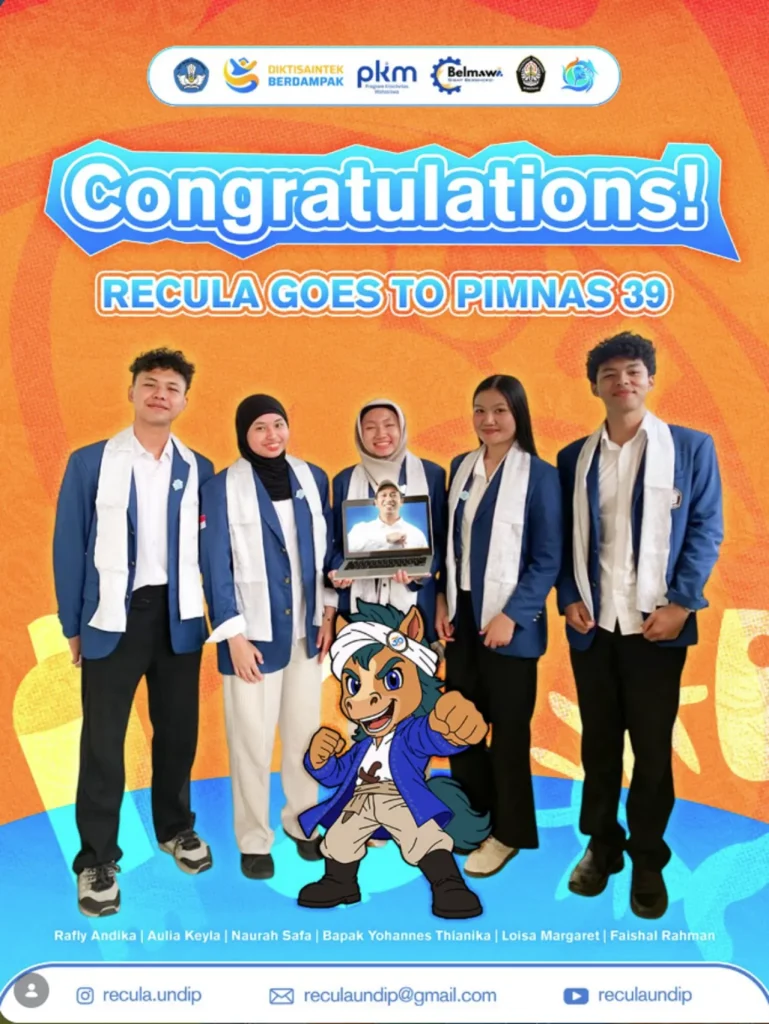
The PKM-VGK RECULA team presents a project entitled “Innovation in an Integrated Waste Processing Area System Based on Circular Economy and Valorization as a Step Toward Indonesia’s Energy Independence by 2045.” The team is supervised by Yohanes Thianika Budiarsa, S.I.Kom., M.G.M.C., and consists of five students: Naurah Safa Labibah, Muhammad Rafly Andika Putra, Aulia Keyla Chairunissa, Faishal Rahman Irawan, and Loisa Margaret Ambarita.
RECULA is founded on the importance of waste management that goes beyond reducing waste accumulation by creating added value through the reuse of materials and the recovery of available resources. A circular economy approach positions waste as a resource that can potentially be processed and reused, while valorization emphasizes efforts to increase the utility and economic value of materials that would otherwise be considered worthless.
Through its concept of an integrated waste processing area, RECULA highlights the importance of connecting waste management processes with resource recovery opportunities and energy development. This innovation is expected to contribute to a more efficient and sustainable waste management system while supporting Indonesia’s agenda for energy independence toward 2045.
The project is also relevant to national development challenges, particularly in strengthening environmental resilience and optimizing resource utilization. Integrated waste management has the potential to benefit not only the environment but also economic development and value creation for communities.
HARMONI: Strengthening Coastal Community Preparedness for Tidal Flooding
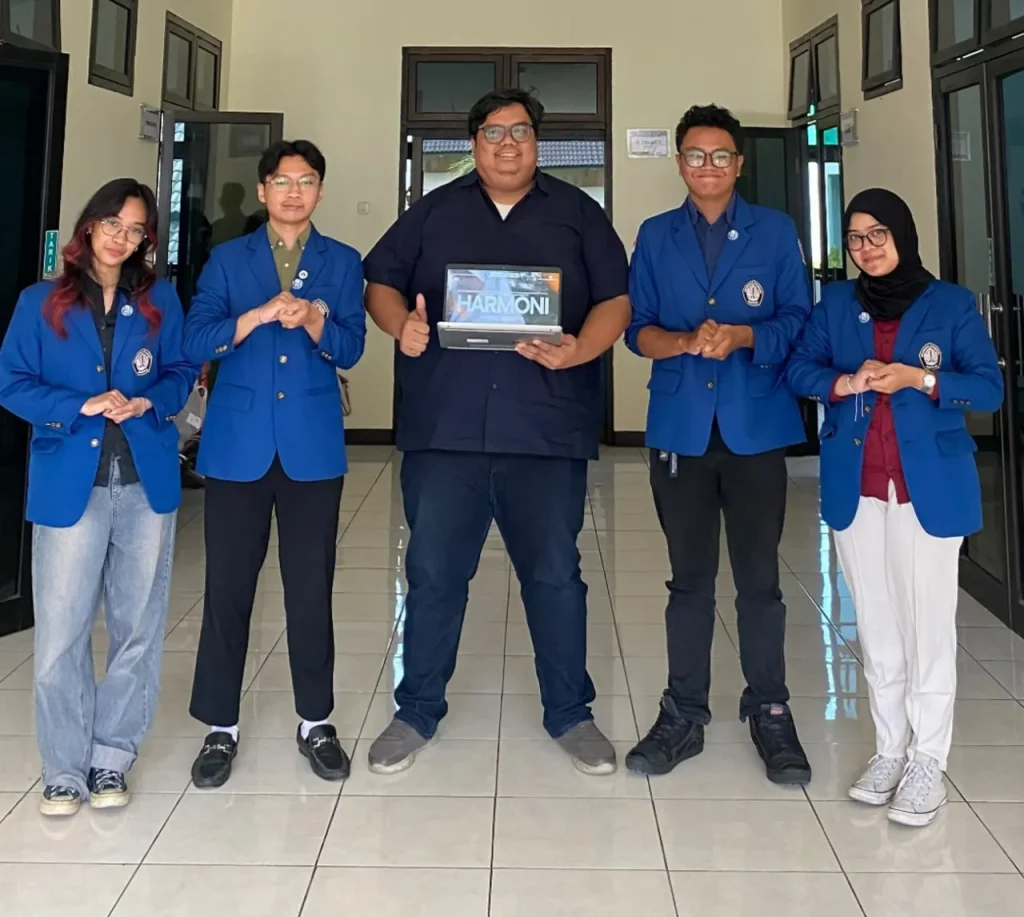
Meanwhile, the PKM-VGK HARMONI team presents a project entitled “A Participatory Sensing-Based Early Warning and Emergency Response System to Build Coastal Communities Resilient to Tidal Flooding.” The team is supervised by Rendy Ega Pradhana, S.A.B., M.A.B., and consists of four students: Anak Agung Bagus Made Aryasakti Pradaswara, Alfonsus Derryl Chrisandy Putra, Faith Ashira Amadhea Alexandra Nugraha, and Nasywa Ammar Naya.
HARMONI focuses on strengthening coastal community preparedness for tidal flooding through the development of an early warning and emergency response system that actively involves community participation. Tidal flooding is a challenge that can disrupt the social and economic activities of coastal communities, damage infrastructure, and increase risks to residents’ safety and well-being.
Addressing this challenge requires access to information about environmental conditions and potential hazards. However, such information must be supported by community involvement to ensure that it can be effectively used for preparedness and local decision-making.
Through a participatory sensing approach, HARMONI positions community members as key participants in identifying, monitoring, and responding to potential tidal flooding threats. This approach emphasizes the importance of involving residents in generating information relevant to their local environmental conditions while strengthening coordination in emergency situations.
HARMONI is expected to support the development of disaster mitigation systems that are more responsive, inclusive, and community-oriented. Building resilient coastal communities requires not only technology and infrastructure but also local capacity, collective participation, and preparedness to address disaster risks.
Student Contributions to Sustainable Development
The qualification of RECULA and HARMONI for PIMNAS 2026 demonstrates the diversity of innovative ideas developed by FISIP UNDIP students in response to development challenges. Although the two teams address different issues, both emphasize social benefits and sustainability as essential components of innovation.
RECULA highlights opportunities to improve waste management through a circular economy and valorization to support energy independence. Meanwhile, HARMONI emphasizes the importance of community participation and preparedness in addressing tidal flooding. Together, these projects demonstrate how social approaches, governance, public participation, and innovation can complement one another in addressing environmental challenges.
Both projects are also relevant to the Sustainable Development Goals (SDGs). RECULA aligns with SDG 12 on Responsible Consumption and Production and SDG 7 on Affordable and Clean Energy. HARMONI, meanwhile, supports SDG 11 on Sustainable Cities and Communities, particularly in strengthening community resilience to disasters, as well as SDG 13 on Climate Action.
This achievement provides an important opportunity for FISIP UNDIP to continue fostering an academic culture that is creative, collaborative, and oriented toward problem-solving. Student participation in PIMNAS is expected to serve not only as an academic competition but also as a platform for testing ideas, expanding networks, and developing innovations with the potential to create tangible benefits for society.
Through the achievements of RECULA and HARMONI, FISIP UNDIP students demonstrate that academic creativity can contribute to building a more sustainable, resilient, and competitive Indonesia. The participation of both teams in PIMNAS 2026 is expected to be an important step toward bringing their innovative ideas to the national stage while strengthening students’ contributions to addressing future challenges.