

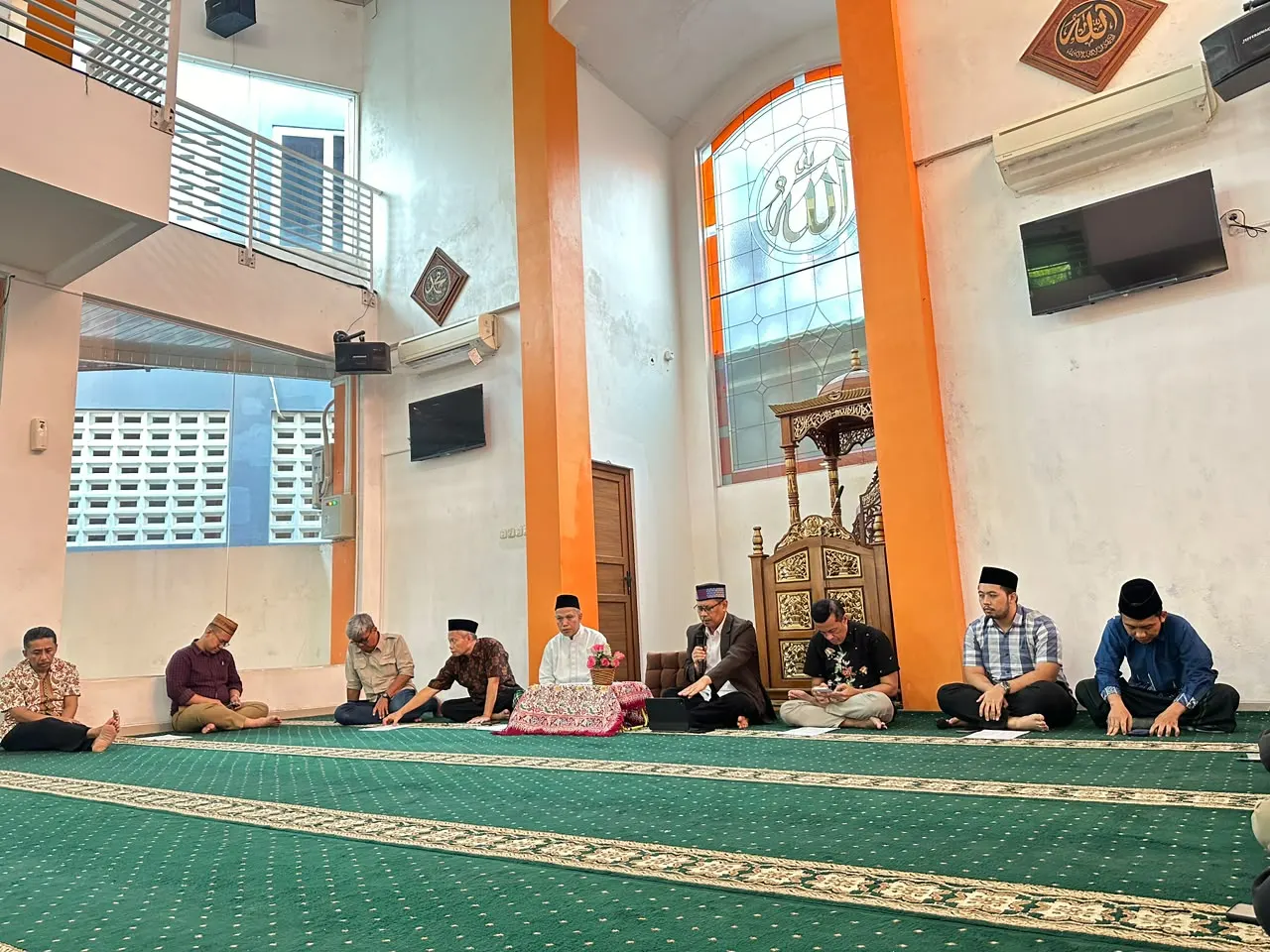
Semarang – The Faculty of Social and Political Sciences (FISIP), Universitas Diponegoro (UNDIP), held an istighosah prayer gathering at the Darul Ilmi Mosque on Tuesday, October 13, 2026. The event served as a spiritual endeavor by the academic community to pray for the smooth and successful implementation of the accreditation field assessment conducted by the Independent Accreditation Agency for Social Sciences, Political Sciences, Public Administration, and Communication (LAMSPAK) for the Undergraduate Communication Science Study Program at FISIP UNDIP, scheduled for October 14–16, 2026.
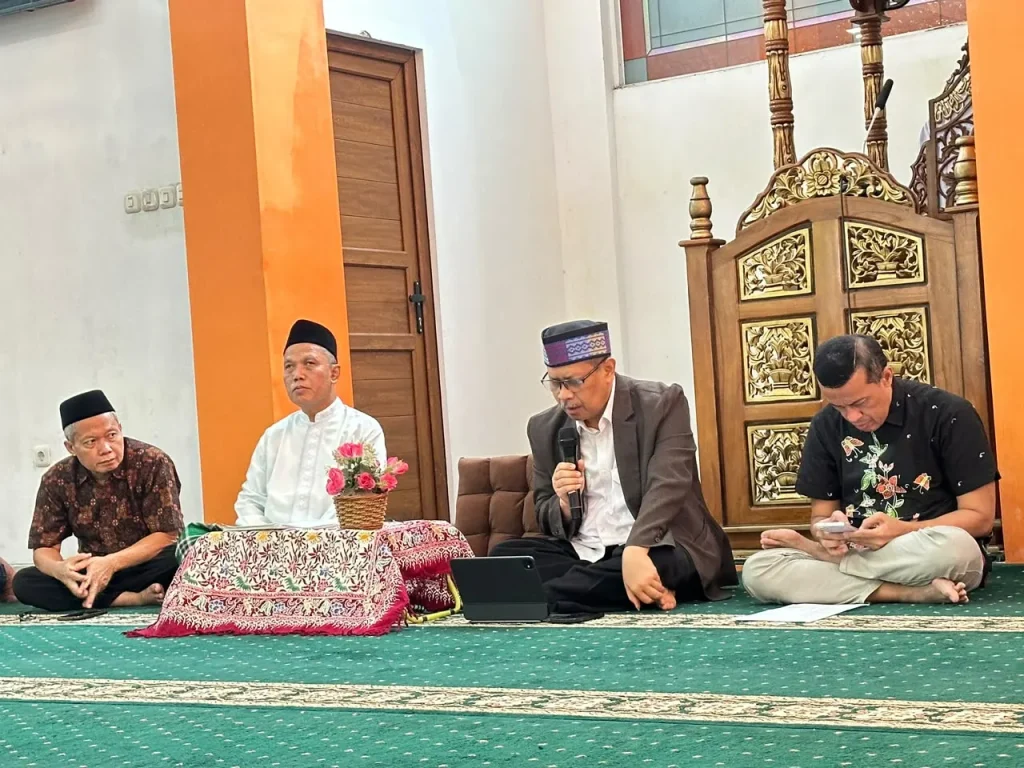
The istighosah was held after the Asr prayer and led by KH. Drs. Aufarul Marom, M.Si. The event began with an opening by master of ceremonies Muhammad Rif’at Al-Razi, followed by remarks from the Dean of FISIP UNDIP, Prof. Dr. Drs. Teguh Yuwono, M.Pol. Admin.
In his remarks, Prof. Teguh Yuwono expressed his hope that the istighosah would serve as a collective spiritual endeavor to support the smooth implementation of the field assessment and help the Undergraduate Communication Science Study Program achieve an excellent accreditation outcome. The gathering also reflected the support and prayers of the entire academic community for the study program’s ongoing commitment to maintaining and improving the quality of higher education.
The LAMSPAK accreditation field assessment is an important part of the accreditation process, aimed at verifying and confirming the alignment between self-evaluation documents, supporting data, and the actual conditions of educational delivery at the study program level. The process also provides an opportunity to evaluate compliance with quality standards, identify strengths and areas for improvement, and assess the sustainability of ongoing quality enhancement efforts.
The field assessment generally involves reviewing and verifying accreditation documents, holding discussions and clarification sessions with faculty leaders and study program management, and confirming the implementation of the university’s three pillars of higher education: education, research, and community service. The evaluation may also cover study program governance, curriculum and learning processes, human resources, academic support facilities, research, community engagement, and internal quality assurance systems. Interviews with lecturers, educational staff, students, alumni, and relevant stakeholders may also form part of the evidence-gathering process, in accordance with the assessment instruments and schedule established by LAMSPAK.
Through these stages, assessors gain a comprehensive understanding of the quality of the Undergraduate Communication Science Study Program, its compliance with applicable standards, and the effectiveness of its quality improvement initiatives. The evaluation is expected to provide a foundation for strengthening academic excellence, enhancing the relevance of education to societal needs and professional developments, and continuously improving the study program’s quality assurance system.
The istighosah was attended by faculty leaders, the leadership of the Department of Communication Science, the management of the Undergraduate Communication Science Study Program, lecturers from the Department of Communication Science, and educational staff across FISIP UNDIP. The participation of these various groups demonstrated institutional support and a shared commitment to preparing for and ensuring the success of the field assessment.
Beyond serving as an opportunity for collective prayer, the gathering also provided a meaningful moment to strengthen solidarity and readiness among the academic community ahead of the evaluation process. Assessment preparation requires not only complete documentation but also effective coordination, a thorough understanding of the study program’s achievements, and a shared commitment to demonstrating accountable, high-quality educational practices.
Through the istighosah and this collective support, FISIP UNDIP reaffirmed its commitment to strengthening a culture of quality across the faculty. The synergy between academic preparedness, sound governance, continuous evaluation, and spiritual support is expected to contribute to the successful implementation of the LAMSPAK accreditation field assessment and the continued improvement of the Undergraduate Communication Science Study Program at FISIP UNDIP.