

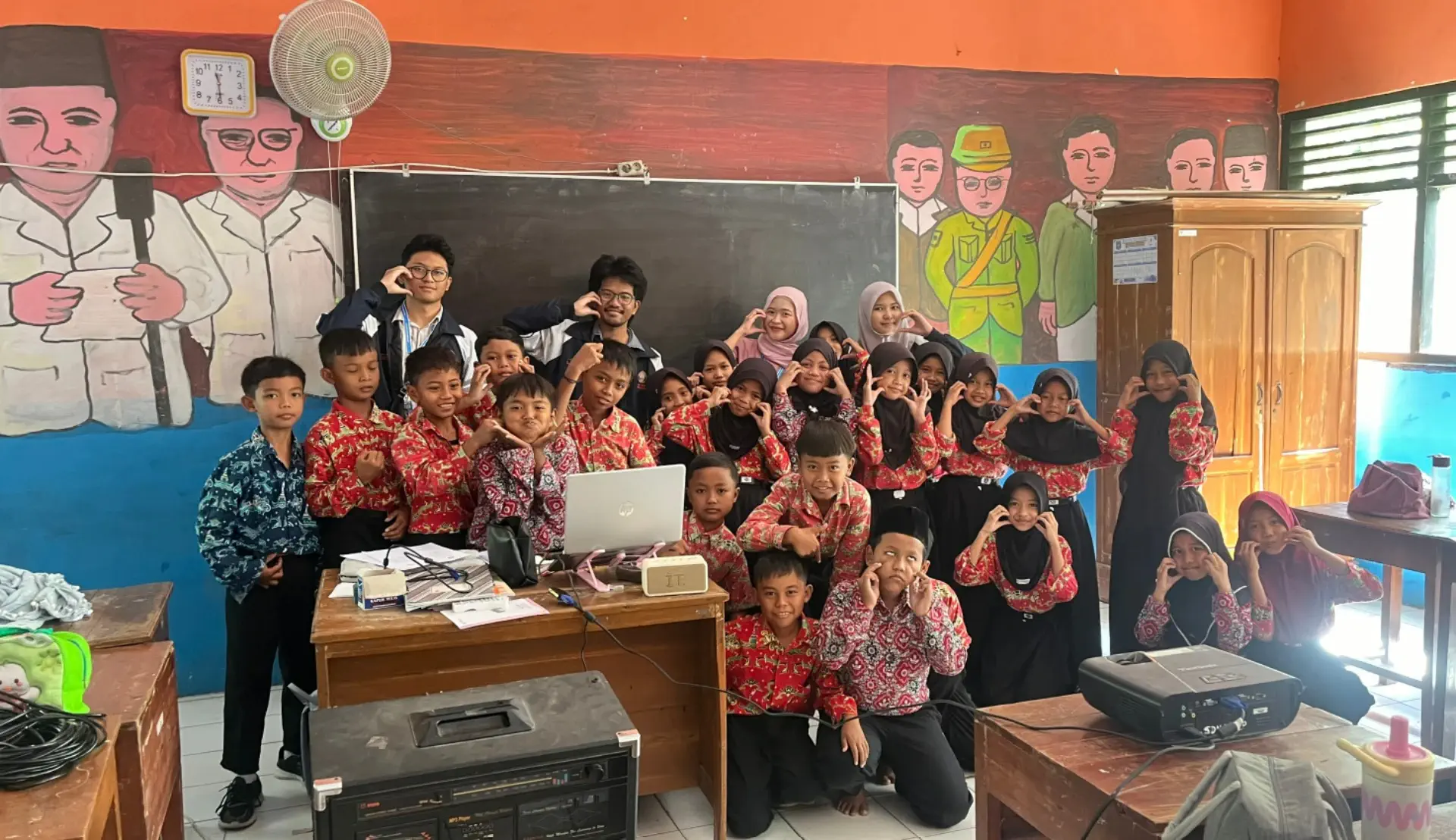
FISIP Undip, Boyolali (12/8) – Students from the Faculty of Social and Political Sciences (FISIP) at Universitas Diponegoro, through the Community Service Program (KKN) Team II, conducted an educational session on bullying prevention for fifth-grade students of SD Negeri 01 Repaking, Wonosamodro Subdistrict, Boyolali Regency, on Thursday (23/7). Under the theme “Dare to Speak Kindly, Dare to Reject Bullying,” the initiative represents a concerted effort by FISIP Undip students to raise awareness among young learners about bullying behaviors while empowering them with the courage to voice their opinions and refuse any form of mistreatment.
The educational activity took place from 10:00 to 10:40 AM, targeting the fifth-grade students of SD Negeri 01 Repaking. Utilizing an interactive communication approach, the FISIP Undip students guided the young participants in recognizing various forms of bullying, understanding its detrimental impacts, and learning appropriate ways to respond to such actions in their daily lives.
The session commenced with an opening and introduction segment designed to foster a comfortable and welcoming atmosphere, encouraging active student participation throughout the activity. Subsequently, the students were invited to watch an educational video illustrating bullying behaviors and their consequences on victims, serving as a thought-provoking prelude to the discussion session that followed.
Following the video screening, students engaged in a reflective exercise, during which they were encouraged to share their observations, the lessons they derived, and the key messages they took away from the footage. They were also given the opportunity to write down their personal opinions or experiences related to bullying—whether from the perspective of a victim, a perpetrator, or a witness who had observed such incidents in their surroundings.
The reflections gathered then became the foundation for a group discussion and feedback session. Selected stories or opinions were read aloud anonymously, allowing the facilitators to provide constructive responses and educational guidance on how to handle bullying situations and the importance of fostering friendships rooted in mutual respect. Other students were also given the chance to briefly express their own viewpoints.
Throughout the activity, the FISIP Undip students introduced the concept of assertive communication as a vital tool for students to express their thoughts, feelings, and objections to mistreatment without causing harm to others. The material was delivered through simple, practical sentence examples that the students could readily apply in their everyday interactions.
The introduction of assertive communication formed a crucial component of the educational session, as students were not only taught to identify bullying but also to understand how to respond to it appropriately. By equipping them with the ability to firmly yet respectfully voice their objections, the program aims to instill the courage to say “no” to unacceptable behavior while fostering more positive peer-to-peer communication.
The activity concluded with a brief quiz to reinforce the material covered during the session. The FISIP Undip students also delivered a closing message emphasizing that every child has the fundamental right to feel safe and comfortable within their school environment. The session ended with a group farewell and a commemorative photograph.
Through the “Dare to Speak Kindly, Dare to Reject Bullying” educational initiative, FISIP Undip students have demonstrated the practical application of communication sciences in community service, particularly through educational efforts tailored to the developmental characteristics of elementary school students. This activity is expected to encourage students to become more confident in expressing their opinions, rejecting harmful treatment, and cultivating a peer environment grounded in mutual appreciation.
Furthermore, this initiative serves as a meaningful contribution from FISIP Undip students in delivering communication education to the broader community through the KKN program. It is hoped that the understanding imparted during this session will extend beyond the confines of the activity itself, enabling students to apply these principles in their daily interactions and ultimately fostering a safer, more comfortable, and bullying-free school environment. (FISIP/Undip/Lutfiatul Haniyah)