

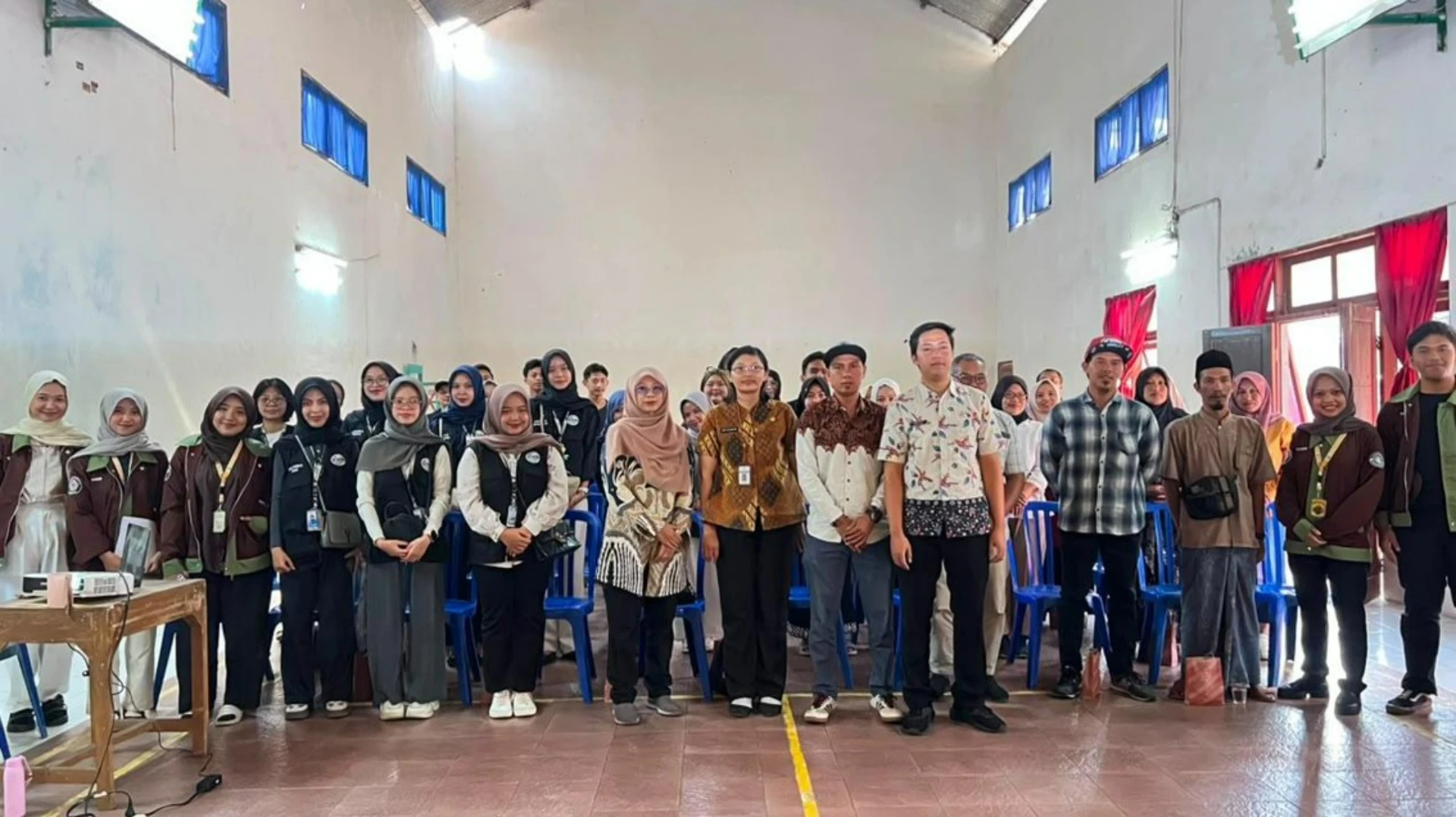
SEMARANG – The Student Organization Capacity Strengthening Program (PPK Ormawa) Team of BEM, Faculty of Social and Political Sciences, Diponegoro University, held a Coffee Bean Processing and Marketing Equipment Assistance activity on Friday (August 7, 2026) at the Lanjan Village Hall, Sumowono Sub-district, Semarang Regency. This activity is part of the Gerakan Kopi Berdaya (GKB) Program, which focuses on enhancing community capacity in processing coffee beans into value-added products while strengthening marketing capabilities.
The activity was attended by representatives from the Department of Agriculture, Fisheries, and Food (Dispertanikap) of Semarang Regency and the Regional Development Planning, Research, and Innovation Agency (Bapperida) of Semarang Regency, as a form of support and collaboration among various stakeholders in developing the coffee potential of Lanjan Village.
The assistance featured two speakers: Mr. Restu Ady Irawan, S.M., from the Department of Cooperatives, Micro Enterprises, Industry, and Trade of Semarang Regency, and Mr. Surandi, the Owner of Koffie Waras. Prior to the material delivery, participants took a pre-test to assess their initial understanding of coffee product management and marketing.
The first material was delivered by Mr. Restu Ady Irawan, S.M., who provided insights into coffee product management and marketing. The material emphasized the importance of managing products more systematically so that the coffee produced not only maintains good quality but also has higher selling value and reaches broader markets.
The next session was continued by Mr. Surandi, who introduced the use of roasting equipment and explained the coffee bean roasting process. Roasting is a crucial stage in coffee processing as it significantly affects the aroma, flavor, and overall characteristics of the coffee produced.
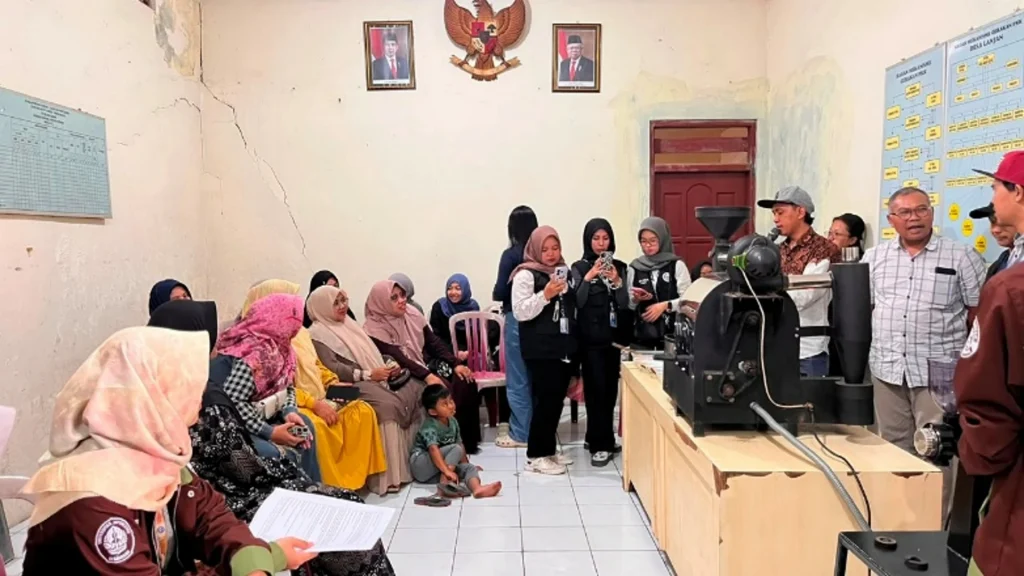
Following the material delivery, participants were invited to the production house to learn about and operate the roaster and grinder. Alongside the speakers, participants practiced the coffee bean roasting process and grinding using the grinder to produce ground coffee. This was followed by processing the ground coffee into espresso and coffee milk drinks, providing participants with direct experience in processing coffee from beans to ready-to-consume products.
This activity served as a form of assistance in optimizing the use of coffee production facilities available in Lanjan Village. Optimizing production equipment is an important part of developing the Gerakan Kopi Berdaya Program, as the community’s coffee management still faces limitations in facilities, and some of the harvest is still marketed in the form of raw beans. This condition highlights the importance of enhancing community capacity in coffee processing to produce value-added products.
Mr. Surandi, as a speaker, expressed his hope that this activity would serve as an initial step in developing Lanjan Village’s flagship coffee products.
“Hopefully, this coffee management introduction activity will run successfully and become the first step in launching a flagship coffee product from Lanjan Village,” said Mr. Surandi, Owner of Koffie Waras.
Meanwhile, Mr. Restu assessed that the assistance activity is highly relevant to the condition of coffee farmers in Lanjan Village, who still need strengthening in the product downstream process.
“This program is excellent because many farmers in Lanjan Village are still confused about downstream coffee product processing. Through this training, they are becoming more open to understanding the coffee processing and marketing process, so they can not only sell green beans but also process them into value-added products,” said Mr. Restu.
He also expressed hope that the assistance would not end with the PPK Ormawa program but would continue to be sustained by the Lanjan Village community.
“I hope this program can continue and provide lasting benefits for the people of Lanjan Village. With the availability of roasting equipment, the community can develop and market their coffee products so that sources of income are not limited to farming but also include sales of processed coffee. Going forward, Lanjan Village is expected to develop independently, create new job opportunities, and improve the community’s economy,” he continued.
Enthusiasm was also felt by the activity participants. Mrs. Iin hoped that the presence of PPK Ormawa BEM FISIP Undip would bring benefits to small business owners in Lanjan Village, particularly in developing businesses and increasing income.
“I hope PPK Ormawa BEM FISIP Undip can help small entrepreneurs to advance further and improve the community’s income,” said Mrs. Iin, a participant in the activity.
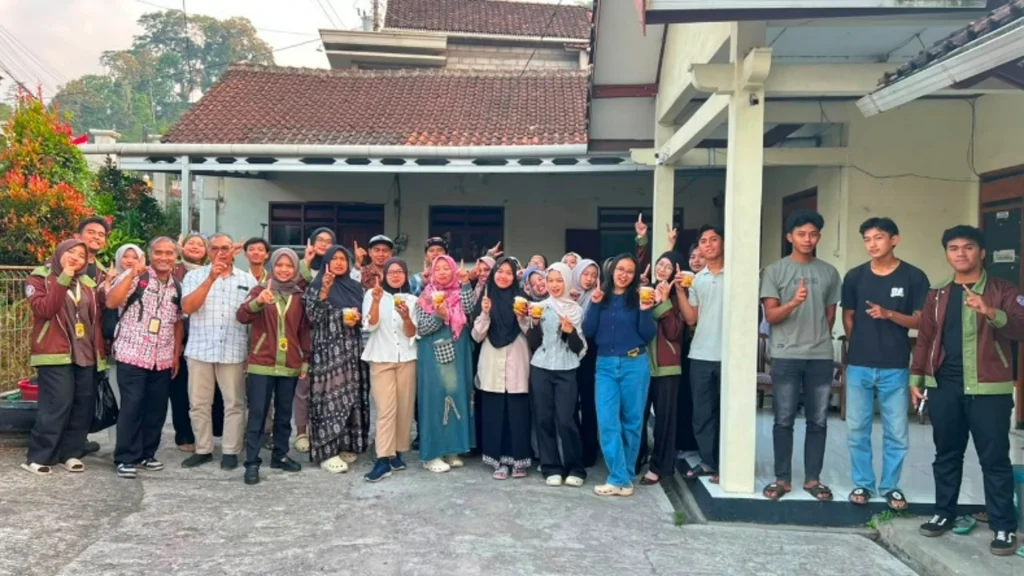
Through this assistance activity, the PPK Ormawa Team of BEM FISIP Diponegoro University encourages the community to develop the processing process to produce value-added products. The use of roasting and grinding equipment is expected to support the community in developing coffee products, while processing and marketing skills serve as a foundation for expanding business opportunities.
This activity is also part of the effort to strengthen community capacity and business institutions in developing Kopi Sejiwa Lan Java as Lanjan Village’s coffee product. The collaboration between the community, government, business actors, and universities is expected to be continuously strengthened so that Lanjan Village’s coffee potential can be independently developed and have a meaningful impact on improving the community’s economy.
Writer: Nabiila Putri F, Public Administration, Faculty of Social and Political Sciences, Diponegoro University