Semarang, May 23, 2026 – As a concrete manifestation of the Tri Dharma Perguruan Tinggi (Three Pillars of Higher Education), particularly in the realms of community service and environmental stewardship, the Student Association for Social Welfare (Himpunan Mahasiswa Peduli Sosial / HIMPS) of the Faculty of Social and Political Sciences (FISIP), Universitas Diponegoro, once again organized the Ecobrick and Mangrovestasi (ECOVEST) 2026 program. Held under the theme “Restore Today, Sustain Tomorrow,” the event took place at the Semarang Mangrove Center in Mangkang Wetan, Tugu District, Semarang City, and involved both the organizing committee and student volunteers from Universitas Diponegoro.
ECOVEST 2026 emerged as a timely response to the escalating environmental challenges confronting coastal areas—ranging from shoreline abrasion and plastic waste pollution to the deteriorating quality of mangrove ecosystems. Through this initiative, HIMPS FISIP Undip seeks to cultivate environmental awareness among the younger generation, emphasizing that ecological preservation is not solely the duty of the government or specific communities, but a collective responsibility shared by all members of the global society. Driven by a spirit of collaboration and social consciousness, all participants were invited to actively engage in hands-on efforts to restore coastal ecosystems.
The event commenced early in the morning, with participants and committee members assembling at the FISIP Undip parking area for registration and attendance checks, followed by a group departure to the venue. Upon arrival at the Semarang Mangrove Center, the program was officially opened by the chief organizer, after which a briefing and educational session were delivered by the local mangrove farming group. During this session, participants gained in-depth insights into the vital functions of mangrove ecosystems—from their role as natural barriers against abrasion and carbon sinks to their capacity as habitats for marine life and natural protectors of coastal areas against various environmental threats. The participants’ palpable enthusiasm from the very outset fostered an atmosphere brimming with energy and intellectual curiosity.
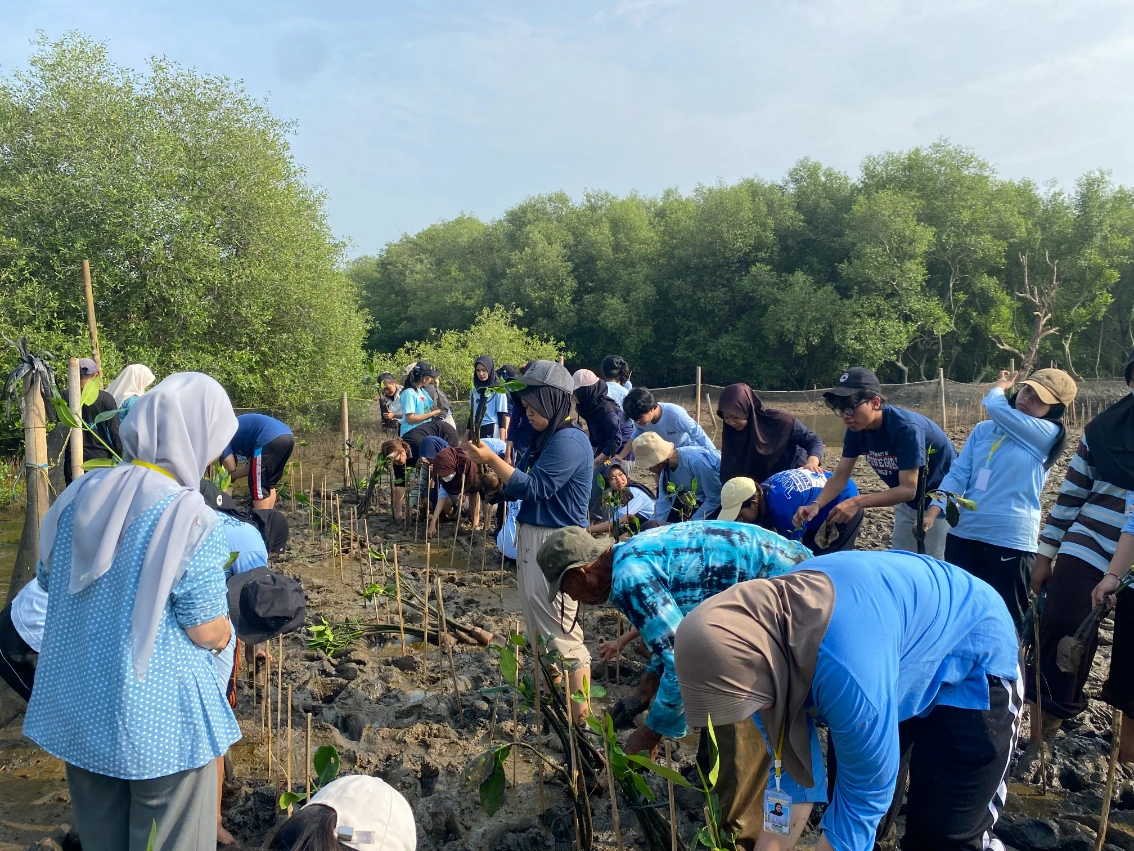
The pinnacle of ECOVEST 2026 was the mangrove planting activity held in the vicinity of the Semarang Mangrove Center in Mangkang Wetan. A total of 250 mangrove seedlings were successfully planted by the committee members and student volunteers from FISIP Universitas Diponegoro, in collaboration with the local mangrove farming group. Despite having to navigate muddy terrain and physically demanding conditions, the participants demonstrated remarkable enthusiasm throughout the planting process—an experience that further strengthened the bonds of solidarity and mutual cooperation among all those involved.
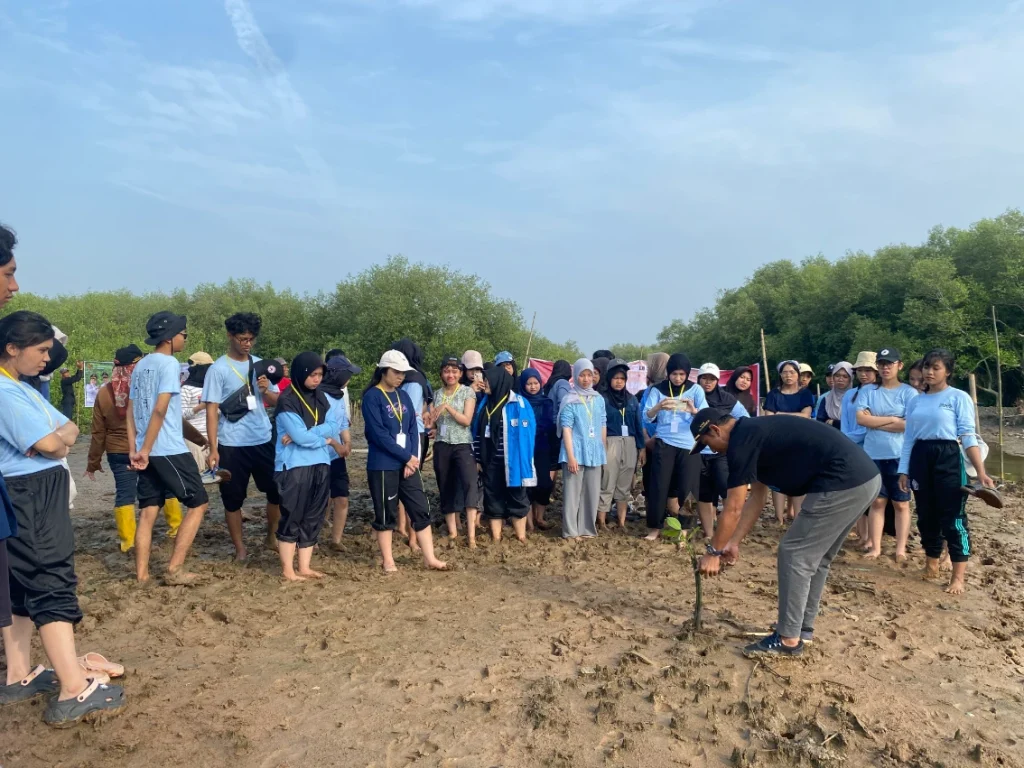
Prior to the planting activity, participants received a comprehensive demonstration from the local farming group on the proper techniques for mangrove planting. The instruction covered every essential step, from the installation of bamboo support stakes and the precise placement of seedlings, to the correct binding methods to ensure the young plants remain resilient against ocean currents and coastal winds—each explained with meticulous care and patience. Through this hands-on practice, participants not only acquired invaluable new experiences but also gained a tangible understanding of the critical importance of sustained, dedicated coastal rehabilitation efforts.
This mangrove planting initiative stands as a powerful symbol of students’ commitment to preserving ecological balance and supporting environmental sustainability for future generations. The spirit of mutual cooperation and social solidarity that pervaded the event cultivated a collaborative atmosphere rich in meaning and shared purpose. Each seedling planted represents far more than a small sapling along the pond’s edge—it embodies a profound hope for a restored, sustainable, and resilient coastal future.
In addition to mangrove planting, ECOVEST 2026 also incorporated a coastal cleanup action as an integral part of the program. Participants and committee members collectively collected plastic waste originating from the packaging of mangrove seedling roots used during the planting process. This seemingly simple measure reflects the principle that environmental care begins with small, deliberate actions—ensuring that no waste footprint, however minor, is left behind.
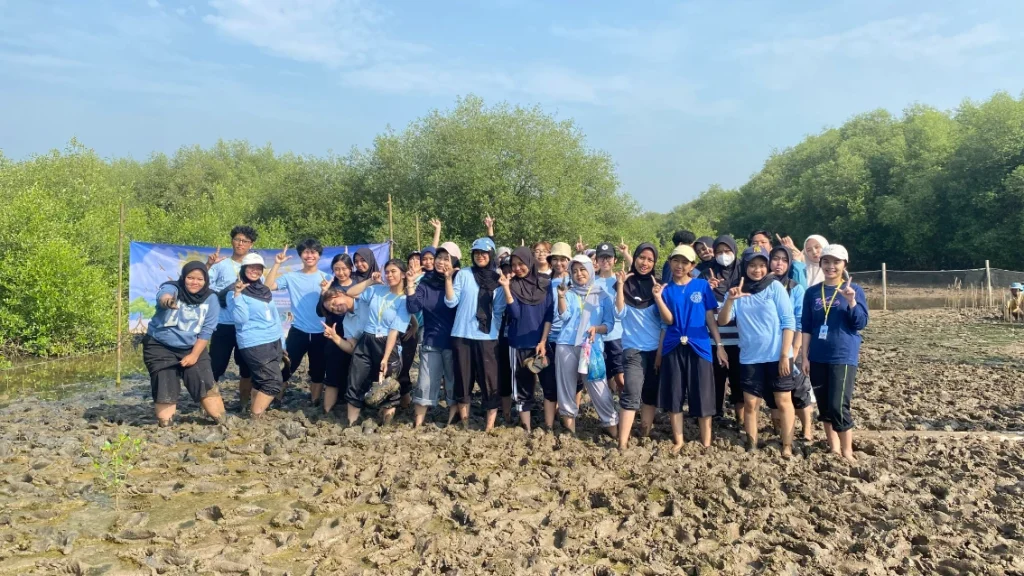
Through a programmatic concept that seamlessly integrates environmental education, direct conservation action, and community service, ECOVEST 2026 succeeded in delivering a meaningful and transformative experience for all participants. The initiative not only contributed to the physical rehabilitation of the coastal environment through mangrove planting and beach cleanup efforts, but also succeeded in raising social awareness, strengthening solidarity, and fostering a collective consciousness among students regarding the increasingly urgent environmental issues that demand immediate attention.
ECOVEST 2026 is by no means merely an annual agenda that passes without lasting impact. Rather, it represents a concrete step by students to bridge academic awareness with collective action on the ground. HIMPS FISIP Undip expresses the hope that the spirit of “Restore Today, Sustain Tomorrow” will not conclude with this single event, but will instead serve as a catalyst for building a lasting culture of environmental consciousness among the younger generation. Through the small actions taken today, it is anticipated that meaningful change will be realized—for a better, greener, and more sustainable future for our planet.